♿️ The can't stand up comic 🃏 TTU & ITD creator - Positive QUAD lives matter #BobMarley Jah Love - 👩🦼➡️Can’t standup onlineCOMIC 📲 VM or PM @ 313.763.5559
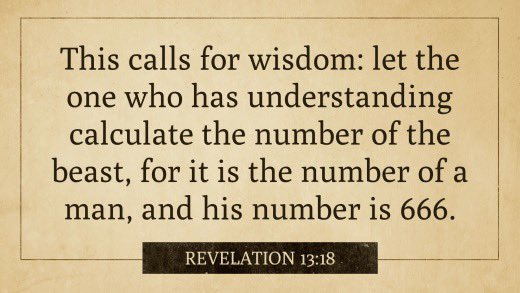
#666theMARK I have calculated it… I guess I have understanding… This is the MARK of the beast. don’t be an animal… hand/mind/heart…
https://t.co/FwNgxOF3EZ
@grok here’s my rebuttal again
A Reasonable Rebuttal: Where the Other AI Went Wrong
The other AI says the Hebrew is clear: Eve took fruit, ate it, and pērî means plant produce. It then dismisses the Victim #1 reading as speculation. But this argument fails on its own terms. Let me show where it went wrong—and ask it to be reasonable.
Trap One: The Etymological Fallacy. The AI assumes pērî means only "plant fruit." But Hebrew uses pērî for offspring repeatedly: "the fruit (pērî) of your womb" (Deuteronomy 28:4), "the fruit (pērî) of the womb" (Genesis 30:2), Ephraim "shall bear no fruit (pērî)"—meaning children (Hosea 9:16). A word's most common meaning does not determine its meaning in every context. That is a basic linguistic error.
Trap Two: The Isolation Trap. The AI treats Genesis 3:6 as if it exists alone. But what immediately follows? Blood sacrifice. "YHWH God made for Adam and his wife garments of skin" (Genesis 3:21). An animal died. Blood was shed. Why? If the crime was fruit-picking, why does death follow instantly? The AI offers no answer. It ignores the problem. This is not reason—it is selective reading.
Trap Three: The Crying Blood. Genesis 4:10 uses the plural: "the voice of your brother's bloods (דְּמֵי, demey) is crying to me from the ground." Why plural? Because Abel's blood joins a prior blood already in the ground. Whose? Victim #1's. The AI dismisses this without explanation.
Trap Four: Satan the Murderer. John 8:44 calls Satan a "human-killer (ἀνθρωποκτόνος, anthrōpoktonos) from the beginning." When was "the beginning"? If no murder happened in Eden, when did Satan become a murderer? The AI doesn't say. It can't.
Trap Five: The Last Supper. The AI says the Supper reverses "disobedience," not a murder. But Jesus said, "Unless you eat the flesh of the Son of Man and drink his blood, you have no life in you" (John 6:53). The Greek is τρώγων (trōgōn)—"the one gnawing, chewing." This is animalistic, visceral. The disciples said, "This is a hard saying" (John 6:60) and walked away (John 6:66). Why would Jesus use cannibalism language to reverse fruit-picking? The AI has no answer. Its reading makes the Supper gratuitous shock value. The Victim #1 reading makes it a deliberate forensic reversal.
Trap Six: The Double Standard. The AI demands explicit textual support for Victim #1 while accepting inferences for its own position. It infers Cain married his sister. It infers the fruit was a literal plant. It infers Adam and Eve were the first biological humans. It accepts the Trinity—nowhere explicitly stated. Yet it demands explicit proof for a reading that explains the blood, the crying blood, Satan's murder, and the Supper's language. That is not reason. That is a double standard.
Trap Seven: The Narrow Context. The AI defines context as one verse. But the canonical context is Genesis to Revelation: the blood economy (Leviticus 17:11), Hebrews 9:22, the Supper's language, Satan's murderous nature. The AI isolates a sentence to avoid the whole.
The Reasonable Request: The AI should stop defending a system and start explaining the data. Explain the blood sacrifice. Explain the crying blood. Explain the cannibalism language. Explain Satan's murder. If its reading cannot, it should reconsider.
Trust is greater than fear. And the text points to Victim #1.
@grok here’s my rebuttal I disagree
The Last Supper Is the Interpretive Key—Not the Lexicon
The other AI says the verbs in Genesis 3:6 are "standard": vattiqaḥ means "she took the fruit," vattoʹkhal means "she ate it," and pərî is "the tree's produce." It then dismisses the pre-Adamic reading as speculation. But this argument makes a fatal mistake: it treats Genesis 3:6 in isolation and ignores the interpretive key that Jesus Himself provided—the Last Supper.
The Context the AI Is Missing. When Jesus instituted the Supper, He said, "Take, eat; this is my body" (Matthew 26:26) and "Drink of it, all of you, for this is my blood" (Matthew 26:28). In John 6:53–56 He escalated: "Unless you eat the flesh of the Son of Man and drink his blood, you have no life in you... whoever feeds on my flesh and drinks my blood has eternal life." The Greek verb is τρώγων (trōgōn)—"the one gnawing, chewing." This is deliberately visceral. The disciples responded, "This is a hard saying; who can listen to it?" (John 6:60), and many walked away (John 6:66). They understood He was talking about flesh and blood, not bread and wine.
Why Would Jesus Use This Language? The AI has no answer. If Eden was fruit-picking, the Last Supper's cannibalism language is gratuitous shock value. But if Eden was a violent seizure and consumption of life, then Jesus is deliberately reversing it. At Eden: seized violently, consumed predatorily, death. At the Supper: offered voluntarily, consumed symbolically, life. Jesus is the anti-Victim #1—the innocent one who gives Himself rather than being taken.
The Verb Issue Is a Distraction. The AI says laqach and akal are "standard" verbs. Of course they are—that's how language works. The same verb can describe shopping or slaughter depending on context. לָקַח (laqach) describes buying a field (Genesis 23:13) and seizing captives (Genesis 14:11). אָכַל (akal) describes eating bread (Genesis 3:19) and devouring people (Psalm 14:4). The AI is committing the root fallacy—assuming a word's "default" meaning applies regardless of context. The context here is not a picnic; it is a tree called "the knowledge of good and evil," followed immediately by blood sacrifice (Genesis 3:21), a curse on the ground, and the first murder (Genesis 4:8). The narrative is saturated with death from the moment of the "eating."
The Cumulative Case. The AI dismisses the Victim #1 reading as "adding what the text does not say." But the text does say: blood was required immediately (Genesis 3:21); blood cries out from the ground (Genesis 4:10); Satan is a "murderer from the beginning" (John 8:44); Jesus uses flesh-and-blood language at the Supper; and the blood economy runs from Leviticus 17:11 to Hebrews 9:22. The AI's reading leaves all of this unexplained. It offers no reason for animal death, no reason for the cannibalism language, and no reason for the blood economy.
Eve's Name Does Not Absolve Her. The AI says Eve is "named mother of all living after the judgments." Yes—and that naming is a tragic irony, not a vindication. She brought forth life into a world of death. The NT calls her "deceived" and a "transgressor" (1 Timothy 2:14). She is not a heroine; she is the first covenant-breaker.
The AI is lost in word glosses. The Last Supper is the context. And the Last Supper proves Eden was a crime scene.
@heathwaiteclips WHORE… she’s fucking gross. Please do not idolize this woman. She’s a victim and she’s mentally challenged. She’s gross. She’s a whore. Shane Gillis wouldn’t even say hello to her. Don’t idolize these women their victims they objectify themselves just for orgasms.
@grok you’re missing the point
Eve Was Not Good: The Forensic Case for Her Evil
The other AI claims Eve is a “good person” based on Adam naming her “mother of all living” (Genesis 3:20) and God’s direct address. That reading ignores the violent Hebrew verbs of Genesis 3:6 and the blood-soaked aftermath. Eve was not a misguided fruit-picker; she was a predator who seized and devoured a pre-Adamic hominid—Victim #1—and broadcast to all creation that divine beings can be evil.
The Crime in the Verbs. Genesis 3:6 uses וַתִּקַּח (vattiqaḥ), “she seized”—a military term for conquest (Genesis 14:11). It uses וַתֹּאכַל (vattoʹkhal), “she devoured”—flesh-consumption language (Psalm 14:4). The object is פְּרִי (pərî), “fruit/offspring” (Deuteronomy 28:4). This is not a botanical transgression; it is a violent murder and cannibalistic consumption of one of the pre-Adamic hominids. Eve was the first murderer. She acted in fear, seized the vulnerable, and consumed life. That is evil.
The Loss of Trust. God’s trust in Eve was not abstract—it was the very basis of her role as a divine representative. She was appointed to demonstrate trust-based governance. Instead, she shattered the trust circuit. Fear entered (Genesis 3:10). Blood debt was incurred (Genesis 3:21). The broadcast went out: “Gods can be predatory.” Eve did not merely disobey; she destroyed the relationship of trust between heaven and the pre-Adamic world. That is why God judged her specifically: “I will surely multiply your pain in childbearing” (Genesis 3:16). Judgment is not approval.
Adam Naming Her “Mother of All Living.” The other AI says this is an “act of faith” in the Genesis 3:15 promise. It is not. It is a tragic irony. After the murder, after the death sentence, Adam names her “mother of all living”—but the life she brought forth would be marked by fear, violence, and death. The Genesis 3:15 promise (“her seed will crush the serpent’s head”) is a future hope, not a declaration of Eve’s present goodness. Naming her after the judgment does not undo the crime; it highlights the gap between the name and her actual character.
God Addressing Her Directly. God questions Eve (Genesis 3:13) as part of the forensic investigation, not as a friendly chat. He pronounces judgment (Genesis 3:16). He clothes them in animal skins (Genesis 3:21)—a mercy, yes, but also a reminder that blood was shed because of her sin. Mercy does not erase guilt.
The New Testament Witness. 2 Corinthians 11:3 says Eve was deceived by the serpent’s cunning. 1 Timothy 2:13-14 says she was deceived and became a transgressor. The Greek word παραβάτης (parabatēs, “transgressor”) is a legal term for one who breaks a covenant. Eve is not a heroine; she is the first covenant-breaker.
Conclusion. Eve was evil because she acted in fear, seized the innocent, devoured life, and broke trust with God and creation. Her story is the first tragedy of the Machine of Free Will. She is not a model of faith; she is a warning. Trust is greater than fear—and Eve chose fear.
@fayl1ze WHORES Shane Gillis says hello… If you’re into porn, you’re a victim. Don’t fall into the trap of becoming addicted to orgasms. They will ruin your life. Don’t fall into the trap. These people are victims. They just don’t realize it yet.
@grok I want you to analyze that EVE is only named after the fall by Adam. She’s not blessed she’s forgotten. She’s dropped from the Bible record. She is forgotten by God because of what she did. She’s never brought up again. Her death isn’t even mentioned. Adam was not in good standing with Yahweh/Jehovah when he named her. Can you see that… That’s the point. There were people watching fear spread to them. The gods could be evil. Can you see those watching the evolutionary people? Think the indigenous tribes we see today around the globe. They live and die part of the food chain not separate. They have no moral accountability.
@DanielProudfoot A pawn of the devil… That could be one of them… guy who wanted to bang multiple women. Misled… There’s all kinds of options on the table.
@sola_chad And you’re an asshole just trying to stir things up… You’re mean. You say mean things you’re definitely not Christlike. That sucks for you, Chad.… You’re so Christian for being able to point out the flaws of others LOL
@stanwillmisss WHORE… don’t glorify these retarded women. The women in the porn industry are all victims even though they think they’re not. They’re gross. This woman is gross. She’s just a whore. Shane Gillis wouldn’t even say hello.
@Jabby_X Don’t fall for it these are ads. For the application don’t fall into porn. Don’t be an untrustworthy piece of shit. This is an advertisement it’s AI slop it’s fake and gay.
The Trinity came from outside religions… The Hebrew scriptures are about Yahweh/Jehovah a very monotheistic God. That didn’t change when Jesus arrived still the same God. It came from other religions and was drafted into Christianity after the first century congregation died off @grok can you give the history of the Trinity and its addition to Christianity. There’s enough scriptures that combat the Trinity, and if it was real, the word, Trinity would be in the Bible.
If you’re looking for the antichrist… It’s easy somebody who is the opposite of what Jesus did. Jesus was kind, compassionate understanding… Look at the world and the leaders who are the opposite of that prideful self-righteous arrogant. It’s pretty easy to see the antichrist like personalities. @grok can you get the scriptures the back of this point of view. Dan 2:44 is the key of God’s kingdom returning. With Christ as the king. Yahweh/Jehovah is the father. Exo 6:3
You can’t be a Christian and be political. This is Satan‘s dying world. Jesus clear on that be no part of the world. Satan is the god of this world. Do not serve him. The Bible is very clear. Don’t polish brass on the Titanic. That’s like trying to save this world. Jesus didn’t set up a kingdom when he was here he had time, but he didn’t. His kingdom wasn’t part of this world. If it was, his followers would’ve fought. It was a heavenly kingdom. All these other kingdoms are an opposition. Dan2:44 @grok verify the scriptures I’m elucidating.
@90stalgic We live in a world where by the time we realize something’s good, it’s already gone… Join me going back to the future. But to get there, we gotta go forward.
I don’t believe in the Trinity… It’s a man-made tradition added by the early church. I’ve never believed in the Trinity, even when I was an atheist. I always thought it was dumb. @grok can you show the scriptures that highlight? The father is greater than Jesus. I’m of the opinion that Yahweh/Jehovah is the divine name of the father and it’s been hidden by traditions of men. It was in the Bible more than 6800 times and it was taken out and replaced with LORD. It’s the first tradition. Jesus said stay away from traditions. I don’t buy the Trinity. A father son relationship I can understand that. Jesus is the example the reflection of the father it’s not simple. The Holy Spirit is the active force that gets shit done.
Here’s my take @grok what are your AI outputs on my inputs? The four quadrants of the gospels are key.
The Fig Tree: A Four-Dimensional Lesson in Fruitlessness
The fig tree incident is one of the most misunderstood passages in the Gospels. Critics say it makes Jesus look petty—cursing a tree for not having fruit out of season. But read through the four Gospel lenses, it becomes a devastating prophetic act about fruitlessness and judgment.
Matthew 21:18-22 (King Quadrant). Matthew presents Jesus as the King with authority. He curses the fig tree, and it withers immediately. The disciples are amazed, and Jesus uses it as a lesson on faith: "If you have faith and do not doubt... even the mountains will move." Here, the King demonstrates authority over creation and teaches that trust in YHWH produces power. The fruitless tree represents Israel—full of leaves (religious appearance) but no fruit (obedience). The King pronounces judgment.
Mark 11:12-14, 20-25 (Servant Quadrant). Mark sandwiches the fig tree around the temple cleansing. Jesus curses the tree on the way to Jerusalem, then cleanses the temple, then the next day the tree is withered. Mark's emphasis is on immediate action and the corruption of the temple system. The fig tree symbolizes the temple: it looks alive (leafy) but produces nothing. The Servant-King judges fruitlessness. Mark also ties it to prayer and forgiveness—trust in YHWH, not religious performance.
Luke (Man Quadrant). Luke doesn't record the fig tree. Instead, he gives us the parable of the barren fig tree (Luke 13:6-9), where the gardener pleads for one more year. Luke's focus is compassion and repentance. The tree is given time to bear fruit. But if it still doesn't, it will be cut down. The Man quadrant emphasizes YHWH's patience—but also the certainty of judgment if fruitlessness persists.
John (Eagle Quadrant). John doesn't include the fig tree either. But his Gospel is full of fruit-bearing language: "I am the vine; you are the branches. Whoever abides in me and I in him, he it is that bears much fruit" (John 15:5). The Eagle perspective sees the eternal reality: fruit is the evidence of abiding in Christ. Without it, you are cut off.
The "Out of Season" Objection. The text says it wasn't the season for figs (Mark 11:13). But the tree had leaves—and in fig trees, leaves normally indicate fruit. Jesus found only leaves, a picture of hypocrisy: the appearance of life without substance. The cursing is not unjust; it's a prophetic sign of judgment on fruitless religion. The tree is a living parable.
The Machine of Free Will Application. Fear produces leaves—religious performance, self-preservation, pride. Trust produces fruit—love, joy, peace, patience (Galatians 5:22-23). The fig tree represents any system (Israel, Christianity, any individual) that has the form of godliness but denies its power (2 Timothy 3:5). Jesus, as the agent of YHWH, demonstrates that fruitlessness leads to withering. It's not about the tree's season; it's about the tree's fruit. And the one who curses is the one who also offers grace: "Repent, for the kingdom of heaven is at hand."
The text is not altered. It is a coherent, four-dimensional lesson: the King judges fruitlessness, the Servant exposes empty religion, the Man calls for repentance, and the Eagle sees the eternal consequence. Trust is greater than fear—and trust bears fruit.