For too long, schools have relied on pockets of excellence, brilliant ideas trapped in silos. Now, by treating talent and technology as part of the same ecosystem, we can scale that excellence across every classroom, every team, every learner.
https://t.co/eNHI7ExNAq
#ISTELive
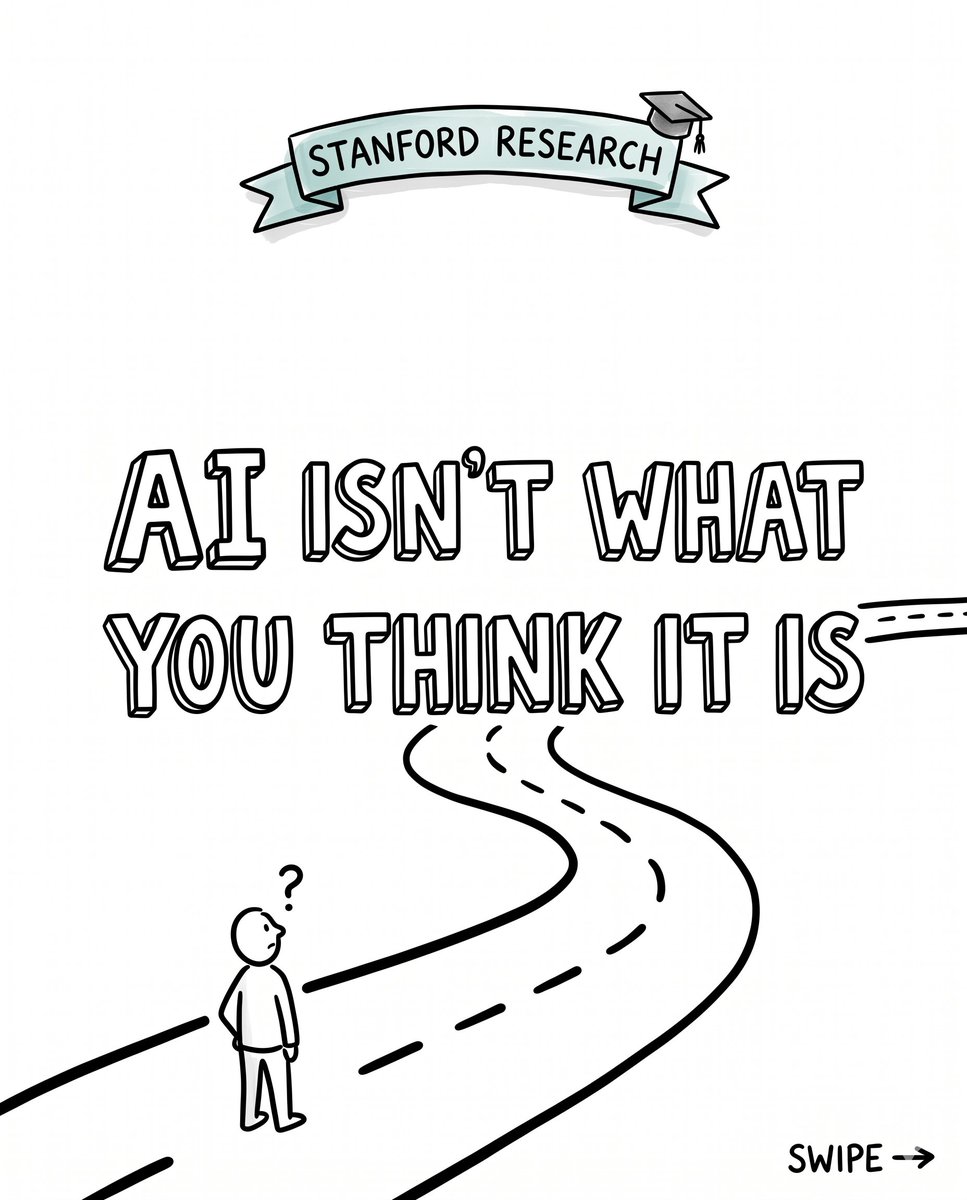
A Stanford economist just reframed AI for me.
Erik Brynjolfsson says AI doesn't stand for artificial intelligence. It stands for amplifying intention. His research? People who use AI to automate see their jobs shrink. People who use it to augment see their opportunities grow.
I get a front row seat to educators and leaders who care deeply about creating better opportunities for students.
And getting to be part of those conversations never gets old.
People usually hear "I teach AI" and imagine screens, tools, prompts, and technology conversations all day.
But what I actually get to experience is something much more human.
I get to hear the questions people are wrestling with in real time. How do we preserve curiosity? How do we build agency? How do we prepare students for a future that none of us can fully predict?
Welcome to the Judgment Economy. When AI makes keyboard-based work almost free, the value of everything else goes up: persuasion, strategic thinking, creative synthesis across fields.
What an incredible morning at our Propellus AI and Education Innovation event with keynote speaker Dr. Sabba Quidwai, CEO of Designing Schools and former Apple executive. 🧱
Sabba reframed something I thought I understood: hope. Not as an emotion, but as a teachable critical-thinking skill — and one of the most human capabilities we have in the age of AI.
She opened with the post-WWII origin story of Reggio Emilia: a small group of women in a destroyed Italian village who believed "children are capable, competent, and full of potential," and built a school brick by brick — mattone su mattone. They had no idea they were planting the seeds of one of the world's leading education philosophies.
A few ideas that stuck with our educators:
🔹 Two kinds of hope. One is given to us conditionally ("do these things and you'll be rewarded"). The other is the hope you build yourself — when the path isn't clear, you notice a problem, and you decide I can figure this out.
🔹 Agency is the differentiator. We have a human agency crisis — not enough people who believe they can figure things out. People with agency see, dream, and achieve.
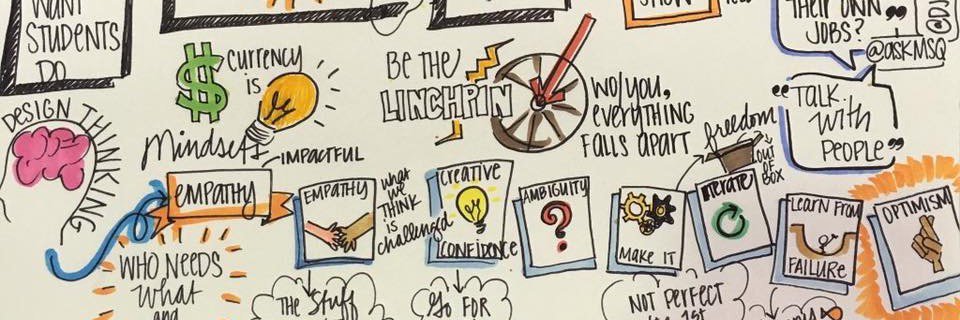
🔹 Prompt the human before the machine. Through her SPARK framework and design thinking, Sabba showed how AI can scaffold the messy middle — but problem-framing, curiosity, and leadership stay with us.
🔹 The interview question of the future: "Tell me a story about a time you figured something out." Beginning, messy middle, and end.
This connects directly to the work we're doing in @WichitaUSD259 — from Creative Minds to our student showcases, where kids narrate their productive struggle, not just polish a final product.
Grateful to everyone who helped make this happen, and to our educators for an energizing roundtable on AI, agency, accessibility, and what learning should look like next. @WichitaStateCED@mrs_smoke@askMsQ
The future is already here — it just isn't evenly distributed yet. Let's change that. 💛
#AIinEducation #DesigningSchools #StudentAgency #Propellus #WichitaPublicSchools #FutureReady #WPSProud
Technology is changing quickly, but helping people develop judgment, agency, and the confidence to navigate uncertainty has never mattered more.
Listen to the full episode, link below:
https://t.co/qek20Fk7y1
I think we're giving graduates the wrong advice.
Right now, we keep telling young people to work harder, build more skills, and learn AI tools. We act as if success is mostly an individual responsibility problem. But the research keeps pointing somewhere else.
1️⃣ Redesign the task, not the tool.
2️⃣ Be the guide and close the guidance divide.
3️⃣ Start with workflows, not platforms.
4️⃣ Build systems that reward experimentation instead of compliance.
I always thought hope was an emotion. Then I heard Brené Brown say that hope isn't an emotion, it's a cognitive process. That one line can reshape how we prepare young people for the future.
I know which side I want our kids on. And agency is how we get them there. Because when young people learn to see what's coming, pick up new tools, and find their own way forward, they stop waiting for someone to hand them a future. They start building one.