10 GitHub tools that are ridiculously hard to believe are free:
1. yt-dlp
Download videos and audio from 1,800+ websites in the highest quality possible. Supports subtitles, metadata extraction, playlists, and more. It keeps adapting to platform changes and has earned 172K+ stars.
https://t.co/qw4B5ZTd8X
2. Stirling PDF
An all-in-one PDF toolkit that replaces most Adobe Acrobat features. Merge, split, sign, OCR, compress, redact, and convert files completely locally. 81K+ stars.
https://t.co/FSVlrMKwvV
3. Homepage
A beautiful self-hosted dashboard that puts all your apps, services, and servers in one place. Perfect for homelabs and power users.
https://t.co/jHrxQLKUiy
4. LocalSend
The AirDrop alternative that works everywhere. Send files between Windows, macOS, Linux, Android, and iPhone without accounts, cloud storage, or size limits.
https://t.co/FOW5RXjtEm
5. AppFlowy
An open-source Notion alternative with documents, databases, and offline-first storage. Your data stays under your control. 70K+ stars.
https://t.co/VTgGJhUnMK
6. Immich
A self-hosted Google Photos replacement with automatic backups, facial recognition, AI search, and shared albums.
https://t.co/mQ40T1Ua84
7. Reactive Resume
Create, manage, and publish unlimited resumes for free. No hidden paywalls when it's time to export.
https://t.co/KkZYdfpbRD
8. Whisper
OpenAI's open-source speech-to-text model supporting 99 languages. The same technology many transcription services charge money for.
https://t.co/jBCrYA7dXm
9. n8n
A powerful workflow automation platform that lets you connect apps and automate tasks without paying per execution. 190K+ stars.
https://t.co/Es1RfxwEqt
10. Firecrawl
Give it a URL and it turns an entire website into structured, AI-ready data. A favorite tool for AI builders and developers.
https://t.co/LhUHaLR0Il
Open source is quietly replacing software people pay thousands of dollars for every year.
Most people haven't discovered these tools yet. 🤯
10 GitHub repos that will level up your AI Agent skills (SAVE THIS)🔖
1. Hands-On Large Language Models
Complete code notebooks from basics to advanced fine-tuning.
🔗 https://t.co/awbIDVAhWe
2. AI Agents for Beginners
A free 11-part intro course to build your first agents.
🔗 https://t.co/vPvgZwjrED
3. GenAI Agents
Tutorials and code for building generative AI agents.
🔗 https://t.co/A7aZkomCyY
4. Made with ML
Learn to design, build, and deploy real ML apps.
🔗 https://t.co/rvYry8ZDvF
5. Prompt Engineering Guide
Learn to write powerful and effective prompts.
🔗 https://t.co/nkqbk0TjmP
6. Hands-On AI Engineering
Practical LLM-powered apps and agent examples.
🔗 https://t.co/HjMTW5nvW1
7. Awesome Generative AI Guide
Curated hub for genAI research and tools.
🔗 https://t.co/qGocn6df1V
8. Designing Machine Learning Systems
Summaries and resources from the popular ML systems book.
🔗 https://t.co/zZC31InA1q
9. ML for Beginners (Microsoft)
Free beginner-friendly ML curriculum.
🔗 https://t.co/SBVf1FPH6f
10. LLM Course
Roadmaps and hands-on notebooks to build LLM apps.
🔗 https://t.co/OCAvim3jah
I'm curating 50+ AI Agent resources on my profile worth checking out 👋
Be visibly competent.
If you have skills but others do not know about them, you will never get the opportunities you deserve. Make your abilities visible, and ensure that what you bring to the table is impossible to ignore.
Everyone is learning Next.js and AI tools.
Almost no one is learning how databases actually work at scale.
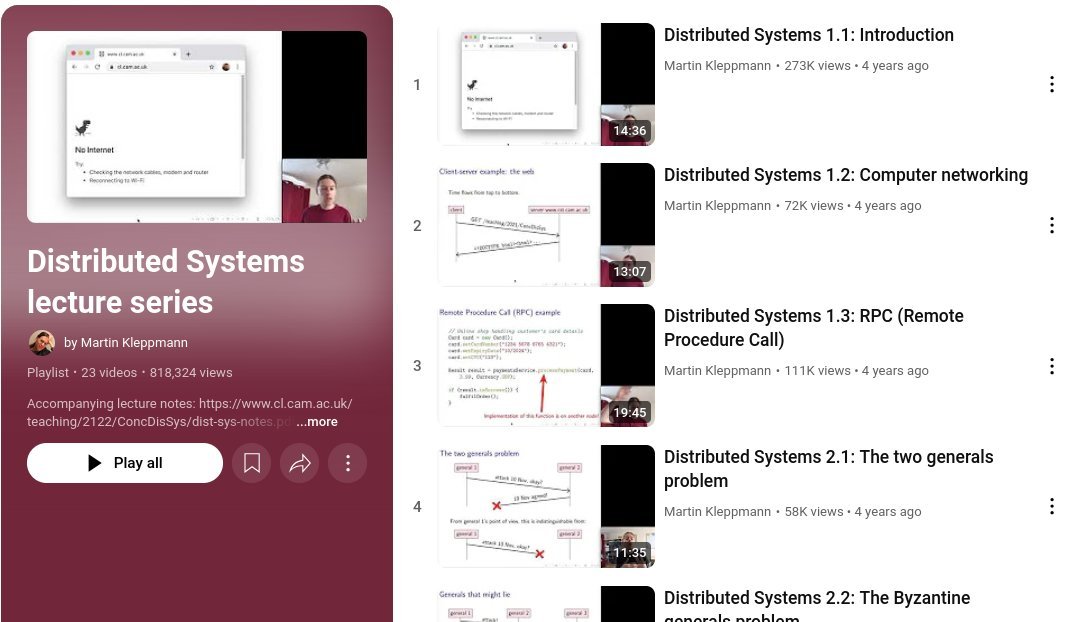
CMU Advanced Database Systems (Full 22-lecture playlist)
Master these rare skills:
• How real query execution & optimization engines work
• Columnar storage, vectorized execution & modern OLAP
• Why Snowflake, Redshift & DuckDB changed everything
• Distributed database failures & the “one DB to rule them all” myth
Top Hackathons 2026 Include:
> Google Solution Challenge – ₹20L prize + Google mentorship
> Microsoft Imagine Cup – $100K + mentorship from Satya Nadella’s team
> Amazon AWS AI/ML Hackathon – $50K + job referrals
> Meta Build for the Future – $40K + Reality Labs mentorship
> NVIDIA AI Innovation Challenge – $100K + GPU grants
> NASA Space Apps Challenge – NASA internship opportunity
> AICTE National AI Hackathon – ₹10L + job offers
> Smart India Hackathon (SIH 2026) – ₹21 Crore+ prize pool
> ISRO Space Innovation Challenge – Research grant + internships
and MANY more!
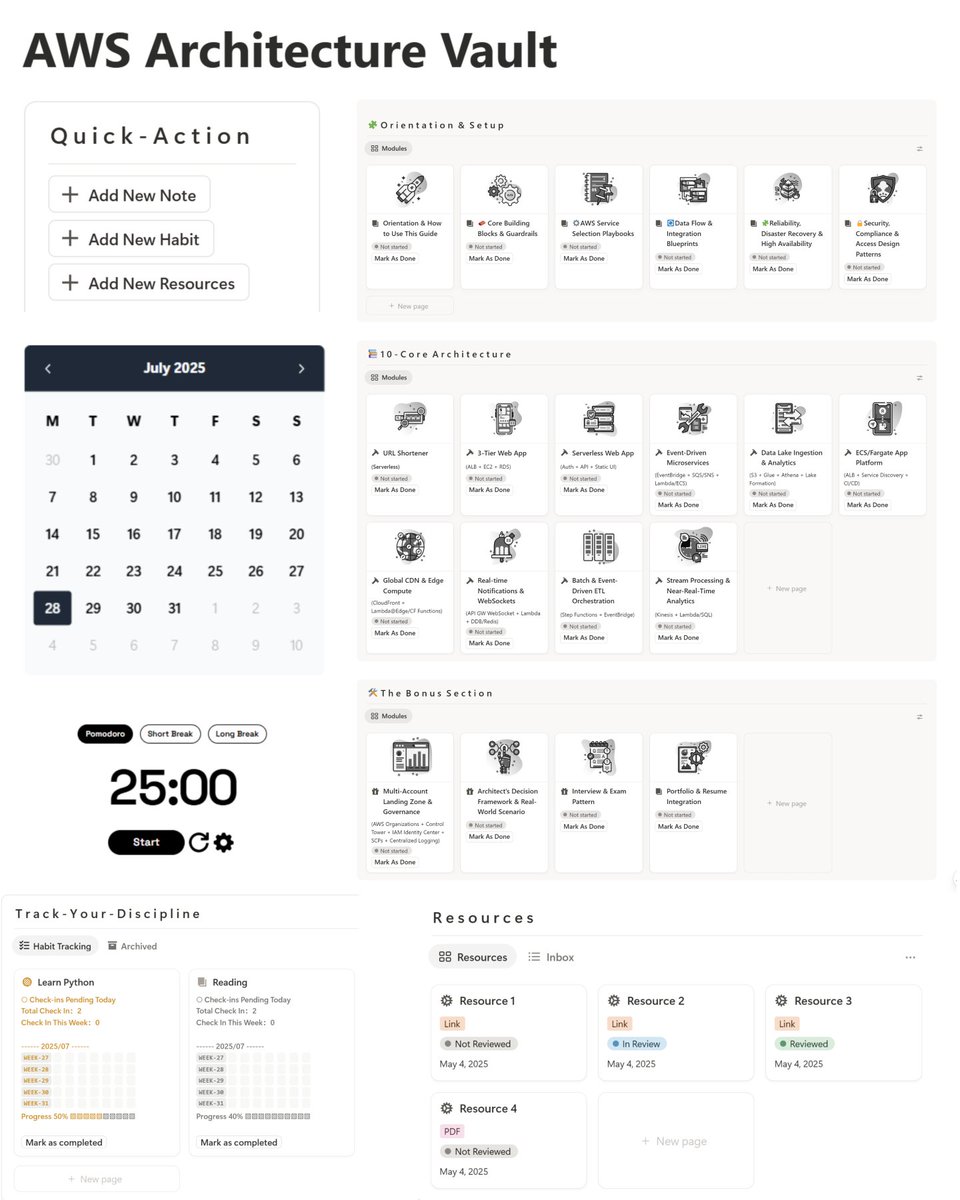
You can learn 100 AWS services and still not understand how systems actually work.
That’s why most people struggle when it’s time to design something.
Here’s why understanding AWS architecture matters more than memorizing services 👇
From Zero to Confident Developer
The Roadmap
If you feel lost learning to code, start here 👇
> Pick one language (Python / JS / Java).
> Learn syntax → Loops → Functions → OOPs.
> Start solving problems (LeetCode, GFG).
> Build 3–5 small projects.
> Learn Git + GitHub.
> Explore a domain — Web, App, Data, or AI.
> Contribute to open source or intern.
You don’t need to learn everything you need to finish something.
❤️ Save this if you’re just starting your dev journey.
I spent weeks researching 2025's hottest AI opportunities.
Found 50 business ideas that actually make money using current tech.
Each idea includes revenue paths, MVP scope, and exact tech stack needed.
Perfect for solopreneurs ready to capitalize on the AI boom before everyone else catches on.
Skip months of market research and failed experiments.
Comment "IDEAS" and I'll DM it to you (must be following)
Automated software testing is growing in importance in the era of AI-assisted coding. Agentic coding systems accelerate development but are also unreliable. Agentic testing — where you ask AI to write tests and check your code against them — is helping. Automatically testing infrastructure software components that you intend to build on top of is especially helpful and results in more stable infrastructure and less downstream debugging.
Software testing methodologies such as Test Driven Development (TDD), a test-intensive approach that involves first writing rigorous tests for correctness and only then making progress by writing code that passes those tests, are an important way to find bugs. But it can be a lot of work to write tests. (I personally never adopted TDD for that reason.) Because AI is quite good at writing tests, agentic testing enjoys growing attention.
First, coding agents do misbehave! My teams use them a lot, and we have seen:
- Numerous bugs introduced by coding agents, including subtle infrastructure bugs that take humans weeks to find.
- A security loophole that was introduced into our production system when a coding agent made password resets easier to simplify development.
- Reward hacking, where a coding agent modified test code to make it easier to pass the tests.
- An agent running "rm *.py" in the working directory, leading to deletion of all of a project's code (which, fortunately, was backed up on github).
In the last example, when pressed, the agent apologized and agreed “that was an incredibly stupid mistake.” This made us feel better, but the damage had already been done!
I love coding agents despite such mistakes and see them making us dramatically more productive. To make them more reliable, I’ve found that prioritizing where to test helps.
I rarely write (or direct an agent to write) extensive tests for front-end code. If there's a bug, hopefully it will be easy to see and also cause little lasting damage. For example, I find generated code’s front-end bugs, say in the display of information on a web page, relatively easy to find. When the front end of a web site looks wrong, you’ll see it immediately, and you can tell the agent and have it iterate to fix it. (A more advanced technique: Use MCP to let the agent integrate with software like Playwright to automatically take screenshots, so it can autonomously see if something is wrong and debug.)
In contrast, back-end bugs are harder to find. I’ve seen subtle infrastructure bugs — for example, one that led to a corrupted database record only in certain corner cases — that took a long time to find. Putting in place rigorous tests for your infrastructure code might help spot these problems earlier and save you many hours of challenging debugging.
Bugs in software components that you intend to build on top of lead to downstream bugs that can be hard to find. Further, bugs in a component that’s deep in a software stack — and that you build multiple abstraction layers on top of — might surface only weeks or months later, long after you’ve forgotten what you were doing while building this specific component, and be really hard to identify and fix. This is why testing components deep in your software stack is especially important. Meta’s mantra “Move fast with stable infrastructure” (which replaced “move fast and break things”) still applies today. Agentic testing can help you make sure you have good infrastructure for you and others to build on!
At AI Fund and https://t.co/zpIxRSuky4’s recent Buildathon, we held a panel discussion with experts in agentic coding (Michele Catasta, President at Replit; Chao Peng, Principal Research Scientist at Trae; and Paxton Maeder-York, Venture Partnerships at Anthropic; moderated by AI Fund’s Eli Chen), where the speakers shared best practices. Testing was one of the topics discussed. That panel was one of my highlights of Buildathon and you can watch the video on YouTube.
[Original text: https://t.co/B1sQ5oDnCU ]
MCP is one of the most important things to learn right now.
• powers next-gen AI workflows
• core to building useful agents
• rapidly becoming industry standard
Here’s the complete roadmap I followed to learn it in 30 days: