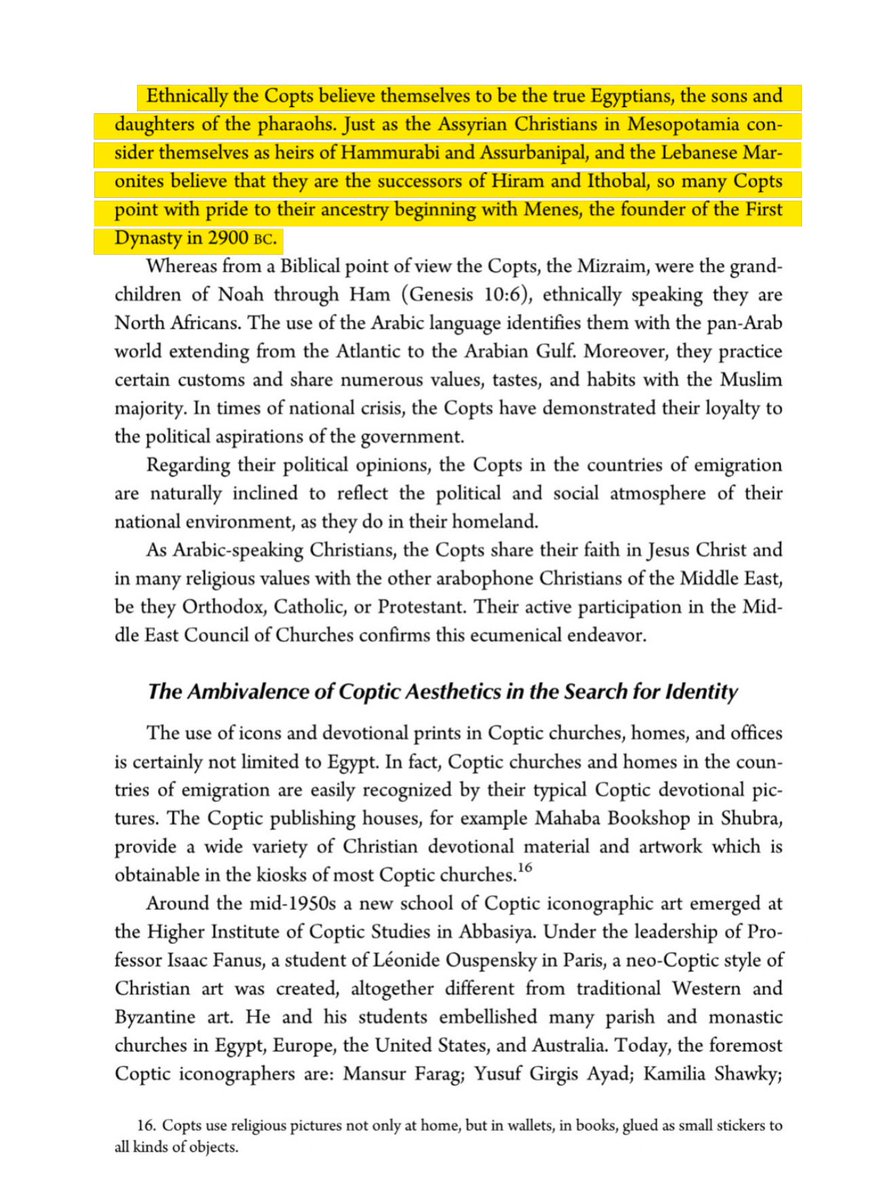
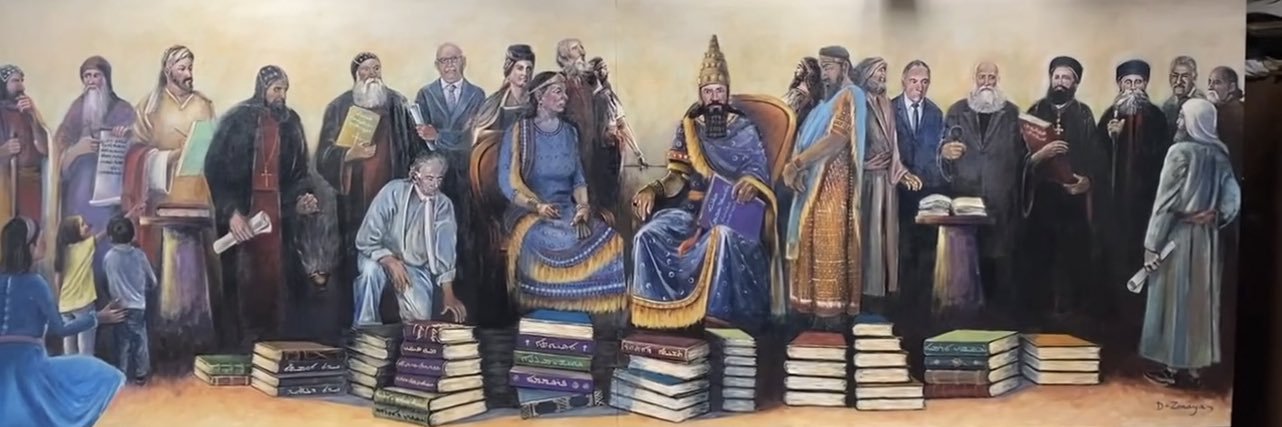
Otto F.A. Meinardus notes that Assyrian Christians see themselves as heirs of Hammurabi and Ashurbanipal, just as the Maronites trace succession from Hiram and Ithobal, and the Copts from Menes, founder of Egypt’s First Dynasty.
📌\
— Otto F.A. Meinardus, Christians in Egypt: Orthodox, Catholic, and Protestant Communities Past and Present (Cairo: American University in Cairo Press, 2002), p.24.
@strongcrusade @PaulElia Lol, nor do they call themselves “Kaldnaya”. Keep up. Cope harder, all of us do. 99% of are nationalist Assyrians. That’s why you gotta make millions of accounts, 😉
Interesting enough, John H. Walton and Craig S. Keener, the two authors of the Cultural Backgrounds Study Bible, mention that this Assyrian priest seems to have been a righteous person and a faithful servant to Sakar (Sin) his god.
📌\
— Walton, John H., and Craig S. Keener. Cultural Backgrounds Study Bible: Bringing to Life the Ancient World of Scripture. Grand Rapids, MI: Zondervan, 2016.
Was the name Abgar-Agbar of Arab origin?
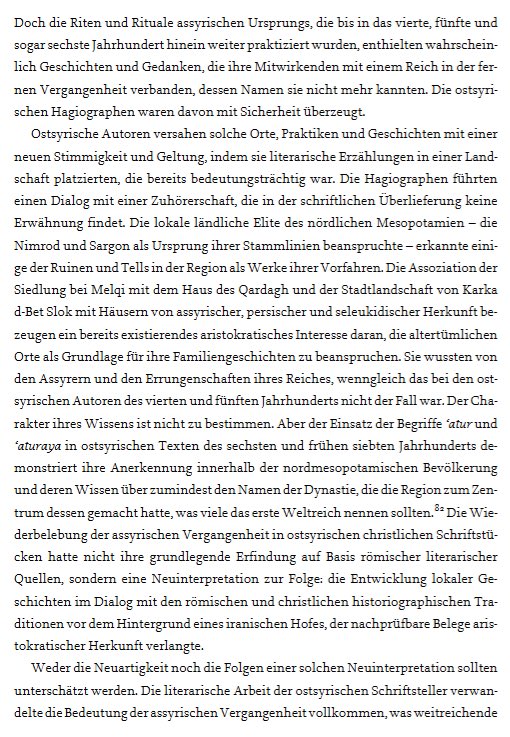
It doesn’t seem so. New studies debunk this claim. For example, Amir Harrak in one of his studies mentions a 7th century BCE Assyrian inscription written by a certain Assyrian Agbar, priest of the moon-god in Nerab (near modern Aleppo). This clearly debunks the idea that the name was of Arab origin and strengthens the argument for Abgar of Edessa’s Assyrian origin, as I have already stated in a previous post refuting anti-Assyrian claims.
📌\
— Maria Rita Corticelli, Religious Minorities in Iraq: Co-Existence, Faith and Recovery after ISIS (London: I.B. Tauris, 2019), p. 174 n.25.
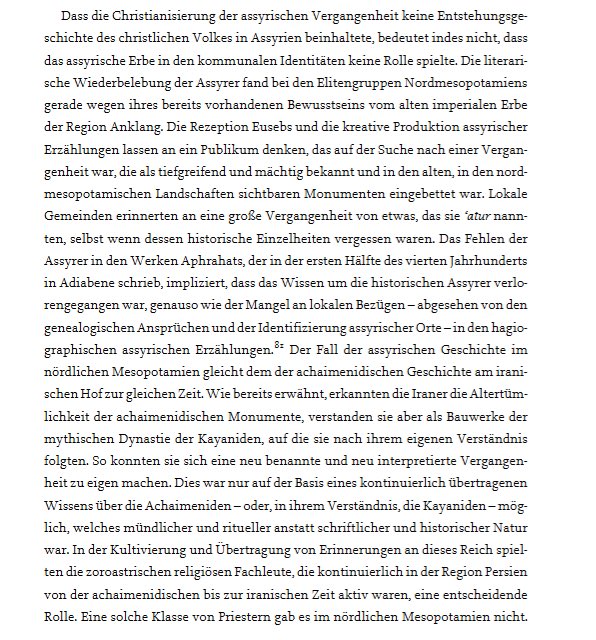
Although the ‘Syriacs’ (Suraye), now known as Chaldeans or Assyrians, used no other term for themselves, they understood they were none other than the descended from the great Assyrians of antiquity. Recently, Dr. Payne has made a convincing case for this in his publications.
In the second century BCE, Greek scholars Hypsicles and Hipparchus of Nicaea strengthened the mathematical foundation of Chaldean astrology, learning from Kidenas, Nabourianos, and Soudines, a triad of Hellenized Assyrian priests closely tied to Greek academics.
📌\
— Mary Ellen Snodgrass, Signs of the Zodiac: A Reference Guide to Historical, Mythological, and Cultural Associations, illustrations by Raymond M. Barrett, Jr.
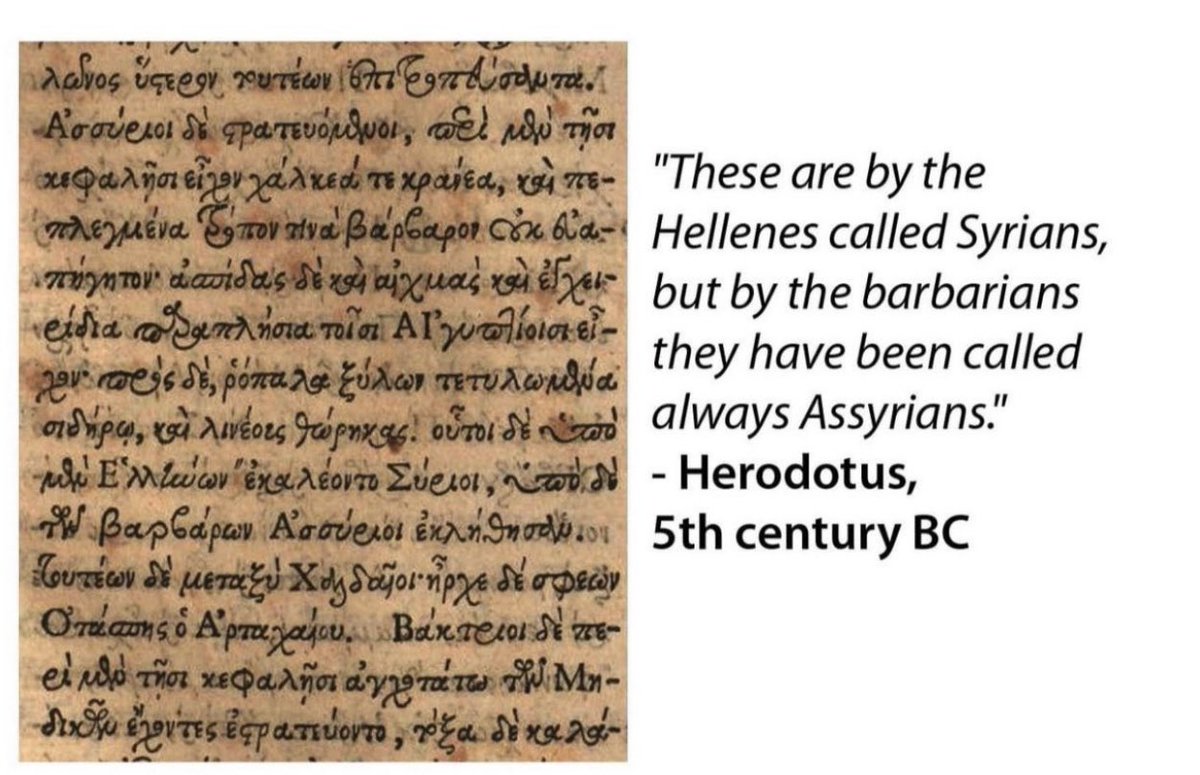
@weamnamou@grok Like I said, stop rambling on about stuff without using any source. Prove to me “Chaldean” are real, lol. No one believes it so good luck. Herodotus says to the Greeks they are called Syrians but to the natives, Assyrians. 😂
🧵> List of some Roman and Greek authors who stated Assyrians are Syrians (or, vice-versa)
In this thread I will present Roman and Greek authors who equated Syria with Assyria or Assyria with Syria. Some examples will be detailed descriptions, others short passages showing the terms used for the same people or meaning, and some will even trace “Syrians” back to the Neo-Assyrian empire. It will be a mix of approaches with the goal of showing that the majority of Roman and Greek authors equated “Syria” with Assyria/Assyrians. I believe this will clear the debate between those who argue that “Syria” does not mean Assyria.
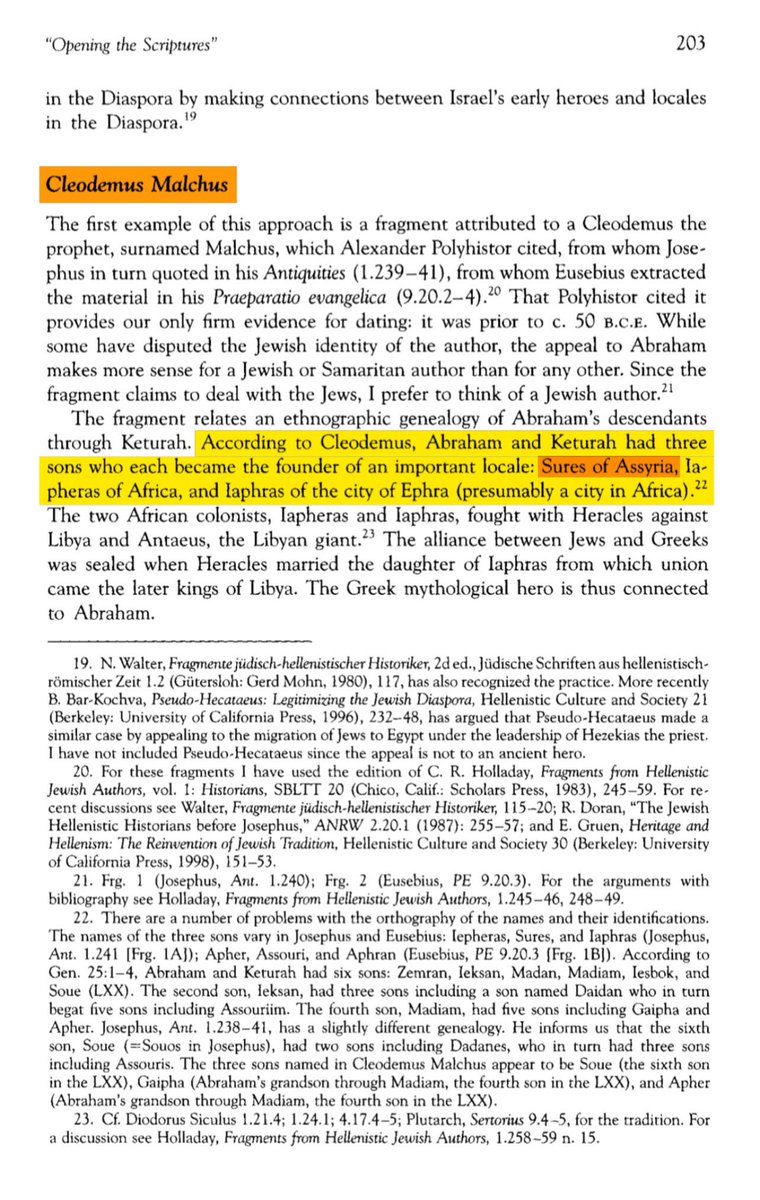
We will start with Cleodemus Malchus (c. 2nd–1st BCE), a Jewish-Hellenistic historian, who wrote that Abraham & Keturah’s sons founded key nations: Sures of Assyria, Iapharas of Africa, & Iaphras of Ephra (Africa). His works are preserved by Josephus and I will add Josephus own words in the next post. 👇🏻
📌\
— Jesus and the Heritage of Israel: Luke the Interpreter of Israel, ed. David P. Moessner (Harrisburg: Trinity Press, 1999), p. 203.
_________________________________
First of all Sumer, Agade, Assur and Babylon are all considered to be the history of Assyrians. Modern scholarship, agrees with that. Here is my newest post about that subject. Chaldeans have nothing to do with these Assyrian civilizations, as they were simply absorbed and were only the astronomers of Mesopotamia.
This Iraqia will have you believing that Assyrians aren’t the remnants of the peoples of Sumer, Akkad, Assur, and Babylon.
Yet countless scholars, historians, and authors have affirmed that the Assyrians are direct descendants of these ancient Mesopotamian civilizations. Here’s one such example by Dr. Agnes G. Korbani: “Assyrians: Remnants of the people of the ancient Mesopotamia, succeeding the Sumero-Akkadians and the Babylonians as one continuous civilization… They use classical Syriac in their liturgies while the majority of them speak and write a modern dialect of this language.”
This is just one of many sources that confirm the ancient continuity of the Assyrian people.
📌\
— Agnes G. Korbani, The Political Dictionary of the Modern Middle East, New York: Interlink Books, 2005, p. 35.
Your outdated book, which you seem to be trying to “quote,” ignores the fact that modern scholarship no longer agrees with such views. Let me show you something better. Berosus, the Assyrian philosopher from southern Assyria writing in Greek, classified his own material as Assyrian lore. You ramble on too much tbh.
@weamnamou@grok You don’t read. Here’s an example of you trying to make up your imagination of “Chaldeans” existing using a biblical designation which the same author notes. 😂
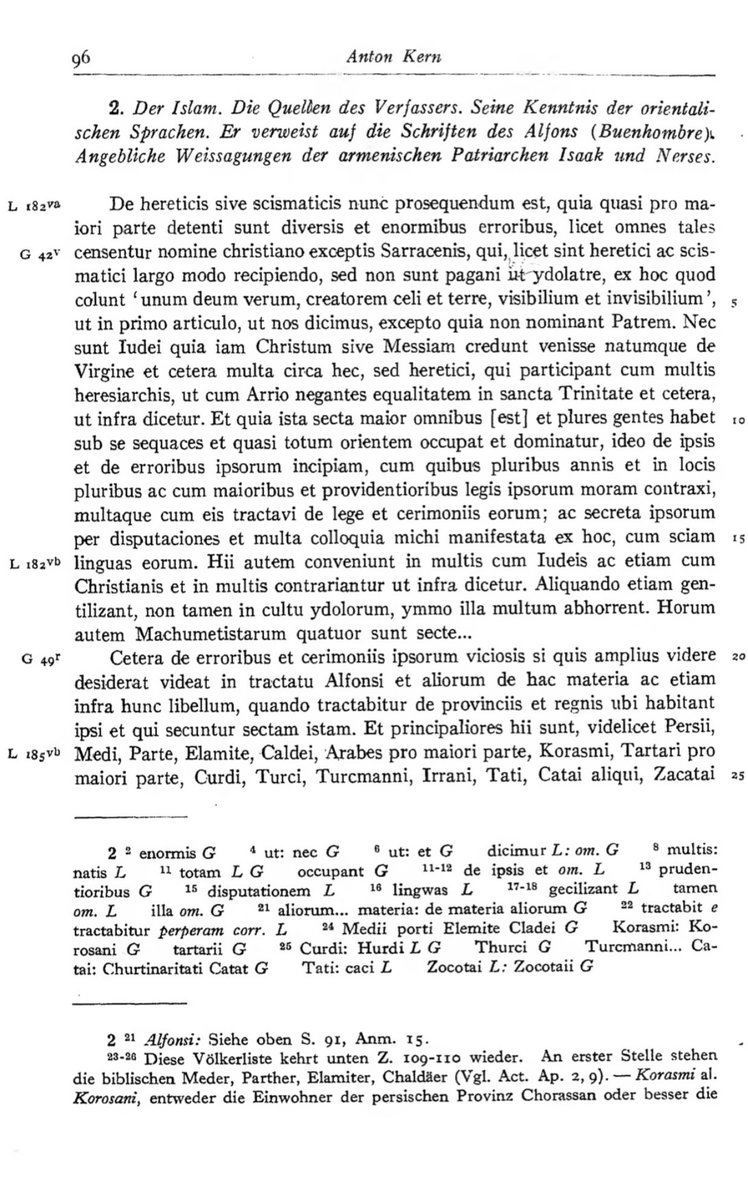
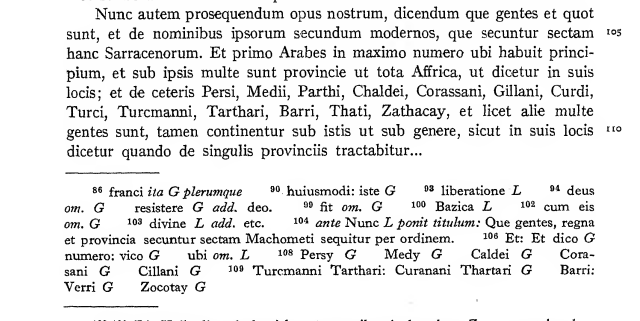
This was written by Johannes III in early-to-mid 1300s.
"First, the Arabs, who are the most numerous... As for the others: the Persians, Medes, Parthians, Chaldeans, Corassanians, Gillanis, Kurds, Turks, Turkmens, Tartars, Barris, Thatis, and Zathacays.
Although there are many other peoples, they are nevertheless grouped under these as a genus, as will be explained in detail when discussing each province individually..."
The Little Book on the Knowledge of the World By Johannes III (of Galonifontibus?), O.P., Archbishop of Sulthanyeh who lived in early-to-mid 1300s.
Dr. Anton Kern (from Graz, Austria), a 20th-century scholar, edited and analyzed this text in 1938. (pg. 100)
https://t.co/Xa0SyG4gF4
@weamnamou@grok How is the original book of Herodotus? 😭 it’s a outdated translation which the same author translates the Assyrians (Ασσύριοι) as Assyrian. Here’s in original Greek:
🧵> Origin of the “Chaldean Oracles”, or Assyrian Astronomers of Asuristan (i.e. Land of the Assyrians)
In this thread, I will be giving you a overview of the origin of the “Chaldean Oracles”, what they mean and their influence, what the name “Chaldean” meant in this subject, and the authors of the Chaldean oracles and their ties to Assyrian origin. I will also showcase you what Roman and Greek authors of the time described their origin as.
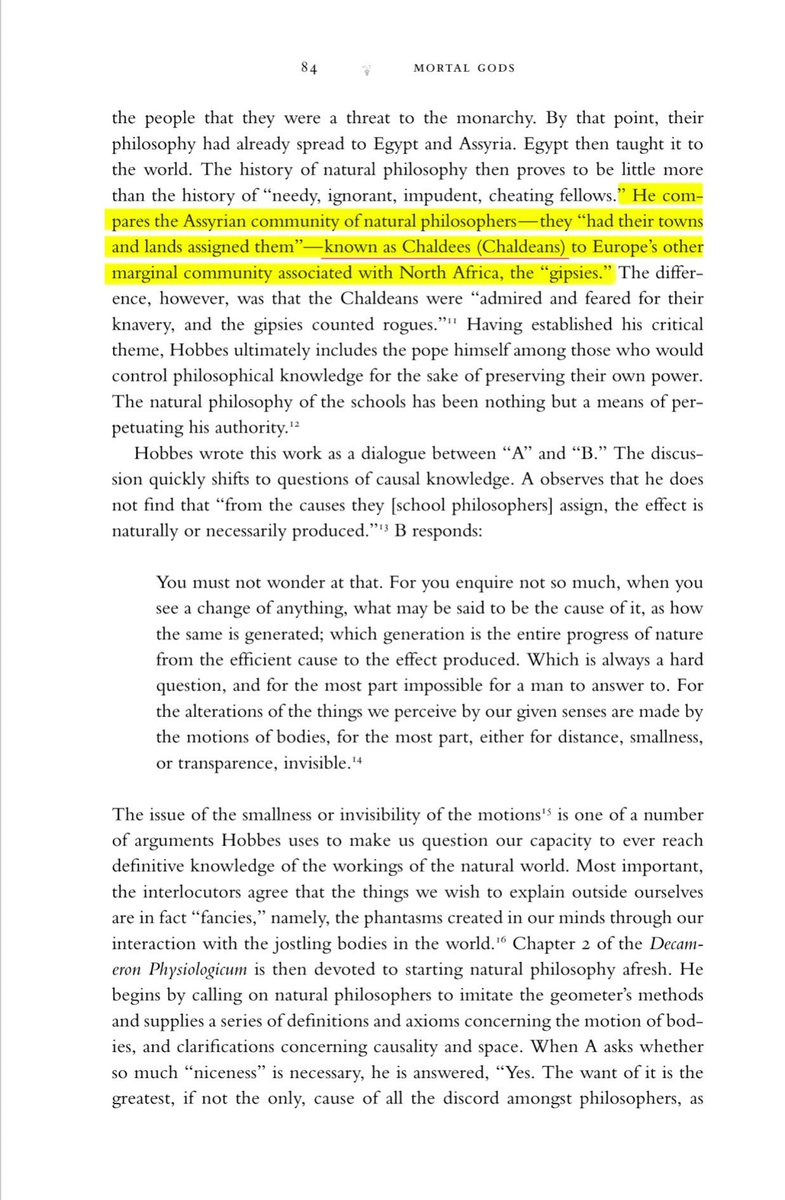
Before this thread begins, it’s important to understand that the term “Chaldean” (or Chaldeas) was often applied to a community of Assyrian philosophers, and used as another word for “philosopher,” “astronomer,” or “soothsayer.” This is why the term sometimes appears in historical writings. This thread will help you understand the meaning behind those references.
📌\
— Miller, Ted H. Mortal Gods: Science, Politics, and the Humanist Ambitions of Thomas Hobbes. University Park, PA: Pennsylvania State University Press, 2011, p. 84.
___________________________________
@weamnamou@grok Ok. Lol. All you have is ChatGPT for your fake identity that no one takes seriously. He was describing the Persian army which he noted, there were Assyrians in it.
Herodotus (c. 484 - c. 425 BCE), the great Ancient Greek historian, records that the Assyrian contingent in Xerxes' army were known to the Greeks as Syrians, but to the Persians as Assyrians, and were commanded by Otaspes, son of Artachaees.
📌\
— Herodotus, The Histories, trans. Robin Waterfield (Oxford University Press,
2021), Book 7, section 63.