The Veil ✨
The Western Veil Nebula has always been one of my favorite deep-sky targets, especially with that bright star sitting right in the middle of the famous “Witch’s Broom.”
This is the glowing aftermath of a massive star that exploded long ago, and I captured it from my backyard on a single clear night last summer using the Apertura CarbonStar 200.
I’m usually a refractor guy, but this astrophotography-focused reflector has been surprisingly easy to use, and it handled my crop-sensor color camera really well.
I hope the Western Veil Nebula, NGC 6960, is on your must-shoot list this summer. It never gets old.
Equipment Used:
Telescope: https://t.co/vniyncNZTw
Camera: https://t.co/WHkif5iMcG
Filter: https://t.co/Gjy7zj6pPn
Mount: https://t.co/6AmoE8DgiD
Image Details:
Gain 100
72 x 300s (6 hours total)
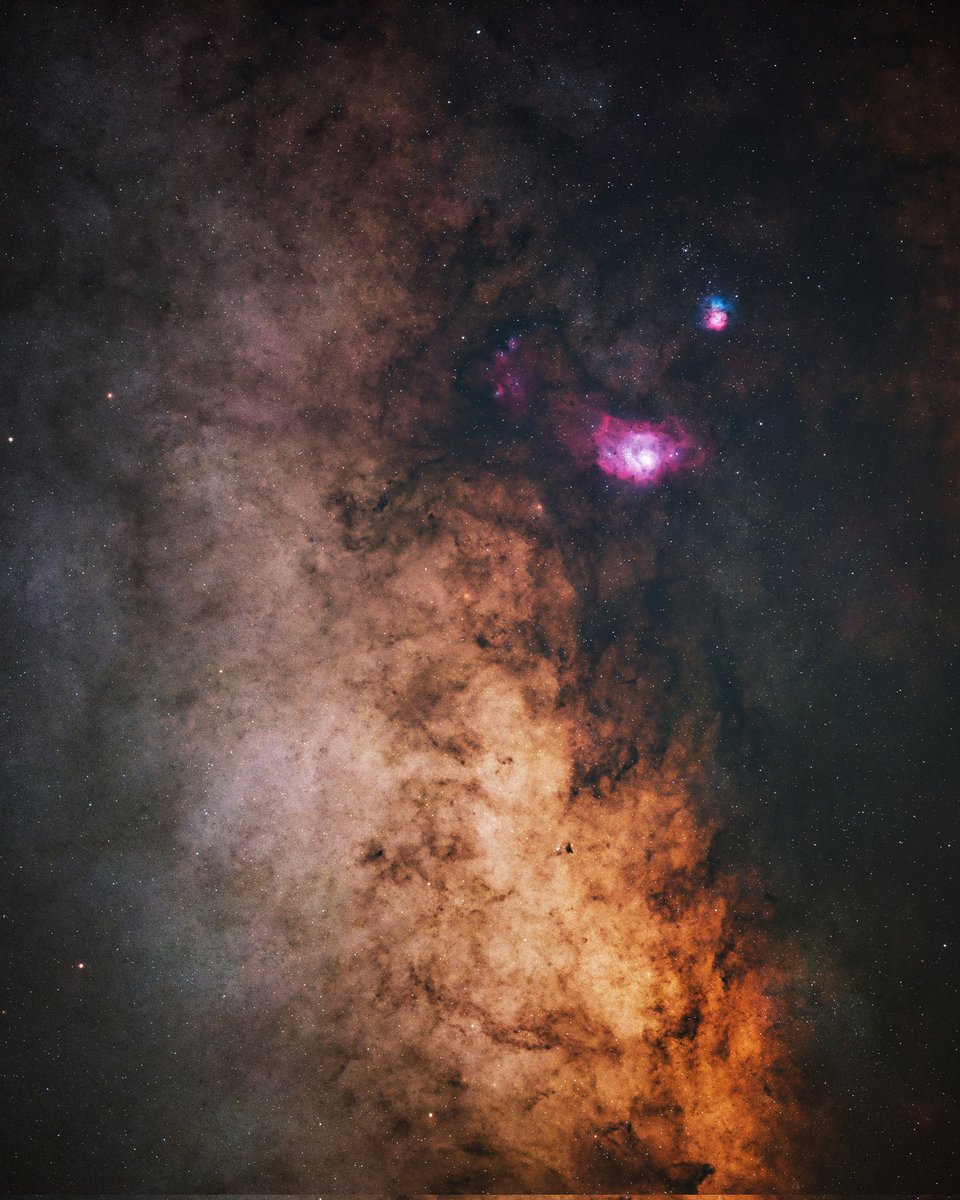
The Lagoon Nebula ✨
For this image, I used short exposures (60-seconds) without a filter to capture the varying star colors and dust in the area.
I am pretty stoked with the way this turned out from the backyard - It's quite low in the sky, and I had to set up my rig in a new location (picture in comments) to clear the tree line.
That gorgeous nebula to the north of Messier 8 is IC 1275, an equally stunning emission nebula in its own right! 🤓
PHOTO DETAILS:
120 x 60-seconds (2 Hours Total)
Gain 100
TELESCOPE USED:
Camera: https://t.co/V8MCcCelBW
Telescope: https://t.co/VTqs2Cf888
Mount: https://t.co/x05pYBorY5
I set up as far back as I could - and M8 just BARELY clears the trees from here. I had to dump about 20 minutes' worth of subs as one of the Poplars passed by 😆
Saturn this morning through the 24in scope. Some ring spokes and the encke division are clearly seen in this view, with Rhea just 'above' the north pole.
My latest picture from the backyard is the striking 'Pelican Nebula' in the constellation Cygnus.
I captured this with my ultra-portable deep-sky astrophotography setup during a stretch of clear nights we had last month.
This object is a bright region of glowing hydrogen gas, and one of my favorite summer targets to photograph.
It is amazing to think that this distant structure was captured with a telescope right from home (gear picture in the comments)😊
Image Details:
156 x 5-minutes (Gain 200)
13 Hours Total Exposure (Bortle 6/7)
Equipment Used:
Camera: https://t.co/Az8cFFUr6o
Telescope: https://t.co/VTqs2CfFXG
Mount: https://t.co/x05pYBoZND
Filter: https://t.co/6YOiMn9DuN
As always, I'd love to see your latest Pelican Nebula image in the comments!
The crescent Moon rising above the mountain ridge in the Chilean Andes. I captured this image from Carnegie Las Campanas Observatory as the rising Moon was glowing in the twilight. Such a beautiful view! It reminds me why we keep doing astronomy :)
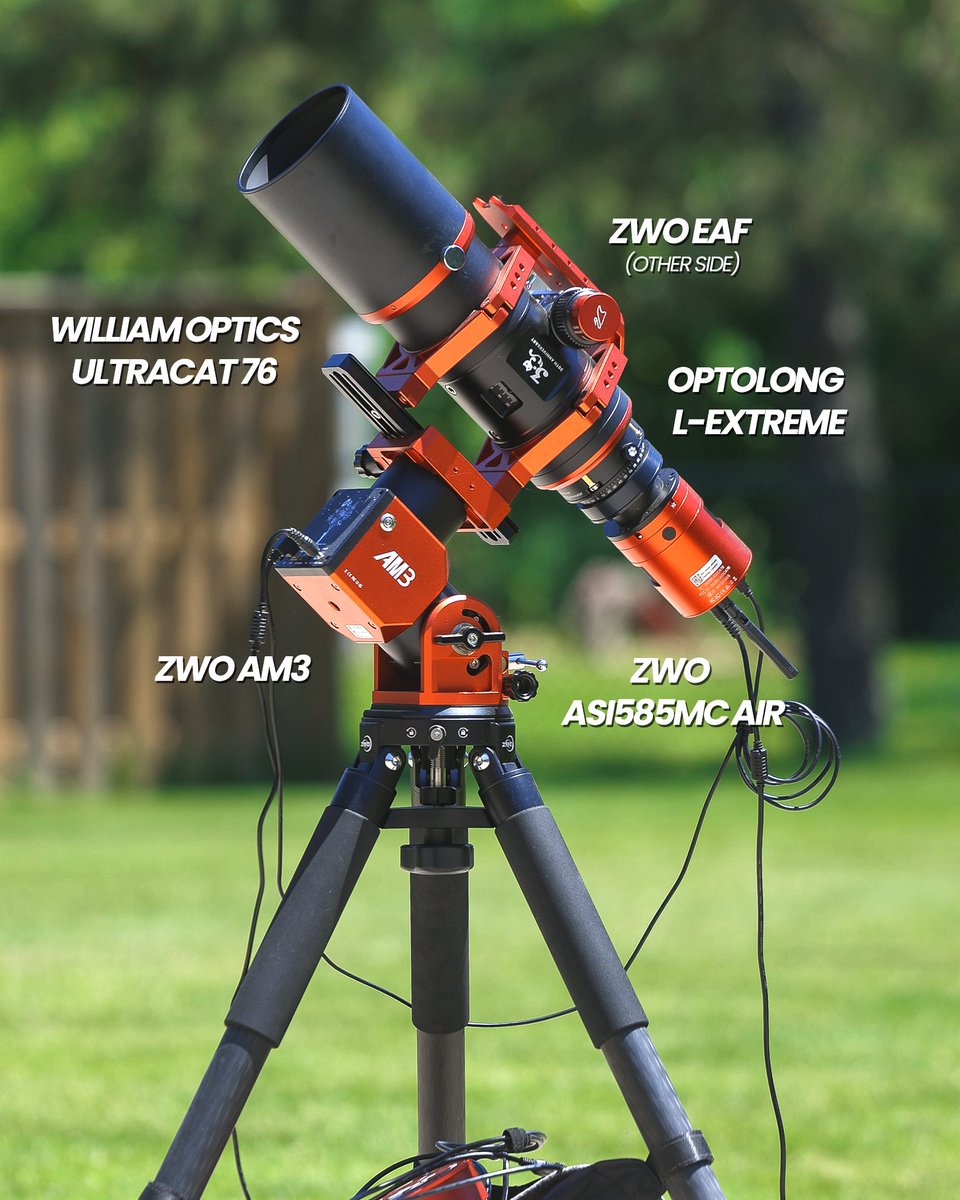
The 'Purrrrrfect' Astro Rig ✨
I've been running this ridiculously easy setup every clear night alongside the other setups I'm testing.
There are two main reasons that this rig is just too painless to NOT run every chance I get:
1. The ASI585MC Air has a built-in ASIAIR and Guide Camera. One camera instead of 3 devices.
2. The EAF (autofocuser) means that I don't ever have to touch anything (focus was the only thing left) - everything is done on my phone in the house.
I just polar-align the mount, then use the ASIAIR to control it and go to any target I want.
Oh, and the modest sensor size means the file sizes for each exposure are manageable (15 MB), and stack quickly.
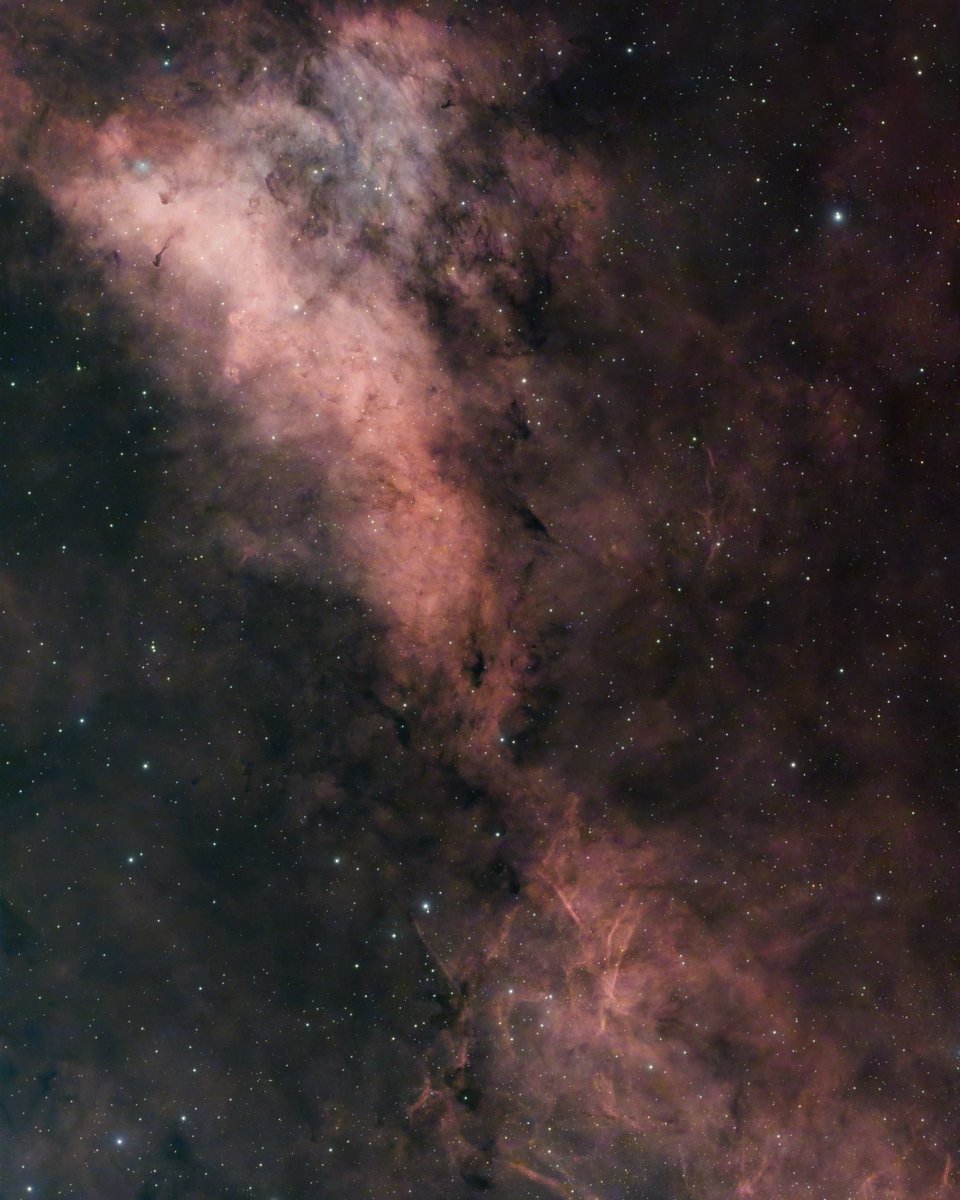
This is a random nebulous region in Cygnus I photographed last month! 240 x 5 minutes (20 Hours Total)
Camera: https://t.co/Az8cFFUr6o
Telescope: https://t.co/VTqs2CfFXG
Mount: https://t.co/x05pYBoZND
Filter: https://t.co/6YOiMn9DuN
What a time to be a backyard astrophotographer!
The 'Lion Nebula' in Cepheus is a faint but beautiful cloud of glowing gas, and one of those deep-sky targets that really comes alive through astrophotography.
This large emission nebula is shaped by massive stars, whose intense radiation and stellar winds light up the surrounding hydrogen, oxygen, and sulfur gas.
I captured this from my backyard using a large refractor telescope and a color astronomy camera. This is the most detail I've ever been able to collect on this target! 🤠
Camera: https://t.co/V8MCcCelBW
Mount: https://t.co/A7sFmwS4m2
Telescope: https://t.co/qw3b8vbvgJ
Image Details:
120 x 300-seconds
10 Hours Total Exposure
Processing Guide:
https://t.co/4HtIlzQM3v
The 'Eagle Nebula' in Serpens is one of the most iconic deep-sky objects in the night sky and is home to the famous Pillars of Creation.
This glowing region of hydrogen gas is an active stellar nursery, where young stars are forming inside towering columns of dust and gas sculpted by intense radiation and stellar winds.
I captured this from my backyard during my testing of a new astrophotography telescope - and I am pretty impressed with it - hopefully you saw the video! 🙂
Camera: https://t.co/V8MCcCelBW
Mount: https://t.co/A7sFmwS4m2
Telescope: https://t.co/qw3b8vbvgJ
Image Details:
50 x 180-seconds
2 Hours, 30 Minutes Total Exposure
Processing Guide:
https://t.co/4HtIlzQM3v
The 'Crescent Nebula' in Cygnus is a beautiful bubble of glowing gas, and one of the most dramatic summer targets to photograph.
This area is shaped by powerful stellar winds from a massive Wolf-Rayet star, creating a delicate shell of hydrogen and oxygen gas.
I captured this from my backyard using a new astrophotography telescope I am reviewing - and I am super happy with the way it turned out 📷 (gear pic in the comments)
Camera: https://t.co/V8MCcCelBW
Mount: https://t.co/A7sFmwS4m2
Telescope: https://t.co/qw3b8vbvgJ
Image Details:
228 x 300-seconds
19 Hours Total Exposure
Processing Guide:
https://t.co/Oa6TuvV1R0