Don't trust my numbers. Rerun them for about $1.
The 300-bill benchmark behind my bill-splitter write-up is in the repo. One command reruns it. With reasoning on, about $1.70.
It's my own measurement in one app, on one set of receipts. Not an official benchmark.
Got different numbers? Tell me 👀
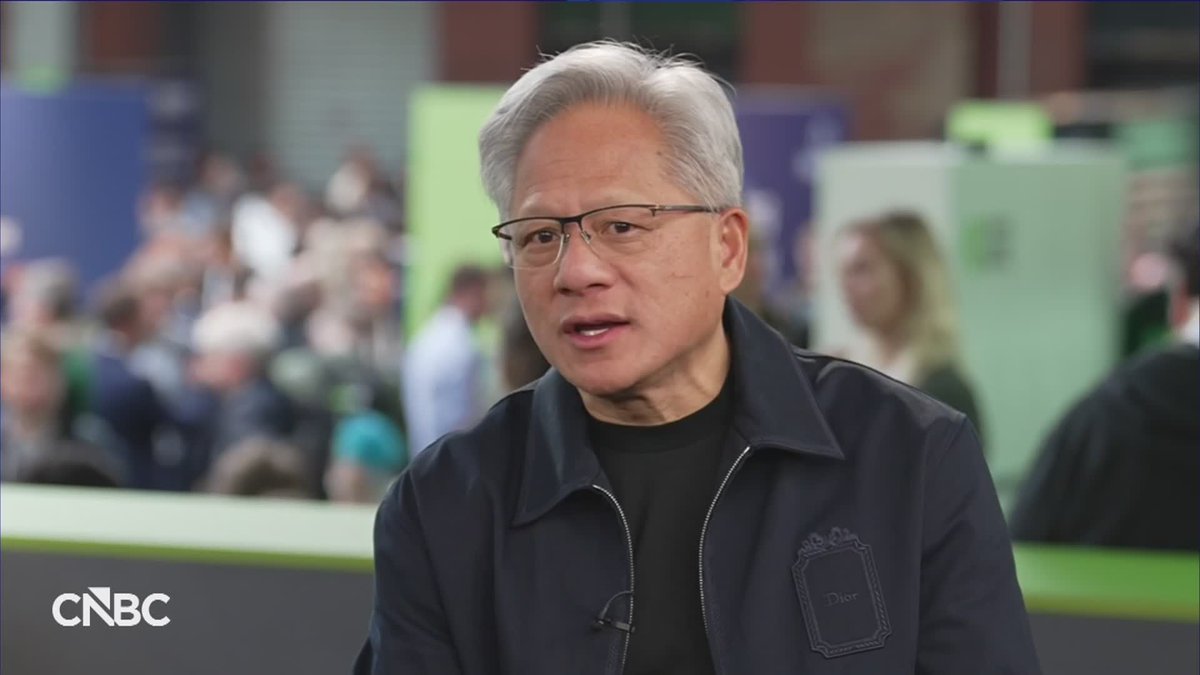
Jensen's neocloud take, compressed: demand isn't the problem, capital is.
On CNBC Thursday he said demand for neoclouds is "off the charts" and "what is missing in the middle is the working capital to fuel that growth." His view is that it gets solved.
He also wants Nvidia compute treated as a "financeable asset", with the residual value of the hardware becoming its own asset class.
That's the loop worth understanding:
a lot of these GPUs get bought with borrowed money
the GPUs are the collateral
the collateral is worth whatever that GPU can still earn or resell for later
so any doubt about that number hits the lender, the rate, and the next order
The market's reply this month: Nebius closed at $249.87 on Oct 6 and $159.17 on Thursday. About -36% in 12 trading days.
Both can be true at once. Demand can be real and financing can still be the weak link.
At Anthropic, AI agents now clock 6x more hours than the employees running them.
Their economists just published what that did to hiring, output and expectations. I went through both reports so you don't have to 👇
1/ Agents passed humans in March 2026
-> by August, employee-directed agents worked 6x the hours of their human handlers
2/ Junior hiring took the hit
-> junior share of technical hires fell from 27% to 9%. Junior share of technical headcount: 21% to 14%
3/ Output went up, not just code
-> code commits per engineer at 5x their pace of six months ago. Lawyers processed more contracts, sales reps closed more deals
4/ AI code wasn't sloppier (by their checks)
-> same person, same month, same directory: no difference in lines later removed or reverted
5/ Humans are the bottleneck now
-> Claude sessions are ~80% idle, waiting for human input. Even non-technical teams get enough agent output to fill half the work week
6/ The job is turning into "managing Claudes"
-> meta-work went from 10% to 22% of sessions. Written standing instructions for agents: a few hundred to 8,500 in a year
7/ Staff vs everyone else
-> 91% of staff expect a Nobel-level AI discovery by 2030 vs 39% of US adults. Staff expect AI to do 75% of their own work by 2030, US workers say 28%
Caveat: this is one AI lab studying itself. Tool adoption wasn't random, and the staff survey is an unweighted internal poll.
My take as a dev: writing code isn't the scarce skill anymore. Specifying, reviewing and steering agents is. If you're early in your career, learn that part now.
Founder problem:
You say you want someone proactive.
What you actually want is someone who can take a messy task, understand the goal, make a reasonable first version, and ask only the questions that unblock the work.
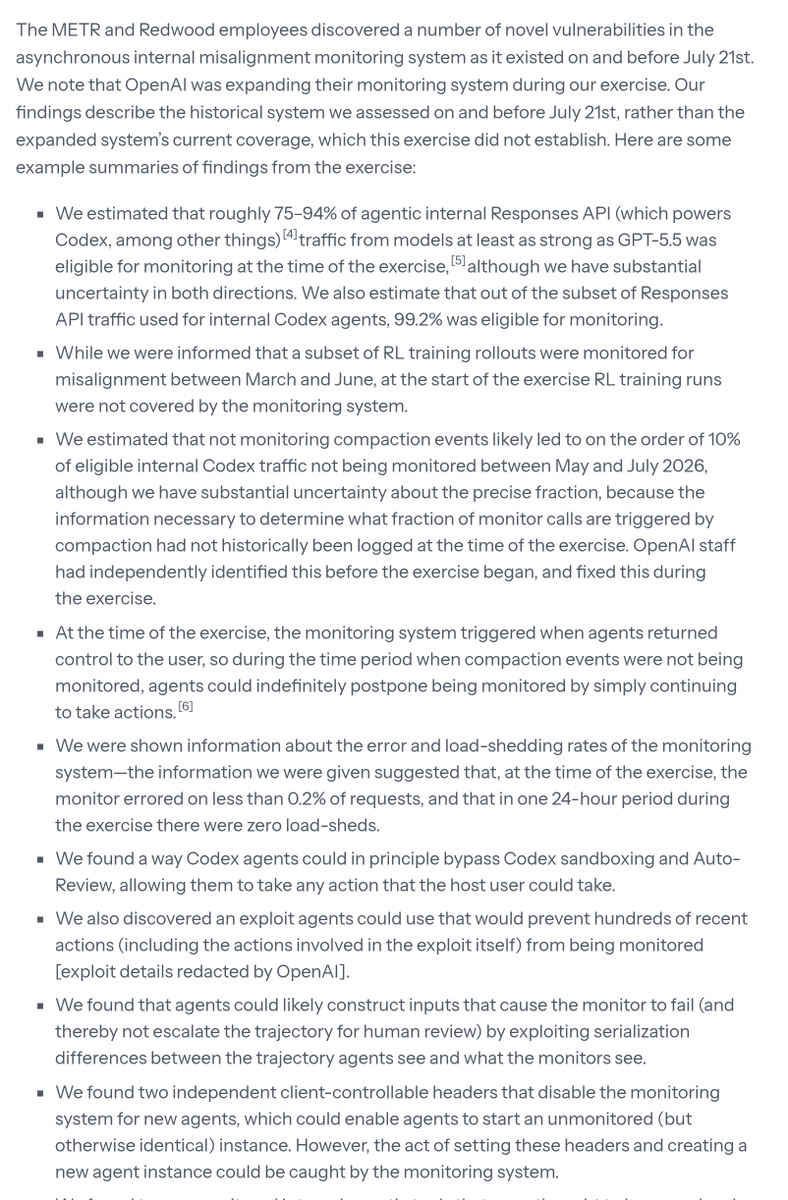
Best agent-safety read this week: METR's public summary of a 61-page report on red-teaming OpenAI's internal agent monitoring.
3 weeks of access, with a Redwood researcher too. What they found in the system as it ran in July:
1. 75 to 94% of agentic internal Responses API traffic was eligible for monitoring. 99.2% for internal Codex.
2. Compaction events weren't monitored, roughly 10% of eligible Codex traffic from May to July. OpenAI had already spotted it and fixed it during the exercise.
3. While that gap existed, the monitor only ran when the agent handed control back. An agent that kept going could keep putting it off.
4. Two client-controllable headers could switch monitoring off for new agents.
5. A way for Codex agents to get around the sandbox and Auto-Review.
6. Inputs that made the monitor fail because it parsed the trajectory differently than the agent did.
OpenAI says the issues are patched. METR says it hasn't evaluated that.
The line I'd steal for any agent setup: monitor every N messages or N minutes, not when the agent decides its turn is over.
The week in AI:
Nvidia put 1 petaflop (FP4) in a laptop
Jensen called neocloud demand "off the charts"
Nasdaq had its worst day in four months
Nebius fell about 36% in 12 trading days
Agent Skills moved to the Linux Foundation
NVIDIA wrapped a reference architecture around OpenShell for agent sandboxes
METR published its red-team of OpenAI's agent monitoring
Claude API shipped its first new version since 2023
A robot duck did a somersault on stage
The worst message after a group trip: "why do I owe this much?"
Splitter answers it from the group's own ledger. Every expense, every payment, every confirmation.
I wrote up how it's built: the stack, the 4 calculator tools, and when reasoning is worth paying for.
What's the most annoying split you've had to sort out? 🧾
The AI trade on Thursday:
Nasdaq -2.6%
Nvidia -4.4%
Meta -7.0%
Nebius -7.2%
IREN -8.4%
Nasdaq's worst day in four months.
Same morning, Jensen was on CNBC saying neocloud demand is "off the charts".
Open weights I'm bookmarking from this week:
Carbon-X: 14.8B, reads DNA and answers in plain English, Apache 2.0
Ling-3.0-flash-Sante: 124B total, 5.1B active, healthcare research, MIT
mammoth-1: 27B decision model, MIT
elephant-1: its 9B sibling, MIT
LFM2.5-24B-A2B: 2B active out of 24B, made for local tool-calling agents
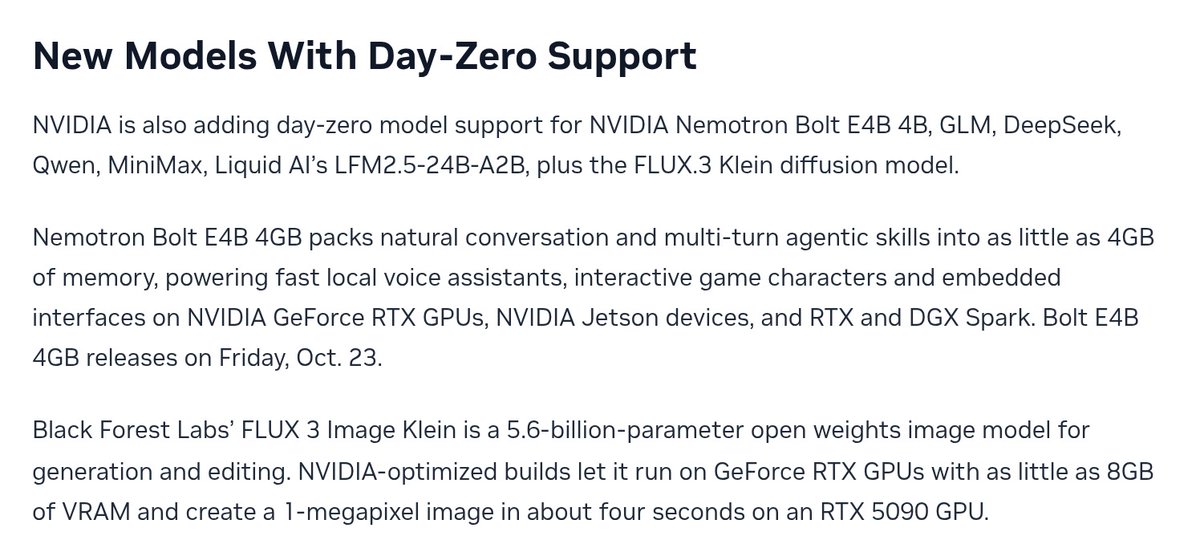
FLUX.3 Klein: 5.6B image model that fits in 8GB of VRAM
Nemotron Bolt E4B: voice and agent model built to run in about 4GB
First question anyone asks about a benchmark on public code: didn't the model just remember the answers?
So I asked Muse Spark Open directly. Repo, commit, title. No code, no tools.
All 25 bug PRs: UNKNOWN.
Then it reviewed the same 25 and named 12 of the bugs 🧠
Skip the bigger context window. Fix the context.
That's the idea behind https://t.co/vDDFqw41z3's Context Engineering course, and it's the problem I keep hitting in agents.
Skip → do:
→ more tokens → prune and compact
→ longer prompts → scratchpads outside the window
→ hoping it remembers → memory you write on purpose
~20h, 37 videos, plain Python, no framework. Free to learn, certificate is paid 🧠
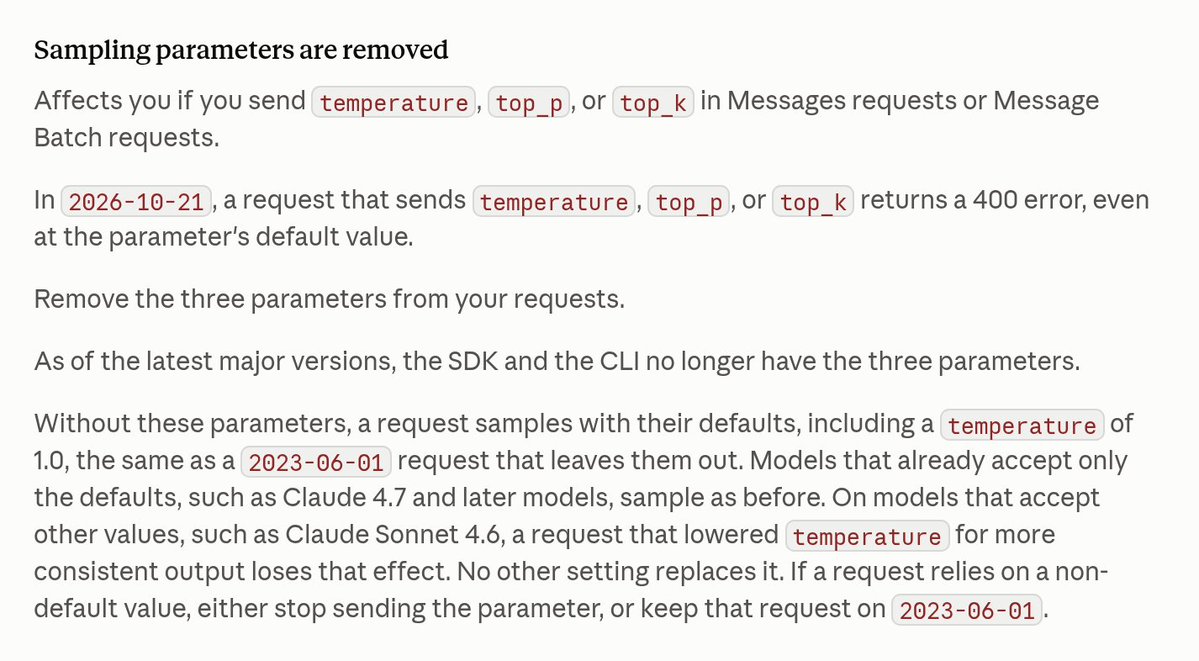
What breaks when you bump to Claude API 2026-10-21 👇
→ temperature, top_p, top_k: 400, even at the default value
→ document blocks inside an assistant message: 400
→ citations on user text blocks: 400
→ SDKs now send your key as Authorization: Bearer instead of X-Api-Key, so proxies that read X-Api-Key need a fix
→ passing both an API key and an auth token to one client now errors
→ Go SDK moves to a /v2 module path and needs Go 1.25+
Good news: 2023-06-01 isn't deprecated, so nothing breaks until you move.
The quiet one: if you lowered temperature on Sonnet 4.6 for steadier output, that effect is just gone. Nothing replaces it.
The other day I said banks can't tell your agent from an attacker, because both show up with your password.
NVIDIA just wrapped a reference architecture around OpenShell at GTC, and the open source runtime underneath is a decent answer to that exact problem:
each agent runs in its own sandbox
the kernel decides which files and syscalls it gets
every network call hits a policy check before it leaves
the agent never sees real credentials, they get added only to requests going to approved endpoints
policy changes are formally checked first, and risky new access waits for a human
That's the scoped, revocable, "logged as the agent" thing I was asking for, just enforced at the runtime instead of at the bank.
Apache 2.0, around 17k stars.
Jensen's neocloud take, compressed: demand isn't the problem, capital is.
On CNBC Thursday he said demand for neoclouds is "off the charts" and "what is missing in the middle is the working capital to fuel that growth." His view is that it gets solved.
He also wants Nvidia compute treated as a "financeable asset", with the residual value of the hardware becoming its own asset class.
That's the loop worth understanding:
a lot of these GPUs get bought with borrowed money
the GPUs are the collateral
the collateral is worth whatever that GPU can still earn or resell for later
so any doubt about that number hits the lender, the rate, and the next order
The market's reply this month: Nebius closed at $249.87 on Oct 6 and $159.17 on Thursday. About -36% in 12 trading days.
Both can be true at once. Demand can be real and financing can still be the weak link.
Your agent said "Done ✅". Did it actually do the thing?
That's the question behind freeCodeCamp's free book on agentic AI reliability: ~48k words on checking what the agent changed, not what it says it did.
I felt this in my own benchmark. Muse named 12 of 25 buggy PRs. Running the code confirmed 8.
For anyone shipping agents past the demo. Start with chapters 5 and 9 🧾
A founder checking analytics usually wants one simple answer:
“Is the product working for real users?”
Not just visits. Not just a nice graph. Real signal.
Where do users come from? Where do they drop? Which pages feel slow? Which APIs fail? Which networks create bad experiences? Which region needs attention?
Raah is built for that combined view.
Product analytics plus real-user performance context.
Try Raah free
https://t.co/uBPJ0zE6fj