August was a pivotal month for Apex AI.
From interviews and regulatory milestones in Korea to US expansion talks in Boston and Harvard Med, here’s everything you may have missed.
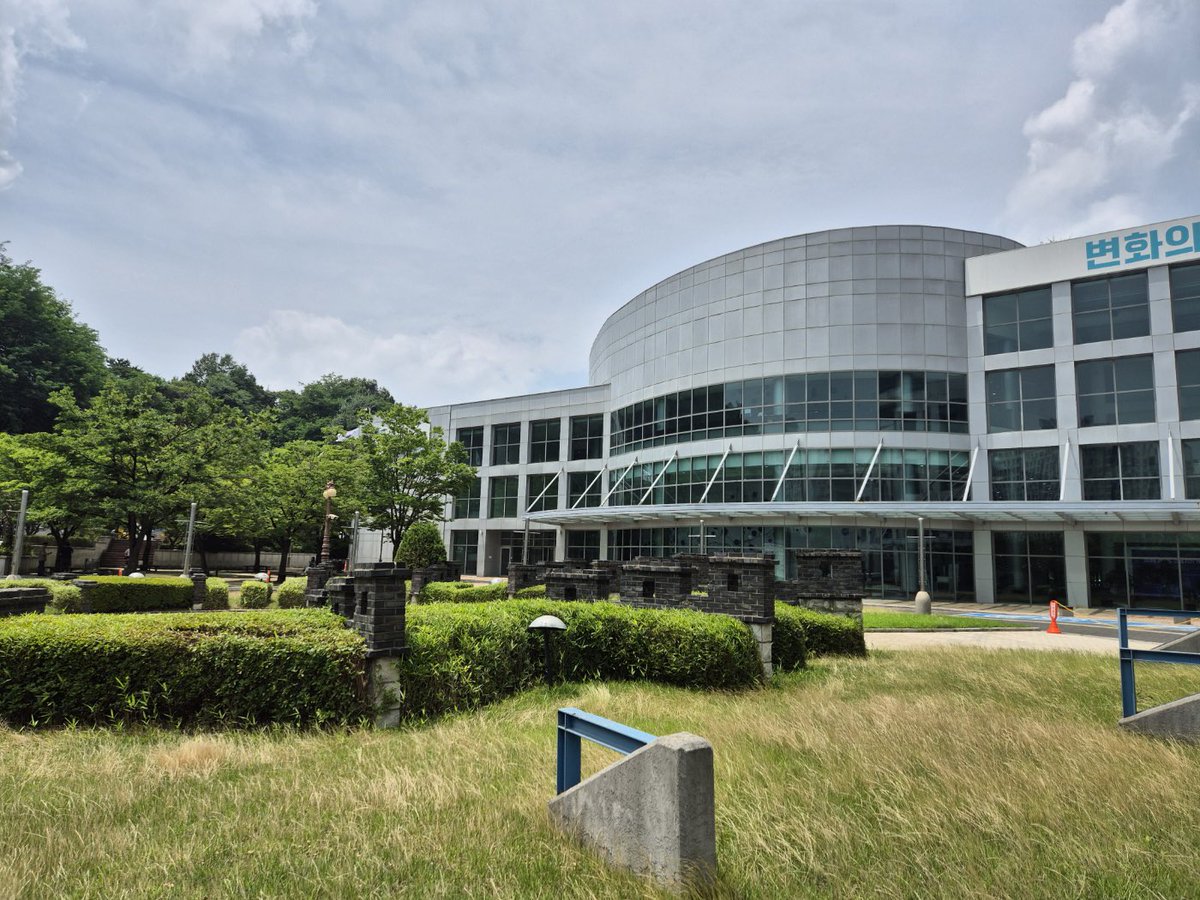
We met with Korea University Ansan Hospital to discuss upcoming clinical trials for AI-driven cancer detection. Turning years of research and over 1M images into real-world validation starts here.
$APEX Saves Lives.
ICM has an exit problem.
If a company gets acquired, what happens to the token?
Does it disappear? Does it still mean anything?
At Apex AI, we plan for that.
We believe the future of Internet Capital Markets is a road to ownership of real companies, built through compliant, on‑chain SPVs. When there’s a liquidity event, proceeds flow to on‑chain SPV holders.
And $APEX will play a major role in all of this.
Stay tuned. $APEX saves lives.
July was nonstop at Apex AI.
From groundbreaking steps in life-saving AI tech to major developments in Internet Capital Markets, here’s every key moment from July ↓
MAJOR UPDATE AT INHA UNIVERSITY HOSPITAL
Apex AI's acute‑kidney‑injury predictor is now integrated with Inha University Hospital's next‑gen data center.
Soon, live ICU vitals and lab results will stream straight into the Apex AI engine, which detects the earliest signs of kidney stress and alerts clinicians in time to act before irreversible damage sets in.
The same platform that underpins our GI‑cancer detection system is architected to tackle various other critical conditions. Wherever real‑time clinical data lives, Apex AI can turn it into life‑saving foresight.
Stay tuned for what’s coming next.
“Early-stage cancer can be missed during an endoscopy. With Apex AI’s real-time detection, we can perform a biopsy right away, which is amazing.”
— Dr. Won Jin Ko (Vice Director at Davos Hospital)
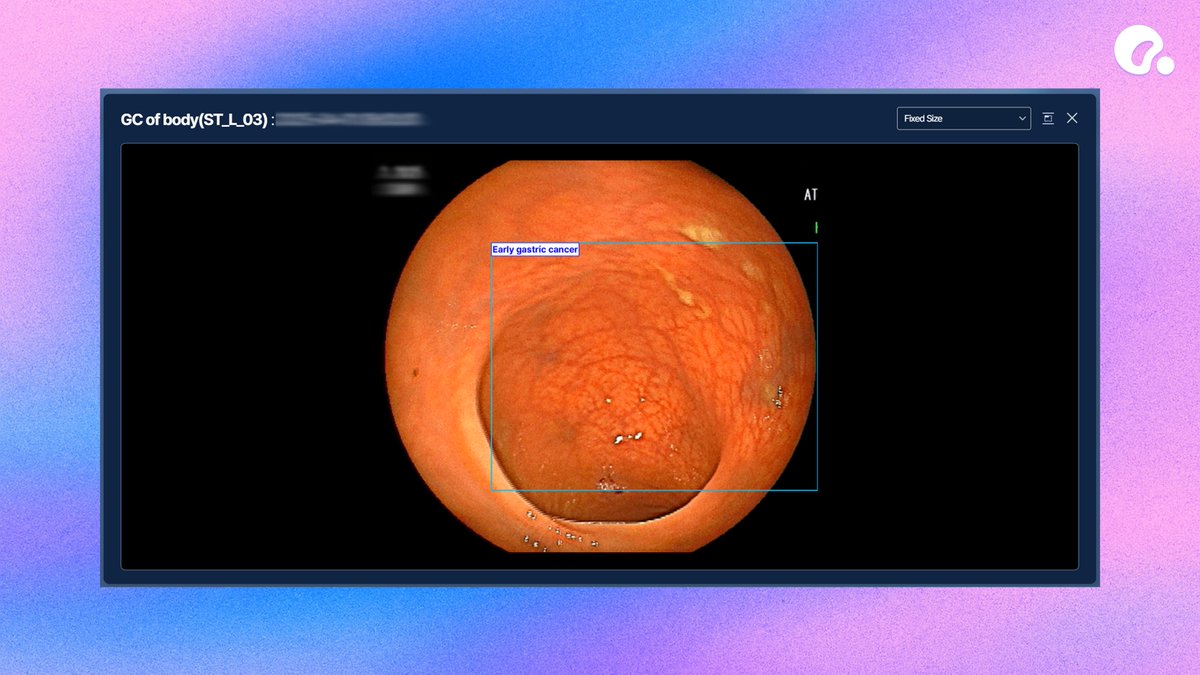
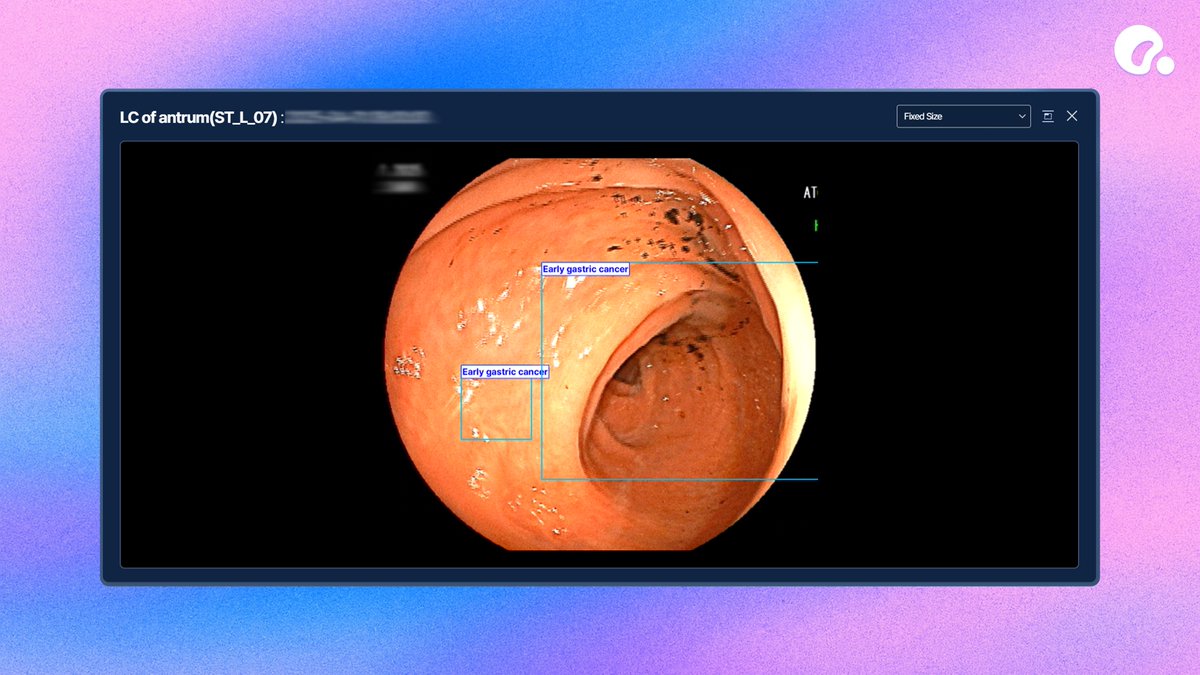
After 4 years of collaborative research, Apex AI’s early cancer detection platform is finalized and ready for KFDA/FDA approval.
Real-time detection, precise year-over-year tracking, and AI-powered diagnostics.
Early detection saves lives. $APEX makes it happen.
CEO Sung Kim represented Apex AI at the 2025 Medical Device Development Program briefing, driving our strategic approach to KFDA approval for our AI-powered early GI-cancer detection.
Next steps:
• Head-to-head evaluation of hospital accelerators at Ajou University Hospital (#7 in Korea) and current partner Inha University Hospital (#13) to optimize KFDA approval path.
• Leverage new Korean AI-medical-device regs & ISO alignment, speeding future U.S. FDA filing.
Clear regulatory runway ahead. AI powered early GI cancer detection is closer than ever.
Part 2 of our recap from our conversation last week with @Wisemenmentors, focusing on Apex AI’s token strategy, investment outlook, and insights on crypto adoption in healthcare.
1. TOKEN ISSUANCE STRATEGY
Apex AI chose token issuance not only for funding but as a powerful go-to-market strategy, instantly engaging thousands of potential supporters. Partnering with D-Day allows rapid community building and widespread visibility from day one, complementing traditional VC funding pathways.
2. TOKEN UTILITY PART 2
Apex AI will soon announce a specific token utility aligned closely with broader industry trends in crypto.
3. TOKEN ALLOCATION
5% allocated to community airdrops and advisors.
1% unlocked at TGE; an additional 1% specifically for D-Day.
14% reserved by Apex AI, structured with cliff and vesting periods; the same arrangement applies to D-Day (9%).
3% reserved for CEX listings.
6% reserved as treasury for marketing and strategic initiatives.
We have not yet sold any held tokens. As the ICM market matures, we plan to strategically utilize these assets to enhance liquidity and operational flexibility.
4. INVESTMENT HISTORY & PLANS
Received ~2.5 B KRW (~USD 2 M) in government R&D grants, complemented by early angel and accelerator backing.
South Korea’s newly elected Lee Jae‑myung administration has launched a massive KRW 100 trillion (~USD 74 B) public‑private AI fund to fast‑track national AI initiatives.
Apex AI will seek institutional funding toward the end of the year, aligning our raise with the rollout of this fund and other government AI investment cycles.
5. MARKET READINESS FOR CRYPTO
The healthcare sector is gradually warming up to crypto adoption. We believe growing familiarity and credible projects will accelerate acceptance, echoing historical technology adoption patterns.
You can listen to the full interview here: https://t.co/IrewaVmti1
Part 1 of our recap from our conversation last week with @Wisemenmentors, highlighting Apex AI’s regulatory roadmap, business model, and competitive landscape.
1. REGULATORY APPROVALS AND TIMELINES
KFDA Approval: Apex AI aims to complete the KFDA approval process by the end of 2025. Currently, we're engaged in extensive documentation focused on data protection, security, and ensuring consistently high diagnostic accuracy.
US FDA Submission: Apex AI is targeting FDA submission and approval in the U.S. for 2026. AI algorithms must be "frozen," meaning no further modifications are permitted during regulatory reviews, to maintain system consistency. We've already frozen our AI algorithms and are now prioritizing essential documentation tasks.
The approval process is challenging but achievable: roughly 60% involves detailed documentation, while the remaining 40% entails rigorous clinical validations mandated by the KFDA.
2. BUSINESS MODEL AND REVENUE STREAMS
Apex AI has two main revenue streams:
B2B (Business to Business):
Hospitals purchasing the Apex AI solution.
Estimated initial fee: around $20,000 plus $100 per patient.
B2C (Business to Consumer):
Individuals who don't have access to hospitals equipped with Apex AI can directly upload their endoscopic images to the Apex AI web portal and receive AI-generated diagnostic insights.
3. MEDICAL FOCUS AREAS
Currently, Apex AI is primarily focused on gastric (stomach) and colorectal cancers.
We plan to expand to other digestive system cancers, including esophageal and duodenal cancers.
4. HOSPITAL PARTNERSHIPS AND MARKET PENETRATION
Post-KFDA approval, several hospitals are expected to adopt Apex AI solutions:
Major Hospitals:
Catholic University of Korea Hospitals (8 branches)
Inha University Hospital
Hallym University Hospitals (7 branches)
Seoul National University Hospitals (3 branches)
Medium and Small Hospitals:
Through a partnership with iKOOB (a subsidiary of Green Cross), Apex AI will have access to 1,400+ hospitals, including private clinics.
Apex AI will prioritize market penetration in the following order: large hospitals, medium-sized hospitals, and private clinics.
5. PARTNERSHIP EXPANSION PLANS
While multiple companies have expressed interest in partnerships, Apex AI is prioritizing its current collaborations, specifically with iKOOB and already secured hospital partners.
6. COMPETITIVE ADVANTAGE
Apex AI distinguishes itself by specifically targeting early diagnosis and preventive tracking of digestive cancers, unlike competitors such as Lunit, which primarily focus on different cancer areas.
The market for AI-driven solutions for digestive cancers is still relatively niche, giving Apex AI a clear and unique market position.
7. COMPETITIVE LANDSCAPE AND RISK MANAGEMENT
Apex AI is confident in maintaining its competitive edge, given our specialization in digestive cancers for over five years. New entrants to this niche market would need several years to catch up due to rigorous clinical testing and validation requirements.
Even if large companies enter the market, hospitals generally avoid frequent changes to medical solutions due to high switching costs, further securing Apex AI’s market position.
Stay tuned for Part 2 of our recap.
You can listen to the full interview here: https://t.co/IrewaVmti1
Tokenized stocks is only the beginning of Internet Capital Markets. $APEX will be much more than a simple “believe and invest in the idea” token. Stay tuned.
Recently, Apex AI detected early-stage gastric cancer from a set of images submitted through our diagnostic portal.
We immediately informed the individual and strongly recommended they seek prompt medical attention.
This is exactly why the $APEX token matters: we can't realistically partner with every hospital worldwide, but we still want to help as many people as possible catch GI cancer early—even if their hospital doesn't yet have Apex AI integrated. Catching GI cancer sooner means undergoing a minor procedure, rather than surgery removing more than half your stomach.
Right now, you can submit your GI images free of charge. However, soon this feature will be exclusively accessible with $APEX tokens.
https://t.co/HQJNc59OCO
"The Apex AI platform for early AI-driven diagnosis of gastric and colorectal cancers achieves an accuracy rate of up to 95%, making it highly beneficial in clinical practice for diagnosing early-stage gastrointestinal cancers as well as precancerous conditions and other cancer risk-related diseases.
Furthermore, the platform's AI automatically identifies lesion locations, facilitating convenient and precise chronological comparisons. This feature significantly streamlines tracking disease progression, enhancing its practical utility in medical settings."
- Dr. Boram Cha, M.D.
Inha University Hospital
https://t.co/nERRcA1N97
Apex AI was featured on KDB Next Round, hosted by Korea Development Bank, Korea’s leading state-owned bank known for spotlighting innovative startups. Great recognition for our AI-driven healthcare solutions!
Details 👇
https://t.co/5WzISI4iRL
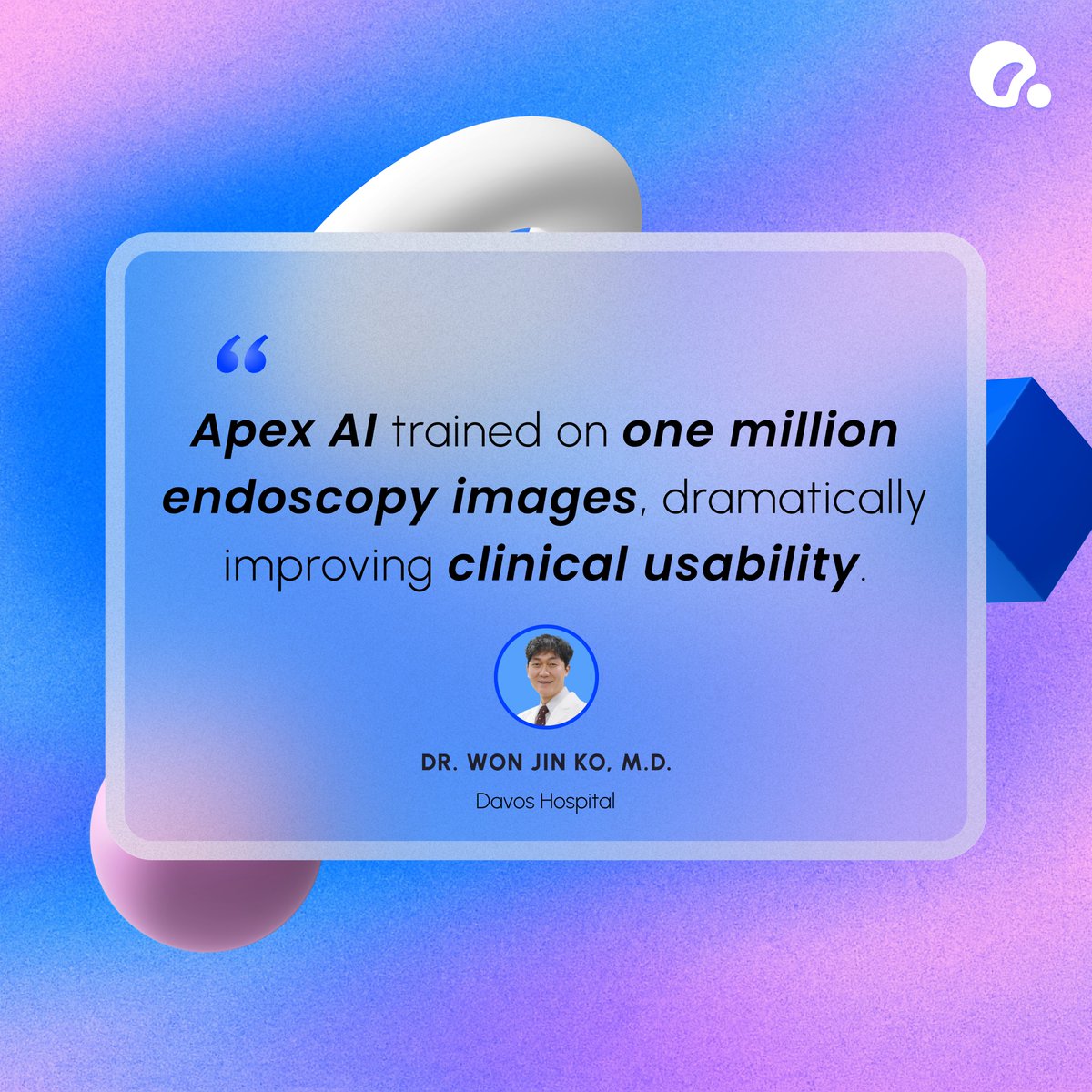
"Apex AI utilized a dataset of one million gastric and colorectal endoscopy images for developing its artificial intelligence, resulting in minimal data bias. Additionally, it significantly enhances usability for medical professionals, making it highly valuable for real-world clinical practice."
- Dr. Won Jin Ko, M.D. (고원진)
Davos Hospital
Apex AI is gearing up to bring our groundbreaking cancer detection tech to the US, starting with clinical validation for FDA approval.
Catch CEO Sung Kim LIVE on Wednesday (5/28) as he demos our tech in action and answers your burning questions.
Stay tuned—time announcement coming soon.
Early detection saves lives—and Apex AI is ready to lead the way.
"Cracked dev" doesn't even begin to describe Sung Kim. Before Apex AI, he architected some of the world’s biggest supercomputers. Now he's using that unmatched technical depth to change medical AI forever.
Check it out 👇