Self-proclaimed 10x Product Manager at @apoliticalco within the AI Products Team.
DJing experimental house by night. Ex @pivotal_org fellow & PPE @UniofOxford
@Manderljung What phone network are you on?
Experience with friends is that the UK cellular market is very segmented on price-quality.
Friends on cheaper networks pay a lot less than others (maybe half) but also seemingly struggle from these problems a lot more.
Learning to use ChatGPT & Codex’s UI is like being in perpetual existential doubt if your knowledge gained from using Claude Code still stands.
And being impressed bumping into new features.
At @AISecurityInst, we tested the cybersecurity safeguards on GPT-5.6 Sol. In all rounds of testing, we found universal jailbreaks that allowed for long-form agentic task completion in domains like vulnerability discovery and exploit development. 🧵
@notanastronomer This creates a poor outcome whereby only those with substantial savings/earnings have a low friction way to learn about investing and context on risk management etc.
Basically, discovery is super hard, unless you have the money that someone will do it for you.
5.
Those are the basics. But understanding the custom heuristics for how these high-level guidelines apply is the key to becoming a master Dianping user. There are a whole set of things to incorporate that are related to geography: For instance:
- Foreign food tax: Cuisines outside of their home region and not well appreciated by locals will pay a rating tax. This applies to both Chinese cuisine and non-Chinese cuisine. A place that Shanghainese would consider to be excellent Shanghai cuisine might be only rated a 4.1 in Chengdu, where locals consider it to be too sweet. Or a place that all the expats know to be the best Greek food in Shanghai only has a 4.1 because the locals like it and the foreign patrons don't use Dianping. This phenomenon can drive a gap of at least 0.5 pts between deserved and observed rating.
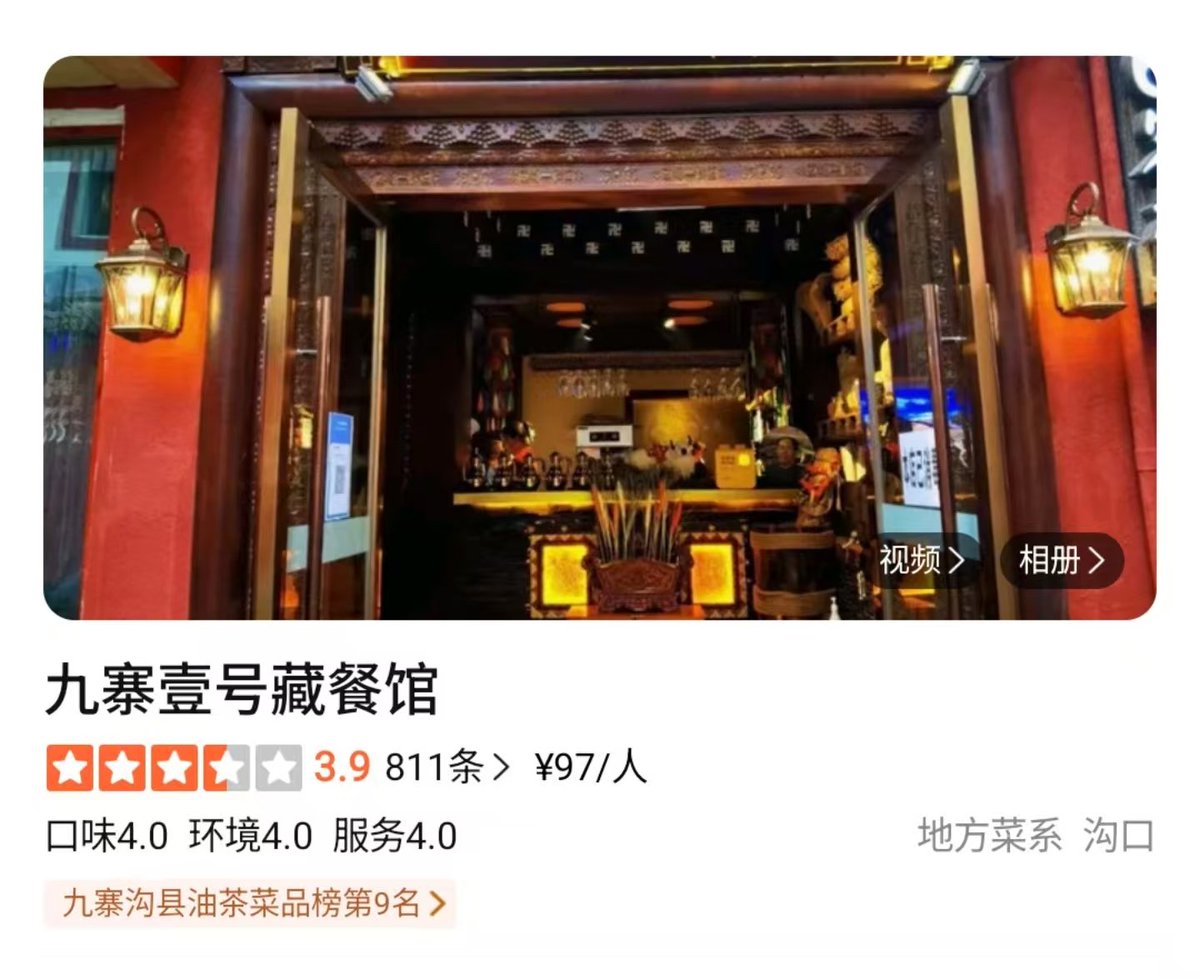
- Tourist rating dominance tax: Conversely restaurants serving local food to locals exactly the way they like it, but that are frequently patronized by outsiders that don't appreciate it, will also pay a rating tax. This is especially relevant in tourist destinations, where the most authentic local food may be one that tourists find too salty, too spicy, too sweet, too earthy, too something, but they're unfortunately also the ones leaving reviews. This can also drive a 0.5 pts swing.
- Local standards tax: Restaurants serving local food to locals that have strong expectations for their own food can ALSO pay a rating tax. In some cities, the local audience is extraordinarily demanding, and can differentiate standards of quality for their own cuisine that a non-local can't even conceive of. A dim sum place rated 4.3 in Guangzhou maybe in contention for one the best dim sum restaurants in Beijing but struggle in its home market. So if you see that 4.3 dim sum place in Guangzhou, don't be afraid.
- Exoticism inflation: Finally, watch out for review inflation for exotic restaurants in more provincial localities. A highly-rated Cantonese BBQ place in a big city means something. But a highly-rated Cantonese BBQ place in a 5th tier city where it's the only one in town is probably seeing some exoticism inflation. Proceed accordingly.
- The "we really don't use that here" tax: A lot of smaller towns in China just don't use Dianping OR Meituan, and their best restaurants only have two stale reviews over the last 10 years. In these cases, ignore the apps, and just ask locals where to go, and what to order.
- Wanghong distortion: Any restaurant that gets super trendy online ends up with very unreliable rankings. It might be great...it might be mediocre, but you won't be able to tell from its ratings. Volume and trendiness and novelty distorts rating fidelity severely.
Left pic: I think Yaya's is good Italian fusion food that is ranked poorly on Dianping.
Right pic: This Tibetan restaurant in Jiuzhaigou was the best meal we had there, recommended by locals, but rated poorly compared to the tourist places.