@progressive information provided by their own employee.
This experience completely eroded my trust in Progressive. I canceled all of my policies and cannot recommend the company based on how my claim and complaint were handled
@progressive initially told me my claim would be covered. I relied on that information, only to later receive a letter denying coverage. My issue isn’t simply that the claim was denied—I understand coverage decisions are based on the policy. My issue is the inaccurate and inconsistent
Setting the tone for the week: Access to quality respiratory care should never be a luxury. We’re working with providers to streamline CPAP & NIV delivery. Every breath counts. 🌬️ #HealthEquity#RespiratoryHealth#CEO
Why choose a CGM?  No more fingerpricks.  Real-time alerts.  Track trends over time. Simplify your health journey with Pride Medical Equipment.  #DiabetesTech#CGM#Wellness
Setting the tone for the week: Access to quality respiratory care should never be a luxury. We’re working with providers to streamline CPAP & NIV delivery. Every breath counts. 🌬️ #HealthEquity#RespiratoryHealth#CEO
The greatest opportunity for the Kurds in Syria right now lies in the post-Assad transition under the new government led by President Ahmed al-Sharaa. This moment offers a pathway to full integration into a unified Syrian state with citizenship rights, cultural protections, and political participation— long denied under Bashar al-Assad’s regime, where many Kurds faced statelessness, language restrictions, and systemic discrimination.
Historically, the US military presence in northeastern Syria was justified primarily as a counter-ISIS partnership. The Syrian Democratic Forces (SDF), led by Kurds, proved the most effective ground partner in defeating ISIS’s territorial caliphate by 2019, detaining thousands of ISIS fighters and family members in prisons and camps like al-Hol and al-Shaddadi. At that time, there was no functioning central Syrian state to partner with—the Assad regime was weakened, contested, and not a viable partner against ISIS due to its alliances with Iran and Russia.
Today, the situation has fundamentally changed. Syria now has an acknowledged central government that has joined the Global Coalition to Defeat ISIS (as its 90th member in late 2025), signaling a westward pivot and cooperation with the US on counterterrorism. This shifts the rationale for the US-SDF partnership: the original purpose of the SDF as the primary anti-ISIS force on the ground has largely expired, as Damascus is now both willing and positioned to take over security responsibilities, including control of ISIS detention facilities and camps.
Recent developments show the US actively facilitating this transition, rather than prolonging a separate SDF role:
• We have engaged extensively with the Syrian Government and SDF leadership to secure an integration agreement, signed on January 18, and to set a clear pathway for timely and peaceful implementation.
• The deal integrates SDF fighters into the national military (as individuals, which remains among the most contentious issues), hand over key infrastructure (oil fields, dams, border crossings), and cede control of ISIS prisons and camps to Damascus.
• The US has no interest in long-term military presence; it prioritizes defeating ISIS remnants, supporting reconciliation, and advancing national unity without endorsing separatism or federalism.
This creates a unique window for the Kurds: integration into the new Syrian state offers full citizenship rights (including for those previously stateless), recognition as an integral part of Syria, constitutional protections for Kurdish language and culture (e.g., teaching in Kurdish, celebrating Nawruz as a national holiday), and participation in governance—far beyond the semi-autonomy the SDF held amid civil war chaos.
While risks remain (e.g., fragile ceasefires, occasional clashes, concerns over hardliners, or the desire of some actors to relitigate past grievances), the United States is pushing for safeguards on Kurdish rights and counter-ISIS cooperation. The alternative—prolonged separation—could invite instability or ISIS resurgence. This integration, backed by US diplomacy, represents the strongest chance yet for Kurds to secure enduring rights and security within a recognized Syrian nation-state.
In Syria, the United States is focused on: 1) ensuring the security of prison facilities holding ISIS prisoners, currently guarded by the SDF; and 2) facilitating talks between the SDF and the Syrian Government to allow for the peaceful integration of the SDF and the political inclusion of Syria’s Kurdish population into a historic full Syrian citizenship.
AI in healthcare should make things easier less paperwork, faster processing, and fewer delays for patients.
At Pride Medical Equipment, we’re using technology to improve the experience while keeping service personal.
Where would you want AI to help most?
Resupply isn’t about being pushy. It’s about being reliable and organized.
hashtag#DME hashtag#CPAP hashtag#RespiratoryCare hashtag#Workflow hashtag#CustomerExperience
Elon Musk's jaw-dropping prediction (Jan 2026):
“Don’t go into medical school.”
Elon Musk: “Yes. Pointless.”
In 3 years (2029), Optimus robots will be better surgeons than any human on Earth — at scale.
By 4–5 years? Not even close. The best medicine in the world will be free — better than what the President gets today.
1:19 clip — the moment Elon says goodbye to traditional medicine forever 👇
3–5 years until AI surgeons dominate?
Exciting breakthrough… or terrifying replacement?
Your honest take.
In most companies, profit isn’t lost because people make “bad decisions.”
It’s lost because:
- Decisions sit in limbo (no owner, no deadline)
- Teams re-discuss the same thing 5 times
- Small blockers freeze big revenue
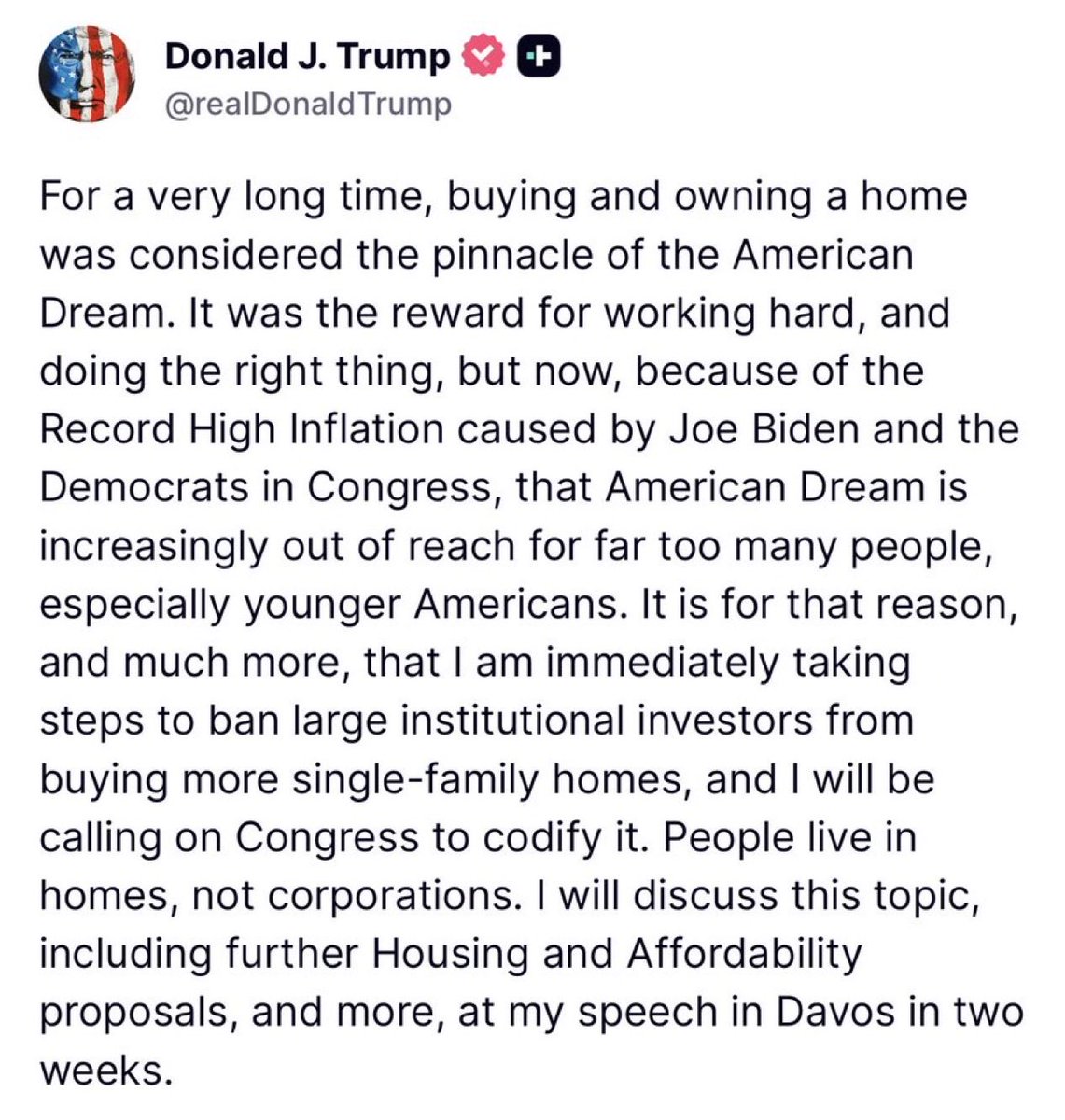
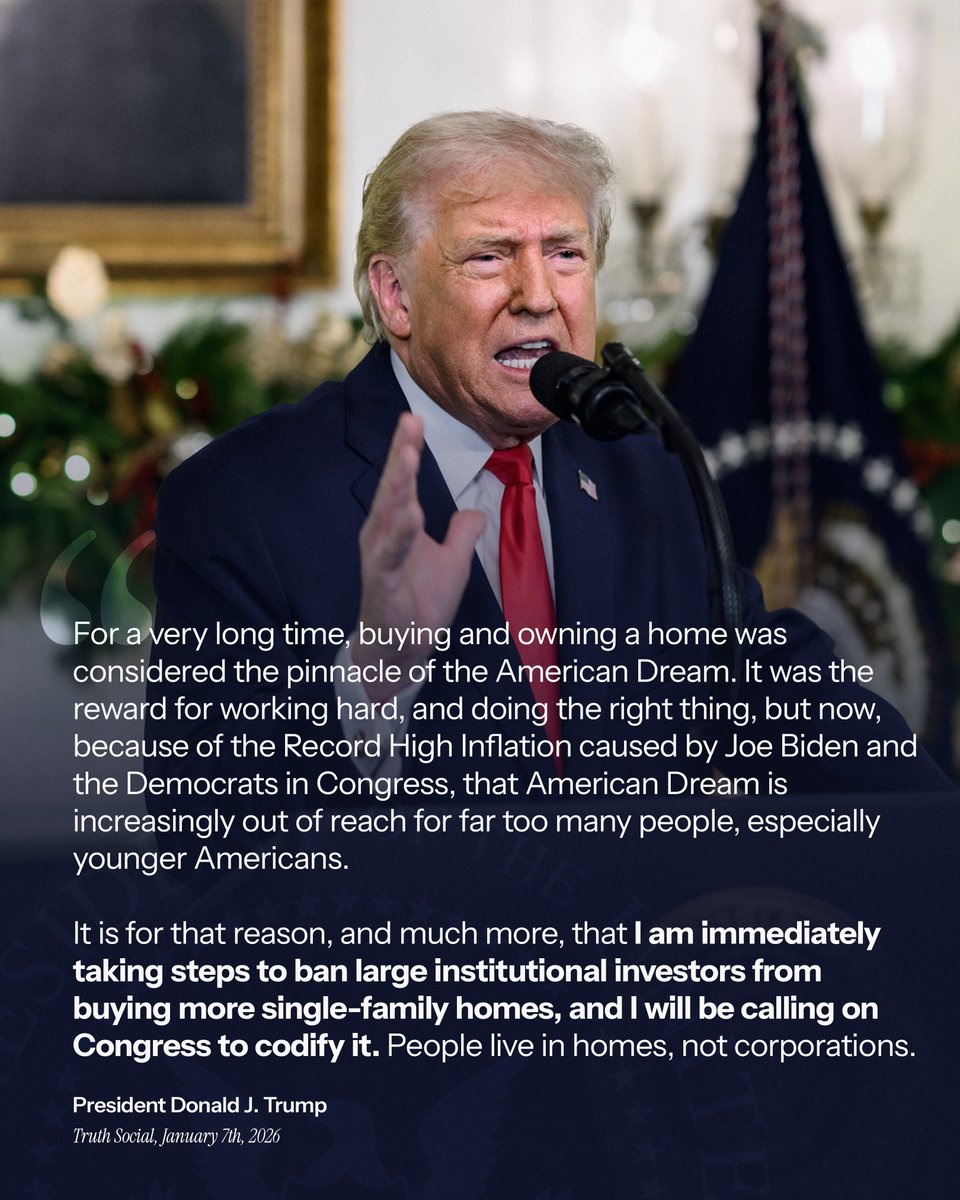
BREAKING: President Trump announces steps to ban large institutional investors from buying single-family homes.
"People live in homes, not corporations." - President Donald J. Trump 🇺🇸