Blessed Feast of St Shenouda the Archmandirite.
Born in Akhmim, Sohag St Shenoute went on to be a major monastic leader. He was also a Coptic nationalist, rejecting Greek influence and writing exclusively in Coptic. He even needed a translator to attend the council of Ephesus
Doğrusu ve doğrusu size derim: Allahın Oğlunun sesini ölülerin işitecekleri saat geliyor, ve şimdidir; ve işitenler yaşıyacaklardır. Çünkü Babanın kendisinde hayat olduğu gibi, böylece kendisinde hayat olmağı Oğula da verdi. Ve hükmetmek salâhiyetini ona verdi, çünkü insanoğludur.
Yuhanna 5:25-27
We celebrate Abba Shenouda (Shenoute) the Archimandrite, the defender of the Orthodox faith who stood beside our fathers, Pope Cyril and Pope Dioscorus; the dean of Coptic literature; and a pillar of Christian monasticism, whom I love so, so much. ❤️
From the Homilies of Abba Shenouda: The Etiquette of True Worship
"Let us go into His tabernacles; let us worship at His footstool." (Psalm 132:7)
No one should raise his head while prostrating, for that is foolishness and a lack of reverence. And when we rise from our prostration, let us sign ourselves with the holy sign of the Cross and pray, saying:
"O Lord, nail Your fear in our hearts, that we may strive for eternal life in Your fear." And let each one cry out in his heart and sigh, saying: "Cleanse me, O Lord, from my hidden sins. Have mercy on Your servant among strangers, lest they prevail over me, and may I be made whole by Your grace. Create in me a clean heart, O God, and renew a right spirit within me."
And while sitting during the homily, let us make the sign of the Cross upon our foreheads, sit, and listen with all our hearts, our ears, and our thoughts to the holy words that are spoken, just as it is written: "My son, give attention to my words; incline your ear to my sayings." (Proverbs 4:20)
And let no one turn to look at his brother's face without necessity, for that drives the fear of God out of the heart. And as we place our hearts in our hands in the presence of our Lord, who is in our midst, let us lift our hearts to Him, fulfilling the words of Scripture:
"Give unto the Lord the glory due His name; worship the Lord in the beauty of holiness." (Psalm 29:2)
And also:
"When I call, answer me, O God of my righteousness. You have relieved me in my distress; have mercy on me, and hear my prayer." (Psalm 4:1)
Let no one say within himself, "I am not worthy to cry out to the Lord because I am a sinner." For the son who squandered his father's wealth in a far country, when he returned to him with all his heart and said in contrition, "Father, I have sinned and am no longer worthy to be called your son..." his father did not allow him to finish his words, but ran to him, fell on his neck, and kissed him with joy and tenderness.
Likewise, the tax collector, who beat his breast and did not dare to lift up his eyes to heaven, went down to his house justified.
And David, mighty in spiritual things, who fell into adultery and committed murder to cover his crime,the Lord accepted his repentance and his tears and lifted away his sin.
And the Apostle Peter, who denied his Lord three times,the Lord made him aware of his fall by the glance of His eyes, accepted his tears and repentance, and restored him to his former rank.
For this reason, let us have confidence in the great mercies of God, and let us pray to Him with all our hearts at all times.
"And we have such trust through Christ toward God." (2 Corinthians 3:4)
The icon :
At least three icons in the area of Old Cairo depict Saint Anba Shenoute on a large scale, with his disciple Anba Wissa shown smaller in front of him. Between them stands a ladder, and Anba Wissa is holding two round objects in his hands.
The icon is based on a vision of Anba Shenoute, traditionally attributed to Saint Cyril the Great. According to this account, while Anba Shenoute and Anba Wissa were praying for the rising of the Nile, Anba Shenoute saw a vision of a ladder reaching up to heaven. At its summit stood an angel calling him to ascend.
Anba Shenoute ascended and instructed his disciple Wissa to wait until he returned. The vision concerned what resembled the consecration of the Church of the Firstborn in heaven, which took place on 14 Abib. The prayers were led by Saint Peter the Apostle, who distributed the Body of Christ, while Saint Stephen the Archdeacon administered the Blood. Could this vision be related to the Coptic practice of permitting the archdeacon to distribute the Precious Blood? Perhaps.
@EugeniosTrb Haklısınız hocam fayum portreleri üzerine çok sayıda akademik çalışma var ama o makalelerin ve arkeolojik konsensüsün ortak vurgusu bu portrelerin 'Yunanlılarla hiç alakası olmayan saf bir Mısırlı fenotipi' olduğu yönünde değil onu demek istedim sadece
Bugün, mübarek Ebîb ayının beşinci günüdür. Ey babalarım ve kardeşlerim, Allah bu ayı bizlere hayırla tamamlatsın esenlik ve huzur içinde tekrar lütfetsin. Rab'bin
merhamet ve şefkatiyle günahlarımız ve suçlarımız bağışlansın.
Bu gün kilise mübarek elçilerin bayramını kutlar. Çünkü M.S. 67 yılının bu gününde iki büyük aziz, Aziz Elçi Petrus ve Aziz Elçi Pavlus şehit edilmişlerdir.
Onların dualarının bereketi bizimle olsun
@bandleizcisi Merhaba! Gününüz nasıl geçiyor? Acaba hayatın anlamını ve Utah'taki muazzam vergi avantajlarını... pardon, kutsal kitabımızı konuşmak için bir 45 saatiniz var mı?
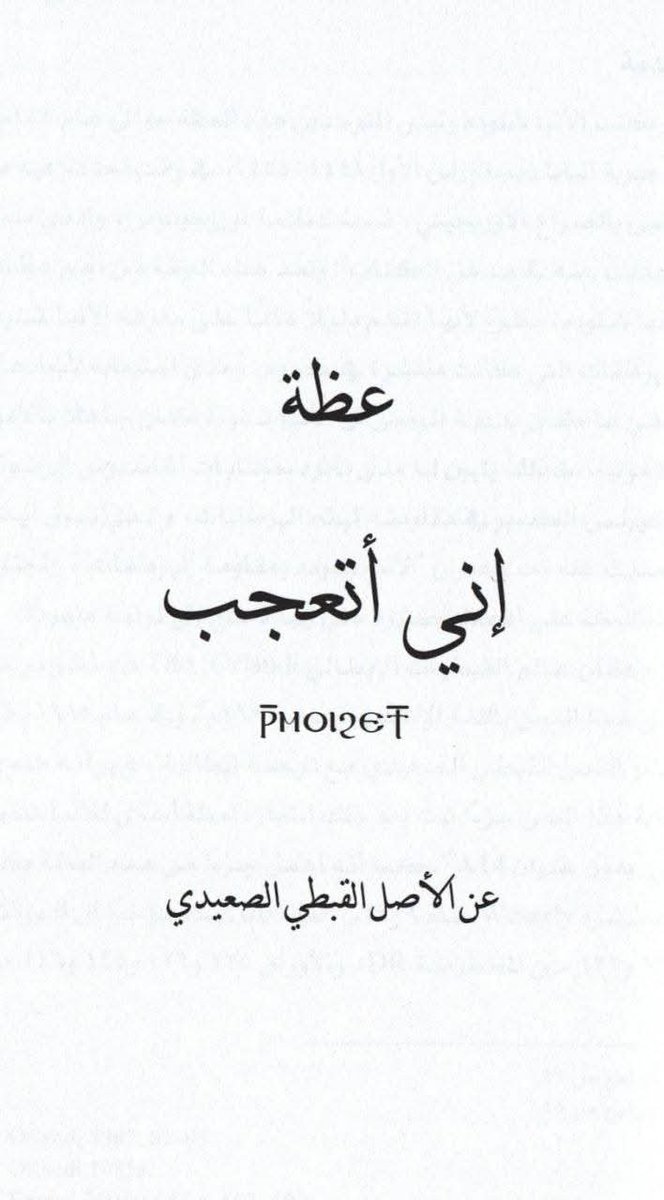
From the homily "I Marvel"
From the original Sahidic Coptic
By Saint Shenoute the Archimandrite
Saint Shenoute the Archimandrite wrote this homily around A.D. 445, during the patriarchate of Pope Dioscorus I (444–454).
In paragraphs 25 and 26, there is a very important teaching concerning the mystery of the Eucharist, the understanding of the change of the offerings, and the orthodox teaching of the Church against those who say that it is merely a symbol.
25. Likewise, there are others who say that the bread and the cup are not the Body and Blood of Christ, but are merely a symbol. I was shattered as I said these words. Woe is me, for I trembled because of this unbelief. If the Lord Himself says, "Whoever eats My Flesh and drinks My Blood has eternal life," and also, "This is My Body; this is My Blood," yet these say, "This is neither His Body nor His Blood," how great will their woe be, and how great the woe of those who accept their words.
Who is it that despises the bread and the cup, and is not despised even more by Jesus?
For by doing so, he has also despised the Holy Spirit, whom God sends upon them so that they may become the Body and Blood of Christ. Who will say that this is not so and yet not be showing contempt for the holy place, the altar before which people fall down and worship them?
For I have also come to know this: they pay no attention to it, as though they were eating ordinary bread and drinking ordinary wine.
26. Truly, whoever says that this is not His Body and His Blood—especially one from among us, and not merely the pagans—is worse than dogs and swine.
Shall we say that what we receive is bread?
Is it not a mystery according to the Scriptures?
Whoever does not believe what we say is not only worse than the animals, but worse than the unclean demons. For if you do not accept the Apostle when he speaks, and you reject the Gospel in this matter, then who will receive you?
And who will not reject you?
Especially if he is a priest or one of the clergy according to his rank in the priesthood, and does not believe that God is able to do all things, even things greater than this, let him shut his mouth while he prays and entreats the Most High, saying: "This is My Body which is given for you for the forgiveness of your sins," and likewise, "This is My Blood which is shed for many for the forgiveness of sins."
Can bread and wine cleanse a person from sins, heal him from diseases, or become for him a living blessing?
Why, then, do you not shut your mouth, as I said before, while you say to the Lord: "Bread of blessing, Bread of purity, of incorruption, and of eternal life," and also: "Cup of immortality, Cup of the New Covenant," and again: "This is the Body and Blood of Your Only-Begotten Son, Jesus Christ our Lord."
My note:
In these words, Saint Shenoute is not insulting people. Rather, he is explaining an important evangelical, apostolic, and patristic principle:
«"Do not give what is holy to dogs; nor cast your pearls before swine, lest they trample them under their feet, and turn and tear you to pieces." (Matthew 7:6)»
John Chrysostom wrote:
«"We celebrate the Mysteries behind closed doors, keeping the unbaptized outside,not because our Mysteries lack persuasive power, but because many are not yet fully prepared for them."
(Homilies on Matthew 23:3)»
And in one of the earliest Christian documents outside the New Testament, the Didache, we read:
«4. As this broken bread was once scattered upon the mountains and was gathered together to become one, so may Your Church be gathered together from the ends of the earth into Your Kingdom. For Yours is the glory and the power through Jesus Christ forever.»
«5. Let no one eat or drink of your Eucharist except those who have been baptized in the name of the Lord. For concerning this also the Lord said: "Do not give what is holy to the dogs.
Kutsal Kabir Kilisesi'nin yıkılışı 1009 yılında evet ama II. Urbanus'un Haçlı Seferleri'ni başlatan meşhur Clermont Konsili çağrısı ise 1095'te yapılmış. Yani arada 86 yıllık (neredeyse üç nesillik) bir zaman dilimi var
Yıkımdan kısa bir süre sonra El Hâkim politikasını değiştirmiş, Hristiyanlara haklarını iade etmiş El-Hâkim'in gizemli bir şekilde ortadan kaybolmasının ardından gelen halefleri Bizans İmparatorluğu ile anlaşmalar imzalamıştır. Bizans fonları ve yerel çabalarla Kutsal Kabir Kilisesi 1048 yılında (Haçlılar Kudüs'e gelmeden yarım asır önce) yeniden inşa edilmiş ve ibadete açılmıştır.