The voice behind the voice is finally getting his flowers. Ataman Nikita — Best Voice nominee, Gramoframe Music Video Awards. Read his story on https://t.co/ubxUsAZsBV
Having conducted medical screening for recruits into the Ghana Armed Forces, I’ve seen firsthand the health conditions that lead to disqualification.
Yet every time those results reach the public, the headline is the same: “X number tested positive for HIV.”
But what about the recruits who tested positive for hepatitis B or C? What about the other conditions flagged in screening that were just as disqualifying?
Why is HIV always the headline?
Here’s what makes this striking. In Ghana, hepatitis B is hyperendemic — an estimated 9.1% of the population carries it, compared with roughly 1.5% living with HIV. That’s about six times more people. Yet hepatitis rarely makes the news. It’s silent, under diagnosed and every bit as serious.
By singling out HIV, we keep feeding its stigma while overlooking infectious diseases that deserve just as much attention.
If we’re going to use recruitment data to spark a health conversation, let’s have the whole conversation not just the part that makes headlines.
Public health communication should educate, not selectively stigmatize.
Madame Celeste Amarilla,
Vous êtes une femme méprisable et indigne de sa fonction.
Vous ne représentez pas le Paraguay, ce pays qui a transpiré la passion et l’honneur tout au long de la compétition. Par votre inconscience et votre racisme décomplex��, le monde entier a déjà oublié le parcours et l’effort historique que vos joueurs ont réalisés durant cette coupe du monde pour laisser place à une dame incompétente donnant la pire image possible de son pays.
Je ne laisserai jamais aux gens comme elle, la liberté de laisser propager leur haine et leur racisme à travers le monde.
Fun fact: While all 3 cities we held a premiere in showed us a lot of love, we got by far the most love in Dar es Salaam.
This was my most technically challenging professional project to date, and while we weren't doing it for the reception (we have an ideological purpose that supercedes such concerns), the love we've received from our audiences across the continent hasn't hurt at all.
We promise to keep on doing our best 🙏🏾
Oh bro you have no idea. My brother @AtamanNikita is also an artist, but something different.
I am the poet + producer (executive and otherwise)
Ataman might be the silkiest voice Ghana has ever produced
And this song of his might be the best way to Summarize Life😢
You heard that Tanzania had a flawed election last year, followed by post-election violence from disgruntled young Tanzanians protesting against Africa's first female dictator. You heard that thousands of people were massacred and dumped in mass graves. You heard that this was "Democracy" versus "Dictatorship."
But what if you found out that everything you have heard about what happened from October 29 to the first week of November in Tanzania was completely fabricated? What if everything you "know" about Tanzania's 2025 election is the result of a brutal information campaign waged by an adversary more powerful than any African government?
The Spearhead has spent 7 months working onsite across Tanzania, Ghana, Nigeria and Kenya to produce our first feature-length documentary titled "What Happened On October 29?"
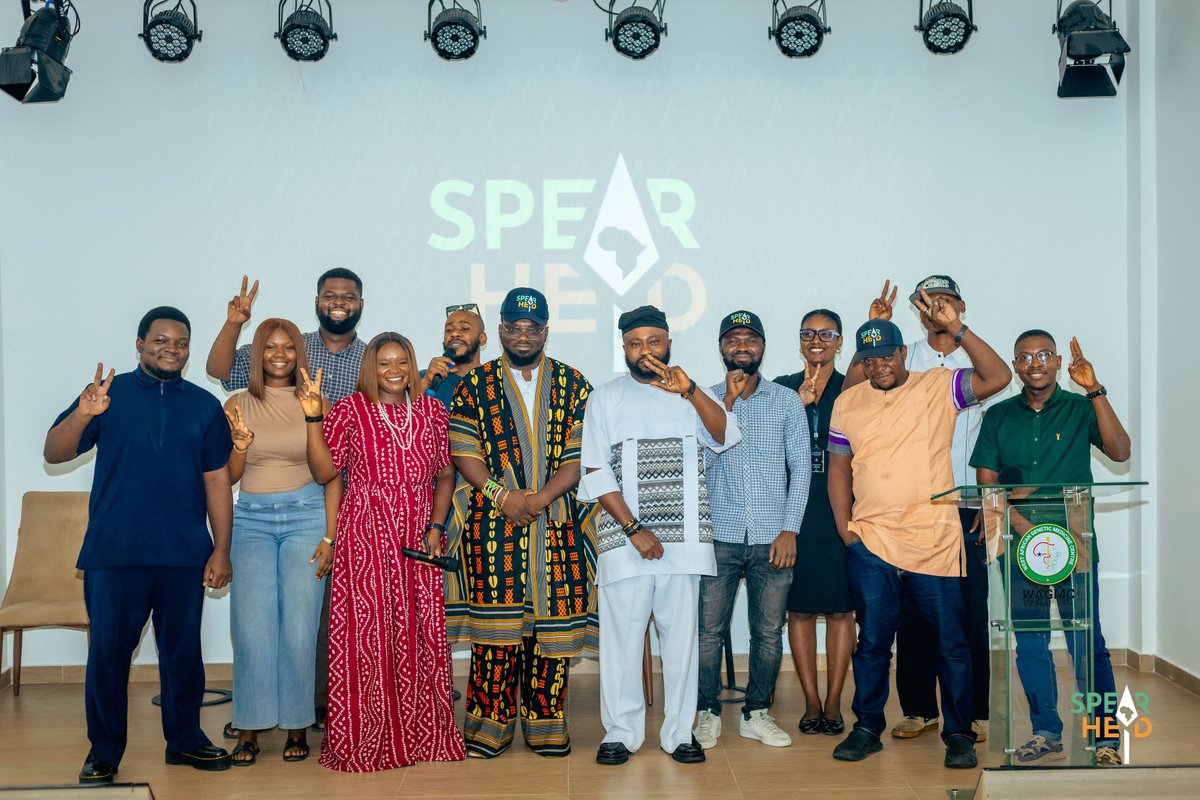
The documentary will premiere in Accra at 5PM on Tuesday May 26 at the WAGMC Auditorium, University of Ghana. Subsequently, it will also premiere in Dar es Salaam and Nairobi before going up for general viewership on YouTube on May 31.
Of the 'big 5' in Anglophone Africa (Nigeria, Kenya, South Africa, Ghana, Tanzania), only Ghana doesn't have a significant part of its population actively seeking to facilitate a disastrous national suicide.
Ghana's only major current problem is Galamsey, which is fixable.
Ghanaian Artist Presents Painting To The Spearhead Depicting The Connected Struggles Of Africans
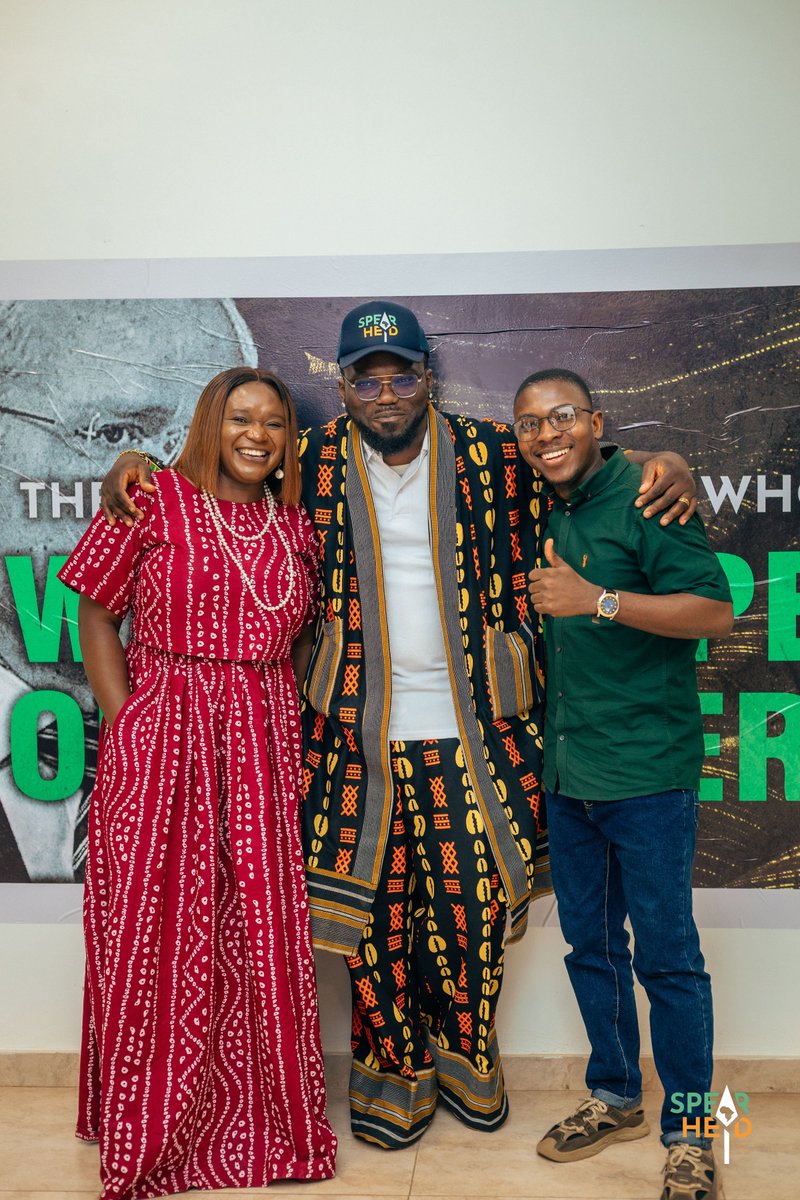
On May 28, 2026, Ghanaian expressionist painter Gusikende Seyon paid a visit to The Spearhead Accra Core Team, and gifted us with a painting depicting three African boys with the flags of Haiti, Sudan and the Democratic Republic of the Congo (DRC) painted respectively on their skin, connected by their shared historical struggle against the brutal parasitism of the West.
Haiti, the modern world’s first independent black republic, has limped from one economic, social and political crisis to another since its once-enslaved people dared to rebel against their former oppressor, France, and win, over 230 years ago. Sudan entered the third year of its latest conflict this April 2026, a conflict fueled by external, Western-aligned forces which covet the North African country’s land and gold. And the DRC has not known a day of peace since its first democratically elected leader, Patrice Lumumba, was murdered by Western-backed terrorists in 1961, under the watchful eye of the CIA.
Gusikende’s painting speaks to the thread that binds all African nations, and all African people, together.
No. I have questions and I need answers 😂
If they had responded to the NITA concerns with humility and appropriate action, we could give them a break
As things stand I see the LGBT Bill, 1 Million Coders & some disinformation in an attempt to distract the conversation.
Nope!
Trump’s New ‘Counterterrorism Strategy’ In Africa Is Neocolonialism
Kwame Nkrumah warned us decades ago, and yet Africa is still living inside the same neocolonial playbook.
The US destroys states, fuels instability, labels the consequences “ungoverned spaces,” then returns as the so-called solution through counterterrorism, military partnerships, intelligence operations, and trade deals tied to African resources.
Washington’s new counterterrorism strategy is not about African security. It is about protecting American interests on African soil and using insecurity as an entry point into mineral-rich regions.
This is why Neo-Colonialism: The Last Stage of Imperialism remains essential reading. Nkrumah already explained the trick: a country may look independent on paper, while its economy, security, and political direction are controlled from outside.
For Africa, the lesson is simple. Anything that does not serve African sovereignty, security, and interests must be rejected.