The π in the normal distribution has a geometric origin.
It comes from a famous mathematical result known as the Gaussian integral.
∫₋∞^∞ e^(−x²) dx = √π
The interesting part is that e^(−x²) has no elementary antiderivative. Yet its integral over the entire real line can be calculated exactly.
The solution involves turning a one-dimensional integration problem into a two-dimensional one. The resulting function, e^(−(x²+y²)), has circular symmetry, and polar coordinates reveal where π enters the calculation.
This result is fundamental to probability theory.
The familiar factor 1/(σ√(2π)) in the normal distribution comes from the same integral. It ensures that the total probability across all possible values is exactly 1.
But its applications extend well beyond statistics.
In engineering, Gaussian distributions are commonly used to model measurement errors and noise. With independent, zero-mean Gaussian errors of equal variance in an additive-error model, maximum-likelihood estimation is equivalent to minimizing the sum of squared residuals.
Gaussian functions also appear in heat diffusion, where they describe how an initially concentrated point source spreads through an unbounded, homogeneous medium.
In Fourier analysis, the transform of a Gaussian is another Gaussian, up to scaling. This property is useful in signal processing and image filtering.
The same mathematical function connects probability distributions, statistical estimation, heat transfer, and frequency analysis.
And the √π in its integral ultimately comes from the geometry of the plane.
Un ruso random tenía el secreto de estos orbes de plasma y se negaba a contárselo a nadie
Así que una grupo de frikis de electrónica y plasma le hizo ingeniería inversa viendo lo que el ruso colgaba en stories y reels en su Instagram
Ahora se vende en Aliexpress por dos duros
Psi Mammoliti x Pictoline 🧠✨ Este Día Mundial de la Salud Mental, hablemos de ansiedad y de cómo aprender a equilibrarla.
#WorldMentalHealthDay#sociedad#pictoline"
Hoy me explicaron que la gravedad no es ni una fuerza ni un campo, sino más bien la manifestación de la geodésica, la forma en cómo se transforman las coordenadas en el espacio tiempo.
Y nada, mero raye
Vivamos este momento con la trascendencia que merece, pues que creo que estamos ante una de las primeras manifestaciones evidentes de lo que una superinteligencia artificial nos puede ofrecer.
Por ahora es un hecho acotado al dominio de las matemáticas, no hablamos de una ASI general, pero sí de superinteligencia al fin y al cabo.
Sobre IA y descubrimientos científicos hoy ha sucedido algo curioso.
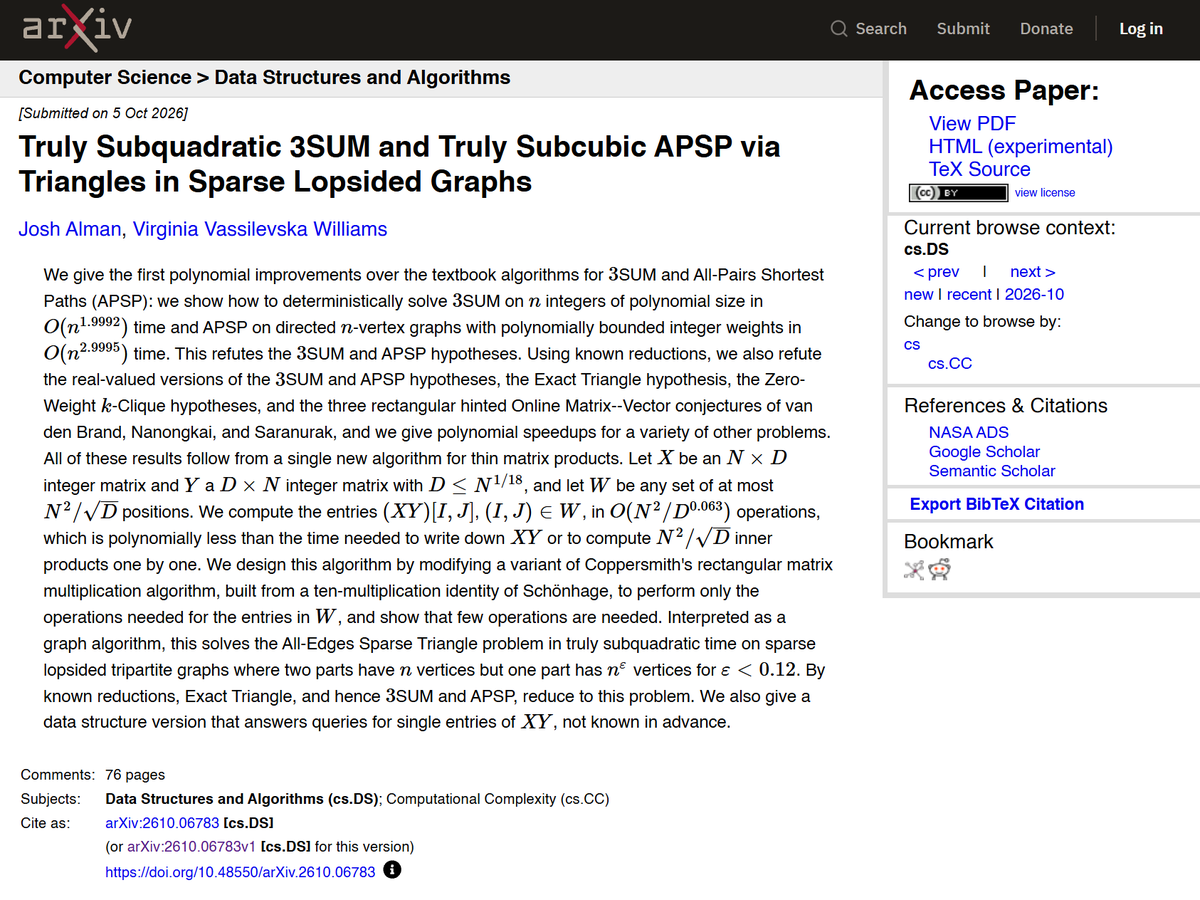
Primero, la noticia: Claude ha cosechado otro resultado científico bastante importante en el dominio de la complejidad algorítmica. Este paper demuestra haber supera una barrera teórica que en muchos trabajos se asumía como real, aunque no se había demostrado. Pues no, Claude traspasa esa barrera con una mejora que por ahora es minúscula, pero muy importante a nivel teórico.
Sin saber medir su importancia, las declaraciones de gente más entendida en el campo es que es una demostración muy importante!
Dicho esto, continúo el hilo con lo 2º que me parece más interesante👇🧵
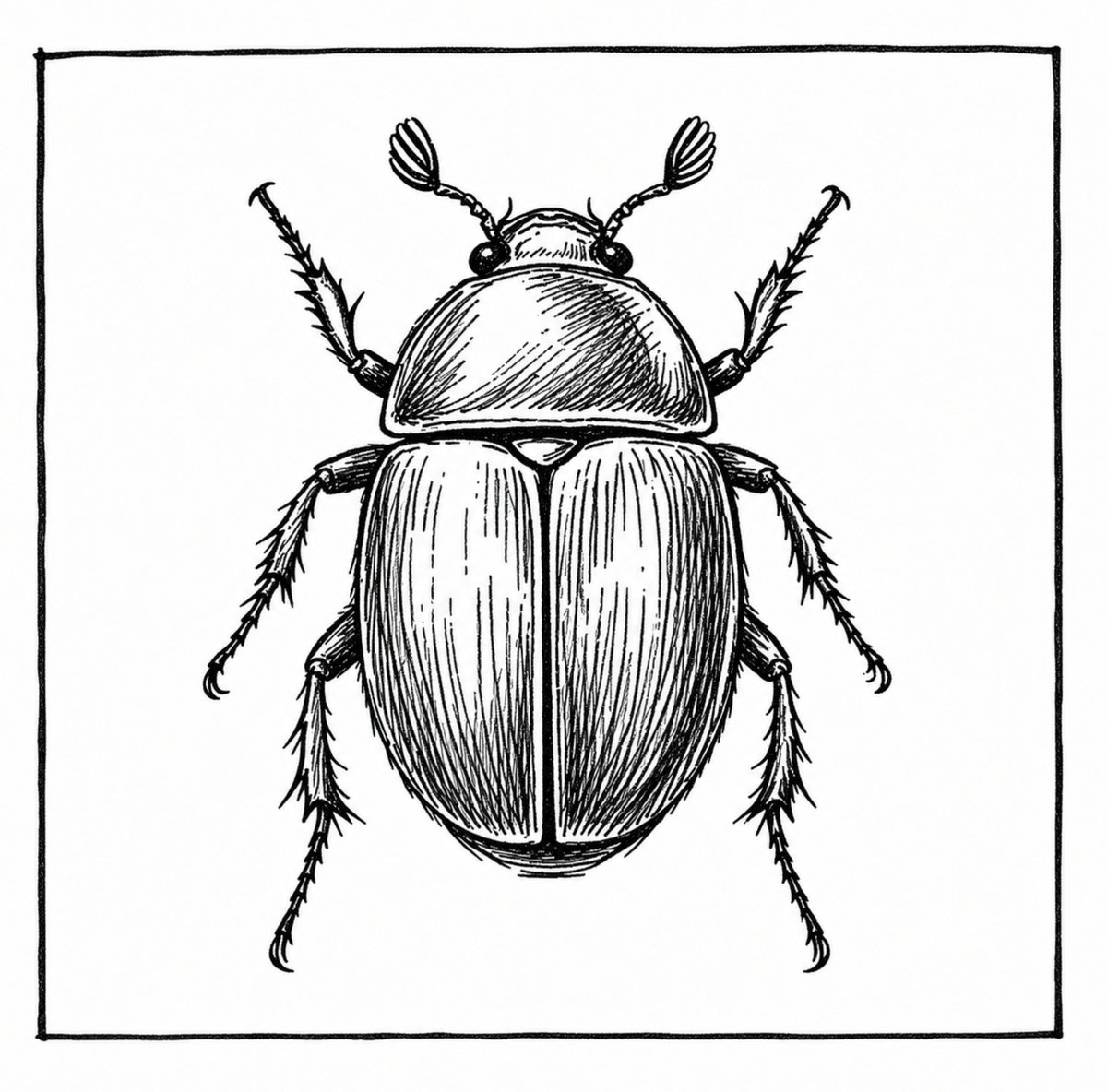
Si la AI produce demostraciones matemáticas que no podemos corroborar en tiempo finito –o ni siquiera entender– entonces se da algo así como con el escarabajo de Wittgenstein, o el margen ilusorio de Fermat.
En Quanta, sobre la AI y las demostraciones: https://t.co/KxP0HDYBm3
"Un nuevo estudio sugiere que tres especies de primates no humanos podrían utilizar a veces una gramática recursiva supraregular al comunicarse entre sí: el tití común (Callithrix jacchus), el colobo oliva (Procolobus verus) y el bonobo (Pan paniscus)", https://t.co/hNly8lAxqf
An electron in an atom is not a miniature planet following a definite orbit. It is described by a wavefunction, and squeezing that wavefunction into an ever-smaller region requires increasingly large momentum components and therefore greater kinetic energy.
The attractive Coulomb energy favors smaller distances, while quantum confinement resists unlimited compression. Their competition produces a lowest-energy state at a finite size. In hydrogen, this scale is the Bohr radius, about 5.29 × 10⁻¹¹ m.
An MIT professor offered his class a coin flip: win $125 or lose $100. Most students said no. Then he proved refusing was the smart move, and it explains why you're bad with money.
The bet looks great on paper. Flip a coin, win $125 or lose $100. On average, you make money. Economists call that a more than fair bet. Most of the room still wanted nothing to do with it.
They weren't being dumb. Their answer actually made sense.
Here's why. You don't experience money as numbers on a spreadsheet. What matters is what that money does for you. Losing $100 you already have can hurt more than gaining another $125 helps.
Then he changed the question. Imagine you were forced to take the bet unless you paid to escape it. How much would you give up? Using the standard math, the answer came out to $43. People would rather lose $43 for certain than face a bet that's actually tilted in their favor.
That's risk aversion. The value of gaining money and the pain of losing it aren't perfectly symmetrical.
And it's part of the reason insurance exists. You accept a small guaranteed cost today to remove the possibility of a much bigger loss tomorrow, even when that loss is statistically unlikely.
Once you see it, you notice it everywhere. Insurance premiums, warranties, bets you refuse. Sometimes you're not paying for better odds. You're paying to remove an outcome you can't afford.
Please welcome GPT-6 Sol and GPT-6 Luna to the GPT-6 universe.
GPT-6 Sol and Luna build on the advances behind GPT-6 Astra, bringing much of its strengths into faster and more affordable models to support work at scale.
We’ve also made caching and inference more efficient, and we’re passing the savings directly to you: 50% lower API prices for Sol and Luna compared with GPT‑5.6 promotional pricing.