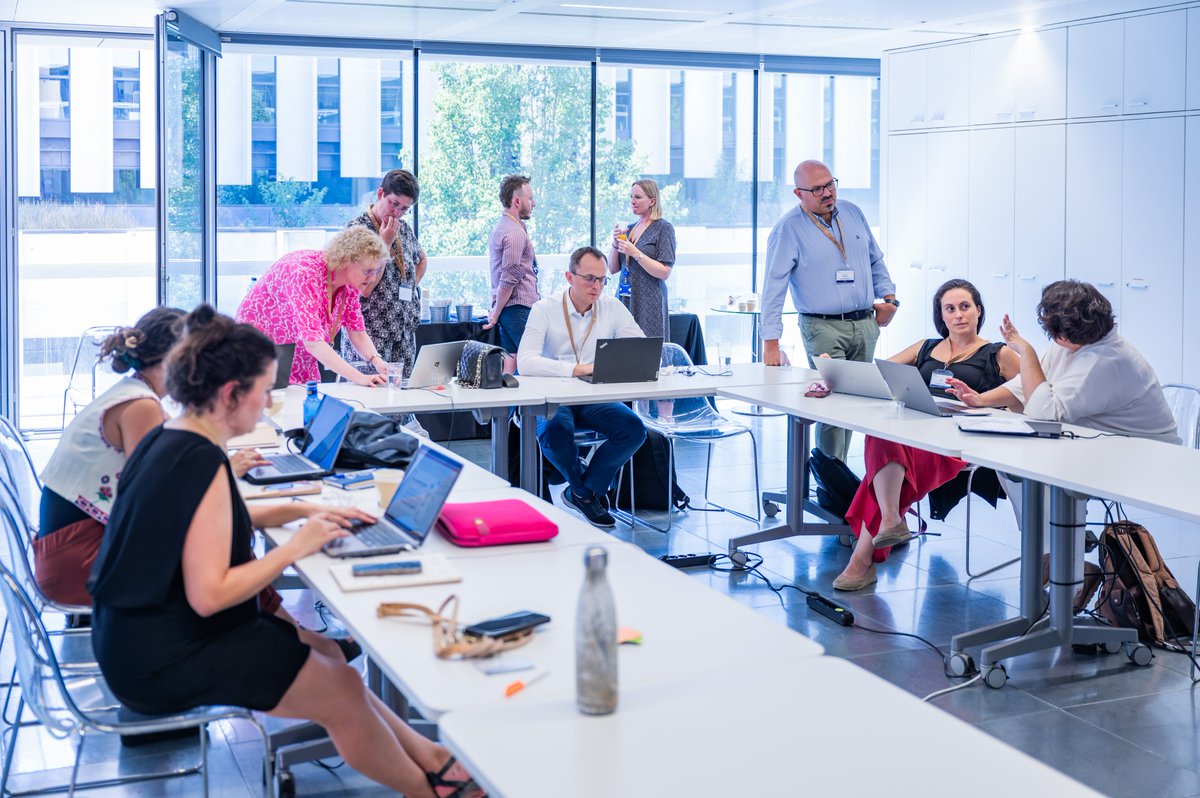
ATTRACT is a pioneering initiative bringing together Europe's research & industrial communities to lead the next generation of detection & imaging technologies
As ATTRACT wraps up its phase 2 🧡, we look back at a milestone event in Brussels 🇧🇪 that celebrated groundbreaking innovation 🚀 and the people behind it 💪.
📽️ Watch this video to see the highlights of the #ATTRACTfinalConference 👉 https://t.co/4dV3rt13D7
#ThrowbackThursday to 1995 ✨
Here we see one of the six hodoscopes, made of 48 scintillator counters, used in the NA50 experiment.
#DidYouKnow: hodoscopes are instruments used in particle detectors, to determine the particle’s trajectories.
NA50 is one of CERN’s seven experiments part of the heavy-ion programme, which provides evidence for the existence of the quark-gluon plasma.
Find out more about how scientists use heavy-ion collisions at the LHC: https://t.co/MLD4Q5ePEG
It's #WorldNatureConservationDay!
Nature conservation is important for:
🌳biodiversity
🩺our health
📈our economies
🌍#ForOurPlanet
Discover #Natura2000, the largest network of protected areas in the world, and a haven to threatened species & habitats 👉 https://t.co/x638IvqQk9
A new analysis of BL Lacertae by NASA’s Imaging X-ray Polarimetry Explorer sheds light on the emission mechanisms of active galactic nuclei.
Read more: https://t.co/RY2Ot1IgSN
Here we see a klystron, an electronic component used to amplify high-frequency radio waves by a factor of up to a million. In particle colliders, they can be used to power radiofrequency cavities and thus play a key role in accelerating particles.
CERN launched the High-Efficiency Klystron (HEK) project ten years ago, aiming to make the accelerators of tomorrow more sustainable and efficient.
High-efficiency klystrons developed for the High-Luminosity LHC are now outperforming industrial klystrons by 10% in terms of efficiency. #HiLumiLHC
Find out more about klystrons and their application in industry: https://t.co/jVIVIwiSsi
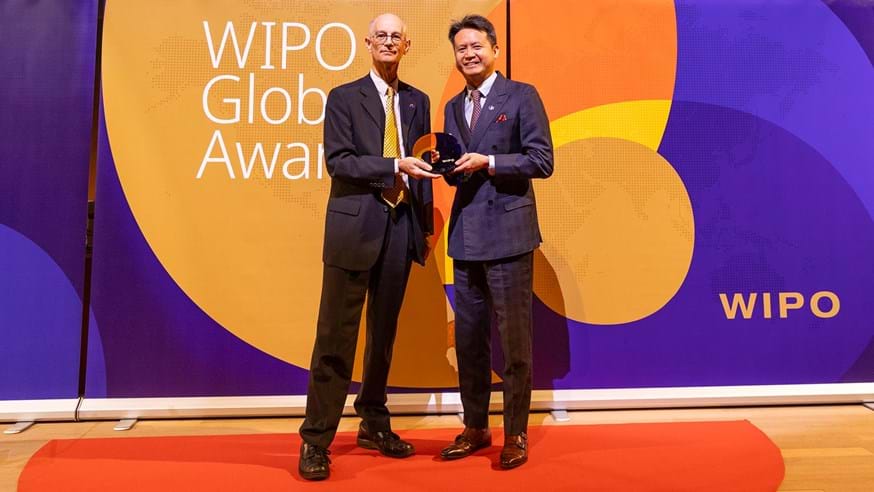
📢 What sets ULTRARAM™ apart? 🤔Quinas Technology, a @LancasterUni spin-out, has won the UK’s first #WIPOGlobalAwards for its quantum-powered memory innovation, combining DRAM speed, flash stability & low energy.
Congrats to the team 🥳
✅ More info 👉 https://t.co/Oo3zx3R529
🤔Could the Higgs boson have a shadowy cousin? CMS is pushing boundaries with #AII in the search for the dark Higgs – a potential link to #darkmatter 😲
👉To find out more about this study, read the physics briefing on our website: https://t.co/owGNNFuHs4
#physics#physicsnews
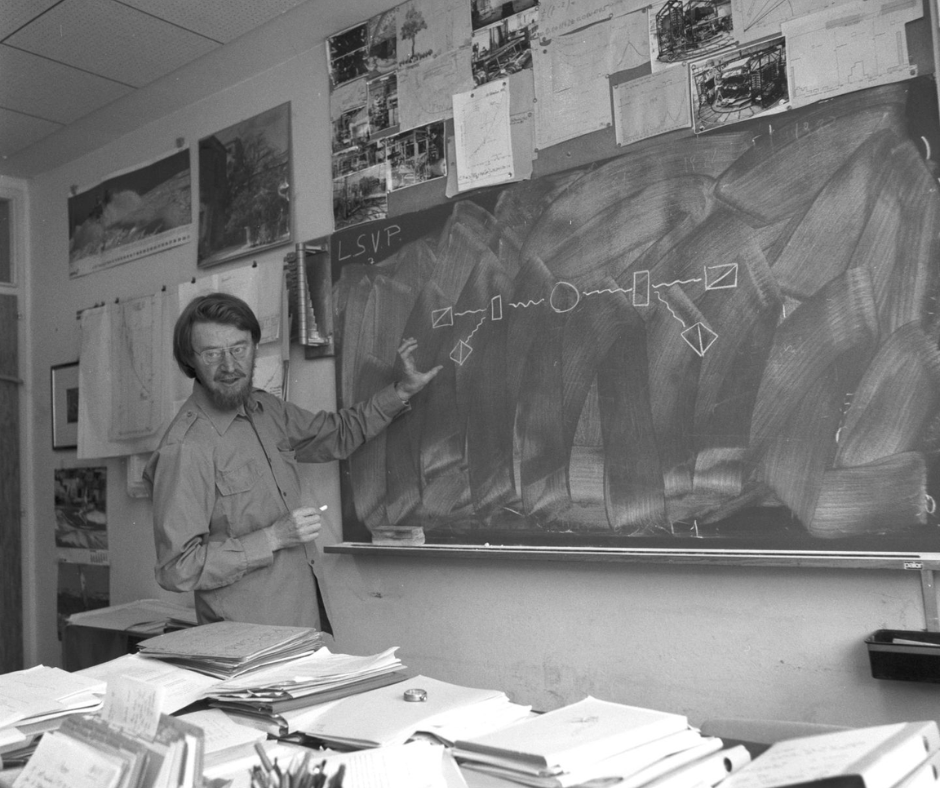
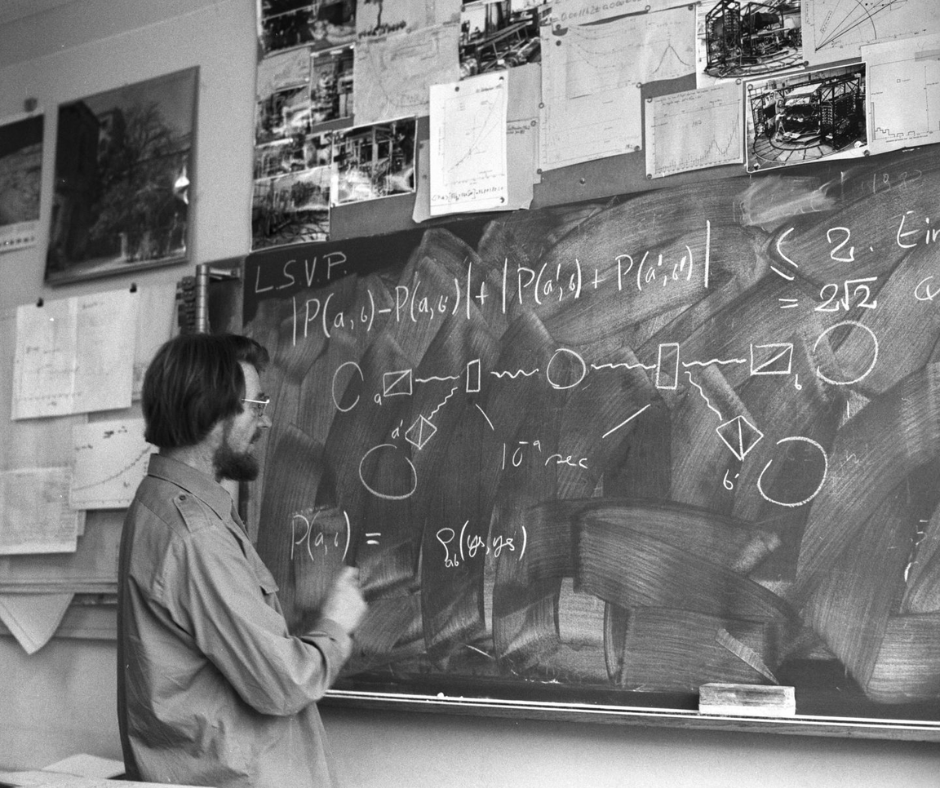
#ThrowbackThursday to the summer of 1982 🧑🏫
Here we see physicist John Bell, known for his theorem on the foundations of quantum mechanics – which he worked on #AtCERN – laying the groundwork for the now-vibrant field of quantum information.
On the blackboard we see entangled particles emerging from a central source and travelling to distant detectors.
Find out more in the latest @CERNCourier issue: https://t.co/e6Z1uaNAC7
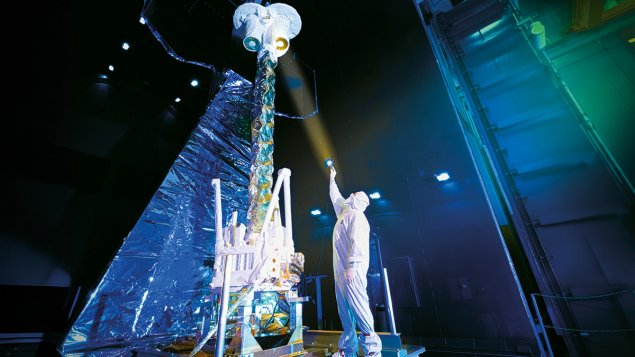
Here we see a prototype alignment system based on the Structured Laser Beam (SLB). Due to its unique characteristics, it can establish a long reference line, suitable for the alignment of particle accelerators.
#FunFact: this diffractive laser can maintain focus over hundreds of metres, unlocking significant potential in fields such as communication, medicine, physics, and meteorology.
Find out more: https://t.co/VLQWiWHR71
The #ATTRACTfinalConference is LIVE! 🥁🎉
We’re kicking off two days of deep-tech innovation in Brussels, bringing together academia, industry & policymakers to shape Europe’s tech future 🚀.
📢📢 Join the conversation using the #ATTRACTfinalConference to share your insights!
We're getting ready at SPARKS, Brussels for the #ATTRACTConference kickoff at 13:00! Follow along for live updates on Europe’s most exciting innovation projects 🔬🚀.
Here we see the first Beam Position Monitors (BPM) produced in CERN’s workshops for the #HiLumiLHC, the successor to the Large Hadron Collider.
The BPM is a device that measures the position of the particle beam in the accelerator in a non-intrusive way. It uses four pick-up electrodes to capture the electromagnetic field generated by the moving beam to reconstruct its position with micrometre precision.
This next-generation BPM is a key element for the #HiLumiLHC, as achieving more collisions, more data, and more intensity requires unprecedented precision in controlling the particle beams.
The study shows how project leadership & institutional context shape impact. OptoGlass3D led to marketable innovation; Scintiglass & PANDA EMC advanced knowledge & skills. Impact depends on openness to diverse outcomes & support for exploration.
+ info 👉 https://t.co/rWx3QGNH9v
📢 #ATTRACTproject 📢
How can fundamental research infrastructures like CERN turn early-stage tech into real-world innovation⁉️ The #CASEIA team explored this in a new study published in the CERN IdeaSquare Journal through three projects: OptoGlass3D, Scintiglass & PANDA EMC.
Here we see the PAX (antiProtonic Atom X-ray spectroscopy) experiment, the first user of the antimatter factory's new test beamline, TELMAX.
PAX aims to test the theory of quantum electrodynamics (QED), which describes the interactions between light and charged particles under conditions of intense electric fields. It will do so by using atoms containing an antiproton.
The experiment is conducted by a team from @CNRS and is funded by the @ERC_Research.
Findings show scientists often stay focused on academic outputs despite entrepreneurial aims. Pairing them with business or design experts works better. The research aims to inform future EU programmes by replacing assumptions with evidence.
Learn more 👉 https://t.co/9WUAvAH33j
Can public investment in research truly be made more effective? 🧐 ATTRACT is testing that question through a unique approach: embedding #SocioeconomicStudies into R&D funding, analysing how research teams turn ideas into value 💡💡.
This #ThrowbackThursday highlights moments from the Future Circular Collider (FCC) conference, held last month in Vienna, Austria.
A variety of public engagement activities – including the Wheel of Science, Pint of Science, discussions on "The Higgs Boson and Our Lives", and musical concerts – brought over a thousand visitors to landmark locations in the city to discover more about the FCC.
Find out more: https://t.co/Lt2r2U8vjh
📸 1–3 & 7–8 / J. Krpelan
📸 4 –6 / M. Gizicki















![CERNpress's tweet photo. [Press Release] Venice event brings future of particle physics into focus
Find out more: https://t.co/nPe6FZMFZy https://t.co/l5c2LgTPxv](https://pbs.twimg.com/media/Guctz-4WoAAEswo.jpg)