I had such an incredible time at the hackathon! Easily the best experience yet thank you for putting this together.
#iQOO#iQOOHackathon#iQOOHackathon2026
Gemini 4 Argon built a 3D periodic table synced to Tom Lehrer’s song, “The Elements.”
Created in @Antigravity, it animates orbiting electrons, atomic data, and light spectra.
Today we are rolling out Gemini 4 Argon globally in the Gemini API, to Pro + Ultra in Gemini App, and Ultra subs in Antigravity!
Argon is a huge step forward for Gemini, and a labor of love. This model has been battle tested by over 100,000 people at Google over the last month, with so much new innovation, ambition, and hard work baked into this release. The team has been heads down over the last 6 months working to make this possible across the stack (research, infra, safety, eng, etc).
We rolled the model out to cyber defenders as part of our fairwind program and early access customers over the last 2 weeks, it has been amazing to see and talk to folks who are now using this model daily. Seeing the models writing capability, raw knowledge and persistence for coding, paired with new features like 1M token output when the model needs to work more has gotten me even more excited about our path ahead.
This is just the start of the Gemini 4 era. As you saw with 3.5, 3.6, 3.7, and 3.8 Flash, our iteration speed with Gemini is fast : ) Now with Gemini 4 Argon to work from, I am cannot wait to see the progress continue, and most importantly see what this new model enables for the world.
This is such a special moment in the arc of technology, as millions of people everyday tackle problems they could never have thought possible before. Gemini 4 Argon was built to help you tackle the hardest problems. I have personally felt this spark with Argon and hope you do too. Onwards!!
@viktoroddy I think you should create a tutorial on how to use Opus 5.5 for creating motion graphics or the videos which are getting very popular and are generated by Claude.
@claudeai Max and Team plans now include monthly API credits.
They cover the Agent SDK, claude -p, the API and Managed Agents. You can still use the SDK and third-party apps on your subscription limits too.
Finally I can start using my Claude subscription for my Hermes agents.
@ASUS@NousResearch@dillonrolnick Just the idea of being able to run local LLMs on a Windows laptop which has integrated or unified memory excites me like crazy. It's the single most exciting hardware or technical improvement I have seen so far. I just love it.
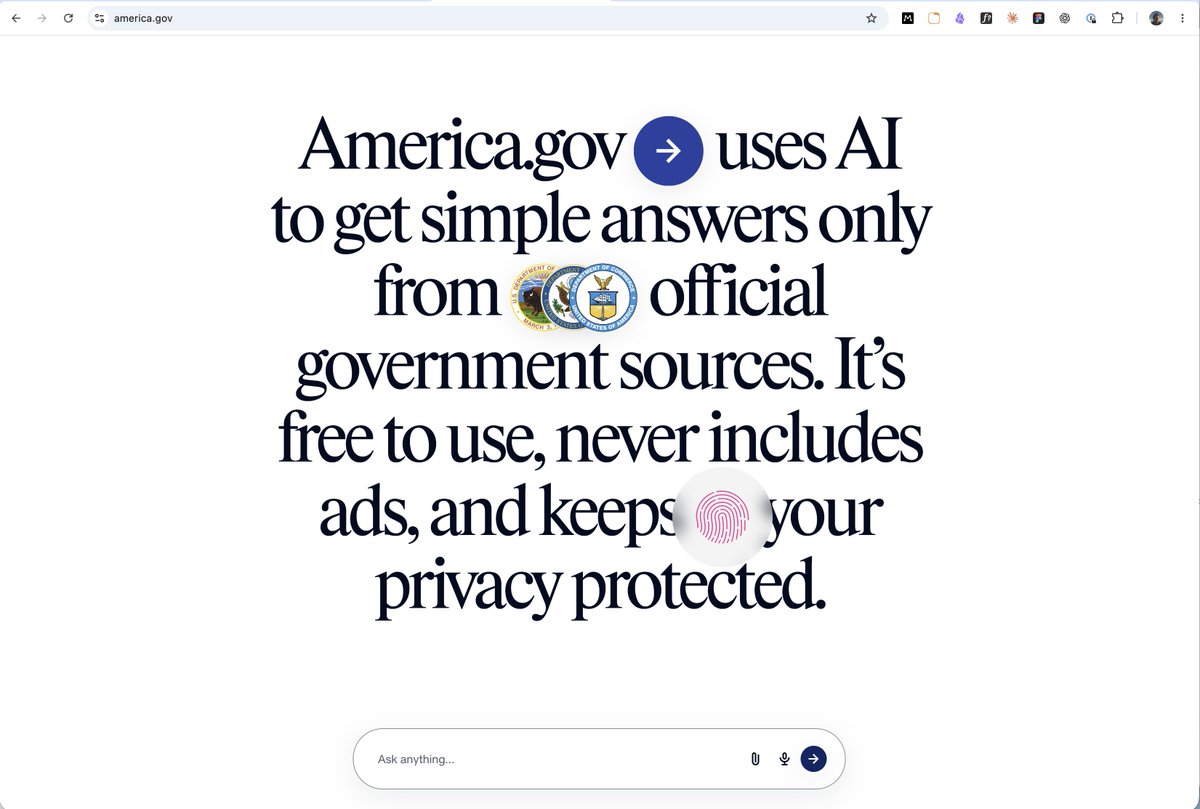
I can't tell you how excited and happy this makes me. Confusing, hard-to-use government software imposes a massive time tax, especially on those who can least afford it (see @AnnieLowrey's work). What if government services were as clear, well-designed, and easy to navigate as Airbnb or Stripe? Hats off to @jgebbia and his team for this exceptionally important work.
https://t.co/3eHC8p5K8C
@garrytan The hardest part of agent-driven workflows is preventing them from writing low signal tests just to increase coverage numbers. Does this actively prune existing dead weight, or only gate incoming PRs?
I had tried something similar in the past but most of the time the improvement of the output quality isn't always good enough to justify the token cost. These all require a lot of extra tokens.
Opus 5.5 can already run all night on its own. Give it 𝘁���𝗲𝘀𝗲 𝟴 𝗚𝗶𝘁𝗛𝘂𝗯 𝗿𝗲𝗽𝗼𝘀 as a second brain and it feels like cheating: a code graph that indexes the Linux kernel in 3 minutes, a 95K-star memory plugin for Claude Code, and the agent brain where Garry Tan keeps 155K pages.
Reading code (code graph)
→ codebase-memory: code only. It builds the graph locally without calling a model, and it's what we use for our own code graph
→ Graphify: graphs your docs, PDFs, images and videos along with the code. 122K stars
Managing notes (knowledge base)
→ gbrain: every fact keeps its source, can be corrected or withdrawn, and is shared across your agents. We've hooked Gmail and Calendar up to it
→ claude-obsidian: turns your sources into linked, cited Obsidian pages, stored locally
→ qmd: local search written by Shopify CEO Tobi Lütke. It searches your notes, meeting transcripts and docs on your own machine, with no API key
Remembering chats (session memory)
→ claude-mem: installs with one command, compresses every session into a summary, and picks up from it next time
→ mem0: a browser extension that shares one memory across ChatGPT, Perplexity and Claude on the web
Tracking long tasks (task progress)
→ beads: replaces scattered plan docs with one task dependency graph, so long tasks don't lose context
Send this to Claude Code and have 𝟯 𝘀𝘂𝗯𝗮𝗴𝗲𝗻𝘁𝘀 set it up for you 👇
"Help me build a second brain from these 8 GitHub repos: DeusData/codebase-memory-mcp, Graphify-Labs/graphify, garrytan/gbrain, AgriciDaniel/claude-obsidian, tobi/qmd, thedotmack/claude-mem, mem0ai/mem0, gastownhall/beads. Pick by four categories: code graph, knowledge base, session memory, task progress, at most one per category. First check what CLAUDE.md and Claude Code's built-in memory already record, and only add what they can't. Send out three subagents:
- scout (use Haiku): read each README and list the install command, where the data is stored, whether it needs an API key, whether it costs extra tokens, whether it runs a background process, and the license.
- architect: look at my project and CLAUDE.md, pick one per category, and explain why you picked it over the other one in that category.
- verifier: after I restart Claude Code, open a brand-new session with claude -p and ask about a decision we made earlier. For the code graph, ask who calls a specific function. Paste me the raw output.
Show me the commands before installing anything, and install only after I confirm. If you can't read a README, stop and ask me to paste it in. Don't fill anything in from memory."