Yesterday Mark Cuban reposted my work, DM'd me, and told me to keep telling my story.
So here it is.
I'm a Master Electrician. IBEW Local 369. 15 years pulling wire in Kentucky. Zero coding background. I didn't go to Stanford. I went to trade school.
Every week I'd show up to a home where someone just bought a Tesla or a Rivian. And every time, someone had already told them they needed a $3,000-$5,000 panel upgrade to install a charger.
70% of the time? They didn't need it.
The math is in the NEC — Section 220.82. Load calculations. But nobody was doing them for homeowners. Electricians upsell. Dealers don't know. And the homeowner just pays.
I got angry enough to build something about it.
I found @claudeai. No coding experience. I just started talking to it like I'd explain a job to an apprentice. "Here's how load calcs work. Here's the NEC code. Now help me build a tool that does this."
6 months later — @ChargeRight is live. Real software. Stripe payments. PDF reports. NEC 220.82 calculations automated. $12.99 instead of a $500 truck roll.
I'm still pulling wire. I still take service calls. I wake up at 5:05 AM for work.
But something shifted.
Yesterday @vivilinsv published my story as Claude Builder Spotlight #1. Mark Cuban saw it. The Claude community showed up. And for the first time, I felt like this thing I built in my kitchen might actually matter.
I'm not a tech founder. I'm a dad who wants to coach little league and be home for dinner. I just happened to build something that helps people.
If you're in the trades and thinking about using AI — do it. The barrier isn't technical skill. It's believing you're allowed to try.
https://t.co/cDVdY5mcLv
We are moving to new definitions of success for organisations & systems, says @indy_johar. It is less about prescribed “end-states” (targets & standards to be achieved) & more about creating the conditions for change - diverse people working well together, having a sense of agency, adapting quickly & creating shared futures.
He sets out key leadership shifts including:
1. Focusing on relationships, not just plans: Success comes from strong trust & communication between people & teams, making it easier to handle challenges & seize opportunities.
2. Treating goals as guides, not set-in-stone: Use goals to give direction but be ready to adjust them as circumstances change & new opportunities arise.
3. Strengthening the “agentic capacity” of diverse people: Enable people to sense, interpret, act & learn together across the system so coherence is built from the ground up—not imposed from above.
4. Pushing authority and accountability closer to where challenges & opportunities happen: So decisions can be made quickly & locally.
5. Measuring improvement in adaptability & collaboration: not just results: A healthy system is one that can handle diversity, make sense of new information & adjust quickly — not just one that delivers on a fixed plan.
6. Investing in trust & learning systems: Make time & space for teams to learn from what’s working & what’s not & share that knowledge openly.
7. Operating across different time horizons simultaneously: (i) current urgencies & institutional realities (e.g. targets, reporting cycles). (ii) transitional infrastructures for reflection & adaptation; (iii) long-term investments in trust, feedback & sensing new directions.
https://t.co/n4ym52oBdu. Via @karas01
@SashaGusevPosts I feel that way (would have had more if only x) but in Singapore had 4 months mat leave and a live-in nanny when I went back to work. Countries with more generous support systems don't improve fertility. Self report seems unreliable here.
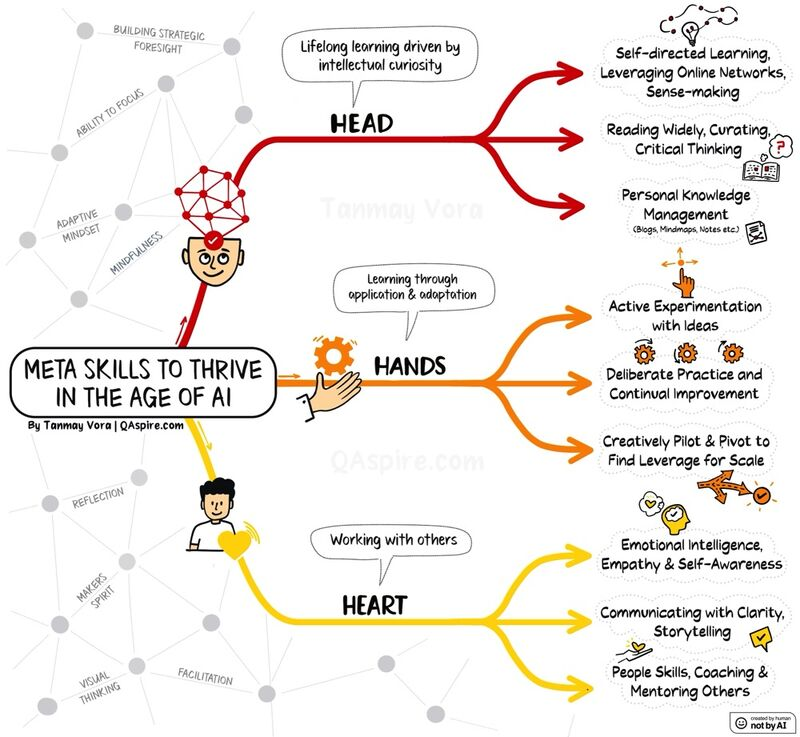
Humans have always thrived not by resisting disruption, but by adapting to it. Disruption is accelerating at an incredible pace so we have to adapt faster than ever before.
Some things remain the same: developing deeper foundational capabilities ("meta-skills") that help us adapt, learn & create value in any environment. Three meta-skills to thrive in the age of AI:
1) Lifelong learning driven by curiosity
2) Experimentation & continuous improvement
3) Collaboration with others
https://t.co/VQN2MHC5q2. By @tnvora.
Here is the simple talk version of what’s wrong with California’s fire situation.
My background: My startup plants trees. We want to accelerate global reforestation because it’s the simplest and most immediately scalable solution for closing the gap on climate change. It also has a lot of other benefits like making the land healthier and more beautiful.
Learning a lot about trees means I also had to study forest fires and how to prevent/manage them. If you are a fire/land management expert, I apologize for the details I will elide and concepts I will simplify. Help me educate the public and our leaders with simple models.
People say “wildfires are happening because of climate change!” and the climate deniers then say, “No, it’s happening because of bad forest management!” and then the conversation stops being useful.
Let's set that argument aside. It’s hot and dry and very windy, and that means if a fire starts in a place where there’s a lot of fuel, it will become a raging wildfire.
Yes, we can argue about whether it’s due to climate change, but we also have an immediate problem with wildfire and the weather is hot and dry and very windy. We have to solve that: the problem where our houses are burning down.
You can think of it as a chain with many links, each one is a necessary cause. One link is the hot and dry weather. Another link is the fuel supply. Another could be climate change as a proximate upstream cause. But for us to prevent wildfires we just need to break ONE LINK.
Here is the key:
We must remove the fuel supply. It is our only solution at this point.
This is why:
Fire is a natural part of the ecosystem. As a part of the natural ecosystem, you need to have regular low-grade fires that burn dry material and even, in some cases, help certain plant species seed and grow. A lot of people understand this at small scale - on Sunday you and Grandpa go up and burn 10 acres on the back 40.
However, many past decades of fire policy that focused on over-suppression has led to a buildup of dry fuel. In recent decades, we’ve learned about the need for prescribed burns, of the natural role of fire, and our fire management people try their best to do those burns.
But they simply cannot burn enough of the fuel backlog. There are many reasons for this, and if you want to get blame-y about it, an uninformed public, spineless politicians, and bad structural incentives are all at fault. But that misses the point.
Until recent times, the weather wasn’t quite as dry and hot, so this fuel backlog was, if not great, still not disastrous. But now the weather is - for whatever reason - hotter, drier, and the winds are blowing hard. And now the margin of error is smaller, and that fuel backlog HAS TO BURN.
How much fuel backlog?
Here’s where the numbers matter.
To restabilize our natural ecology in terms of fire, there is so much built-up fuel that roughly 20 MILLION ACRES in California of land with pent-up dry fuel need to burn.
Each year, our fire and forest management people are able to burn 20,000 acres. The most ambitious and optimistic of those guys estimates that maybe in five years we might be able to increase that to 40,000 acres of prescribed burns.
WE ARE OFF BY THREE ORDERS OF MAGNITUDE.
We need to get rid of this fuel backlog. And we can’t do it by burning it.
And by the way, we’re not going to solve it by solving climate change. I’m working on that with Terraformation, and along with everyone else who is working on it, it will take (best case) decades, and what we will get is (again, best case) getting back to a world that’s cooler and wetter where the fuel backlog still exists, it just doesn’t go up in flames as often.
WE NEED TO MECHANICALLY REMOVE ALL OF THAT FUEL BACKLOG. This is a mega-project and we need to do it.
We need to cut, thin, rake, scoop up, replant, and otherwise remove 20 million acres of dry material and get rid of it without burning it. (One solution is to burn it in sealed pyrolytic ovens that turn it into biochar without release the CO2)
The scope of this is enormous (and unthinkable in our recent political Overton Window).
But I say the time has come again for giant mega-projects.
It costs roughly $2000-5000 to clear an acre, depending on terrain specifics. This means $100B in total - if I were running the plan, I would try to do it over a 5-year period, focusing on strategic points first upwind of cities, so it would be $20B/year for 5 years.
If we don’t do it - by the way, our margin of safety goes DOWN every year it gets hotter and drier - it will burn and burn and burn again and we will pay for it in far worse ways.
It is time that we get back to a mindset of “the natural world is dangerous and can kill us” and our solution to that has to be “let’s mobilize all our resources and ingenuity to solve it in a big way.” In this case, the state of the “natural world” is kind of our fault, so all the more reason to solve it.
But it will not get done by half-measures (or 0.1%-measures, to be technical). This is landscape-scale restoration of land we (and our predecessors!) have mismanaged! We can get to work and solve it, or we will suffer more.
sources:
https://t.co/Q3frzfxNlu
‘The average price of a Big Mac meal, which includes fries and a drink, is $9.29.’
for two Big Mac meals a month you get access to ridiculously powerful machine intelligence, capable of high tier programming, phd level knowledge
people don’t talk about this absurdity enough
There's a growing body of evidence about the importance of cultural readiness & social connection as foundations for change & improvement capability in organisations. It can be very hard to improve performance in organisations where this "relational" investment has not been made. One way of describing this is "organisational debt syndrome", a phenomenon that results from accumulated compromises & shortcuts taken in people, culture & leadership practices over time. So rather than diving straight into technical solutions, we need to look at the big picture & consider how to nurture social & cultural growth, not just technical remedies: https://t.co/Prjid8pqev. By Stefan Lindegaard, via @innovate.
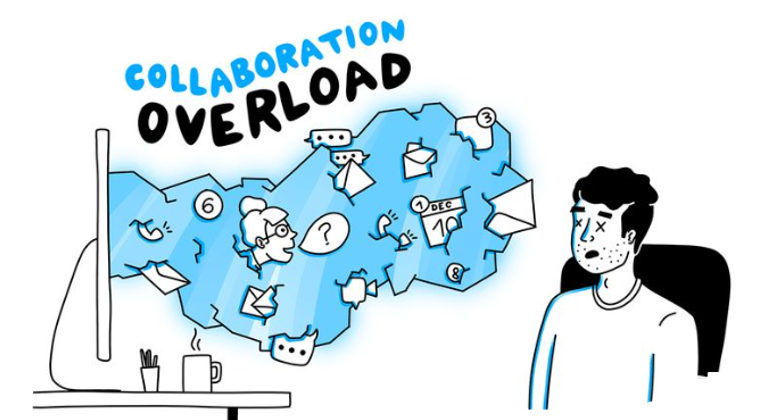
There's an increasing need to collaborate across teams & systems. Yet many leaders report "collaboration drag": too many meetings & collaborative processes that are messy, political & frustrating. Research shows that trying to reduce "collaboration drag" through senior leadership alignment can actually make it worse. Three ways to reduce "collaboration drag":
1) Understand where the critical relationships are to get work done across the organisation/system & support the people involved.
2) Invest in building skills that help teams navigate difficult group dynamics, see how different pieces of a project fit together & speak a common language.
3) Practice reducing collaboration drag within your own function or team:
https://t.co/ywnd1KIQYX. Via @Gartner_inc@HarvardBiz. Graphic: @planio