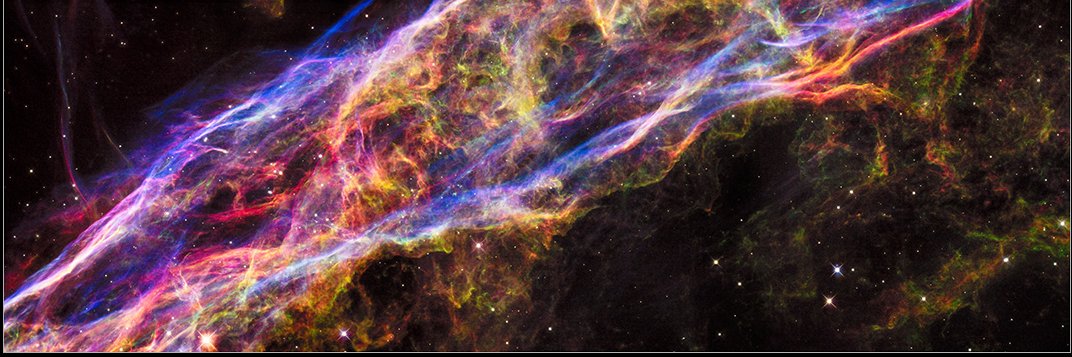
We just saw the exact moment a star exploded for the first time ever.
Astronomers have achieved a rare feat: imaging the exact moment a massive star detonated—and the explosion was anything but spherical.
SN 2024ggi, a supernova located 22 million light-years away in the spiral galaxy NGC 3621, was detected a mere 26 hours after ignition. This extraordinarily early discovery allowed researchers to train the European Southern Observatory’s Very Large Telescope in Chile on the event while it was still in its infancy.
Using the technique of spectropolarimetry—which analyzes the polarization of light to reveal geometric structure—the team uncovered a surprising truth: the expanding shockwave was distinctly aspherical, elongated into an “olive” or prolate shape along one primary axis.
This asymmetry means the catastrophic rebound following the star’s core collapse did not propagate uniformly in all directions, directly contradicting the long-standing assumption that the deepest layers of a core-collapse supernova explode spherically.
The progenitor was a red supergiant 12–15 times more massive than the Sun that had exhausted its nuclear fuel, triggering gravitational collapse of its iron core. In most supernovae, the initial shape of this breakout is quickly obscured as the blast wave slams into the star’s outer envelope. Here, however, astronomers captured polarized light signatures of the still-unobscured ejecta, freezing the explosion’s geometry in time.
The discovery carries far-reaching consequences. It strongly suggests that asymmetry is common, if not universal, in the earliest phases of massive-star deaths. Current theoretical models, which often assume spherical symmetry at the core, will need significant revision. Moreover, these distorted explosions could help explain observed peculiarities in supernova remnants, the production of gamma-ray bursts, and the kicking of neutron stars and black holes to high speeds at birth.
By catching a star in the act of dying asymmetrically, SN 2024ggi has given us a vivid glimpse into the violent, chaotic physics that govern the final heartbeat of the universe’s most massive stars.
[🎞️ Artist’s animation of a supernova explosion]
[Unique shape of star’s explosion revealed just a day after detection. ESO, 2025]
☀️☀️ The Sun compared to the stars Vega, Arcturus, and Rigel.
Vega (α Lyrae) is a blue star located in the constellation Lyra.
Arcturus (α Boötis) is the brightest star in the Northern Hemisphere's sky. It is an orange giant with a luminosity 110 times that of the Sun.
Rigel (Beta Orionis) is the brightest star in the constellation Orion and the seventh-brightest star in the night sky.
Stars orbiting supermassive black hole at the center of the Milky Way
This time-lapse video from the NACO instrument on ESO's Very Large Telescope in Chile shows stars orbiting the supermassive black hole that lies at the heart of the Milky Way, center of the image, over a period of nearly 20 years.
Useless machines, first conceived around 1952 by Marvin Minsky while at Bell Labs, are fully functional machines designed to perform exactly nothing useful.
📽: fritend1
Voyager 1 is traveling at 17 km per second.
70 times faster than a commercial airliner.
It could orbit the Earth in under 40 minutes.
It is the farthest human-made object in the universe.
#Voyager1#NASA#andromedagalaxy#cosmos#universe
TON 618: The Cosmic Titan That Defies Imagination Meet TON 618 — one of the most monstrous supermassive black holes ever discovered, and quite possibly the heaviest single object known in the universe.This gravitational behemoth sits an astonishing 18.2 billion light-years away (comoving distance) in the distant cosmos. The light we see from it today left when the universe was less than half its current age — a staggering journey across 10.8 billion light-years of expanding https://t.co/GqJiMXBWqJ its core lies an ultramassive black hole estimated at 66 billion times the mass of our Sun. To put that in perspective: it outweighs the entire stellar mass of the Milky Way galaxy. Its event horizon is so enormous that our entire Solar System could fit inside it many times over — with room to spare. A beam of light would take weeks just to cross from one side to the other.But TON 618 isn’t lurking silently in the dark. It powers a hyper-luminous quasar — a blazing accretion disk of superheated gas and dust spiraling into oblivion. This cosmic lighthouse shines with the ferocious energy of 140 trillion Suns, outshining entire galaxies and making it one of the brightest objects in the observable universe. This isn’t just a black hole. It’s a ravenous engine of destruction, devouring matter at incomprehensible rates while blasting energy across the void — a reminder of the universe’s most extreme and awe-inspiring extremes. If black holes had a hall of fame, TON 618 would be the undisputed champion.
Some thoughts on Capitulation Day.
This level of defeat in Iran is only possible at the hands of a super loser like Trump.
To win a war means changing the politics of the enemy such that they must surrender. That is what Iran just did to the United States.
After Japan battled the Netherlands to a 2-2 draw, the Japanese fans stayed behind and cleaned up every single piece of trash from their section at Dallas Stadium after the game.
I just watched priests trying to save crucifixes from a burning monastery.
This is what russia is destroying.
The Kyiv Lavra is one of the holiest Orthodox sites on earth. A UNESCO World Heritage site.
Moscow calls itself “Christian civilisation.”
It’s literally barbarism.
While Andrew Tate & Candice Owen’s visit Moscow and lie about how it’s the bastion of peace, missiles are raining down on civilian homes here in Kyiv. Russia is a terrorist state and it should never be normalised.