MFA matters. Strong auth matters.
Yet after years of raising the bar, we still rely on credentials that leave a blind spot:
Do we know who is actually on the other side?
Access isn't just about what you know or what you carry.
The person matters too.
Hot take: The best auth experience is the one you barely notice.
No extra app. No chasing codes. No digging for badges.
Just prove you’re you and move on. Security matters, but why should better security always mean more friction?
We’ve gotten pretty good at checking credentials.
But credentials aren’t people.
So here’s the question we keep coming back to:
Do you actually know who’s getting access?
That’s the problem we’re working on at AuthentiFace.
#IdentitySecurity#MFA#Authentication
Hot take:
The best authentication experience is the one you barely notice.
No extra app.
No extra code.
No digging for a badge.
No “approve sign-in” notification.
Just you proving you’re you.
Agree or disagree? 👇
A photo can look like you.
A video can look like you.
Neither should be enough to authenticate as you.
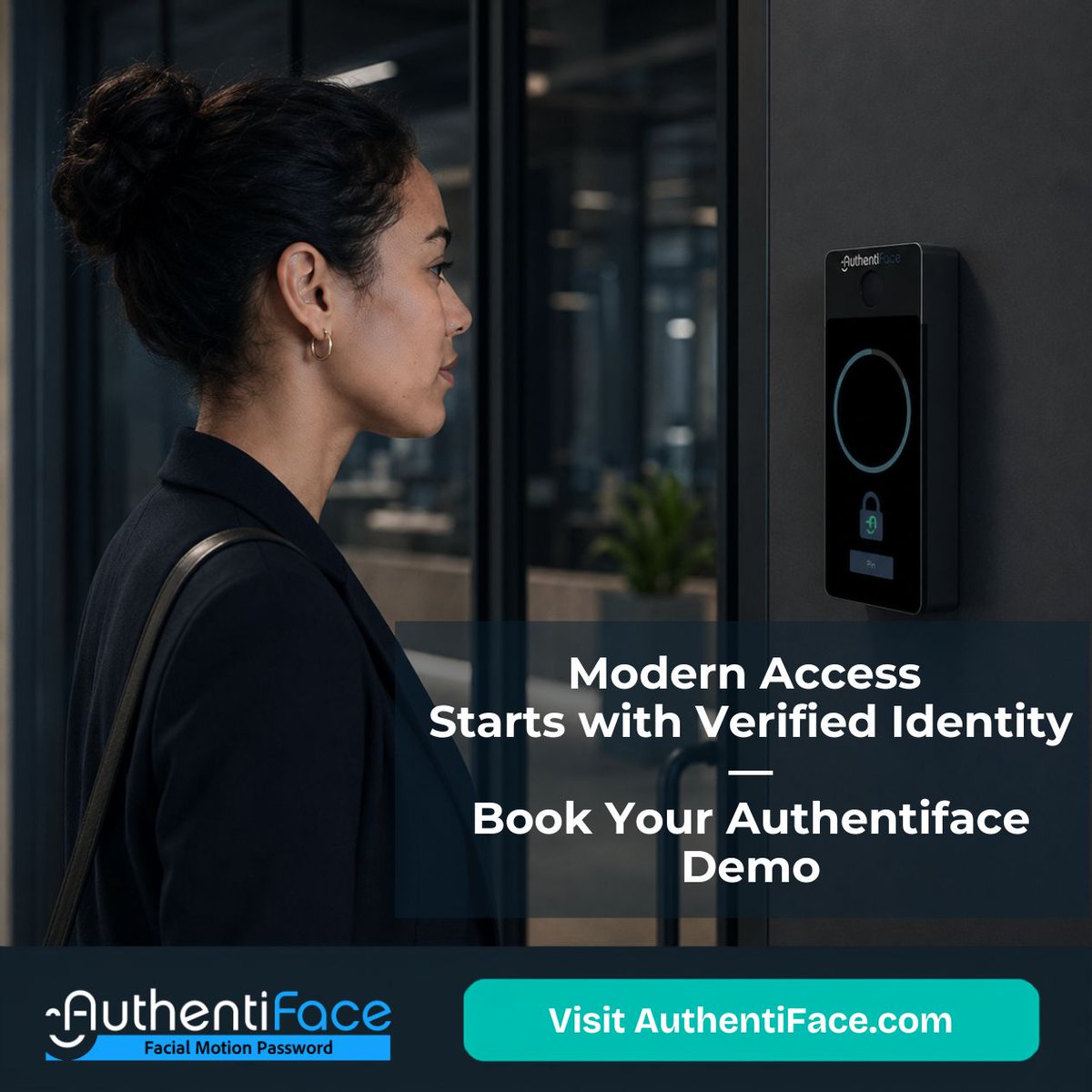
AuthentiFace combines facial matching, liveness detection + a Facial Motion Password to help verify who’s really logging in.
Because the person matters too. 🔐
#Authentiface
Your password knows what you typed.
But does it know you? 👀
Here are 3 things AuthentiFace can verify that credentials alone can’t.
Less identity uncertainty. More confidence in who’s actually getting access.
#IdentitySecurity#AuthentiFace
What if stronger security starts slowing down patient care?
Clinicians already deal with shared workstations, multiple systems and repeated authentication.
More security shouldn’t mean more friction.
Verify the person. Keep them moving.
Less friction. More certainty.
What if your security system is trusting the wrong thing? 👀
The badge works. The door opens. But is the right person holding it?
The credential can be right while the person is wrong.
That’s identity uncertainty.
AuthentiFace AI is built to remove it.
What if logging in proved more than just your password? 👀
Passwords verify credentials. AuthentiFace verifies the person behind them.
Because the credentials can be right while the person is wrong.
Remove identity uncertainty. Know who’s really on the other side.
The best technology is the technology you don’t have to think about.
🚫 Another badge
🚫 Another password
🚫 Another app
✅ Secure, seamless access.
Innovation doesn’t always add more. Sometimes it removes what’s no longer needed.
Can you trust the person behind the login?
Stolen credentials shouldn't be enough to gain access.
AuthentiFace AI verifies the person, not just the password, using facial matching and liveness detection.
Remove identity uncertainty.
#IdentitySecurity#Cybersecurity
Access control has changed. Has your approach to identity?
Badges can be lost.
PINs can be shared.
Passwords can be stolen.
The strongest credential is the person.
Verify them.
#IdentitySecurity#AccessControl#CyberSecurity
@ChideraUregbu Great question. The system is designed so that no identifiable visual data is retained. Data is encrypted in transit, facial images are used only briefly to generate secure biometric templates and are then deleted, and only the minimum data required for authentication is stored.
A stolen credential can unlock an account.
That's the problem.
Most access control systems verify passwords, cards, PINs, and badges, not the person using them.
What if authentication could verify identity instead?
Learn how: Link in Bio
🔐 Quick question for security leaders:
What's the weakest link in authentication today?
• Passwords?
• PINs?
• Cards?
• Mobile credentials?
• Something else?
What would you eliminate first?
#IdentitySecurity#Authentication#CyberSecurity
We've spent decades improving credentials.
Passwords → PINs → Cards
But better credentials don't automatically mean better identity verification.
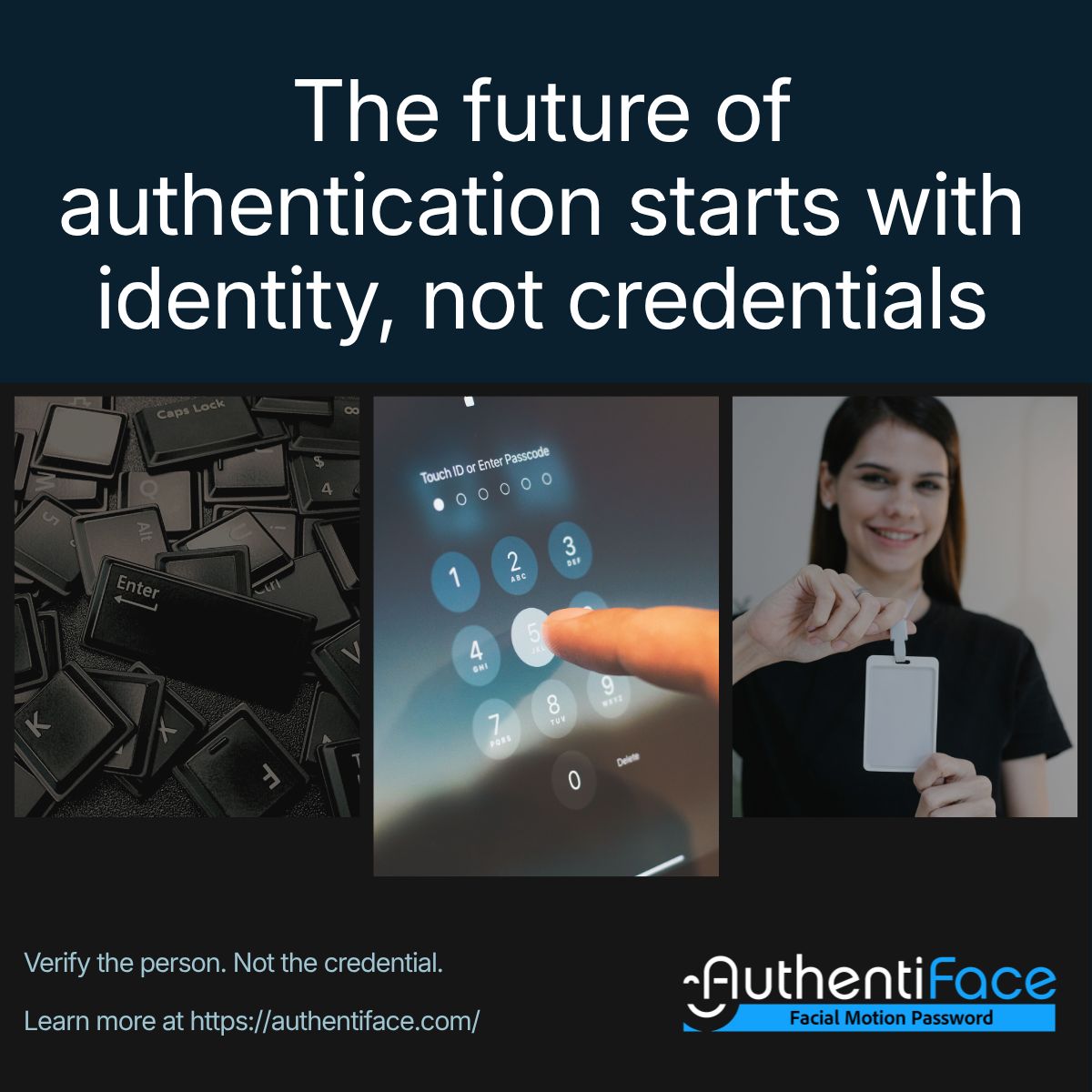
The future of authentication starts with identity and not credentials.
#IdentitySecurity#Authentication#Biometrics
Access ≠ Identity.
A valid credential doesn't prove a real person is behind it.
It only proves the credential was presented.
That's why identity verification matters.
#IdentitySecurity#Biometrics#CyberSecurity