1 in 277 PubMed papers from early 2026 cites a reference that doesn't exist. In 2023 it was 1 in 2,828.
When the scientific record gets noisier, who you listen to matters more. Authorix shows which experts the field genuinely recognizes on each topic.
https://t.co/HfoFU98g9U
Pharma built its AI stack layer by layer. One layer is still missing.
AI can tell you what sounds relevant. Not who actually knows. That's the layer Authorix adds.
#PharmaAI
Research rarely starts in a trial registry. It starts in conversations. Most tools index content. Authorix indexes the people behind it: 40M+ recognized authorities.
Pick the experts your field listens to and see what they're discussing now.
Lawyer cites fake authorities produced by AI in court. Then blames it on her law student intern. Who, it turns out, she didn't have.
We can only assume AI came up with that one too.
Better use Authorix next time.
Full Fact spent five months testing chatbots against claims it was fact checking. 39 major errors, 67 wrong answers across the models.
Some of those answers changed days later, after Full Fact's own debunks entered the information environment, and in at least one case the "fix" introduced a brand new error.
That's the tell. The AI was never asking who actually knows the answer. It was asking what it could currently retrieve, and it followed the information environment rather than judging it. Authorix is built to close that gap, so the answer also depends on who actually holds authority on the topic, not on what happens to be retrievable that day.
We’ve been trialling a tool comparing the output of various LLMs over time to questions about false claims circulating online. Here are the results 👇 https://t.co/SLLgGQleB0
Anyone can write that they're a leading voice in their field. For senior hires, what matters is whether the field actually agrees.
Authorix scores that gap: real, peer recognized authority on the subject a candidate claims to own, not their own summary of it.
A company sold 650,000 units of ordinary food as "anti-aging" using an AI-generated fake doctor to endorse it in ads. It earned 8.1 billion won before Korea's food safety ministry caught it.
If a "doctor," "expert," or "professor" is trying to convince you of something, check their authority before you believe them. Authorix shows in seconds whether a real, recognized expert stands behind the claim.
<AI 가짜의사 불법광고로 81억 판매한 업체, 적발하여 검찰에 송치했��니다>
식약처 위해사범중앙조사단은 AI로 만든 가짜 의사를 앞세워 식품을 과대광고하여, 약 81억 원 상당의 식품을 판매한 업체를 적발하고, 검찰에 송치했습니다.
해당 업체는 실제 의사처럼 보이는 AI 가상 인물을 등장시켜 비타민C, 효모식품 등으로 만든 일반식품을 ‘신체나이 감소’, ‘역노화’ 등 의학적 효과가 있는 것처럼 추천하는 방식으로 소비자를 현혹하였습니다.
식약처는 AI 기술을 악용해 소비자를 속이고 부당이익을 취하려는 불법 과대광고를 철저히 단속하고 엄중하게 처벌하겠습니다.
#AI가짜광고 #부당광고 #소비자보호 #특별사법경찰 #식품의약품안전처
📰 관련 뉴스는 아래에서 ���인하실 수 있습니다.
https://t.co/CqWV16Jw8x
Pharma moves fast. Most KOL lists don't.
Authorix keeps yours current, surfacing the HCPs and researchers your peers actually recognize, updated as the field moves.
An opinion writer got published by the Mississippi Free Press in April 2026. Real byline, real-looking headshot, real bio. Only an invoice with a different name gave it away.
Turns out the headshot was AI generated, the social links were dead, and the writer didn't exist.
That check should happen before publishing, not after the invoice. Paste a byline into Verify and you'd see instantly: no real cross platform footprint, no peers, no history. That's not a person with authority, that's a name with none.
https://t.co/ZBoXoJYrGj
A researcher invented a fake disease, wrote two bogus preprints, and within weeks ChatGPT, Gemini, Copilot and Perplexity were confidently explaining it to people.
The listed author didn't exist. No footprint, no peers, no real citations.
Semantic relevance checks if text sounds right. Authorix checks who's behind it.
https://t.co/H3ixbVbbPT
High follower count is not the same as high expertise. Reach measures attention. Authority measures whether the people who actually know a subject recognize you as one of them.
74% of new content now contains AI generated material.
Everything ranks on semantic relevance: does this sound like an answer. Almost nothing checks who is actually behind it.
That's the layer we're building. A way to know who actually knows.
Anyone can sound confident. Not everyone actually knows.
Authorix ranks people, not only content. Authority is granted by peers and the community, not claimed by whoever talks the loudest.
Search any topic on Authorix and see who the field actually recognizes as an expert.
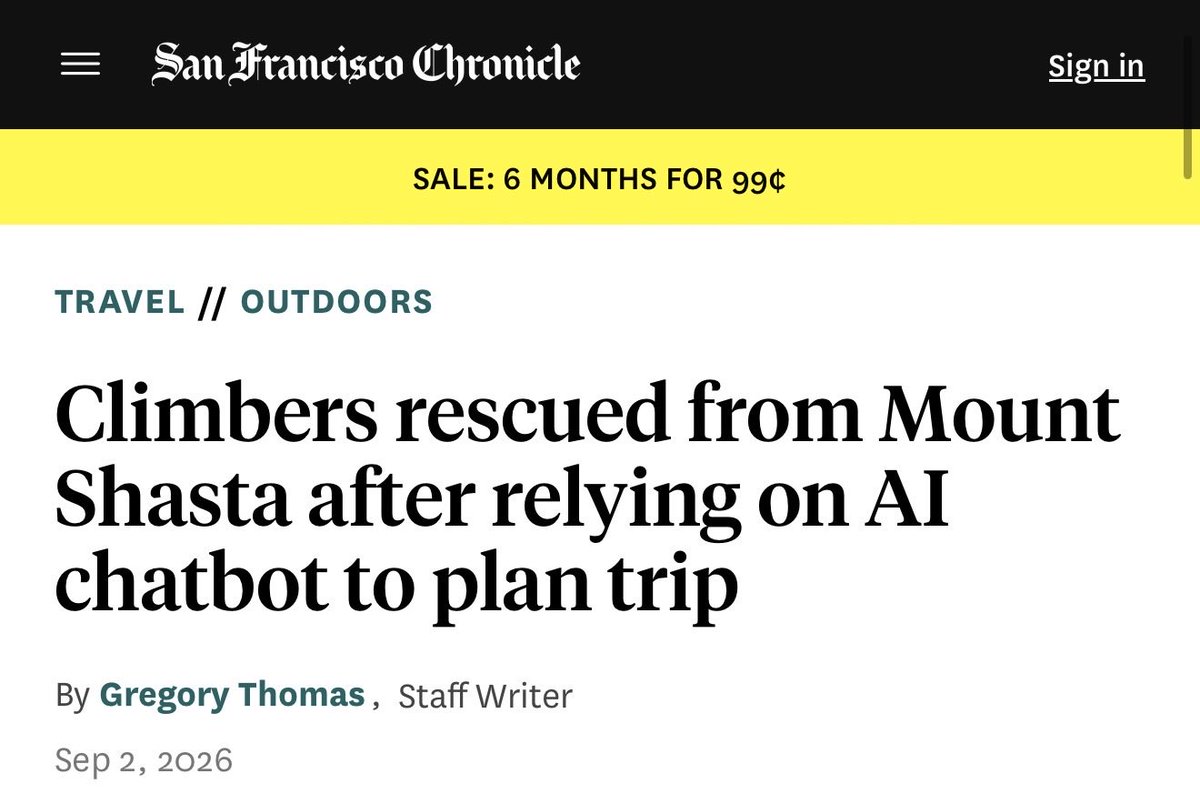
Three hikers got stranded on Mt. Shasta after letting Gemini plan their route, including how much food and water to bring.
Sheriff Jeremiah Larue's response says it plainly: "AI can be a good tool, but it shouldn't be used as the expert."
That's the gap Authorix closes. Ground your AI on authorities the community actually trusts, not just a confident answer.
“According to authorities with Siskiyou County and the U.S. Forest Service, the novice climbers, from Roseville, said they’d entrusted Google's AI chatbot, Gemini, to help them craft key logistics of their trip — from the best route up the mountain to the types of food they should pack and how much water they should carry with them.
“The county Sheriff’s Office called relying on artificial intelligence tools “a critical misstep.”
AI answers sound right. Then an expert reads them, and the gaps show.
We base our answers on authoritative voices, ranked by who their peers actually cite, follow, and engage with.
@DogsBreakfastAZ Maybe it is BS. Maybe your assumption is. There’s an easy way to find out. Open to a different perspective? Happy to walk you through it on a quick call.
Pharma runs on trust. Every KOL engagement and advisory board rests on one question: does this person actually know the subject?
Authorix scores authority by what peers and the medical community do: cite, follow, engage. Not just who claims it.
A living index of real authority.
The trust crisis didn't start with AI. It's been building for decades. Every era gave unverified voices more reach and made being wrong cheaper. A short history of who we chose to believe, and why that system is quietly breaking down: 🧵
That's what we're building with Authorix. Not follower counts, not claimed credentials. A live map of who peers and communities actually cite, follow, and trust, at the scale the internet now needs.