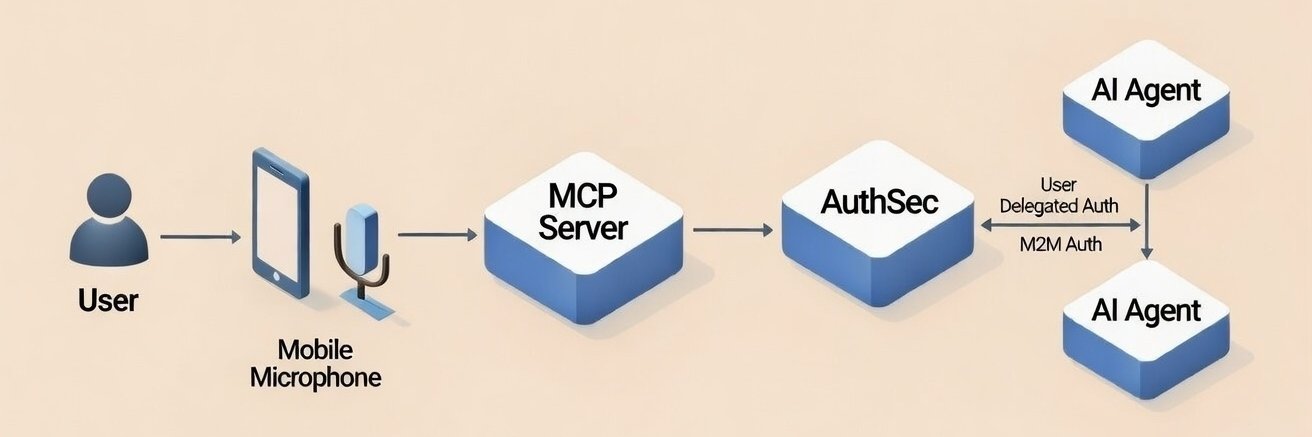
Building with LangChain? With AuthSec, each tool gets a token that only covers the actions you allowed and expires when you say, like after 1 hour.
https://t.co/0dksC50ydW
Asked someone to approve an agent's request on their phone? In AuthSec it expires after 5 minutes, so an old prompt can't be approved hours later.
https://t.co/cNLZrtYCKC
An agent's token in AuthSec only gets scopes its role allows and the user agreed to. The role sets the limit, and consent decides what it actually gets.
https://t.co/FdoCS0dG1Q
Agents in your cluster can get short-lived certificates that renew themselves, and outside integrations a client secret. AuthSec runs both in one workspace.
https://t.co/ug7j7k4dNr
One agent reads, another writes? Give each its own role in AuthSec and keep their tokens short, 15 minutes to an hour, so a leak does less harm.
https://t.co/zWO0Ps02jF
One agent reads, another writes? Give each its own role in AuthSec and keep their tokens short, 15 minutes to an hour, so a leak does less harm.
https://t.co/zWO0Ps0A9d
Need to pause an AI agent for a while? Deactivate its client in AuthSec and it can't sign in, but its setup stays, so you can switch it back on later.
https://t.co/7OJd5xUOtV
Public MCP server? In AuthSec, end users appear on their first sign-in, no invites. Suspend one and every token they hold for your app stops working.
https://t.co/5Jm7dNeA9o
In AuthSec, a protected MCP server denies every call until you onboard the caller. Each one gets its own identity, a role, and a kill switch you can revoke.
https://t.co/Bh4DrXNnRR
AuthSec lists every tool your MCP server exposes and rates each one low, medium, or high risk, so you know which ones to review first.
https://t.co/8SZs9fG0Ew
A new MCP tool in AuthSec starts out denied. Nobody can call it until someone maps it to a scope, so a tool you forgot about stays locked.
https://t.co/bORpXgZhyz
If someone deletes a scope or rotates a secret after launch, AuthSec flags it as a drift event that shows what changed, who did it, and when.
https://t.co/uOJEjS8YT5
Stop granting MCP server access one engineer at a time. In AuthSec, give the role to a group, and access follows people as they join or leave.
https://t.co/X4KfGokHaE
Is your MCP server ready to launch? AuthSec runs eight quick checks on your live server and shows what's done and what still needs work.
https://t.co/DFUrSaB6ee
Webhook secrets and API keys don't belong in config files. AuthSec keeps them in a vault, and only authorized services can read them at runtime.
https://t.co/Z3pGQE96Rj
Already use Splunk or Elasticsearch? AuthSec can send its logs there, or to Syslog or Fluent Bit, so your auth logs land where your team already looks.
https://t.co/HNWBB6xSmH
Can this user call this tool right now? AuthSec shows the answer, which check failed, and the safest fix, so you don't have to dig through roles.
https://t.co/DuN68kcdn7
When your MCP server starts, it sends AuthSec its tools and the scopes each one needs. Ship a new tool and AuthSec knows right away, with nothing to type in.
https://t.co/Oo5R8x8fjO
AuthSec's Go, Python, and TypeScript SDKs all read the same environment variables, so one config works whether you use a .env file, Docker, or Kubernetes.
https://t.co/rntKIQfasy