La Tierra ha mostrado una intensa actividad sísmica en las últimas horas. Mientras el Cinturón de Fuego del Pacífico registró al menos cinco sismos de magnitud moderada y fuerte en distintos puntos de su extensa franja tectónica, Venezuela fue sacudida por un inusual doble terremoto de magnitudes 7.2 y 7.5, ocurrido con apenas 39 segundos de diferencia, dejando importantes daños y activando una amplia respuesta de emergencia.
Ambos hechos ocurrieron casi al mismo tiempo. El Cinturón de Fuego del Pacífico concentra cerca del 90 % de la actividad sísmica mundial, mientras que el terremoto de Venezuela ocurrió en el límite entre las placas del Caribe y Sudamérica, una zona tectónica diferente.
Las autoridades continúan evaluando los daños en Venezuela, mientras los organismos sismológicos mantienen un monitoreo constante de la actividad sísmica en distintas regiones del planeta.
Desde hace semanas lo he comentado con mis amigos, están cortando mármol en una zona cerrada bajo tierra donde miles de personas pasan todos los días. 🫠
Las normas de seguridad e higiene de esas empresas y el metro brillan por su ausencia.
🇲🇽Mientras en el Estadio Ciudad de México la fiesta está por comenzar, madres buscadoras toman el Ángel de la Independencia para exigir justicia por sus familiares desaparecidos.
Así se viven las dos caras del México mundialista.
8 de cada 10 comentarios positivos para Clara Brugada en Facebook vienen de perfiles falsos. Decidí dejar atrás las suposiciones y audité una muestra estadística de 384 interacciones con un Libro de Códigos avanzado. El resultado es contundente. Abro hilo 🧵👇
You have noticed it. ChatGPT feels dumber than it used to. Your prompts that worked six months ago produce worse results now. The writing sounds flatter. The ideas sound safer. The internet itself feels like it is shrinking. Every article reads the same. Every email sounds the same. Every answer sounds like it was written by the same voice.
You thought it was you. It is not you.
Researchers at Oxford and Cambridge published a paper in Nature proving what is happening. They call it Model Collapse.
Here is the mechanism in one sentence. AI trained on AI-generated data gets dumber every generation until it forgets what real human data looked like.
The internet is filling with AI-generated content. Blog posts. Articles. Reviews. Comments. Social media. AI companies scrape the internet to train the next generation of models. Which means the next generation of AI is being trained on the output of the current generation.
Each cycle loses information. Not randomly. It loses the rarest, most unusual, most creative parts first. The researchers call these the "tails of the distribution." The weird ideas. The unexpected perspectives. The things that made the internet feel human. Those disappear first.
What remains is the average. The safe. The expected. The bland.
Then the next generation trains on that. And loses more. And the next generation trains on that. And loses more. The researchers proved this is not a slow decline. Major degradation happens within just a few iterations. Even when some of the original human data is preserved.
They tested it on large language models. On image generators. On statistical models. The pattern was the same every time. The output converges toward a narrow, flattened version of reality that looks nothing like the original data.
The lead researcher put it plainly. "Large language models are like fire. A useful tool. But one that pollutes the environment."
The pollution is invisible. You cannot see which sentence on the internet was written by a human and which was written by AI. Neither can the AI that is about to train on it. And once the tails are gone, they do not come back. The damage is irreversible.
This is not a prediction anymore. It is a diagnosis.
The internet you grew up on was built by humans writing things no algorithm would have written. Strange, personal, imperfect, alive. That internet is being diluted. One generation of AI at a time. And the models trained on what remains are learning a smaller and smaller version of the world.
Model Collapse is not a technical problem. It is a cultural one. The thing that made the internet worth reading is the thing that disappears first.
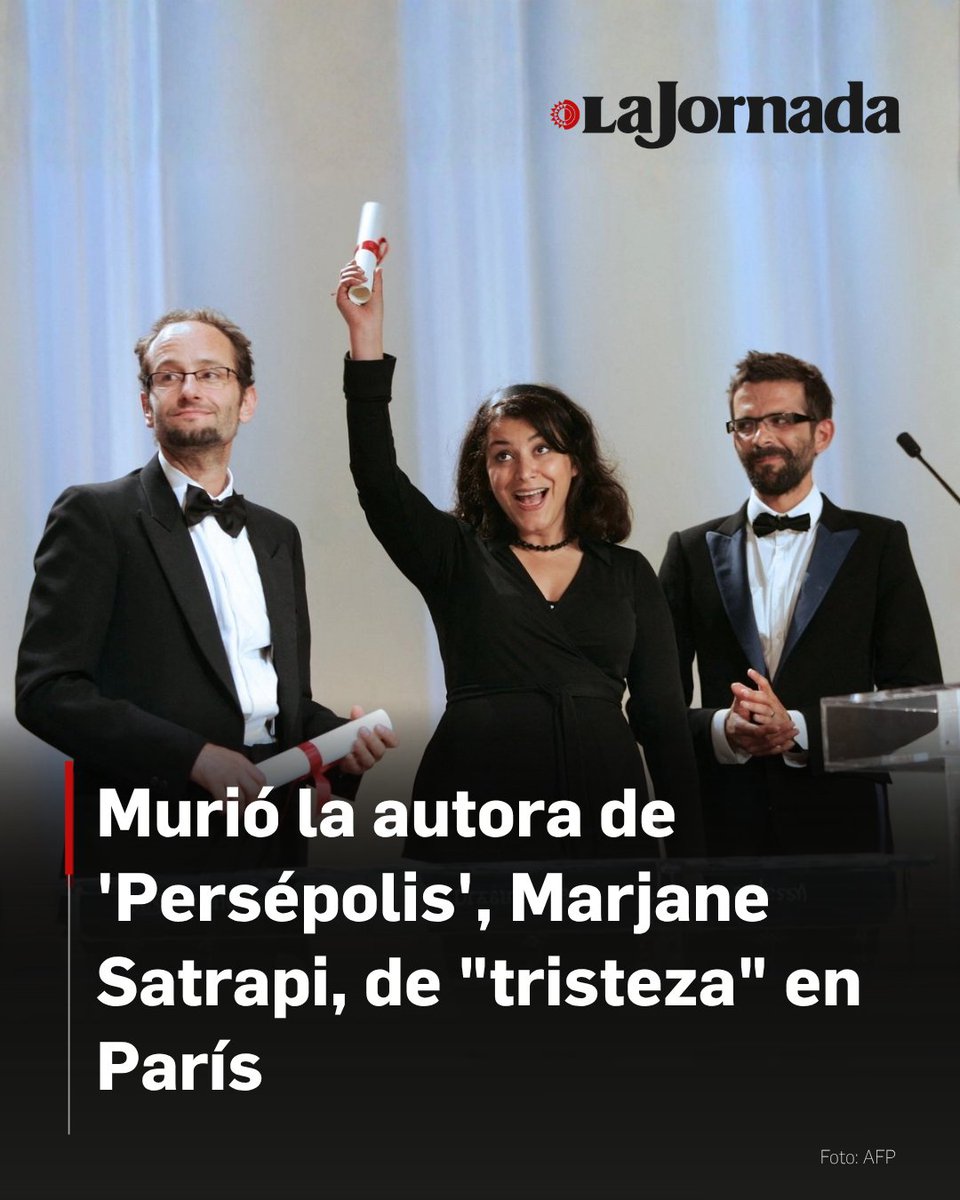
La célebre escritora, ilustradora y cineasta francoiraní Marjane Satrapi, mundialmente conocida por ser la autora de la novela gráfica Persépolis, falleció a los 56 años de edad en su residencia de París tras un prolongado deterioro anímico derivado de la muerte de su esposo, Mattias Ripa, ocurrida un año atrás.
El deceso de la artista, confirmado por su entorno familiar bajo la premisa de que "murió de tristeza", generó consternación en los círculos culturales de Europa, particularmente en Francia, nación que la acogió en el exilio desde 1994.
Más información en: https://t.co/YEMoArX5wI
Les dejo este video de una extraordinaria oftalmóloga y retinóloga, donde les explica con claridad por qué es una estupidez lo que hizo @ClaraBrugadaM de pintar de morado todo.
🚨 El Papa León XIV acaba de citar un pasaje de «El Señor de los Anillos: El Retorno del Rey»
«No nos corresponde dominar todas las mareas del mundo, sino hacer lo que está en nuestras manos para el bienestar de los años que nos ha tocado vivir, erradicando el mal de los campos que conocemos, para que quienes vivan después tengan tierra limpia que cultivar».
This is the best preserved medieval street in Europe.
Recorded in the Domesday Book of 1086, The Shambles in York, England has had shops trading on it for nearly a thousand years. It's older than the Crusades.
El historiador de arte Aldo Solano y el especialista en muralismo Iñaki Herranz denunciaron que las sustituciones de las celosías en la estación Viaducto de la Línea 2 del Metro, ejecutadas en el marco de las remodelaciones por la Copa del Mundo, constituyen una intervención improvisada que altera permanentemente el programa arquitectónico original.
Los expertos señalaron que el Sistema de Transporte Colectivo (STC) reemplazó las estructuras diseñadas hace cinco décadas por el arquitecto Enrique del Moral con materiales inadecuados y de baja calidad que no replican las características de textura, transparencia ni el color amarillo original, el cual tornó a anaranjado.
Más información en: https://t.co/uPgrv8btQH
Pixar hired a chef with three Michelin stars to design the dish in Ratatouille. Then they built the scene around the neuroscience of how taste triggers memory, and got Peter O’Toole to deliver one of the great monologues in animation history.
What you call “taste” is mostly smell. When you eat, molecules rise up the back of your throat into your nose. From there, smell takes a unique route. Every other sense (sight, sound, touch, even the actual taste your tongue picks up) gets filtered through a kind of switchboard in your brain first. Smell skips it. The smell heads straight to the parts of your brain that handle memory and emotion. Which is why one bite of food can drop you back into a moment from 30 years ago.
Ratatouille’s director, Brad Bird, built the entire flashback around this. Anton Ego takes one bite, and Pixar zooms the camera through his pupil into a childhood kitchen. The dish itself was Thomas Keller’s. His restaurant The French Laundry in California has three Michelin stars. He took a 1976 recipe by French chef Michel Guérard called confit byaldi (paper-thin vegetables spiraled over a tomato-pepper sauce) and adapted it for the film. Keller even had Pixar’s producer intern in his kitchen for months to get the look right.
Anton Ego is voiced by Peter O’Toole, the lead in Lawrence of Arabia. He was nominated for Best Actor eight times. Never won. He holds the record (tied with Glenn Close) for most nominations without a win, and once called himself the Academy’s “Biggest Loser.” He was 75 when he recorded the Anton Ego monologue. He died six years later, and it became one of his signature performances.
The speech was Brad Bird’s. In the review he writes the next morning, Anton Ego turns on his own profession. Critics risk almost nothing, he writes. They thrive on tearing strangers apart. The only risk that matters, he writes, is defending new talent when no one else will. He ends with the line everyone still quotes: “a great artist can come from anywhere.”
Ratatouille won Best Animated Feature at the 2008 Oscars, plus a Best Original Screenplay nomination on the strength of Bird’s speech. The film grossed $624 million on a $150 million budget.
In 90 seconds, a cartoon rat and a fictional food critic turn that science into something you can feel. Your best memories live in your stomach.