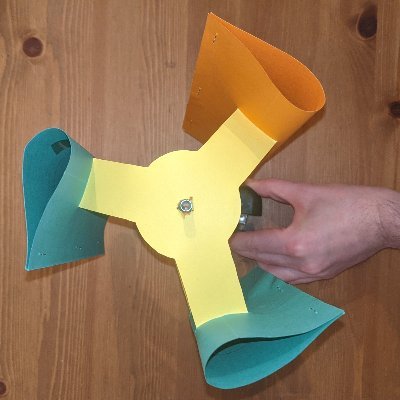
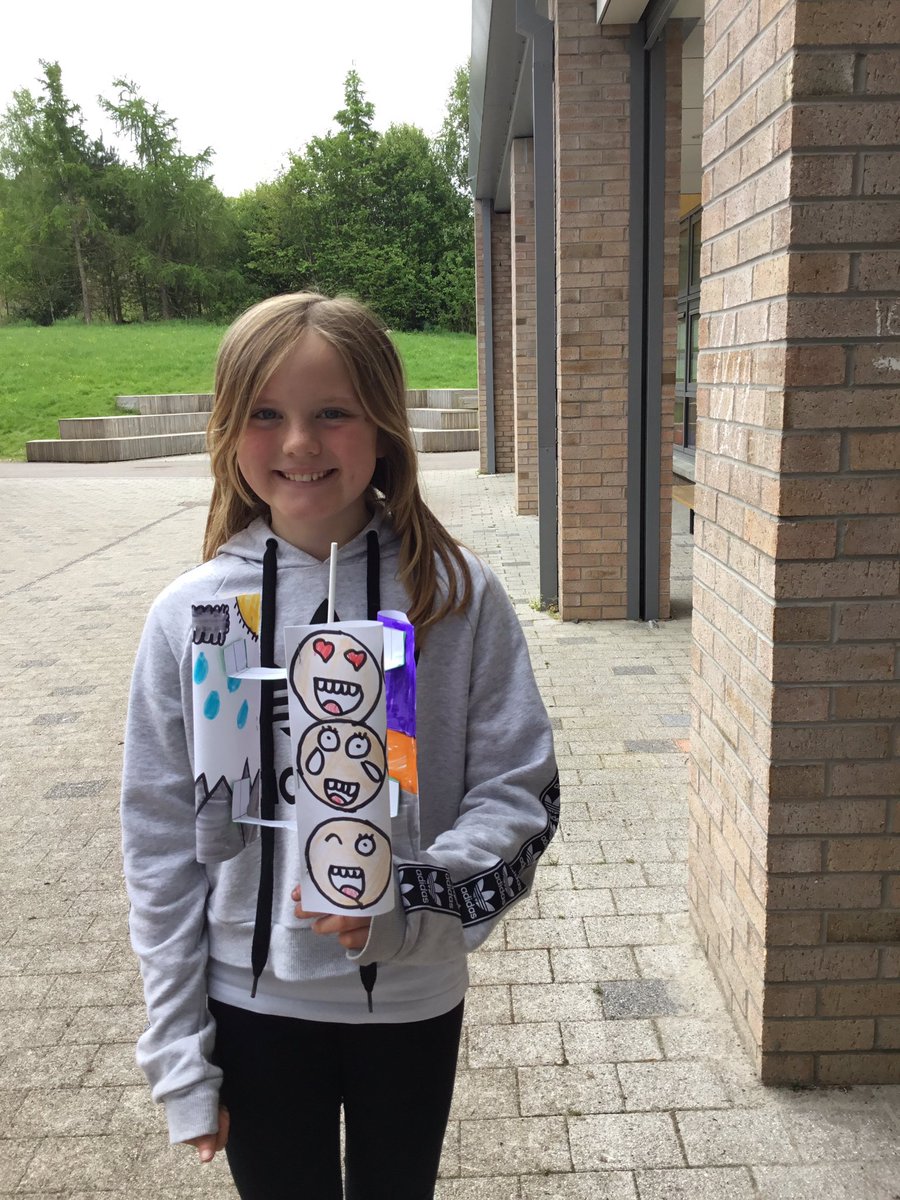
How many people out there know what VAWT stands for? P5 can tell you. Well done to everyone for working through this intricate design from @AxisWind students at GCU. @BredilandSchool @STEM_Ren @STEMscotland
We have set up another demonstration for you to try involving an aerofoil. This uses all three of the theories that have you learned in previous experiments. The instructions are linked below to try it yourself!
@BredilandSchool@BargarranPS@Cochrane_Castle@DRigmand@pme269
Excellent research students! We have had some great weather recently with little wind but that's exactly one of the conditions we want to consider. We are really impressed with the effort you put into your wind vane designs!
P5 have been busy creating and experimenting with their own weather vanes. They were successful in working out the wind direction. @BredilandSchool@AxisWind@STEMscotland
@BargarranPS@GCUEngagement@BredilandSchool Excellent Quinn! Engineers understand that Bernoulli's Principle is something that can be used to generate lift and is one of the forces that will turn the wind turbine! Bernoulli's principle has a key role in allowing aeroplane's to fly and can even lift boats out of the water!
Really impressed by those who have attempted some of the experiments and writing down the results. The only difference between fun an science is writing down the outcome! Well done those who have participated so far we love the photos! 🧑🔬🙌
P6 STEM Challenge.: P6 are taking part in a STEM challenge with students from Glasgow University. As we are not in school to continue with our challenge, the University students set us some experiments to try at home. Thank you very much to those… https://t.co/rYgpreC9nb
We have made a 5 minute presentation to explain how the fluid dynamic effects from the experiments will influence the vertical axis wind turbine's performance.
@BredilandSchool@BargarranPS@DRigmand@pme269@GCUEngagement
https://t.co/LFtXWupwog
Newtons third law tells us that 'for every action, there is an equal and opposite reaction'. We can demonstrate this by a simple experiment where we release air from a balloon in a controlled direction.
The Coanda effect is the behavior that fluid (air) has when flowing around an object. It tells us that airflow around an object will follow its shape instead of being deflected in random directions which we may initially think. Try the experiment to discover the exciting result!