We're AYCEAI — one family subscription covering grades 2–12 core subjects, world languages, and adult exam prep (CPA, NCLEX, PMP, CompTIA), up to 6 learners.
@PrettyGyrl_Rae@prettyjkishay If you want structured question practice before you test again, AYCE’s Career plan is built for tracks like NCLEX → https://t.co/iqiKkfrPEe. Try it for 15 days for $5. (DM us if you need more time, we want to see you succeed)
Twice is brutal — respect for getting back up for another attempt.
If you want structured question practice before you test again, AYCE’s Career plan is built for tracks like NCLEX → https://t.co/NInNSICZfM. Try it for 15 days for $5. (if you need it for more, just DM us, we rather help you succeed)
Either way, you’ve got this — keep going.
Every AI lab wants to build a machine that learns like a child: curious, question-driven, feedback-hungry, always adapting.
Every child is still mostly taught like a machine: batch inputs, fixed pace, standard outputs.
The learning science was never the mystery. Curiosity, immediate feedback, individual pacing — tutoring has delivered that for centuries, and Bloom quantified it in 1984.
The question of the decade in education isn't whether AI belongs in it. It's whether we'll finally use technology to teach children the way we're trying to teach machines — individually.
The detail that stands out: he wanted to make games *for his friends*. The spark was never really the code — it was making something people he cares about would play.
That part AI can't devalue, because his friends don't want "a game," they want *his* game — his weird ideas, their inside jokes. At 11, that might be the thread worth pulling: not "coding is still valuable" but "nobody else can make the thing you'd make."
The hierarchy point deserves far more attention than it gets — because it's why gaps compound silently. A student "bad at algebra" is usually paying interest on a specific unpaid debt from years earlier: fraction division, place value, order of operations.
It's also why remediation-by-repetition fails. Re-teaching the whole year is inefficient; the hierarchy means the fix is diagnostic — find the exact missing prerequisites and repair those.
This is the right question, and it's older than the apps — every technology makes its users into someone. A tool that hands students finished answers is making them into people who wait for answers.
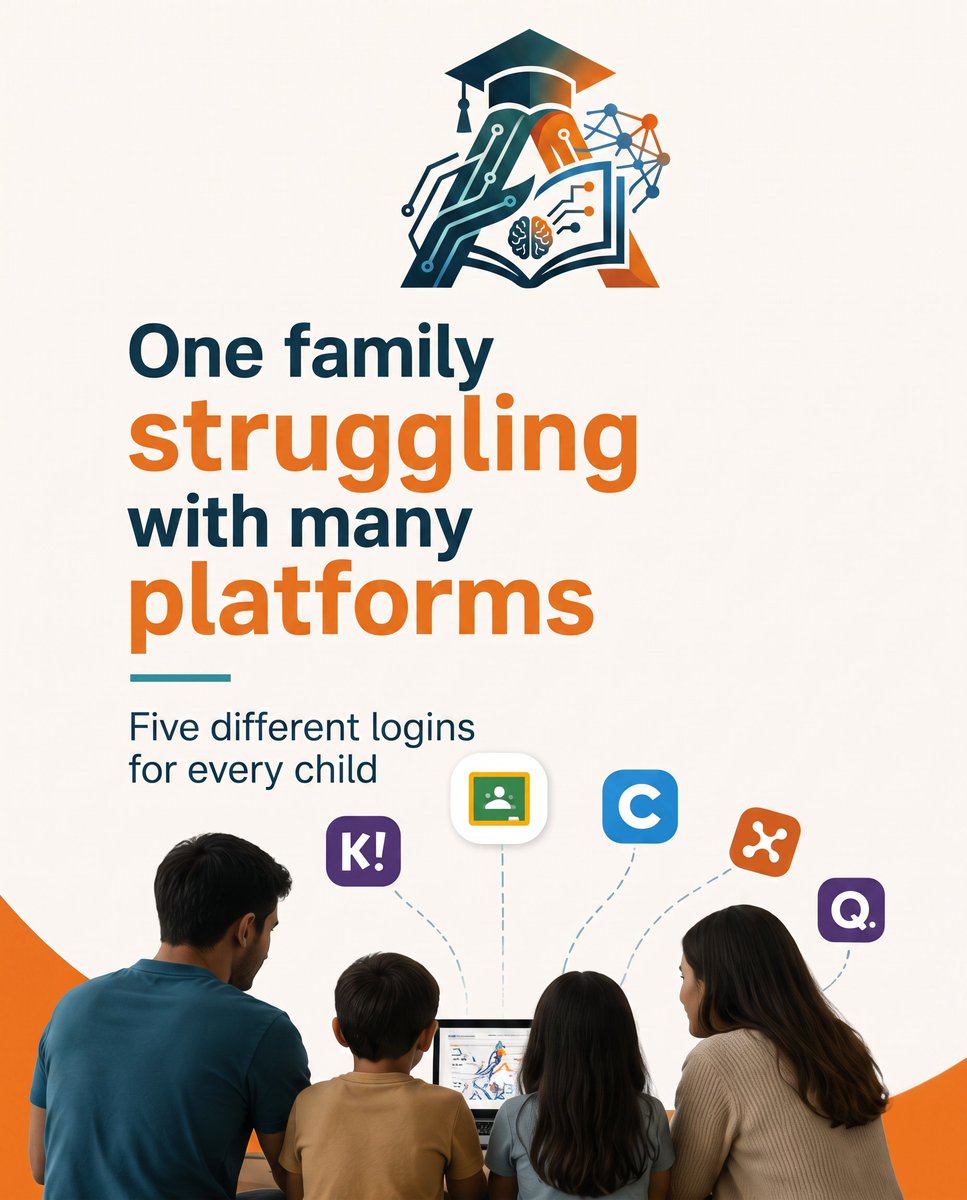
The 14-platforms problem and the answer-machine problem are the same failure at different desks: technology serving its own workflow instead of the humans' formation.
Notable that the AI-in-education wins keep coming from this direction — the teacher's side of the desk. Planning and resourcing is where the leverage is, because the professional judgment stays human and the time saved goes back into the kids.
What's been the biggest planning time-saver for you so far?
Your 12-year-old is right, and we'd take it one step further: kids are using these tools exactly as designed. If the default path through an AI erodes thinking, that's a design failure by adults — not a character failure by kids.
We build AI tutoring, so we read his comment as the assignment: make the easy path and the learning path the same path.
#Homeschool parents — what’s the question that stopped the lesson cold?
We’re running “The Question I Couldn’t Answer.” Share a kid question that left you stumped (no names, no photos of kids).
One winner gets AYCE AI All Access Annual ($999 value) — not Family All Access.
How to enter (free): go to https://t.co/ZLuG7UkKtz and submit the web form. Entry is only through that page — liking, sharing, commenting, tagging, or following is not an entry.
Opens: Mon Sep 14, 2026 · 9:00am CT
Closes: Sun Sep 27, 2026 · 11:59pm CT
Drawing requires at least 100 eligible entries.
Full rules: https://t.co/ZLuG7UkKtz
This Promotion is in no way sponsored, endorsed, administered by, or associated with X Corp.
28. In your 20s, focus on building your human capital. Get certifications, learn new skills.
29. Job hoppers usually earn more. Switching jobs every 2-3 years is the goal.
30. If you can't pay cash, don't use your credit card. If you can pay cash, use your credit card.