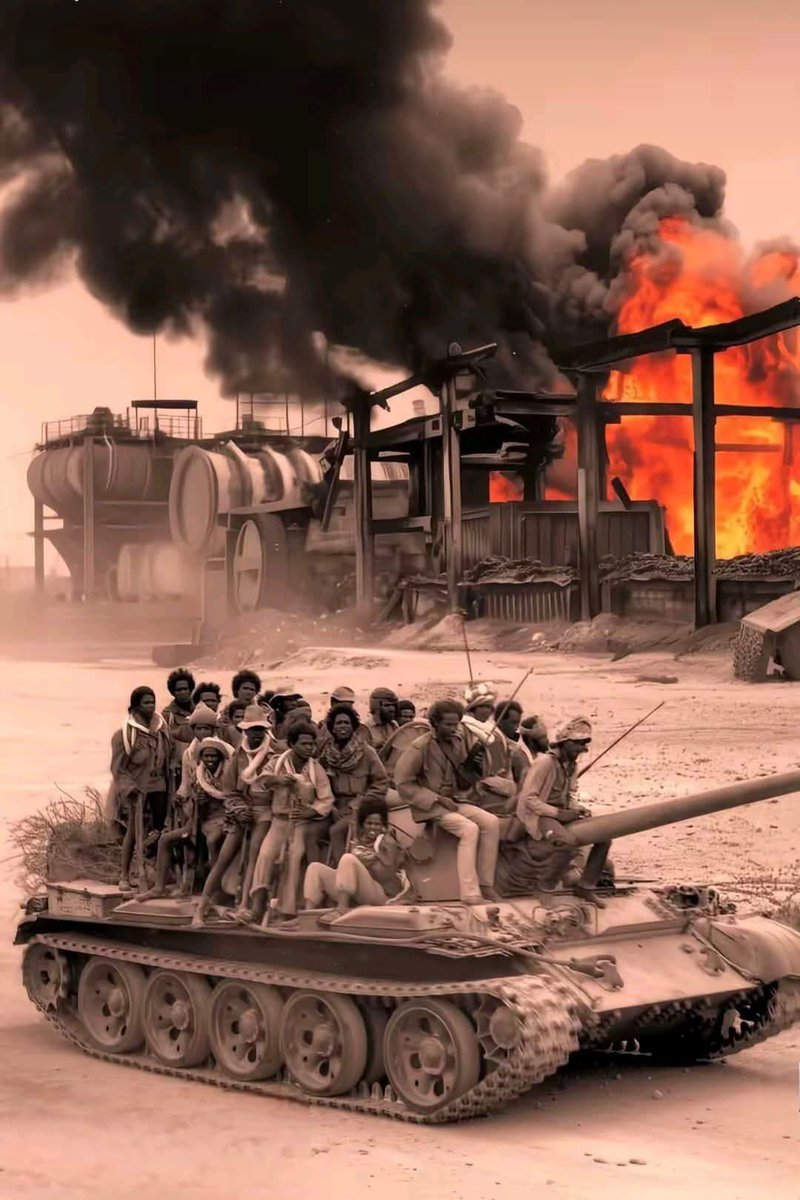
Fifty-five years ago, on November 30 and December 1, 1970, two small Eritrean villages, Besikdira and Ona, were erased from the map by the Ethiopian army of occupation. In barely 48 hours, nearly a thousand civilians, men, women, children, the elderly, were slaughtered. Families disappeared entirely; communities that had stood for centuries ceased to exist. And yet these atrocities, among the worst committed in the Horn of Africa in the twentieth century, remain largely unknown beyond Eritrea’s borders and denied by those who carried them out.
These massacres were not the fog of war. They were policy. They were the logical endpoint of a strategy designed in Addis Ababa after Haile Selassie declared a state of emergency and vowed to crush Eritrea’s lawful demand for decolonization. The goal was simple and barbaric: destroy the population’s ability to resist Ethiopia’s illegal occupation. By 1967, Ethiopia’s army was conducting scorched-earth campaigns across Eritrea, burning villages, imprisoning and torturing civilians, killing livestock, destroying water sources, and forcing tens of thousands into exile.
Read More:
https://t.co/wwBIKRxkPx
#Ethiopia #Eritrea #Sudan
Meanwhile, few Ethiopians today know what was done in their name during the thirty-year war. Independent researchers estimate that more than 250,000 Eritrean civilians were killed, numbers the Ethiopian state has neither acknowledged nor apologized for. Instead, astonishingly, new generations of Ethiopian leaders once again speak of Eritrean ports and territory as their “birthright,” threatening reoccupation and boasting openly of future conquests, as if the decades of massacres never occurred.
https://t.co/wwBIKRxkPx
#Ethiopa #Eritrea @BBCWorld@AlJazeera@hrw
#Eritrea: President Isaias Afwerki just arrived in Port #Sudan — and the reception said everything.
Crowds out in force, Burhan himself at the front of the welcome line.
Eritrea walks in with quiet strength, no theatrics, no noise… just respect earned over decades.
History doesn’t shout — it arrives.
#Eritrea - Safe Medicines: Safe Community; National Medicines Safety Week 2025
by Heaven Yohannes
*" The Ministry of Health, through its National Medicines and Food Administration (NMFA), is conducting a crucial nationwide campaign entitled ‘National Medicines Safety Week’ to galvanize profound and powerful action from every citizen".
*"...The campaign’s guiding theme is 'We Can All Help Make Medicines Safer'. This motto underscores the fundamental truth that safety is a collective responsibility, demanding vigilant cooperation from healthcare professionals, regulators, and the public".
*"..The importance of this campaign transcends the current week’s events. It must catalyze a long-term, continuous commitment to vigilance. By sustaining this partnership, we secure the promise that medicines in the market will always remain a safe and trusted means of wellbeing that benefits all Eritreans equally".
https://t.co/nRScHxflmJ
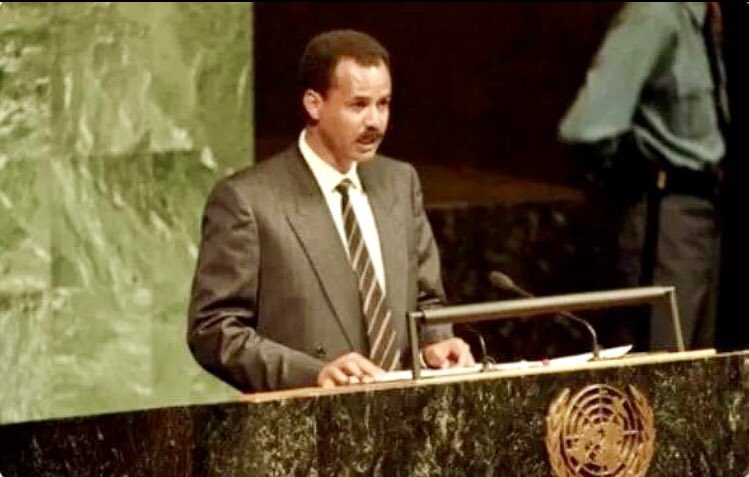
This month marks the Historical speech by H.E President Issais Afewerki.
September 30, in the History of Eritrea.
On September 30, 1993, 43+years after the #UN unjustly decided #Eritrea to be federated with Ethiopia, President Isaias Afewerki addressed the 48th session of the United Nations General Assembly as the Leader of the Sovereign State of Eritrea.
Some excerpts from the historic Speech;
"I feel special privilege & honor to address the United Nations General Assembly on behalf of a people who struggled for half a century to regain their fundamental human & national rights & who, despite the outright military victory that they won took the unprecedented step of organizing a free & fair referendum, so as to join the community of independent states on the basis of their freely expressed wish & on solid legal grounds."
"As I speak here today, I cannot help but remember the appeals that we sent year in and out to this Assembly & the member countries of the UN, describing the plight of our people and asking for legitimate sympathy, support and recognition."
"We appealed to the UN not only in its capacity as a representative of the International community, but also because of its special responsibility to Eritrea."
"For it was the UN that decided in 1950, at the beginning of the Cold War, to deny the colonized people of Eritrea their right to self-determination, thereby sacrificing their national and human rights on the altar of the strategic interests of the superpowers."
"In passing that resolution, the UN affirmed that it "remained an international instrument" which the GA "could be seized of" at any time. But for the next 41 years, as a brutal war of aggression was conducted against the Eritrean people, initially with the active support of the US & later with a much worse & massive involvement of the Soviet Union & despite the repeated appeals of the Eritrean people, the UN refused to raise its voice in the defense of a people whose future it had unjustly decided & whom it pledged to protect. Not once in 41 years did Eritrea, scene of the longest war in Africa, & victim of some of the grossest violations of human rights, figure in the agenda of UN. This deafening silence pained our people. It also gave a free hand to the aggressors, thereby prolonging our suffering.”
"But it neither shook our resolve nor undermined our belief in the justness of our cause & the inevitability of our victory. As an Eritrean proverb says, "The rod of truth may become thinner but it cannot be broken." Indeed, Justice has finally prevailed." President Isaias Afwerki 🇪🇷
#ERITREA #UnitedNations #UNGA
Today, I had the privilege of meeting with the new Eritrea Desk at the U.S. State Department. We held a productive discussion covering the recent travel ban, ongoing sanctions, regional dynamics, economic opportunities, and my books. Most importantly, we explored concrete ways to strengthen Eritrea–U.S. relations.
A key takeaway: the United States has signaled a shift away from regime change agendas and expressed a commitment to developing business partnerships and fostering mutual respect. This marks a significant change, as the State Department has long engaged primarily with dissenting voices while sidelining the silent majority advocating for constructive, mutually beneficial relations.
I appreciated the opportunity to share my views and vision, and I am confident that the future of Eritrea–U.S. relations holds more promise than the past eight decades have offered.
#Eritrea #USA #USEritrea
@realDonaldTrump@SecRubio@EmbassyEritrea@hawelti
Someone has to translate @MikeHammerUSA Abiy's provocative 47-minute speech. Abiy didn't go to the #Ethiopian parliament to ask for commercial access and peaceful means of gaining reliable access to the sea. Commerce is a business that requires professional people to make business decisions. Instead, he made 47 long infuriating speeches about building the Navy, Alula, and Axum Empire, famine, and population size; he did everything he could to bully its neighbours. What do you expect from a puppet leader? He does what he is told to do.