From my perspective, Miyazaki is a rather unique, yet extremely serious game developer.
His career did not begin in the game industry. In fact, he didn’t become a game developer until he was almost thirty years old.
Even among developers of my generation (those of us born in the 1970s), I think it’s remarkable that someone who wasn’t even a game developer during the dawn of the polygon era eventually became one of Japan’s most representative game creators. (In other words, compared to the rest of us from the same generation—including myself—his career path is exceptionally unusual. Most notably, unlike many of us, he was not working at one of the major development studios that held a significant technological advantage during the early polygon era. That, more than anything else, is what makes his path so unique.)
Next, regarding my impression of Dark Souls.
People often focus on its difficulty as a game, but I believe Miyazaki’s true creativity shines through in the world he created. (By the way, I personally think Dark Souls has fairly simple action mechanics, and I don’t actually consider it to be an especially difficult game.)
If you look into my own career, you’ll see that I was personally involved with the Dark Souls series and Elden Ring as the General Manager overseeing both production and marketing (Just to clarify, I wasn't part of the development team itself. My involvement was simply as the General Manager of the publisher-side department overseeing production and marketing). From that perspective, I can say that Dark Souls didn’t suddenly become a massive success overnight. It was the result of everything Miyazaki and his team had built up through their previous titles.
Today, he receives offers from all over the world, but when I think back to the days when he and his team were struggling the most, many of those offers seem like they’re coming from people who only know who they are today. Some of them almost feel like complete reversals in attitude. Well, that’s just my personal perspective.
Personally, I had grown tired of people who would simply compare games by saying things like, “That title cost X billion yen to make and sold Y million copies,” and then use nothing but those numbers to judge them against other games. There were so many people who couldn’t appreciate the journey or the growth of the developers themselves. Anyone can look at the current numbers—they’re available to everyone. Whenever I heard those kinds of opinions, I always thought, “That’s exactly what you’d expect from someone who’s never actually developed games.”
What surprised me even more was that, even if people couldn’t properly evaluate that journey, almost nobody even seemed interested in trying to understand the process of how those developers gradually reached where they are today.
(I'm NOT talking about the fan community).
Now, going back to Miyazaki, there are two things about him that have always stayed with me.
The first was back when I was developing Summer Lesson for VR, around the time it was generating a lot of buzz.
One day, he came to try an early build of Summer Lesson along with people from several other game companies.
While everyone else was laughing, chatting, and having fun with it, Miyazaki alone played it with incredible seriousness. Then, after everyone had finished and started discussing their impressions, he remained completely silent, staring intently at the preview monitor, deep in thought.
Everyone became curious and finally asked him, “Miyazaki, what are you thinking about?”
He suddenly smiled and said,
“Oh… I got completely absorbed in thinking about what I would do if I were making this, and what kind of game I’d create.”
What he talked about after that was, in the best possible sense, completely insane.
It was one of those rare moments when I caught a glimpse of what I’d call his “mad scientist” side—his deeply serious, obsessive approach to creativity.
The other thing that left a strong impression on me was that he generally dislikes video interviews (including live streaming).
I once asked him about it by email, and he replied with quite a long explanation. After reading it, I completely understood where he was coming from.
Simply put, he doesn’t like watching himself moving around on video. (Psychologically speaking, it’s actually a bit more complicated than that.)
But there was another reason.
According to him, there are naturally many people in this industry who know games far better than he does. Whenever he listens to those people speak, he realizes that his own understanding is still shallow, and it makes him feel that he’s not yet in a position to be the one talking about games.
I mean… it’s common for well-known developers to say, “I still have a long way to go.”
But whenever someone like him says that, my reaction is always,
“Come on… if you say you’re still not there yet, then the rest of us won’t feel qualified to talk about games at all.” (laugh)
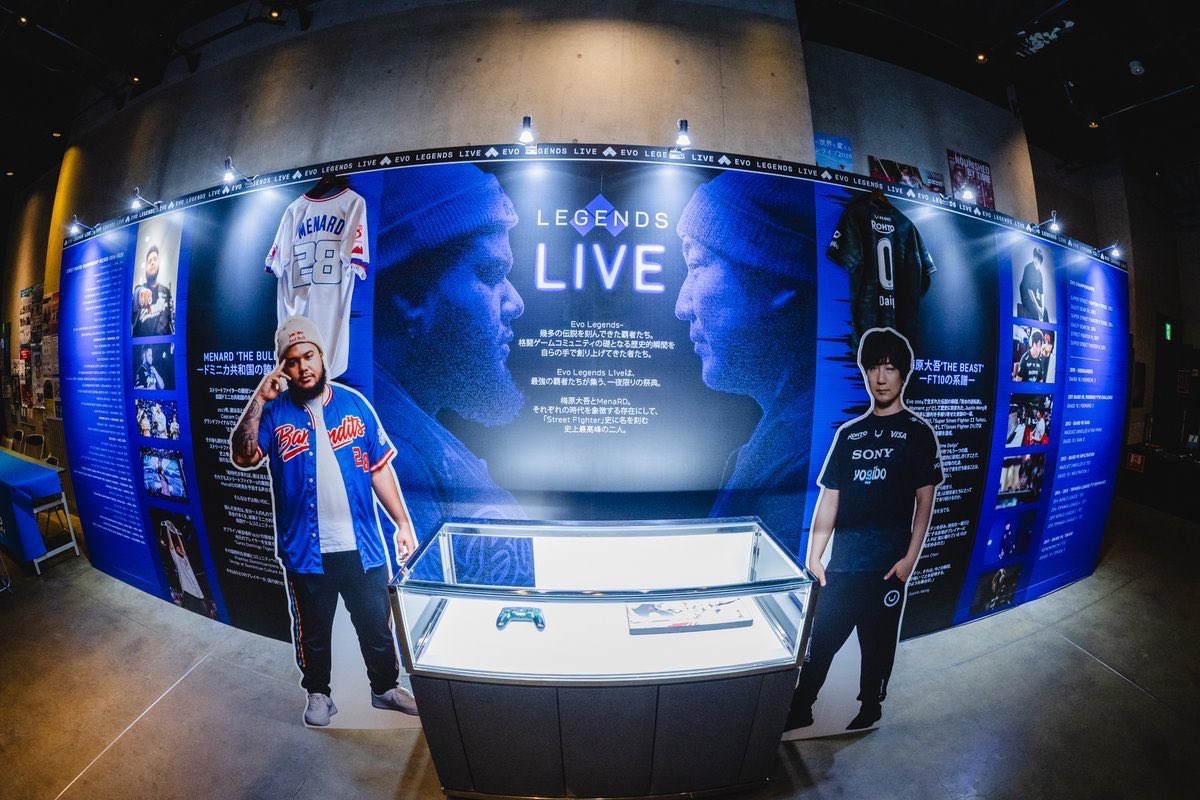
Anyway, that’s one of the reasons why video interviews with Miyazaki are extremely rare. And conversations with him on camera—especially long-form discussions with another developer—are even rarer. They almost don’t exist at all.
By the way, the other game developer in that photo is Masahiro Sakurai.
If you ask me, he’s basically:
“A Saiyan who genuinely believes he’s just another ordinary human.”
Every now and then, when the rest of us are struggling with some problem, he’ll say something that sounds exactly like Goku saying,
“Well… why don’t you just fly?”
And I’ll reply,
“Because we humans can’t use Flight Technique.”
Then he just stares at me with a completely puzzled look.
To put it in terms of Demon Slayer, I’d describe him as:
"Like Muzan Kibutsuji casually showing up at a drinking party where all the Hashira have gathered, genuinely believing he's just another ordinary guest".
That’s the kind of person he is.
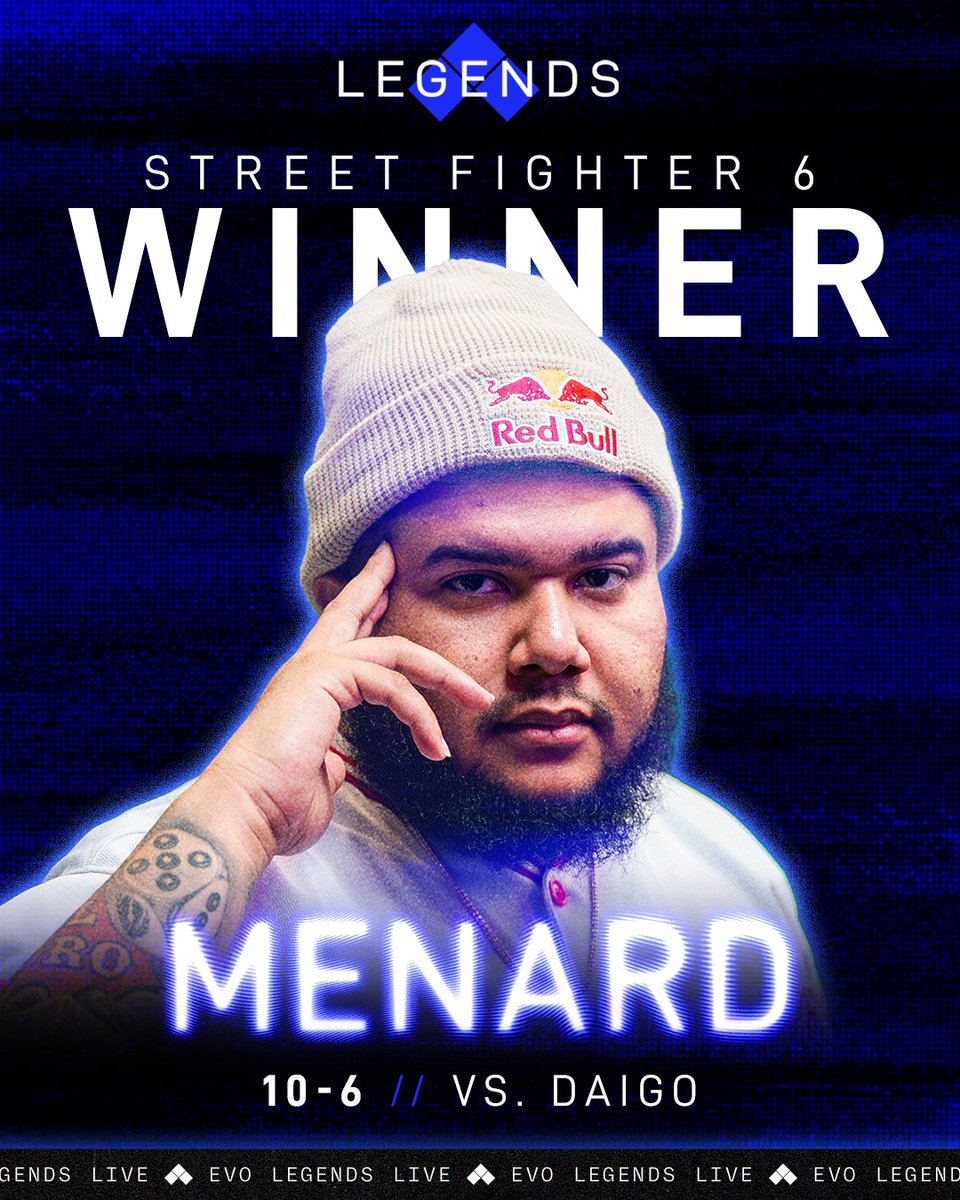
Daigo on stream talking about Kemonomichi. He says he seriously planned on retiring if he lost to Mena. The reason being that since SF6 release he has not felt “strong” or the motivation to improve like in his youth in the arcade days. But after 3 months of training, in the final week before the match he thought, “Wait a minute. Am I strong again? This is what it felt like back in the day.”
He was incredibly stressed the day before the match and couldn’t eat, and said just walking outside felt like he was already in the fight. He thought he wouldn’t be able to sleep due to stress, but surprisingly fell asleep easily - however when he woke up he had tears in his eyes. He doesn’t know why, but he thinks it’s because he had a dream where he quit Fighting Games.
After he lost to Mena, he still thought it was time to retire. But in the taxi ride back to Tokyo, Eita kept bothering him and begging him not to. Daigo agreed just to shut him up, but then he thought back on that feeling of being strong in the last week and thought if he could keep that same motivation and approach he had for Kemonomichi, he could become strong again.
For now he has decided to continue competing, but is taking a short rest after the set.
A whole lot of nothing. Subsidies for the grocery store with the most narrowly means tested criteria imaginable to ensure the maximum amount of people fall through the cracks.
Standard Liberal policy.
We wanted to leave the fans with one final special moment between us. 💙
Thank you all for your overwhelming support over these last years of DBFZ,
and an ESPECIALLY HUGE thank you to @go13151 for being the greatest rival one could ever ask for!
Till next time everyone~
It’s not your expression, it’s a machine given words that it uses to create a consensus of how other people have expressed it. Expression is your voice, not the voices of others serrated and dragged through a machine made to mimic your mouth. You express nothing, you forfeit your voice to allow the rest of humanity to speak for you. Here, you even say the ultimate goal is the erasure of human voices. Your “expression” leads to a lack of humanity, not a furtherance of it. Every iteration and invention of art has found new ways to allow us to culminate the human experience through sensation, but generative AI is cancer, it’s the cells of what we’ve already built spinning ad nauseam until all we “make” is what others have already made. It’s a dead end and lifeless, and goes against whatever spirit, soul, or God gave us the gift of creation in the first place.
Introducing #CanFGC🍁, a grassroots Canadian national circuit for fighting games, opening with @Play2XKO & @StreetFighter for Year 0.
Canada's FGC deserves a national stage. Let's bring our country together! 🇨🇦