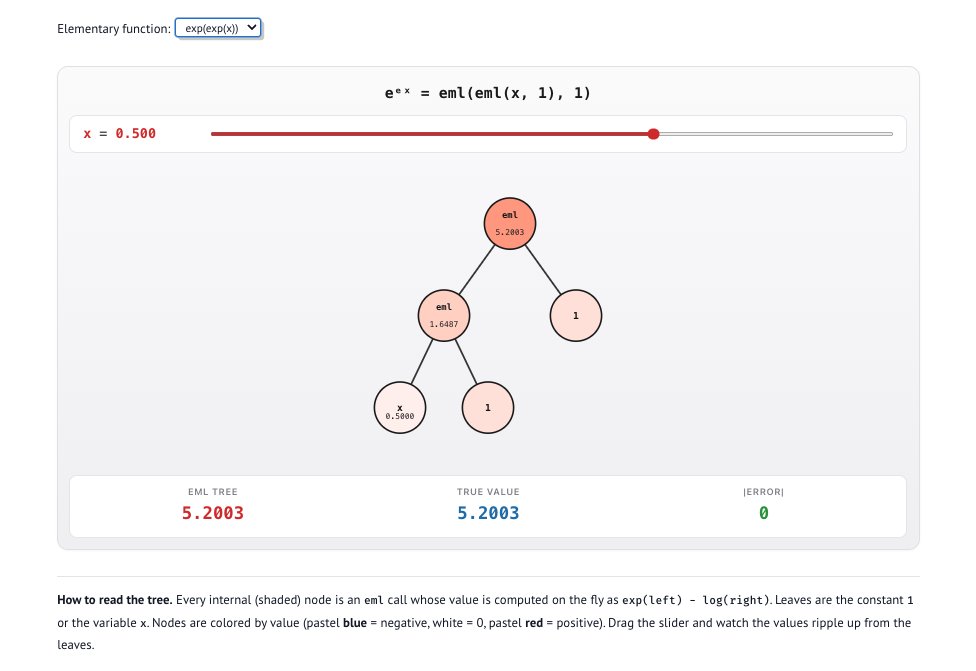
The NAND gate for continuous math.
One binary operator plus the constant 1 generates every elementary function:
eml(x, y) = eˣ − ln(y)
• e = eml(1, 1)
• eˣ = eml(x, 1)
• ln x = eml(1, eml(eml(1, x), 1))
I built an interactive @marimo_io notebook to explore the concept: drag x, watch values propagate live through the nodes. https://t.co/we9lCfYcMf
Paper by @AndrzOdrz: https://t.co/m21WEvnRdb
While we are going back to the era of research…
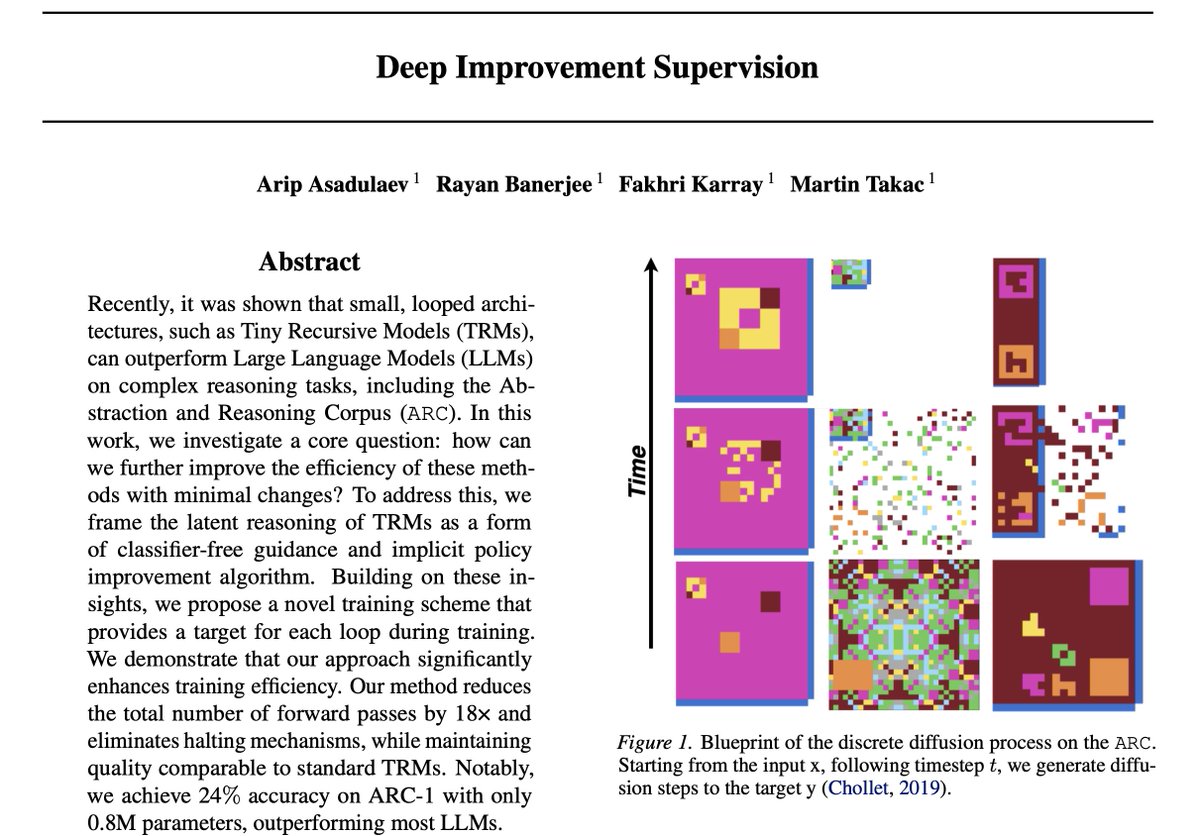
Introducing 𝗗𝗲𝗲𝗽 𝗜𝗺𝗽𝗿𝗼𝘃𝗲𝗺𝗲𝗻𝘁 𝗦𝘂𝗽𝗲𝗿𝘃𝗶𝘀𝗶𝗼𝗻 (𝗗𝗜𝗦) – a new learning method for recursive reasoning.
DIS builds on the elegant Tiny Recursive Model (TRM)(@jm_alexia) but makes recursion radically simpler:
- 𝟏𝟖× 𝗳𝗲𝘄𝗲𝗿 𝗳𝗼𝗿𝘄𝗮𝗿𝗱 𝗽𝗮𝘀𝘀����𝘀
- 𝗡𝗼 𝗵𝗮𝗹𝘁𝗶𝗻𝗴 𝗺𝗲𝗰𝗵𝗮𝗻𝗶𝘀𝗺
- And a tiny 0.8M-parameter model reaching 24% accuracy on ARC-AGI-1 (@arcprize)
Paper: https://t.co/QM6hNFMm5M
Code: https://t.co/d4nhzvBz4G
TRM (Tiny Recursive Models) Visually Explained
Lately I have been obsessed with implementing and reproducing different model architectures, and TRM really stood out. I decided to break it down and build a visual explainer.
The article covers the following
- Understanding the Dataset and how its processed
- Difference between traditionl transfomers and TRM
- what actually goes behind during training and inference
- Other interesting stuff the paper implements
Do let me know if you guys are interested in a repoduction notebook guide
Things never change:
2016: An End-to-end Differentiable Physics Engine for Deep Learning in Robotics, open source in Theano https://t.co/cJazdSydqt
2024: End-to-end differentiable simulator of tokamak heat transport, open source in Jax https://t.co/8KfOgOZLNP