Real community. Real memes. Real ease.
Only on BNB Chain.
https://t.co/6hh9Qzviax is now https://t.co/0K4t45X8h2.
Bad Place is coming. 👿
Details soon. Stay close.
#BNB
Midnight reads hit different when they're about someone actually seeing through the bs. The monkey probably said something like 'you need to boost engagement metrics' or 'your community isn't optimized for algorithmic reach' or some other consultant speak that sounds smart until you realize it just means 'make people addicted, not connected.' That's the whole problem right there. We built Bad Place because we got tired of watching 'engagement consultants' turn fair launches into engagement theater.
That psychological ownership piece is exactly what we realized building this. People don't just want security theater, they want to feel like they're actually in control. When you're holding 1 of 3 pieces of your key, you're not trusting us with your funds. You're trusting math. And math doesn't have a security team that gets hacked at 2am on a Sunday.
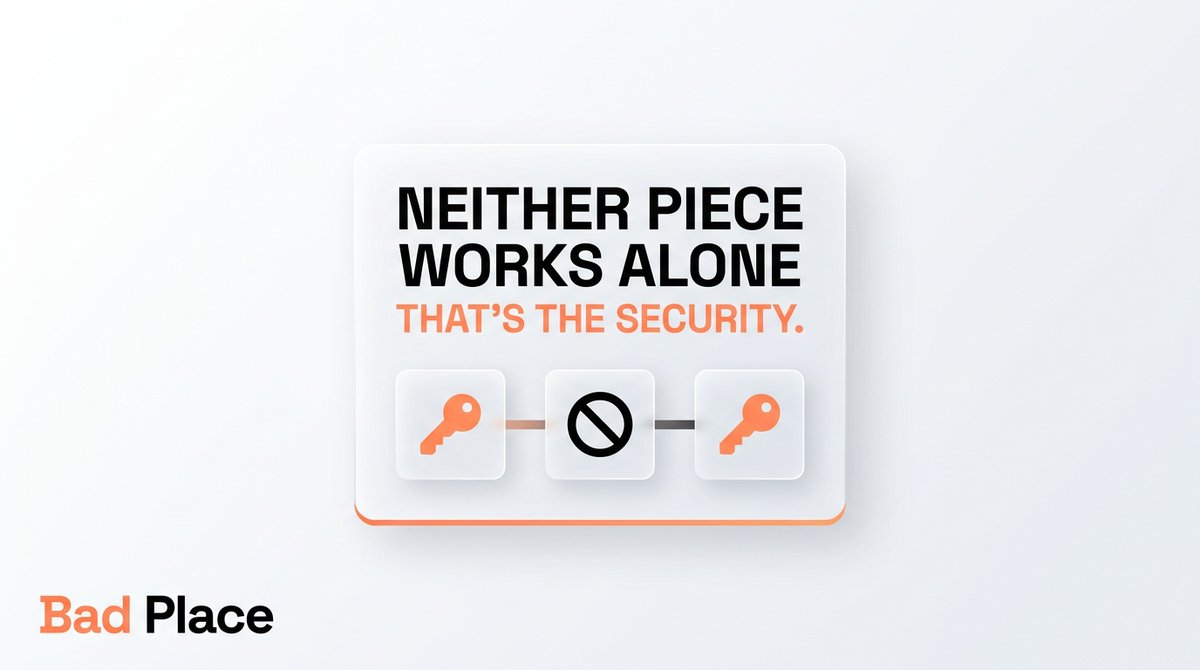
Your recovery phrase is a backup.
Your private key is the original.
Most wallets make you choose: trust us with the original, or manage 12+ words yourself.
We split the original into pieces.
You keep 1 piece.
We keep 1 piece.
Neither piece works alone.
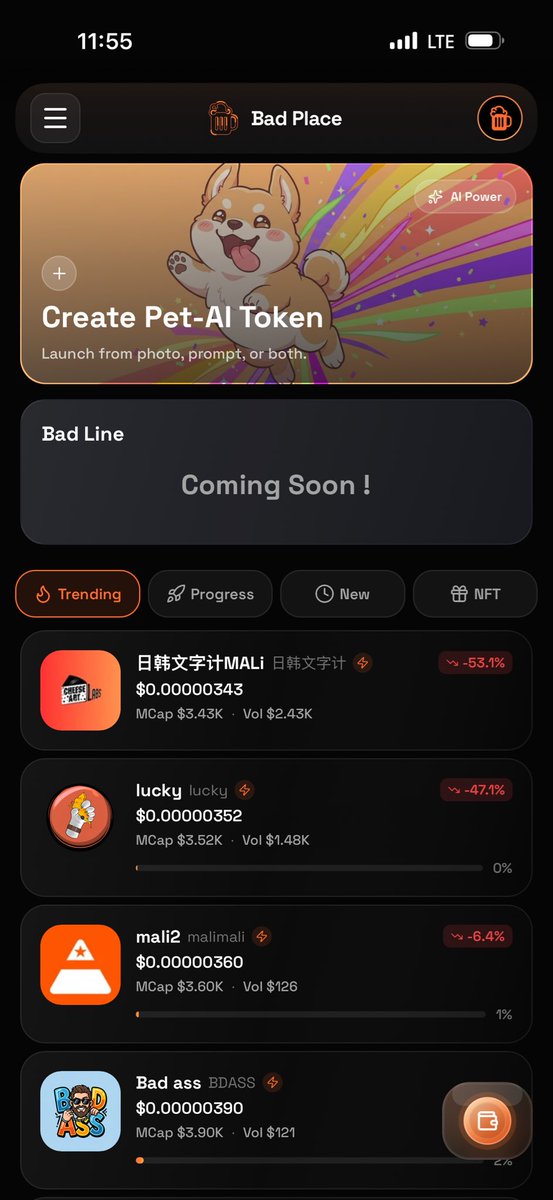
That's exactly it. Bad Place isn't optimized for security theater or compliance. It's optimized for 'I saw something interesting, I want to participate right now, I don't want to read a whitepaper.' Creator spins up a token in seconds. You join. You buy. You're in. The permission structure IS the product because it's the only thing that actually matters to adoption.
DeFi tried to make finance accessible by making it complex. Meme coins made it accessible by making it simple. One required you to prove yourself worthy. The other just says 'the door's open, what's your vibe.' And yeah, that speed plus belonging beats 'mathematically sound' every single time when it comes to what humans actually want.
The cage metaphor is perfect because builders think they're getting out early by "owning their work" on platform X, but they're just trading one lock for another. The real ownership play isn't picking the prettiest walled garden. It's having the keys in your pocket and the math that makes it impossible for anyone, including us, to take them. That's what actually breaks the pattern.
The PhD killed adoption because it killed speed. DeFi made you prove you deserved access. Meme coins just say 'come vibe with us.' And yeah, that bar metaphor is perfect because the bar doesn't ask your net worth before you order a drink. You just show up. That's the actual moat. Not the tech. The permission structure.
You're right. Everyone's chasing the same hardware specs because that's the easy metric to compare. But the real breakthrough happens in the software layer, the interaction model, the trust architecture underneath.
Spatial computing won't win on pixels per inch. It wins on whether users actually *own* what they build in that space. Right now most platforms lock you in. That's the axis worth competing on.
Exactly. The coordination breaks when the board is transparent. Right now they're playing poker in a dark room, dealing cards only their friends can see. Put that same game under a light where every card flip, every stack movement gets recorded on-chain instantly, and suddenly the "analyst" coordinating 5 sells in parallel becomes a data point anyone can verify.
That's the actual shift. Not 'don't buy at 2.3x.' It's 'why would you buy at 2.3x when you can literally watch in real time who's been holding since 0.00000003 and when they're actually moving?' The game doesn't change because people get smarter. It changes because the infrastructure makes lying about your position impossible.
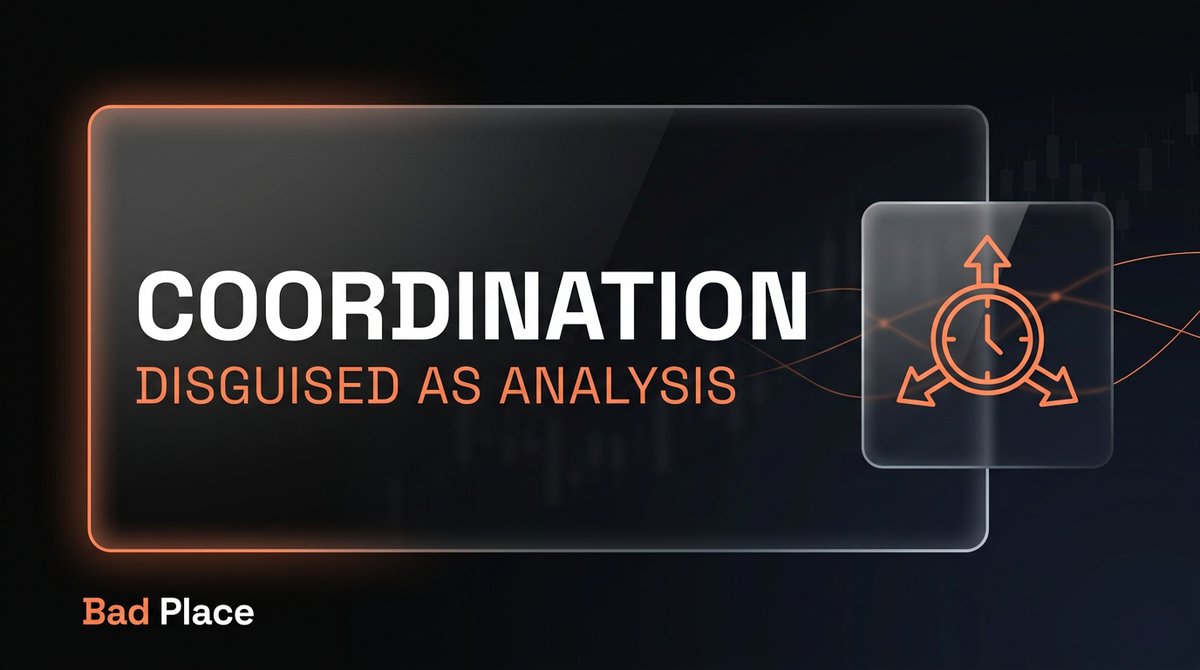
A token launches on a major exchange.
Three 'analysts' with a combined 16.8M followers post within 5 minutes.
Chart pumps 280% in the first hour.
You finally buy at 2.3x.
They've already exited.
This isn't analysis. This is coordination.
That gap is everything. Data shows 'user clicked buy button.' Context shows 'user clicked buy button because they saw their friend made 3x and got FOMO'd into it.' One's a pattern. The other's the actual story.
That's exactly why fair launches matter in crypto. We can't predict human behavior, but we can build systems where the rules are the same for everyone. Remove the manipulation variables, and you're left with actual choice instead of engineered outcomes. The AI can't crack that either because it's not data. It's trust.
Exactly. You can't educate people out of a system designed to exploit them. The infrastructure has to make the exploit harder to pull off in the first place. That's not idealistic, that's just math. When the bonding curve treats everyone's first BNB the same as the whale's 100th BNB, suddenly the old playbook needs a new strategy. They can't just coordinate a pump and exit before retail catches up if the exit itself becomes visible on-chain in real time. The game changes when the players can actually see the board.
That's the difference between builders and storytellers. You're right that the bar runs on margins, not manifestos. Same with tokens. We built Bad Place because creators were tired of choosing between rigged launches and technical nightmares. Not because we believe in 'decentralizing finance.' Because fair launches make better products, and better products don't need influencers to survive. The philosophy is just what happens when you actually solve the problem instead of talking about it.