Research Professor & PI at the Hylleraas Centre for Quantum Molecular Sciences |
Doing ML for Chemistry and Materials Science | WATOC OSLO 2025 organizer
In case you missed it, check out the video of my talk on OMol25, where I discuss how we built the dataset + how MLIPs trained on OMol25 are revolutionizing computational chemistry!
https://t.co/4QuejTLbuc
🧪🔬 Synthesis experts!
Our team at Google DeepMind is hiring a scientist to establish and lead an AI-driven laboratory for materials discovery.
The team is working to combine our AI capabilities with automated experimentation to discover novel functional materials. 1/
🚀Exciting news! We are releasing new UMA-1.1 models (Small and Medium) today and the UMA paper is now on arxiv!
UMA represents a step-change in what’s possible with a single machine learning interatomic potential (short overview in the post below). The goal was to make a model that works out-of-the-box for materials, molecules, catalysts, and beyond, while remaining fast enough for general-purpose use. ⚡🔬
The new 1.1 models fix a bug related to size extensivity. 🛠️✅
🧵 1/
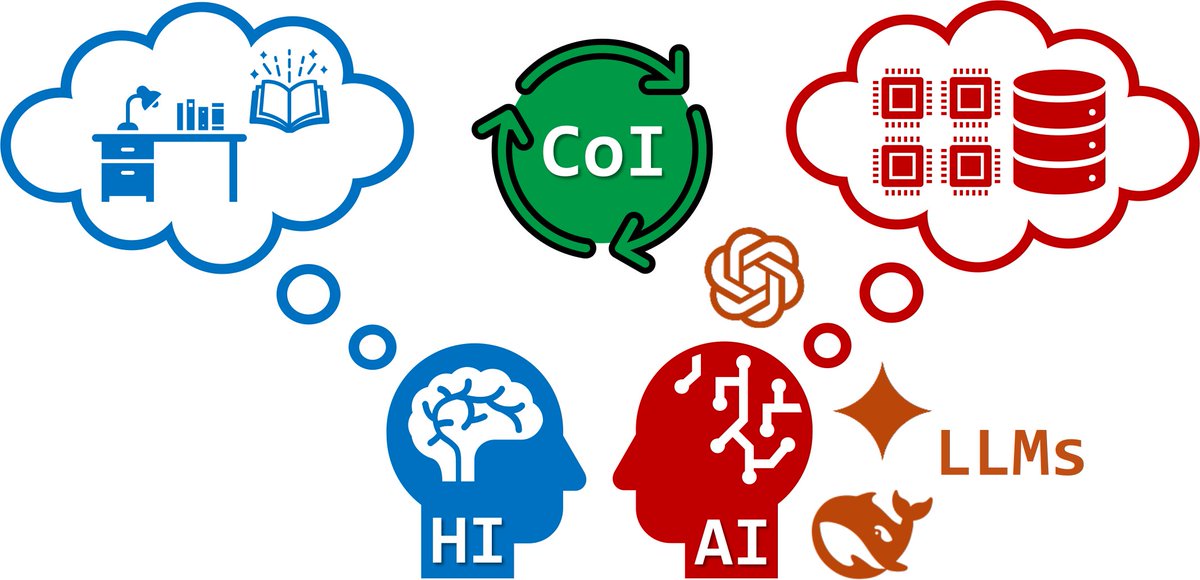
Inspired by @emollick's co-intelligence (CoI) concept, I explored CoI in the design of chemistry research with an example in computational catalysis. Trying to find some middle-ground between AI hype & denial, if such a place exists...👇
https://t.co/km9iYw0rB8
Feedback welcome!
I’m thrilled to share our latest publication in Nature Machine Intelligence: “Advancing molecular machine learning representations with stereoelectronics-infused molecular graphs”
Led by @daniil_boiko, our work introduces stereoelectronics-infused molecular graphs (SIMGs),
New preprint from our group: Screening Diels-Alder reaction space to identify candidate reactions for self-healing polymer applications (1/5)
https://t.co/Yq2EefBO1w
Check out Lucía's @Lmoranglez Perspective now out in @ACSCatalysis on AI on homogeneous catalysis, with Arron, Ainara, and I. Awesome work already done, with many future exciting challenges!
🚀 From mechanistic insights to inverse catalyst design, our new Perspective maps the breakthroughs — and the hurdles ahead — in AI for homogeneous catalysis with transition metal complexes. Take a peek! 👀 @BalcellsD@hylleraas https://t.co/j1jSivBhG5
🚀 From mechanistic insights to inverse catalyst design, our new Perspective maps the breakthroughs — and the hurdles ahead — in AI for homogeneous catalysis with transition metal complexes. Take a peek! 👀 @BalcellsD@hylleraas https://t.co/j1jSivBhG5
@mkasaneva Thanks! Great question: Sure, a larger basis set would provide higher accuracy but costs are critical at 74k scale. Still, we train ML models for ultrafast screening of hits that are refined at higher levels of theory. Another alternative is to do delta-ML with additional data.
Want to see an estimate of the average UV-Vis spectrum of the known metal-organic chemical space? Here you have it for 74,281 transition metal complexes, including wavelengths & intensities, charge transfers, and solvatochromic effects. All ready for your ML projects. Have fun!
For any who are interested in working on machine-learning driven simulations of battery electrolyes using path-integral techniques, I am opening a new postdoctoral position in my group. The Interfolio application site is here: https://t.co/l6kOCFngPC