🏇 An extra €20K!
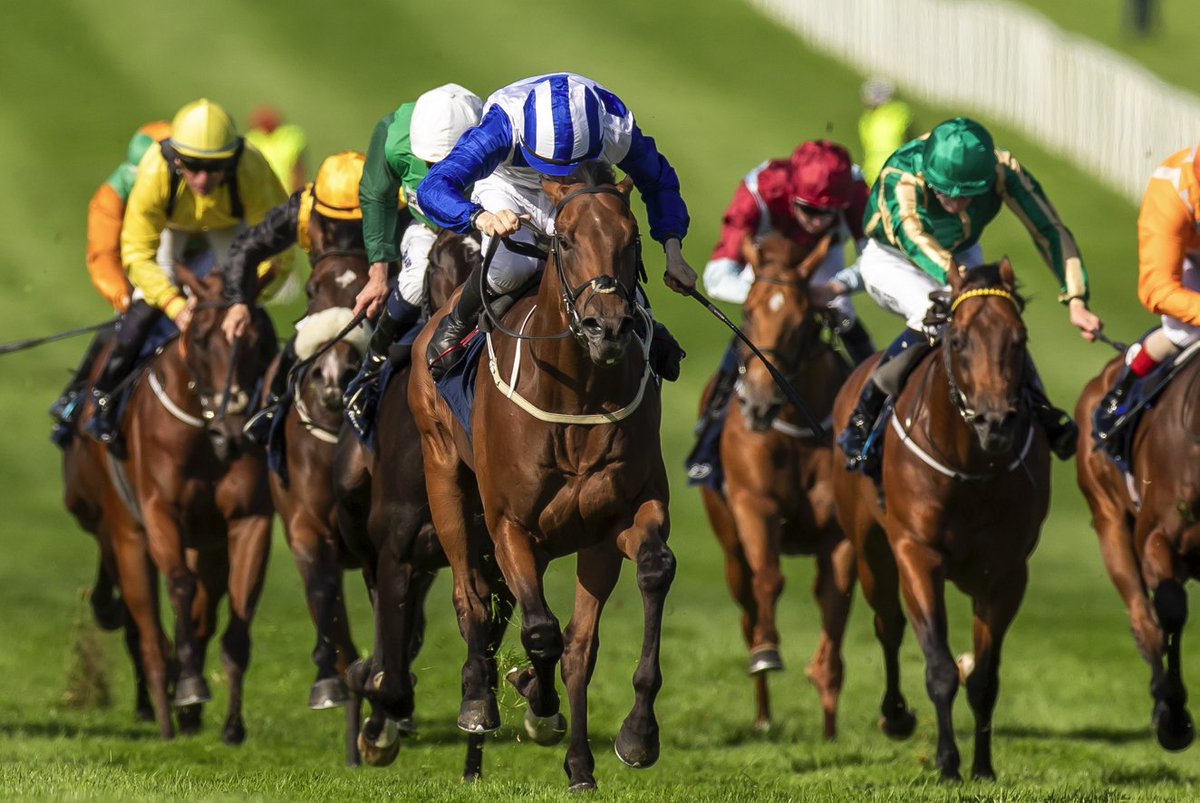
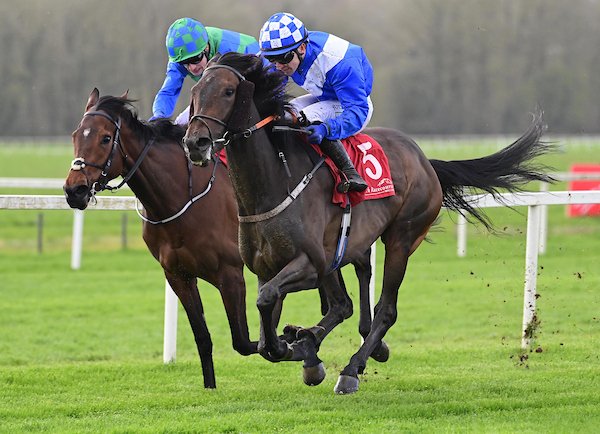
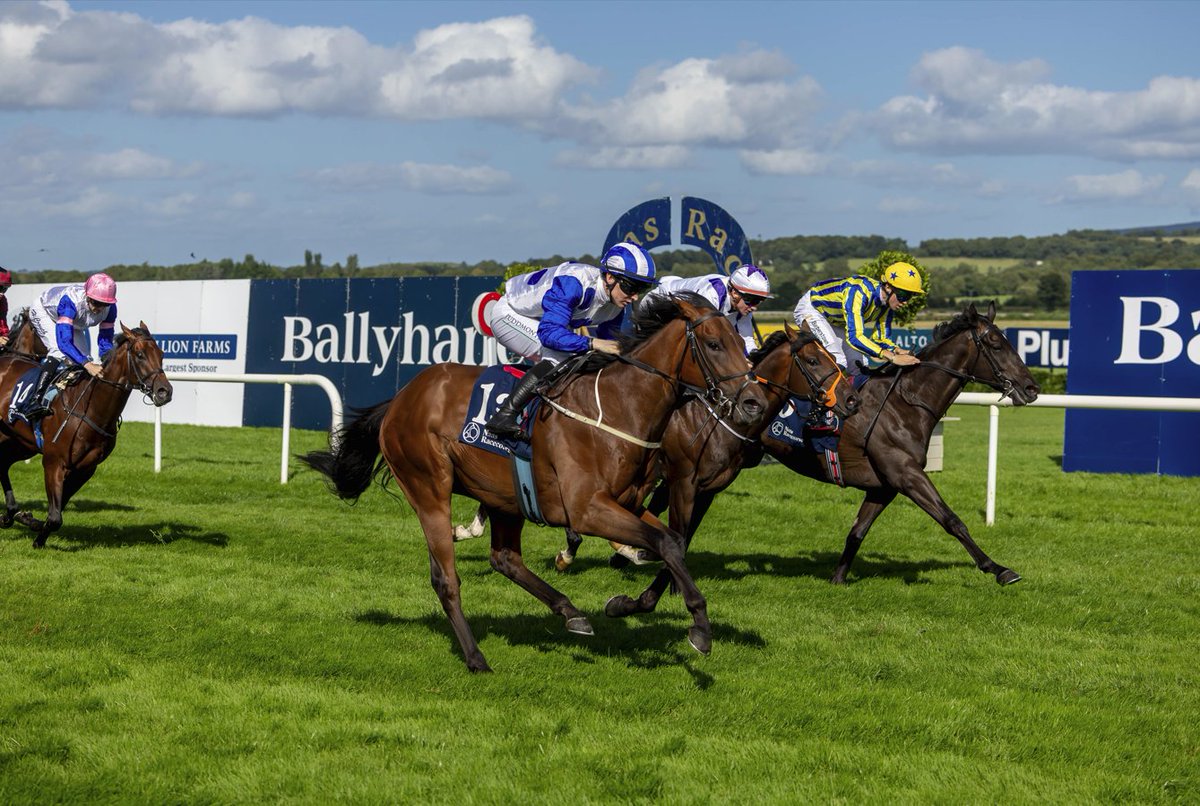
Lars Soldier & Pink Venom are among the runners declared the @IrishEBF_ Birdcatcher Premier Nursery Handicap - with both eligible for the bonus if they come out on top! 💰
🎥 Hear from Michael Mulvany, ahead of Saturday’s competitive contest.
BALLYHANE success in the USA 🇺🇸 🇺🇸
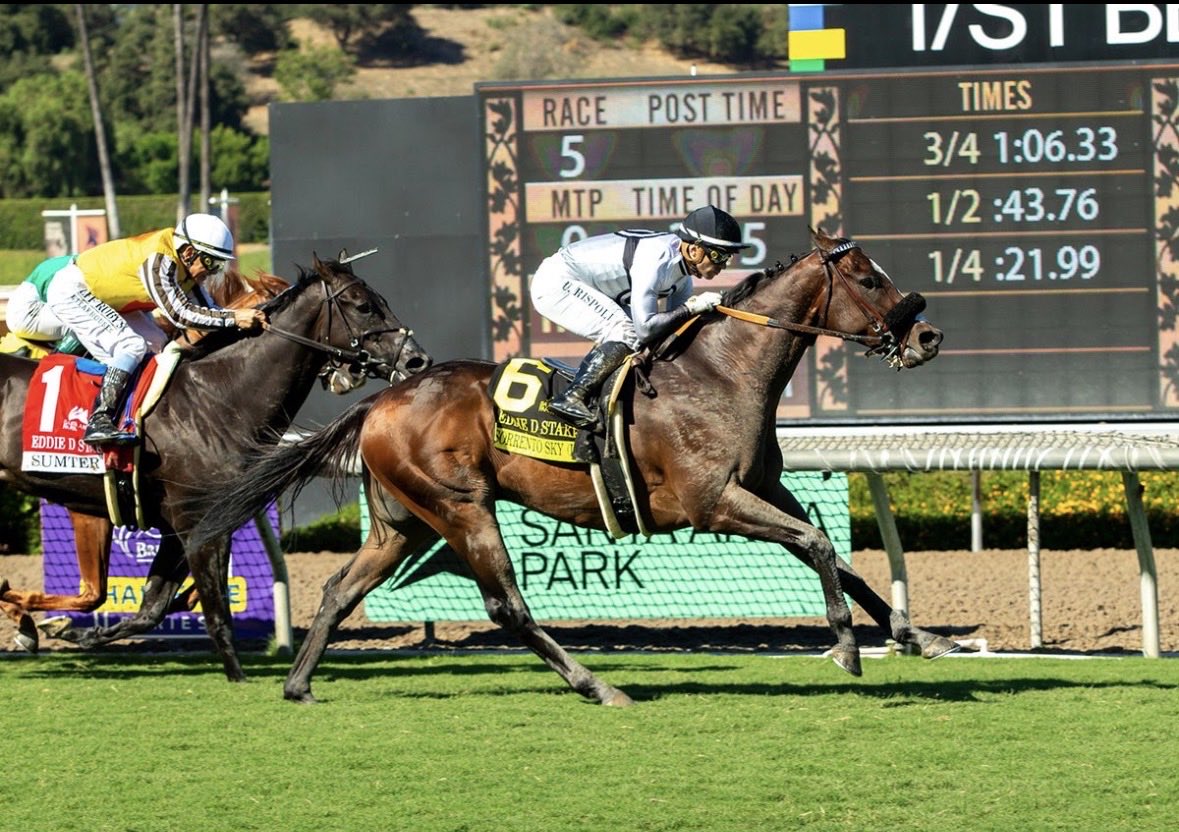
Sorrento Sky won the Gr2 Eddie D Stakes at Santa Anita last weekend, bred by Matt Dwyer by PRINCE OF LIR
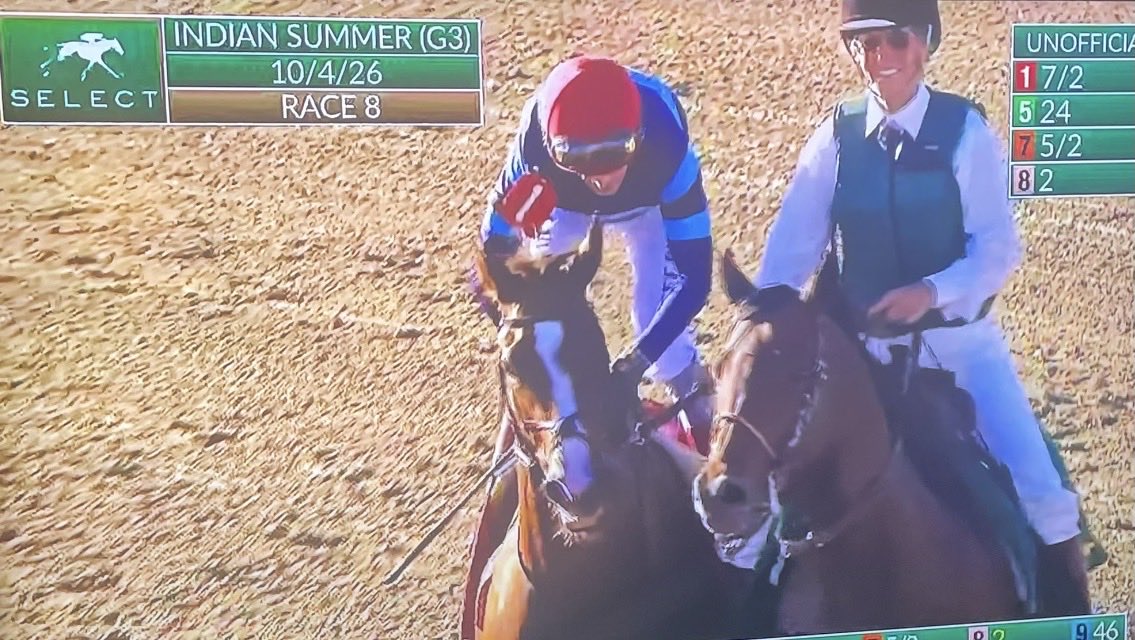
Adonius wins the Gr.3 Indian Summer Stakes tonight at Keeneland, bred by Monksland stud by SOLDIER’S CALL
🏆🏆👏🏻👏🏻
LOVE DYNASTY becomes the 52nd Group/Stakes winner produced for Clipper Logistics when winning the Gr.3 Atalanta Stakes at Sandown today for @kevinryanracing@neilcallan78
99 Black Type earners and counting!
Cracking run from the Ballyhane bred BATTLE FEVER in the @GoffsUK Harry’s Half Million race today @yorkracecourse to finish a gallant 2nd behind impressive winner Sun Goddess, bred by our friend John Tuthill 👏🏻👏🏻
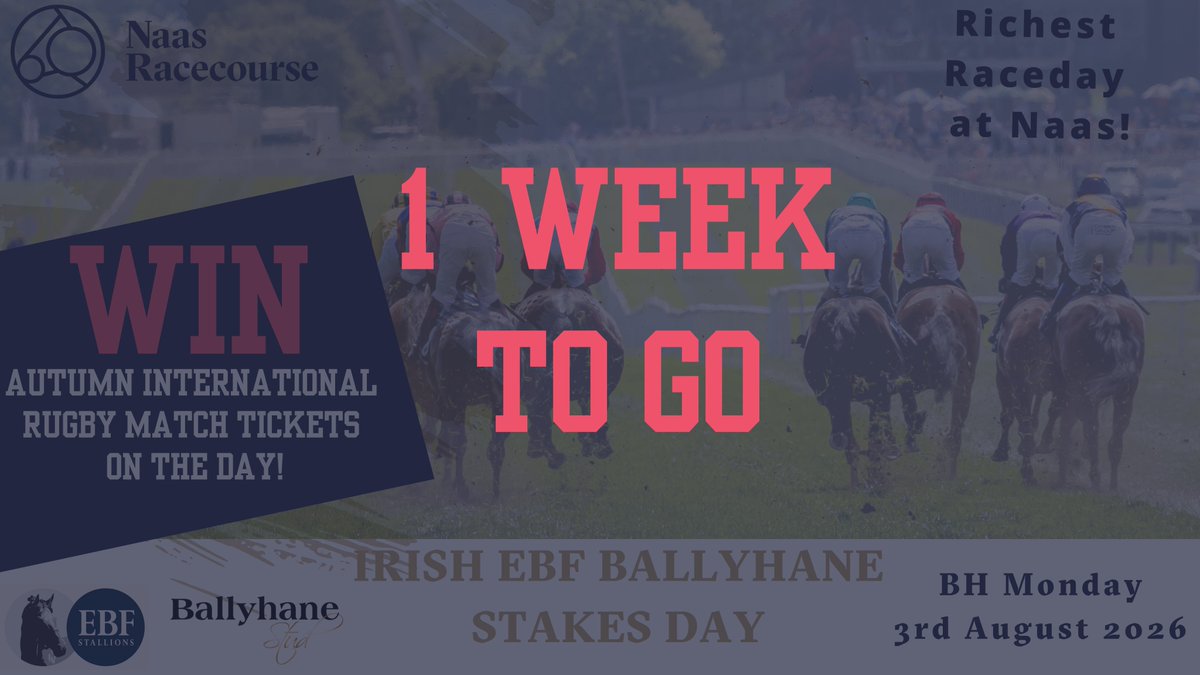
⏰ 1 week to go until @IrishEBF_@BallyhaneStud Stakes Day
The richest race day at Naas is almost here
Every racegoer is entered into our Rugby Sweepstakes to win:
🏉 2 Ireland v South Africa tickets + 🏨 hotel stay
🎟️ https://t.co/9B9bR8MIG3
🥇Group 3 success for September Yearling Sale🥇
ALPARSLAN lands the G3 Greenham Stakes (Guineas Trial) for @karl_burke Mohamed Saeed Al Shehh & Clifford Lee.
By the late @BallyhaneStud Dandy Man, ALPARSLAN was sold by breeders Coole House Stud to @fbarberini for €75,000.
Big Entries and Big Plans! 🐎🔥
The #IrishEBF@BallyhaneStud Stakes Day @NaasRacecourse is shaping up to be a massive event:
🏆209 entries confirmed
💰€200k prize pot
🏉Rugby Sweepstakes is BACK!
Full story & list of entries here: 🔗 https://t.co/8dWs4NvAM2
@JoeFoleyBally
NEWS 🗞️Big Entries and Big Plans for @IrishEBF_@BallyhaneStud Stakes Day at Naas!
🏇209 entries
🇬🇧 72 UK entries
💰€200K prize money on offer
🏉Rugby Sweepstakes back for all racegoers
Find out all about it 👉 https://t.co/42c85tFPSI
#RichestRaceatNaas
Great to see breeders who supported SOLDIER’S CALL at Ballyhane enjoy success;
Lars Soldier -Curragh 2yo mdn
Adonius -Musselburgh 2yo mdn
Dark Ace - £65,000 Lingfield h’cap
Soldier’s Tree - 2nd LR Cork Stks
@YulongInvest@MickleyStud
Horse Racing: A Sport Denied Its Due
By Sharan Kumar
Horse racing in India stands in a peculiar limbo, rich in sporting merit yet starved of recognition. Burdened by heavy taxation and denied concessions enjoyed by other sports, it continues to be viewed through the narrow prism of betting. A fragmented administrative structure and a failed attempt at formal recognition have only deepened the crisis, leaving a historically rich sport struggling for identity, policy support, and a fair place in the national sporting framework.
At its core, horse racing possesses every hallmark of a sport. From the moment a thoroughbred is conceived, science and skill take centre stage. Stud farms invest years in carefully matching sires and mares, blending pedigree with performance potential. This is not chance breeding but a calculated pursuit of excellence, akin to talent scouting in any major sport.
The journey continues under the watchful eye of professional trainers who condition these horses with the precision of elite coaches. Training schedules, recovery cycles, race selection and peak conditioning mirror the regimens followed by top athletes across disciplines. Yet, unlike their counterparts in mainstream sport, these trainers operate without formal recognition as coaches.
Then come the jockeys, arguably among the most underappreciated athletes in the sporting world. Their careers begin early, often in childhood, and demand years of rigorous preparation. Maintaining extremely low body weight while possessing the strength and balance to control a powerful thoroughbred at high speed is no ordinary feat. It is athleticism in its purest, most demanding form.
Even the much-maligned punter engages in a level of analysis that would not be out of place in modern sports analytics. Studying form, pedigree, track conditions, and performance metrics requires both discipline and understanding. Yet, this entire ecosystem is overshadowed by a single word: betting.
That, perhaps, is where the contradiction lies. Horse racing is the only sport in India where betting is legal and regulated. And yet, it is this very aspect that prevents it from being accepted as a sport. Meanwhile, illegal betting on cricket continues on a massive scale, drawing little more than periodic concern. Speculative trading in financial markets, where fortunes can be made or lost in moments, is accepted as part of economic activity.
The inconsistency is striking. Regulated betting in racing is stigmatized, while unregulated betting elsewhere is tolerated, and speculation in markets is legitimized.
This perception has real consequences. Since horse racing is not formally recognized as a sport, it is subjected to disproportionately high taxation. Race clubs are required to pay market rates for land leases, unlike cricket and other sporting bodies that benefit from heavily subsidized or nominal rates. There are no structured concessions, no incentives, and little institutional support to promote growth.
The contrast is stark. Facilities for other sports are often developed with state support, viewed as investments in public good. Racing, despite its long history and economic contribution, is treated as a commercial activity at best, and a vice at worst.
Part of the problem also lies within the sport itself. Unlike cricket, which is governed cohesively by the Board of Control for Cricket in India, horse racing in India is fragmented. Individual turf authorities operate independently, with the Turf Authorities of India lacking the authority and structure of a unified national body.
This lack of cohesion has weakened efforts to secure recognition and policy support. Each centre functions in isolation, and the absence of a collective voice has meant that racing’s case is rarely presented with the force it deserves.
There is also an underlying apprehension that official recognition as a sport could invite greater government oversight. However, this concern appears misplaced. The government already exercises significant control through licensing, regulation, and oversight mechanisms to ensure integrity.
The result of this hesitation is stagnation. Racing continues to operate under constraints that limit its potential, even as other sports expand rapidly with institutional backing.
A telling example lies in the half-hearted attempt made nearly a decade ago by the Turf Authorities of India to secure recognition for racing as a sport. The effort, by most accounts, faltered at the very first hurdle. When asked fundamental questions, where is the headquarters of Indian racing, what is its administrative structure, who serves as its permanent executive head, the representatives reportedly had no clear answers.
In that moment, the sport’s greatest weakness was laid bare. Racing had not organised itself into a coherent regulatory framework, nor projected the institutional clarity expected of a national sport. The attempt, instead of gathering momentum, dissipated almost as quickly as it began.
If that effort appeared tentative then, the situation today is far more precarious. Conditions have worsened, and racing finds itself with little to no meaningful representation in government circles. And governments, by their very nature, do not engage with a vacuum.
Recognizing horse racing as a sport would not merely be a symbolic gesture. It would pave the way for rational taxation, equitable land policies, and structured development. It would also help shed the stigma that has long overshadowed the sport and allow it to be judged on its merits rather than misconceptions.
India has a rich racing heritage, built over decades of excellence in breeding, training, and competition. What it lacks is not substance, but recognition.
Until that changes, horse racing will remain what it currently is: a sport in every sense, except on paper.
https://t.co/b29gJJS3ET