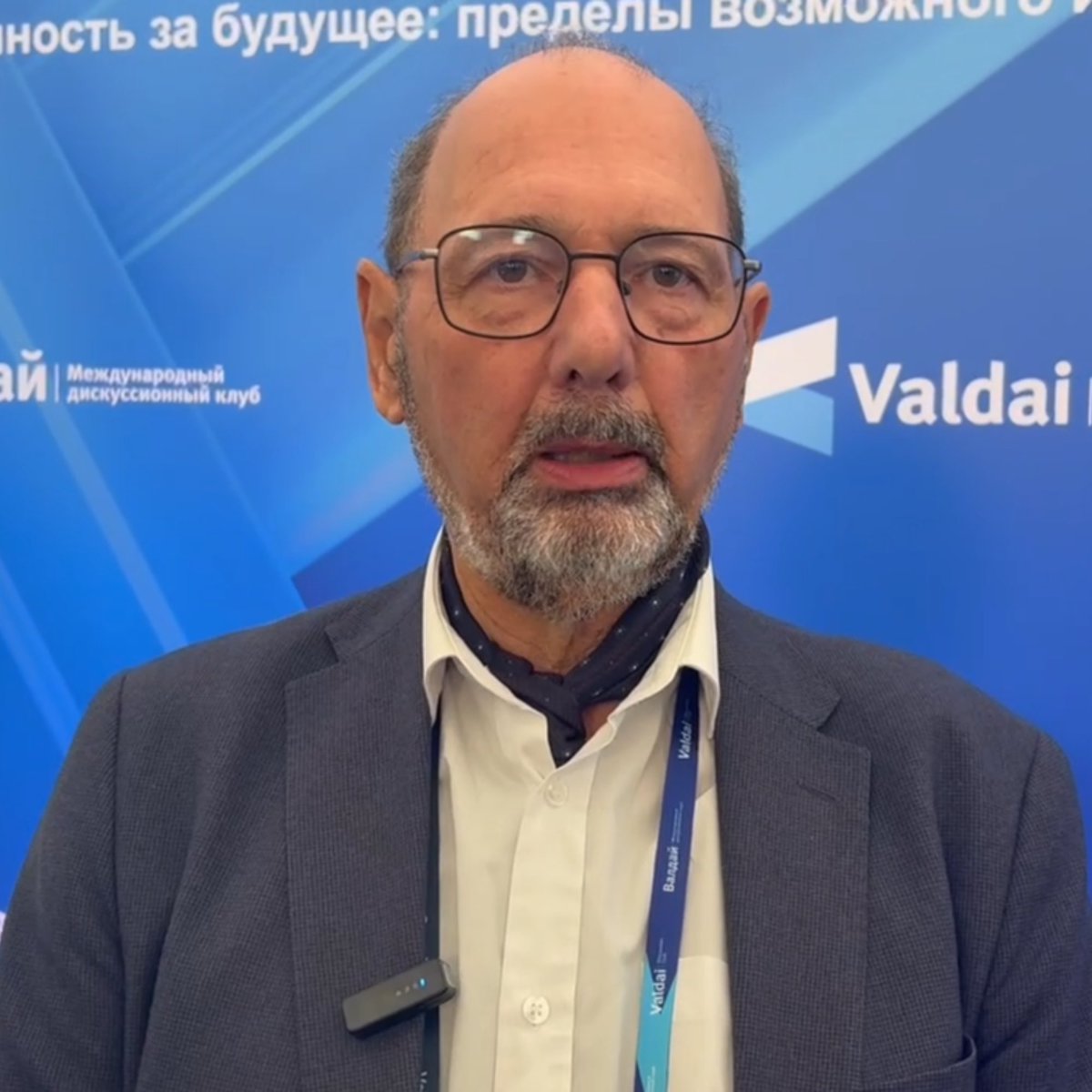
The world’s wrongest man, John Mearsheimer, says he was effectively penniless during his recent visit to Russia because the “Russia expert” didn’t know his US credit card wouldn’t work there.
Mearsheimer was in Russia to lecture Russians about Russia, leaving local audiences confused by pro-Russia talking points that he seems unaware are only meant for Western consumption.
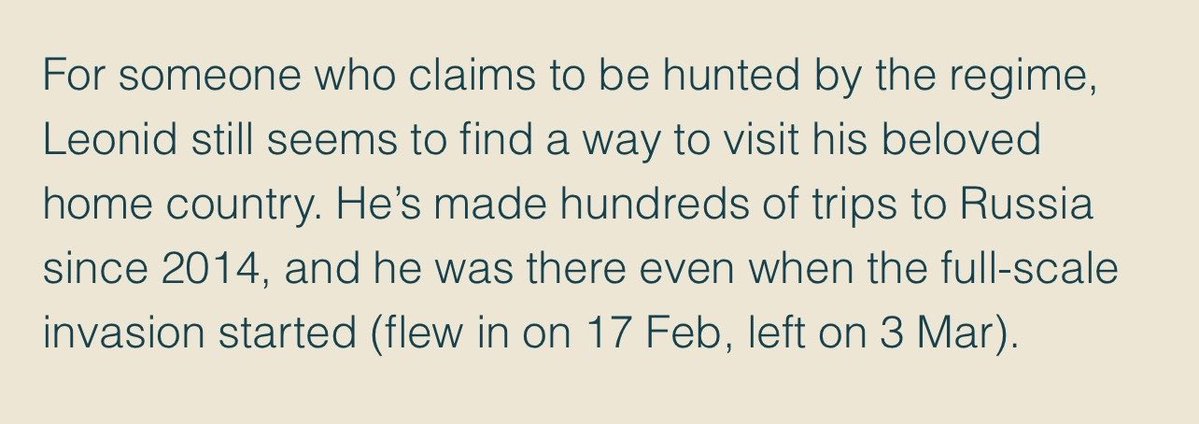
One slight correction here. Ragozin hasn’t had that much time to miss Russia. @P_Kallioniemi reported that he’s made hundreds of trips back to Russia since the start of the war (despite not mentioning it himself). He was there while ridiculing people for being concerned about the full scale invasion. He was also there during the full scale invasion.
Hopefully Ragozin will no longer have to suffer the russophobia of the EU anymore. I'm sure he'll kiss the tarmac when he arrives in his beloved home that he clearly misses.
The Estonians do it to shame the spies, keep their population alert to the threat of espionage, and deter other would-be traitors and foreign agents. Other countries’ intelligence and law enforcement bodies admire and envy KAPO’s publicizing approach, including one or two you may have heard of…
Countries usually like to keep quiet about espionage cases. Sometimes that helps gather more counter-intelligence without revealing methods. Often though, it can just be about saving face and keeping relations uncomplicated.
Those days are over: https://t.co/BmCiCEjOEc
That Swedish study says the key factors explaining higher reported incidents in our region include:
“…new and effective legislation, strong ability to identify and convict spies, and the political will of Baltic and Polish leaders to prosecute and publicise them, rather than sweep them under the rug. While this study does not focus on the efficacy of counterintelligence (CI) efforts, anecdotal evidence suggests that archaic legislation, political considerations, and lack of trust from other European intelligence agencies, may all occasionally have hampered the CI response. Hence, the geographical concentration of cases should not be interpreted to mean that the Baltic countries and Poland are by far the most highly prioritised collection targets for Russian and other services.
It goes on to explain that:
“…with relatively new espionage legislation and a keen understanding of the threat, the Baltic countries and Poland may be particularly adept at detecting and convicting spies in their midst. For instance, in the case of Estonia, the ability to bargain an agreement between the
accused, the counsel and the prosecutor is key, as all 20 trials on espionage since 2007 have ended in such settlements. Conversely, it is widely reported that
Belgian legislation makes it particularly challenging to prosecute espionage cases,
in spite of the allegedly large threat in Brussels.”
Journalist @michaeldweiss wrote a detailed report back in 2019 on one such asset convicted by Estonia, Deniss Metsavas. We need more excellent journalism like this.
The key part is that Metsavas initially thought he’d got off easy because his first task was just to give some information that could easily be found on Wikipedia. He didn’t realise that his handlers didn’t care about that information. It was just part of the process of making him feel there was no turning back before then asking him to do more serious stuff. The boiling frog analogy comes to mind again.
https://t.co/GOm7riBF4Q
Journalist @michaeldweiss wrote a detailed report back in 2019 on one such asset convicted by Estonia, Deniss Metsavas. We need more excellent journalism like this.
The key part is that Metsavas initially thought he’d got off easy because his first task was just to give some information that could easily be found on Wikipedia. He didn’t realise that his handlers didn’t care about that information. It was just part of the process of making him feel there was no turning back before then asking him to do more serious stuff. The boiling frog analogy comes to mind again.
https://t.co/GOm7riBF4Q
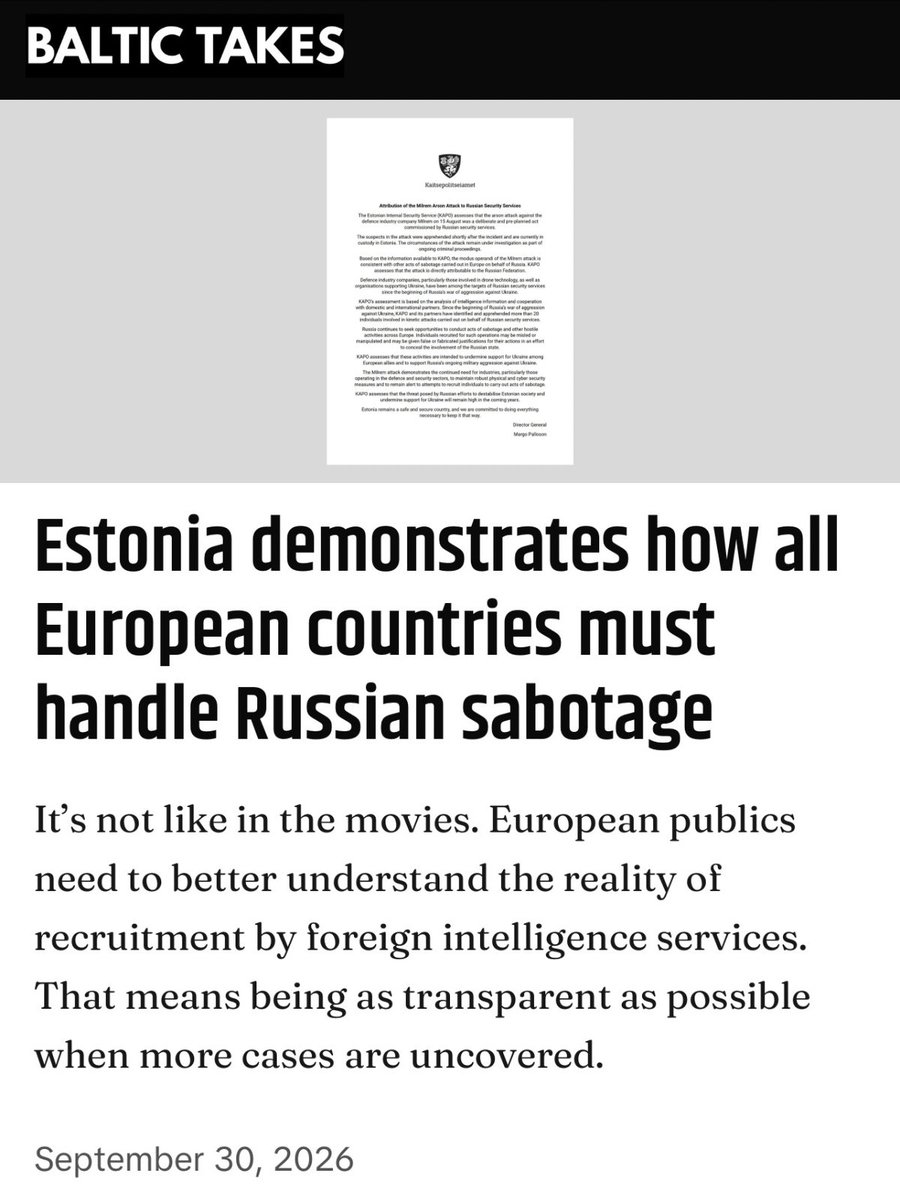
Some key context to Estonia’s attribution of an arson attack to Russia.
Between 2010 and 2021, Estonia accounted for HALF of all publicly recorded espionage convictions in Europe.
The three Baltic countries accounted for almost two thirds.
This was calculated in a study by Sweden’s Defence Research Agency.
The key bit to understand though is that this is not because Estonia or the Baltics are that heavily targeted by spying.
It’s because they are effective at confronting it and, just as importantly, very open about discussing it.
Convictions are pursued and publicised. Repentant recruits willingly give media interviews from custody even.
Other countries assume you have to keep any spy stuff on the down low. But why? Sunlight is absolutely the best disinfectant.
Other potential recruits aren’t just aware of the consequences, they are aware of the tactics that could be used to groom and exploit them.
It’s not like in the movies. Some suave guy in a trench coat is not going to ask you openly to betray your country.
But the difficulty tackling any kind of scam is the widespread perception that it would be so obvious that it could only happen to other people.
In reality, you might just think you’ve managed to get a bit of easy work. You usually wouldn’t know it was for an adversary of your country. It starts small, usually with very pointless tasks, and builds incrementally. Classic grooming. They want you to feel “in too deep” before you ever make a conscious choice about it.
How many people across Europe understand that? How many politicians, journalists, and others in particularly vulnerable roles could recognise attempts to compromise them? It’s way, way too low.
That’s why the transparency is now so important, especially as our adversary increasingly shifts from espionage to sabotage, and acts in increasingly desperate, haphazard ways.
Estonia showed yesterday exactly how countries must deal with it.
The suspects are in custody, the responsibility is clear, so you attribute that publicly, go through the protocols, explain the tactics, explain the motives, and then double down on your values and the consequences.
As for those being recruited, no one should ever feel they are in too deep nor that help isn’t available. @kaitsepolitsei tells people clearly: Come talk to us before we come talk to you.
Other countries must now adopt this approach.
Which, once again, shows a lot of concern for Estonia and the Baltics on this site is not useful. Every country is being targeted like this. There should be more listening and learning instead.
That Swedish study says the key factors explaining higher reported incidents in our region include:
“…new and effective legislation, strong ability to identify and convict spies, and the political will of Baltic and Polish leaders to prosecute and publicise them, rather than sweep them under the rug. While this study does not focus on the efficacy of counterintelligence (CI) efforts, anecdotal evidence suggests that archaic legislation, political considerations, and lack of trust from other European intelligence agencies, may all occasionally have hampered the CI response. Hence, the geographical concentration of cases should not be interpreted to mean that the Baltic countries and Poland are by far the most highly prioritised collection targets for Russian and other services.
It goes on to explain that:
“…with relatively new espionage legislation and a keen understanding of the threat, the Baltic countries and Poland may be particularly adept at detecting and convicting spies in their midst. For instance, in the case of Estonia, the ability to bargain an agreement between the
accused, the counsel and the prosecutor is key, as all 20 trials on espionage since 2007 have ended in such settlements. Conversely, it is widely reported that
Belgian legislation makes it particularly challenging to prosecute espionage cases,
in spite of the allegedly large threat in Brussels.”
Sakwa has also been an atrocity-denier during the full scale war, spreading conspiracy theories to doubt Russian responsibility for Bucha and other atrocities.
That should reflect on those who called him superb for what was always shitty pseudo-academic analysis.
Still appearing at the Valdai Club this year is British scholar Richard Sakwa, author of what is quite possibly the dumbest book ever published.
‘The Russia Scare’ by Richard Sakwa is all about how the West exaggerated the threat posed by Russia.
It was completed with unfortunate timing in early 2022, just prior to Russia’s full scale invasion of Ukraine, which Sakwa had previously described with all his Russia expertise as “inconceivable”.
Back in 2015, after Russia first began the war, Sakwa had written that: “Putin was well aware of the dangers of being sucked into a war over Ukraine, which would be unwinnable and disastrous.”
In 2021, Salwa was asked in an interview why Russia invades its neighbours. He replied angrily: “Russia does not invade its neighbours.”
He argued that the term ‘invaded’ is “loaded and misleading” because Russia had merely been fighting defensive wars.
That genuinely sounds like it was written by @DarthPutinKGB.
Alas, Richard Sakwa is not a parody of a “Russia expert” but actually still disgracing the University of Kent as their Emeritus Professor, in addition to being an Honorary Professor at Moscow State University.
He’s also praised by fellow “Russia experts” such as John Mearsheimer and Mark Galeotti, both of whom have separately referred to Sakwa’s previous work as “superb”.
But what do you do when your central thesis is bombed to oblivion just after you’ve written it?
Sakwa acknowledges in his introduction that the book was written before “events outpaced the empirical analysis and earlier paradigms of European and global politics changed.”
Probably the single dumbest sentence in Russia studies pseudo-academia.
He then claims that: “The substance of the earlier analysis remains valid, although now framed largely in the past tense.”
Incredible.
His publishers go along with this bullshit, promoting the book as if it’s a scrutiny looking back on the period leading up to the full scale war.
The bulk of the book is his original argument in the past tense about why the threat from Russia was exaggerated, although with some lines clearly added later after the full scale invasion.
Western concerns, he claims, were “tipping Putin over into acting as he had earlier been portrayed”.
We were all wrong to think of Russia as a threat, which is why it has to attack us.
Just a reminder here one more time that Mark Galeotti, who poses as one of the more respectable “Russia experts” thinks that this guy is “superb”.
Sakwa is now one of the last of the Western “Russia experts” to still unashamedly attend events like the Valdai Club and appear on Russian state TV.
Yet his main analysis is hardly any different to many other “Russia experts” who now keep their distance in order to still seem credible in the Western media.
A large proportion of them spent the last decade or two schmoozing in Moscow while reporting back to the West that we are all dumb for thinking Russia is a threat.
All these same “Russia experts” are near to 100% wrong about all major developments related to Russia so keep constantly updating their predictions to explain why the thing they dismissed was actually inevitable.
Sakwa is an obvious joke. Some others are more subtle.
Well, it matters in the sense that good owners can ensure a company thrives while also protecting its heritage, keeping production local, etc, while bad owners can wreck it all. In this case, agree that existing ownership structure is already complex and so the acquisition could be beneficial, especially if it keeps production in Latvia.
This account, like the website, is now simply Baltic Takes.
Been spending time in Latvia, talking to some wonderful followers about how we better amplify Baltic perspectives, and not just play whack-a-mole with all the bad takes thirsty for attention.
“So why didn’t you just shorten the name to Baltic Takes?” they pointed out.
Genius.
That’s saved a couple of million euros on branding consultants.
So the hub for this project is now https://t.co/pmYkL6inVE.
If you’re a fan of a rules-based world of sovereign nations, sign up there or get in touch at [email protected].
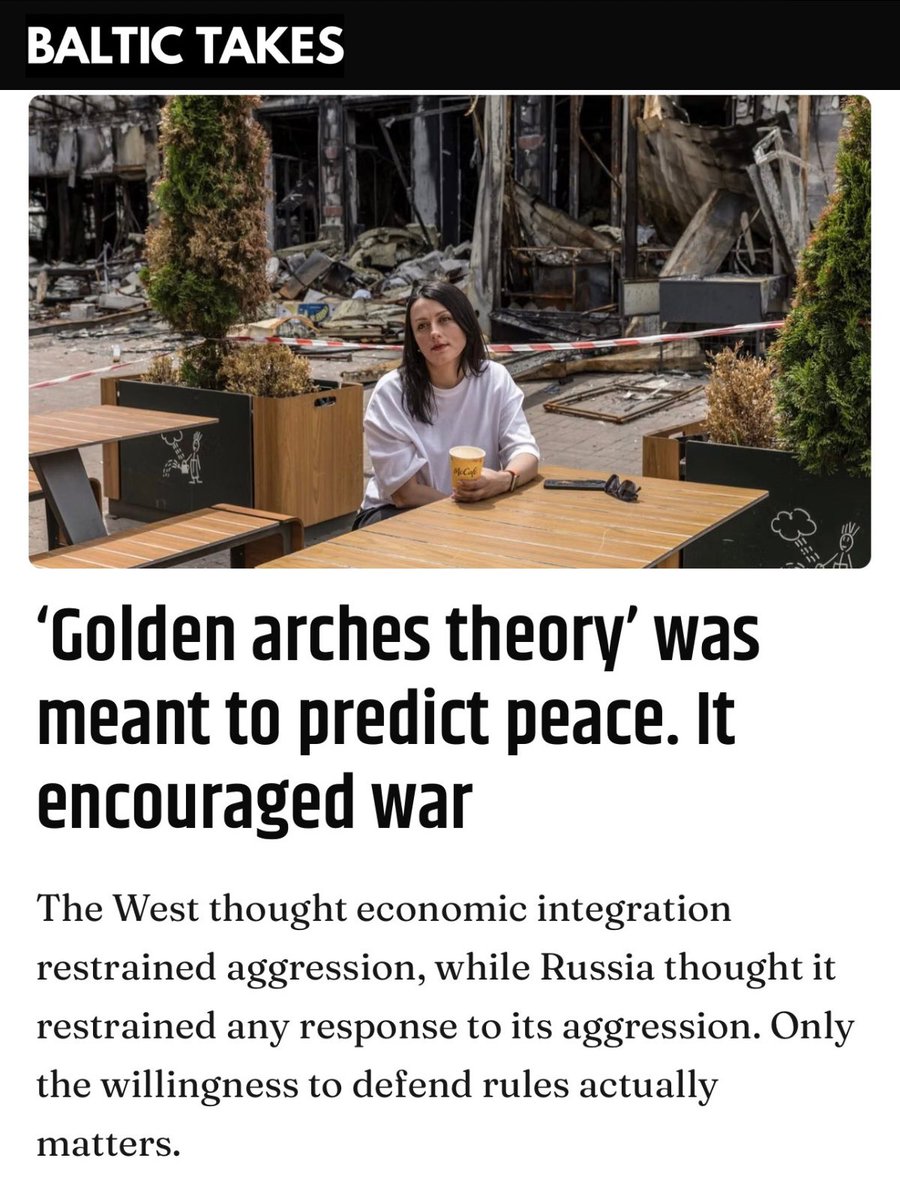
Today’s latest article is a deep dive into why Friedman’s golden arches theory proved so spectacularly wrong: https://t.co/VM16anEPdu
Thanks. Will look at that and see if there’s a better way to explain it. It’s mainly about being aligned with the spirit of the UN Charter and international law, described by Lennart Meri as the nuclear weapon of small states. Beyond that, we don’t particularly care if anyone is right wing or left wing, liberal or conservative, etc. All takes are valid, as long as they respect the constitutional order.
@koutchoukalimar These prescriptivists acknowledge that language has been shaped by a long and fascinating history, but think it all culminated in the exact form of language they happened to learn at their school when they were younger, which is correct for the rest of time.