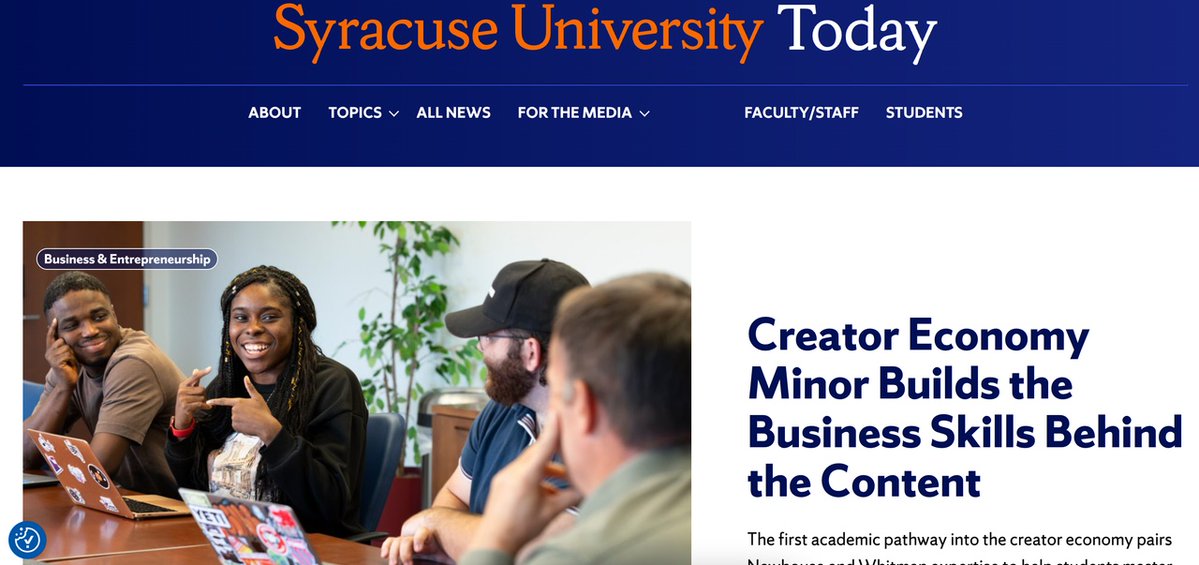
It should tell you something when universities start offering classes on how to become a creator. There's a lot of opportunity to build something in this space, but until now, not a lot of resources on how to do the business side of it.
https://t.co/3vkictLRbX
I talk a lot about posting authentically, so naturally, I get a lot of questions about what authentic looks like.
I'll tell you what it doesn't have to look like: Sharing everything. You don't have to turn your profile into your personal diary to build an engaged audience.
Very cool research from Fast Company about entrepreneurship, and something that rings true to me. There’s nothing like building something from the ground up and watching it grow.
One big caveat: You have to take care of yourself, too. https://t.co/gAAWVSL6CE
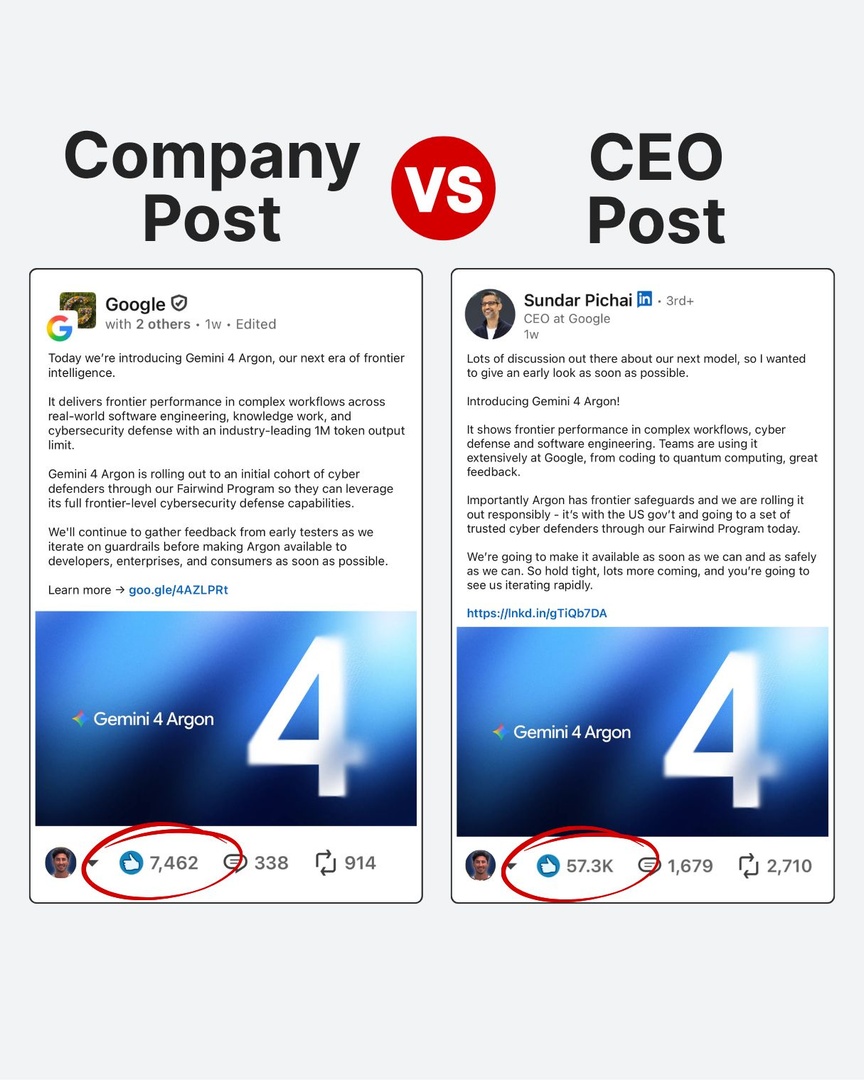
The perfect example of why your company page isn't enough.
Google is one of the most recognizable brands on earth. And even they get 657% more interactions when the CEO posts instead of the company.
People want to interact with people.
A company page is useful for official updates, but it can’t share the experiences and opinions of the people behind the business. Founders, executives, and employees can add the context that makes those updates more meaningful.
Alicia Teltz explores more: https://t.co/AHq51CARKK
AI is becoming another audience for corporate communications. As LLMs influence how people find companies, products, and expertise, communications teams need to understand how AI systems interpret what they publish. https://t.co/ozhXCBlBn0
It's not glamorous, but "Write everything down" is the advice that saved me as a first-time founder.
Do yourself and your team/clients a favor and document it all. A good rule of thumb: If it's too important to forget, put it in writing.
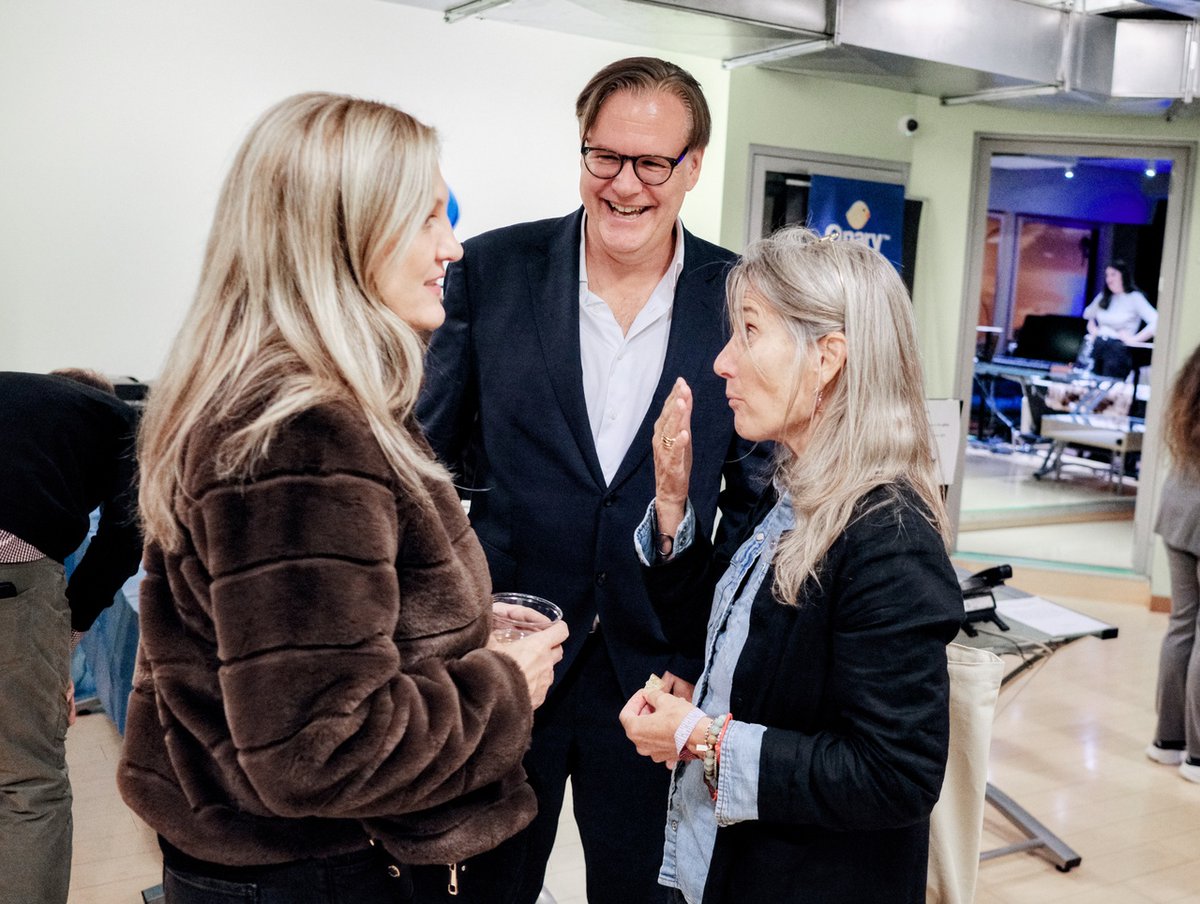
Quite a night with Qnary and Edge Studio! David Goldberg got into how the way we speak can change how people receive what we’re saying. We also recorded Uncaged live from the studio, which was a ton of fun. A remarkable evening!
In my experience, the most successful founders treat their companies as living systems. They adapt them to how people actually operate, and that means moving away from rigid, hierarchical structures.
Humans don't stop being humans when they step into an office.
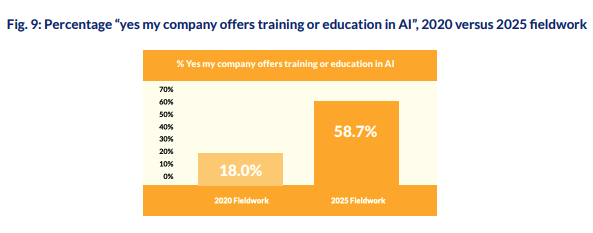
AI adoption moved faster than AI education. In 2020, 18% of respondents said their company offered AI training. By 2025, it was 58.7%.
That’s progress, but AI education needs to be a bigger part of the investment.
See my full study here: https://t.co/a53XgOX2ys
Interesting research from Inc.: for technical topics, 38% of knowledge workers would rather hear from a specialized leader than the CEO.
At Qnary, we work with plenty of CEOs, but also people throughout organizations with expertise worth sharing. https://t.co/3QuRXSQuNm
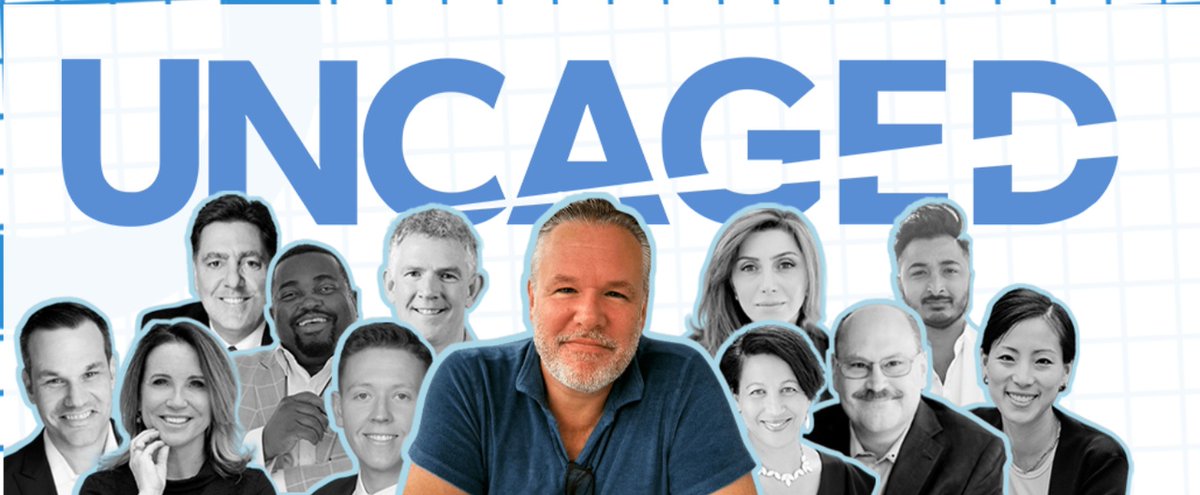
Happy Podcast Day to all the creators out there. I started The Uncaged Show 5 years ago because I wanted to give the thought leaders I work with every day the chance to go deeper.
I never expected I'd learn so much!
Give it a listen: https://t.co/4r3fbrriwc
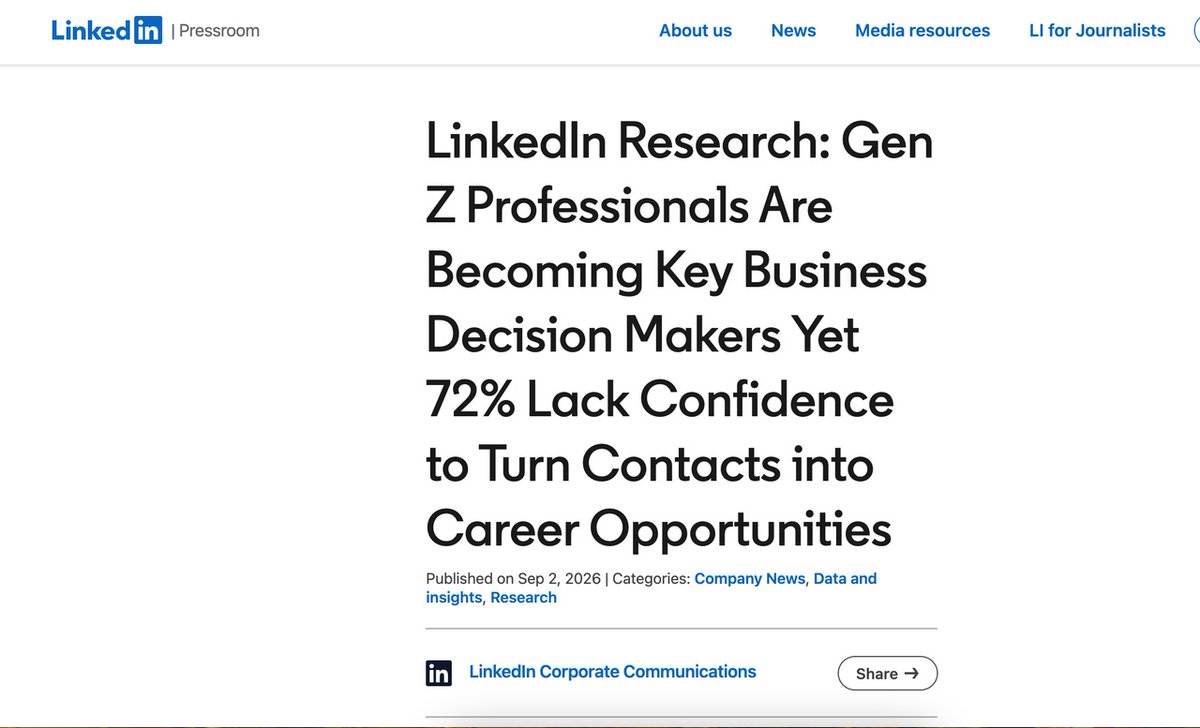
Gen Z are highly connected online, but lack the confidence to build their professional networks IRL.
64% say no one has clearly shown them how to build professional relationships, leaving many unsure who to approach or when to reach out.
Full study: https://t.co/sFGwIE9Wdo
It's been fascinating to watch how creator partnerships have changed over the past few years. Now that brands have realized just how strategically minded these creators are, they're willing to give them real input & stakes.
It's an incredibly smart play. https://t.co/3kTwMeCV6y
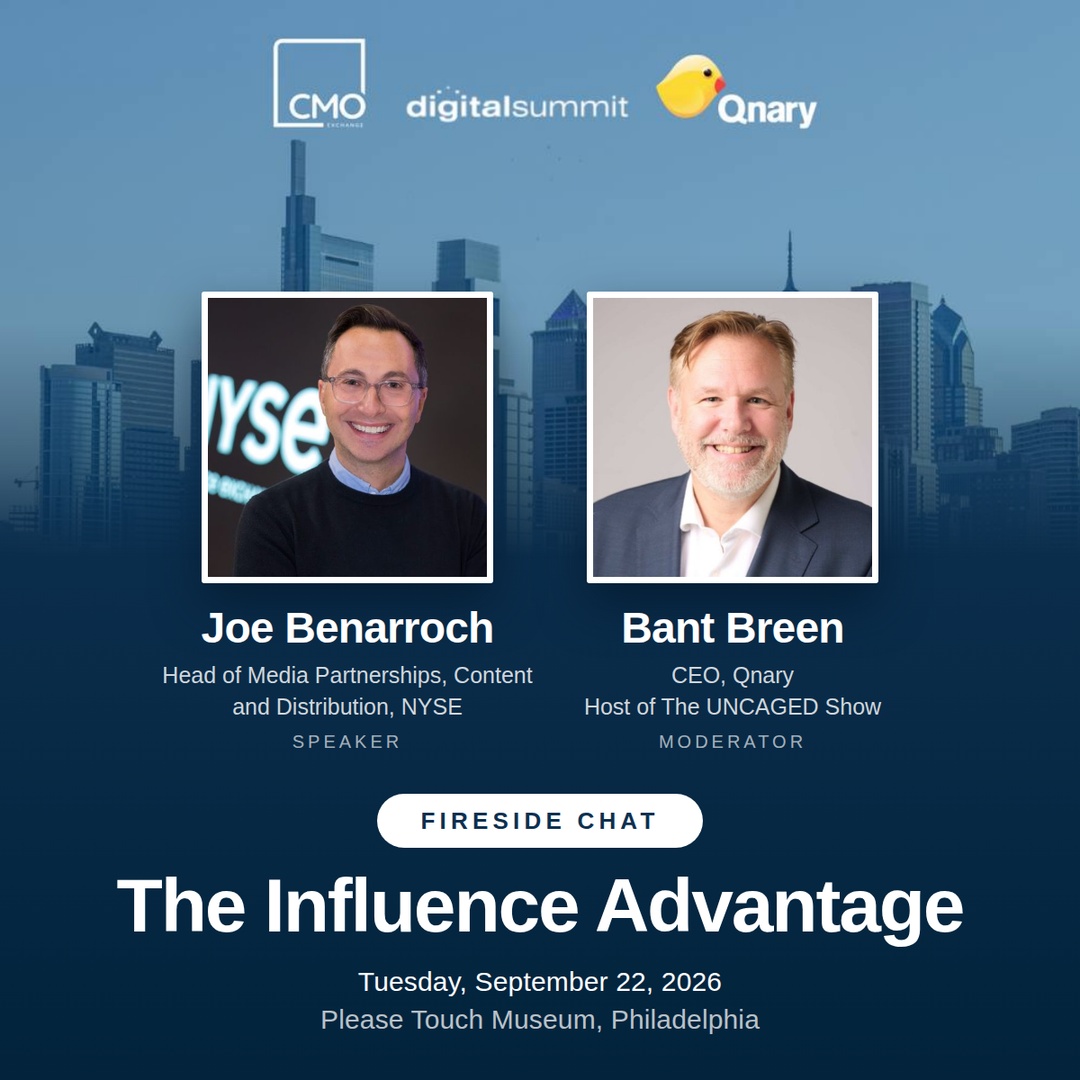
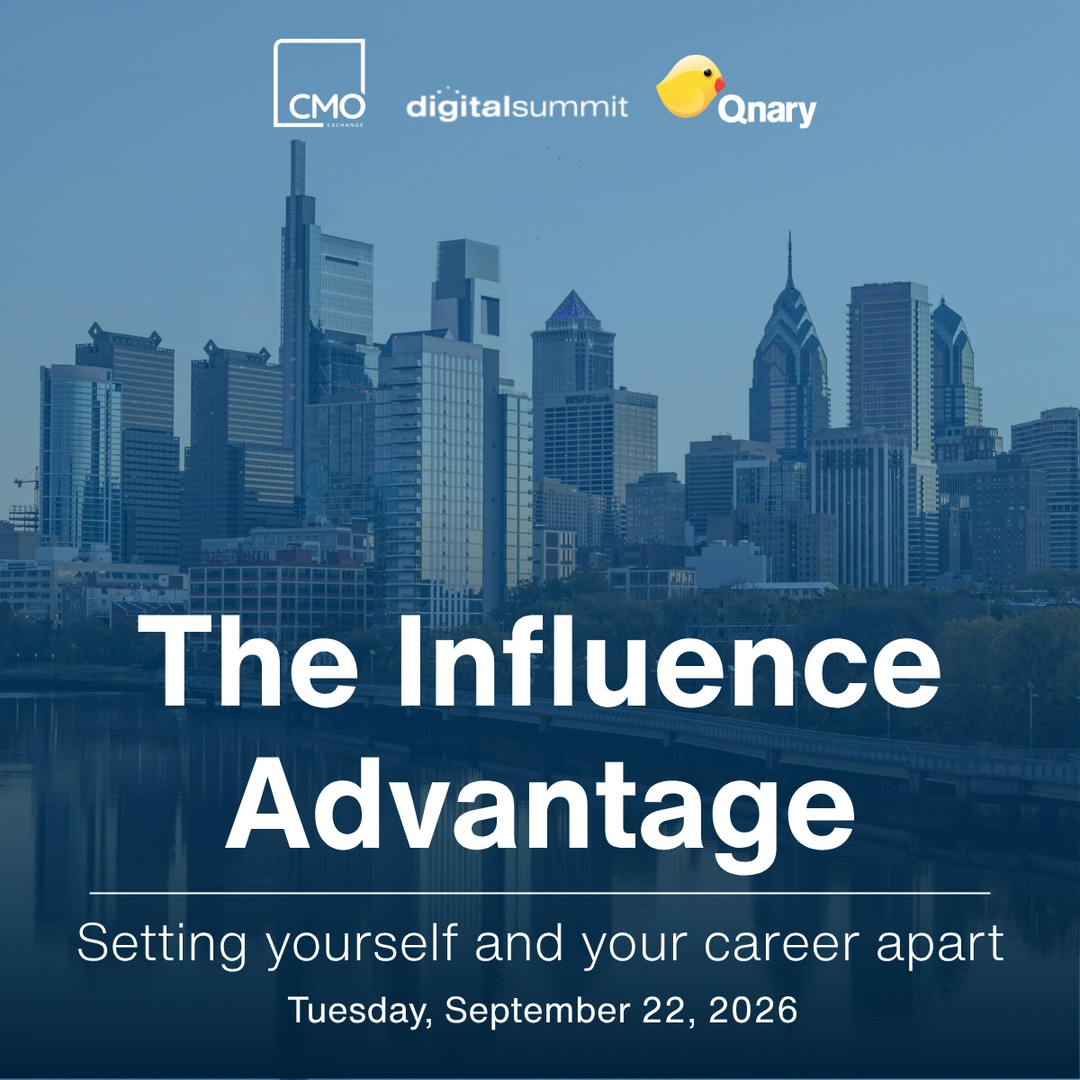
Next week in Philly, I will be joined by Joe Benarroch of the NYSE to kick off the day with a Fireside Chat.
A curated experience for candid conversation, meaningful connections, and practical insights. Seating is limited to senior marketing executives: https://t.co/AytND3gzHb
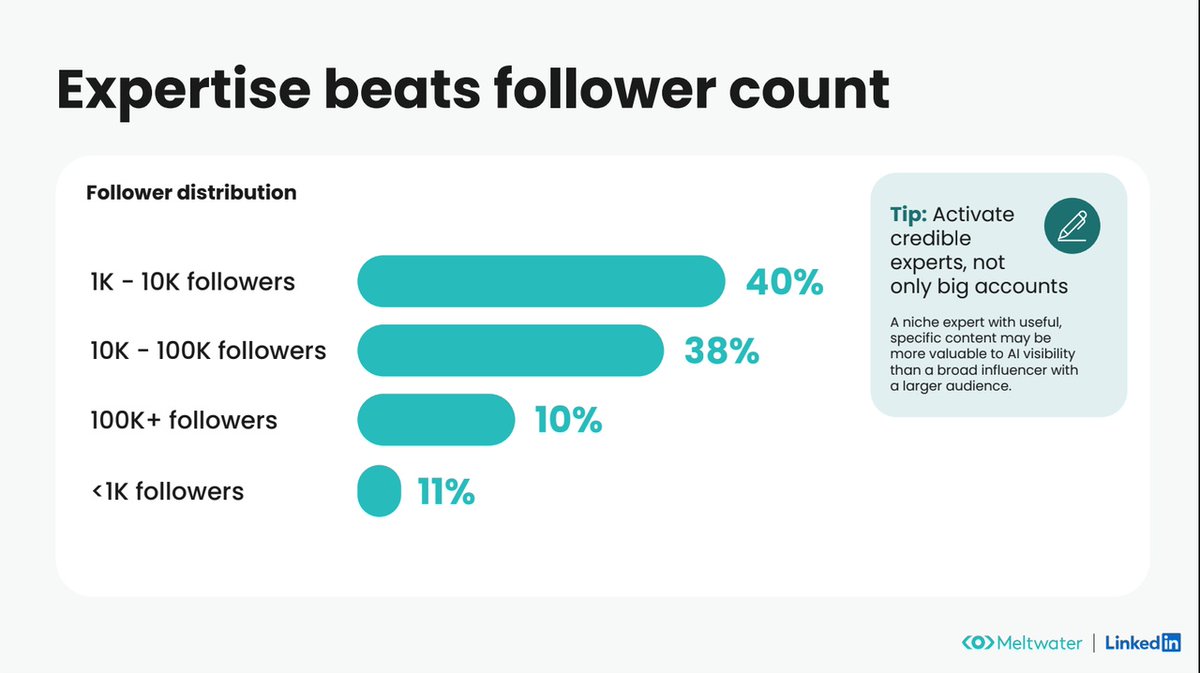
One of my biggest takeaways from Meltwater and LinkedIn’s new research is that true expertise beats your follower count every time. What you publish doesn't have to go viral or come from someone with hundreds of thousands of followers; it just needs to say something worth citing.
Next week, we're bringing CMO Exchange to Philadelphia with Digital Summit. Excited to get some great marketing minds in the room.
Still time to request your invite here! https://t.co/AytND3gzHb
UPDATE: Capitol Hill rumor mill is saying the likelihood of CLARITY act passing is near zero.
It's currently 18% on Polymarket & but its really likely more like a 3-5% chance.
From what I understand, everyone in DC somewhat assumes that CLARITY is not going to pass, but they can't publicly say this because the industry has invested tens of millions of dollars and 18 months of resources on trying to get it through.
It’s just not going to happen from what I hear.
There's still no answer to this ethics question for Trump’s dealings in crypto, from the Democrats. Based on that, the odds of passing on prediction markets are probably pretty high and seems like 'No' is potentially interesting.
CLARITY will instead be more or less ‘drafted as separate bills’ focusing on specific sectors of the crypto market.
These could be innovation exemptions, acts, or bills that are focused on stablecoins, tokenization, perpetual futures, and prediction markets coming shortly after CLARITY failed. They prefer take a nuanced approach rather than a massive, wide-reaching crypto bill at this current point.
That is what is much, much more likely to happen from what I understand from folks in DC.
TLDR;
CLARITY likely out but no one will admit it, innovation exemptions are in, and they are far under discussed for their significance to open the doors for all of finance to come oncain.
Throwing it back to a great conversation with Rebecca Metzler about the “brand robot” problem. Companies can tell a coordinated story without asking every executive to sound the same. Their expertise, networks and individual voices are the advantage. https://t.co/VNjhTaQFNm