Joël is a carer in a nursing home and invented these games to improve motion and cognition in his patients, proving that it's possible to activate the elderly in a playful way.
[📹 bewegen .is.leven]
🏃♂️ ℂ��𝕞𝕣𝕒𝕕𝕖𝕤 𝕄𝕒𝕣𝕒𝕥𝕙𝕠𝕟 𝟚𝟘𝟚𝟞 🏃♀️
George Kusche is the winner of the Comrades Marathon's 99th edition for men!
🚨 LIVE
📺 SABC 2
🌐 https://t.co/26PdrPrnVE
#SABCSportAthletics #Comrades2026
🏃♂️ ℂ𝕠𝕞𝕣𝕒𝕕𝕖𝕤 𝕄𝕒𝕣𝕒𝕥𝕙𝕠𝕟 𝟚𝟘𝟚𝟞 🏃♀️
Gerda Steyn is the winner of the Comrades Marathon's 99th edition for women!
🚨 LIVE
📺 SABC 2
🌐 https://t.co/26PdrPrVLc
#SABCSportAthletics#Comrades2026
After 144 years of construction, Barcelona’s Sagrada Familia is finally complete. The iconic basilica, designed by architect Antoni Gaudí and considered one of the most ambitious architectural projects in modern history, was shaped by Gaudí for 43 years before his death exactly 100 years ago, when he was struck by a tram while the church was still far from finished.
In the final years of his life, Gaudí lived on the construction site and devoted himself almost entirely to the project. At the time of his death, only about 10% to 15% of the basilica had been completed, leaving future generations with the monumental task of carrying out his vision. A century later, that vision has finally become reality.
Some of the worst damage in your life came from people who love you, in the form of a poisonous sentence wrapped in good intentions:
“You're perfect just the way you are.”
The reason it landed as damage rather than kindness is that you didn't believe it. And how could you? Nobody actually believes they’re perfect. So, when we’re told something that contradicts what we know to be true about ourselves, our brains try to resolve that conflict. There are only two ways to resolve this one — and both are bad.
The first resolution goes like this: I feel terrible, and I've been told I'm as good as I can possibly be, so this must be what life amounts to — grim, static, with nothing to fix and therefore nothing to improve. That's despair: the conviction that this is what life is, and that nothing you can do will change it.
The second goes the other way. I've been told I'm perfect and my life still isn't working, so the problem must be out there — in other people, in the system, in the generation that came before me. That's bitterness: the conviction that everything wrong in your life is somebody else's fault, and that there's nothing for you to do but wait for the world to change.
Neither of these is what the well-meaning person had in mind when they told you you're perfect. But these are the two places it ends up.
You can see both play out at scale right now.
Depression has roughly tripled among adolescents and young adults; anxiety has roughly doubled. The angry activism of the last decade — the belief that previous generations robbed me, that the system is rigged, that I'm fine and everything around me is broken — is the second resolution lived out in public.
The world is in fact unjust in many ways; I'm not arguing otherwise. But the resolution that leaves you with no agency over your own life is not the one that lets you live it.
There is a plausible connection between telling kids, in a state of high synaptic plasticity, again and again, that they are perfect just the way they are, and what we are now measuring in those same kids ten years later. We lied to them when they were young. And the lie metastasized.
The truth is you are not perfect, and that is incredibly good news. If you accept the reality of your imperfection, you have somewhere to go.
The kindest thing anyone can say to a child (or to themselves) is not that they are perfect: it’s that they are not — and that in the gap between who they are and who they could be lies the meaning of their lives.
Anyone else seeing a rise in banks losing title deeds for new homeowners? Conveyners not able to see what banks submit, delaying lodging causing R100 000’s in fees. How is this not process managed better? @Investec@dailymaverick@News24@FinancialTimes
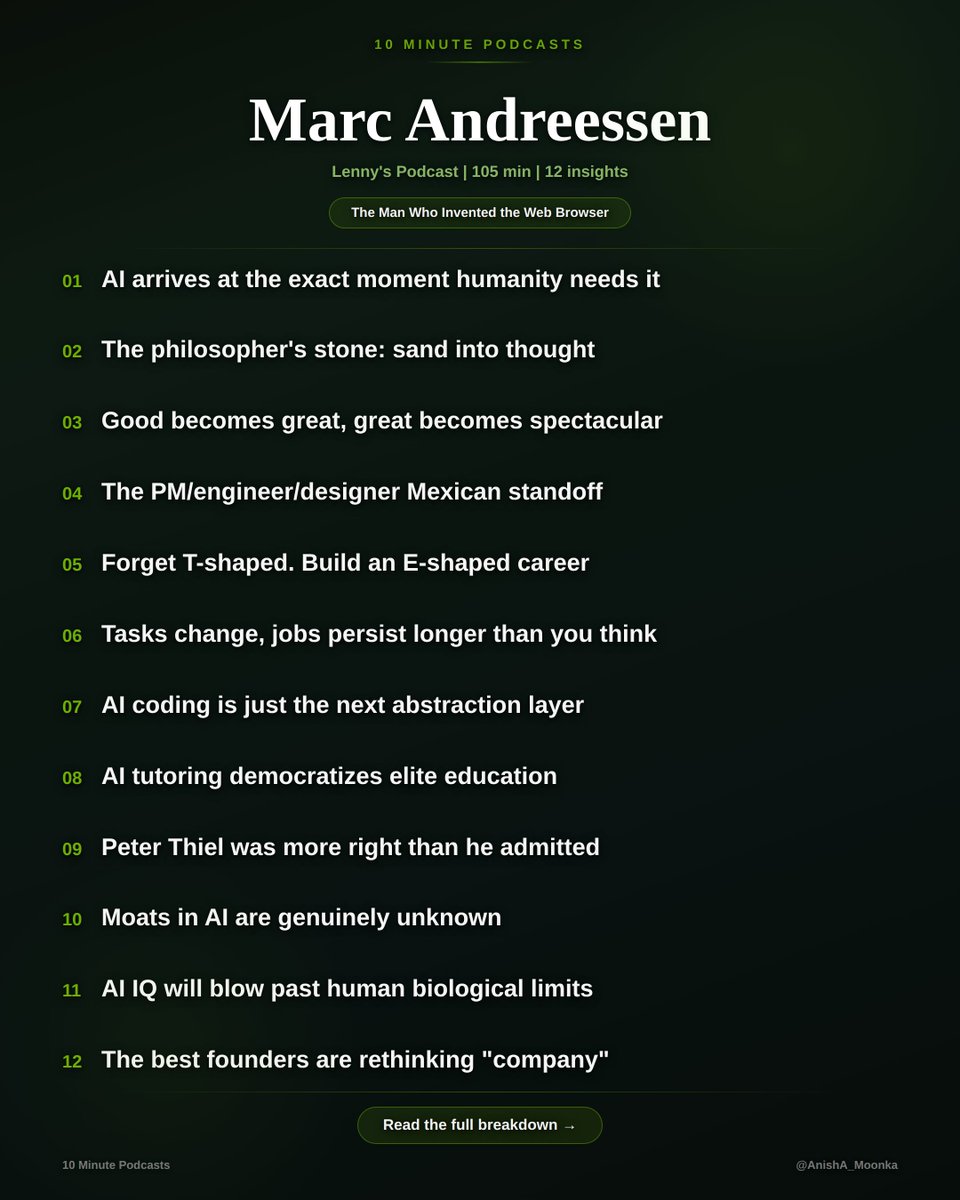
Marc Andreessen just dropped ~105 mins on Lenny's Podcast covering AI, jobs, careers, and why everyone is panicking about the wrong thing.
Just the clearest macro framework I've heard on where AI actually lands.
My notes:
𝟭. 𝗔𝗜 𝗶𝘀 𝗮𝗿𝗿𝗶𝘃𝗶𝗻𝗴 𝗮𝘁 𝘁𝗵𝗲 𝗲𝘅𝗮𝗰𝘁 𝗺𝗼𝗺𝗲𝗻𝘁 𝗵𝘂𝗺𝗮𝗻𝗶𝘁𝘆 𝗻𝗲𝗲𝗱𝘀 𝗶𝘁.
US productivity growth has been running at half the rate of the 1940-1970 era and a third the rate of 1870-1940. The global population is declining below replacement in dozens of countries, including China. Without AI, we would be panicking about economies shrinking from depopulation, not job loss.
The timing is almost miraculous. This is what Andreessen means when he says the real boom has not started yet. We have been in a 50-year productivity drought, and most people do not even realize it.
𝟮. 𝗔𝗜 𝗶𝘀 𝘁𝗵𝗲 𝗽𝗵𝗶𝗹𝗼𝘀𝗼𝗽𝗵𝗲𝗿'𝘀 𝘀𝘁𝗼𝗻𝗲.
Isaac Newton spent decades trying to transmute lead into gold and never succeeded. AI does something more powerful: it converts sand (silicon) into thought. The most common material in the world is the rarest output.
This one metaphor reframes the entire AI conversation. You do not have a job loss problem. You have a philosopher's stone sitting on your desk that you are not using enough.
𝟯. 𝗔𝗜 𝗺𝗮𝗸𝗲𝘀 𝗴𝗼𝗼𝗱 𝗽𝗲𝗼𝗽𝗹𝗲 𝘃𝗲𝗿𝘆 𝗴𝗼𝗼𝗱, 𝗮𝗻𝗱 𝘃𝗲𝗿𝘆 𝗴𝗼𝗼𝗱 𝗽𝗲𝗼𝗽𝗹𝗲 𝘀𝗽𝗲𝗰𝘁𝗮𝗰𝘂𝗹𝗮𝗿𝗹𝘆 𝗴𝗿𝗲𝗮𝘁.
The best coders right now are not reporting 2x productivity. They are reporting 10x. The gap between "pretty good with AI" and "elite with AI" is widening, not narrowing.
This is the most important signal for career planning right now. If you are just using AI to do the same job slightly faster, you are leaving the real leverage on the table.
𝟰. 𝗧𝗵𝗲𝗿𝗲'𝘀 𝗮 𝗠𝗲𝘅𝗶𝗰𝗮𝗻 𝘀𝘁𝗮𝗻𝗱𝗼𝗳𝗳 𝗯𝗲𝘁𝘄𝗲𝗲𝗻 𝗣𝗠𝘀, 𝗲𝗻𝗴𝗶𝗻𝗲𝗲𝗿𝘀, 𝗮𝗻𝗱 𝗱𝗲𝘀𝗶𝗴𝗻𝗲𝗿𝘀.
Every engineer now thinks they can be a PM and designer. Every PM thinks they can code and design. Every designer knows they can do both. And they are all correct, because AI enables each role to absorb the tasks of the other two.
I have seen this firsthand in the investing world. The analyst who can build models and write narratives is 5x more valuable than someone who can do only one. The same convergence is happening in the product.
𝟱. 𝗙𝗼𝗿𝗴𝗲𝘁 𝗧-𝘀𝗵𝗮𝗽𝗲𝗱. 𝗕𝘂𝗶𝗹𝗱 𝗮𝗻 𝗘-𝘀𝗵𝗮𝗽𝗲𝗱 𝗰𝗮𝗿𝗲𝗲𝗿.
Scott Adams could not have created Dilbert by being the world's best cartoonist or the world's best business mind. He needed both. The additive effect of two skills is more than double. Three skills are more than triple. Larry Summers puts it differently: don't be fungible.
The person who can code, design, and ship a product is no longer a unicorn. They are the new baseline for "extremely valuable." If you are only one of those three things, you are increasingly replaceable.
𝟲. 𝗝𝗼𝗯𝘀 𝗮𝗿𝗲 𝗯𝘂𝗻𝗱𝗹𝗲𝘀 𝗼𝗳 𝘁𝗮𝘀𝗸𝘀. 𝗧𝗮𝘀𝗸𝘀 𝗰𝗵𝗮𝗻𝗴𝗲. 𝗝𝗼𝗯𝘀 𝗽𝗲𝗿𝘀𝗶𝘀𝘁.
Executives never typed their own emails in the 1970s. Secretaries printed incoming emails and hand-delivered them. Both roles survived the transition, just with different task sets. The same will happen with AI and coding, PM work, and design.
Everyone obsessing over "will my job disappear" is asking the wrong question. The right question is: which tasks in my job are about to rotate, and am I ready to pick up the new ones?
𝟳. 𝗔𝗜 𝗰𝗼𝗱𝗶𝗻𝗴 𝗶𝘀 𝗷𝘂𝘀𝘁 𝘁𝗵𝗲 𝗻𝗲𝘅𝘁 𝗮𝗯𝘀𝘁𝗿𝗮𝗰𝘁𝗶𝗼𝗻 𝗹𝗮𝘆𝗲𝗿.
We went from human calculators to machine code to assembly to C to scripting languages. Each layer was dismissed by the previous generation. Each time, the new layer won, and total coding employment grew. AI coding is the same pattern, not a rupture.
The Perl programmers of 2005, laughing at JavaScript, are the C programmers of 1995, laughing at scripting. History rhymes, and it always rewards the people who adopt the next abstraction first.
𝟴. 𝗔𝗜 𝘁𝘂𝘁𝗼𝗿𝗶𝗻𝗴 𝗱𝗲𝗺𝗼𝗰𝗿𝗮𝘁𝗶𝘇𝗲𝘀 𝗲𝗹𝗶𝘁𝗲 𝗲𝗱𝘂𝗰𝗮𝘁𝗶𝗼𝗻.
One-on-one tutoring is the only method proven to move a student from the 50th to the 99th percentile (Bloom's two sigma effect). It used to require being born into royalty. Alexander the Great was tutored by Aristotle. Now, any kid with a phone can access the same quality of personalized instruction.
This is the most under-discussed consequence of AI. Every parent reading this should be supplementing their kid's education with structured AI tutoring right now. Not next year. Now.
𝟵. 𝗣𝗲𝘁𝗲𝗿 𝗧𝗵𝗶𝗲𝗹 𝘄𝗮𝘀 𝗺��𝗿𝗲 𝗿𝗶𝗴𝗵𝘁 𝘁𝗵𝗮𝗻 𝗔𝗻𝗱𝗿𝗲𝗲𝘀𝘀𝗲𝗻 𝗼𝗿𝗶𝗴𝗶𝗻𝗮𝗹𝗹𝘆 𝗮𝗱𝗺𝗶𝘁𝘁𝗲𝗱.
Progress in bits masked stagnation in atoms. The built world is barely different from 50 years ago. Same bridges from the 1930s, same dams from the 1910s. Cartels, monopolies, unions, and regulations prevent the rate of change that people had 100 years ago.
This is also why AI will not transform everything overnight. Institutional sclerosis is real. Healthcare alone could take a generation. If you are building in atoms, budget for a war of attrition, not a blitzkrieg.
𝟭𝟬. 𝗠𝗼𝗮𝘁𝘀 𝗶𝗻 𝗔𝗜 𝗮𝗿𝗲 𝗴𝗲𝗻𝘂𝗶𝗻𝗲𝗹𝘆 𝘂𝗻𝗸𝗻𝗼𝘄𝗻.
Within a year of ChatGPT's launch, five American companies, five Chinese companies, and open-source all had roughly equivalent models. DeepSeek emerged from a hedge fund in China and basically replicated the American labs' work. The smartest AI insiders privately admit there aren't many real secrets among the big labs.
This is the most honest take I have heard from a top-tier VC. No one knows if the value accrues to models, apps, or infrastructure. Anyone who tells you otherwise is selling you certainty they do not have.
𝟭𝟭. 𝗔𝗜 𝗜𝗤 𝘄𝗶𝗹𝗹 𝗯𝗹𝗼𝘄 𝗽𝗮𝘀𝘁 𝗵𝘂𝗺𝗮𝗻 𝗹𝗶𝗺𝗶𝘁𝘀.
Human IQ caps around 160 because of biology. Current AI models test around 130-140. There is no theoretical ceiling stopping AI from reaching 200, 250, or 300. The concept of AGI as a "human equivalent" will be a footnote because AI will race past that threshold.
This is the frame that makes the "will AI take my job" debate feel small. We are not building a replacement for human thought. We are building something that will be better than the best human thought has ever been.
𝟭𝟮. 𝗧𝗵𝗲 𝗯𝗲𝘀𝘁 𝗳𝗼𝘂𝗻𝗱𝗲𝗿𝘀 𝗮𝗿𝗲 𝗿𝗲𝘁𝗵𝗶𝗻𝗸𝗶𝗻𝗴 𝘄𝗵𝗮𝘁 𝗮 𝗰𝗼𝗺𝗽𝗮𝗻𝘆 𝗲𝘃𝗲𝗻 𝗶𝘀.
Layer one: AI redefines products. Layer two: AI redefines jobs within companies. Layer three, which has not dropped yet: AI redefines the very concept of having a company. The holy grail is the one-person, billion-dollar outcome, and the best founders are chasing it.
Satoshi did it with Bitcoin. Instagram and WhatsApp came close with tiny teams. The question is no longer if this is possible with software. The question is how many of these we will see in the next five years.
AI is the philosopher's stone. The question is whether you pick it up.
The full podcast is worth your time. Link in replies.
Got the privilege of listening to @lucy_guo at @YPO Edge conference. 31, first self made billionaire under 30 list, invested in over 100 businesses, solid advice on what to look for as an investor, impact vs time ratio as a guiding principle, 90% is good enough to launch. #ypo