My reactive opinion (and i have not looked at data) is that we may need to change our scale from linear to exponential.
Makes me wonder if all these debt, in hindsight, is necessary to fuel the next frontier
FED DOT PLOT DELIVERS HAWKISH HIGHER-FOR-LONGER SIGNAL
The Fed’s new Dot Plot shows 12 of 18 officials expect another 25bp hike by year-end, taking rates to 4.125%, while four see rates reaching 4.375%.
The hawkish signal extends well beyond 2026: 14 officials see rates ending 2027 above today’s level, while the 2028 median stands at 3.9% versus 3.4% expected.
The longer-run rate also rose to 3.2%, suggesting officials increasingly believe neutral rates have moved higher.
I have a more detailed commentary about this that ill post a little later.
But for now, its fair to say that while im wary of the implications of AGI/ASI, im also selfish and insane to risk humanity for the small optimistic possibility that we can live disease-free lives and possibly travel and marvel more of the universe’s wonders
We Must Pace the Frontier: I’ve written a new essay on why the AI industry should slow down, with a three-part plan for doing so.
Anthropic is unilaterally committing to the first of these steps. We’ll provide third-party evaluators with permanent, employee-level access to our systems, so that they can verify adherence to our safety measures, report on incidents, and assess models’ alignment during training.
You can read the full post here: https://t.co/OGyPb7yaYt
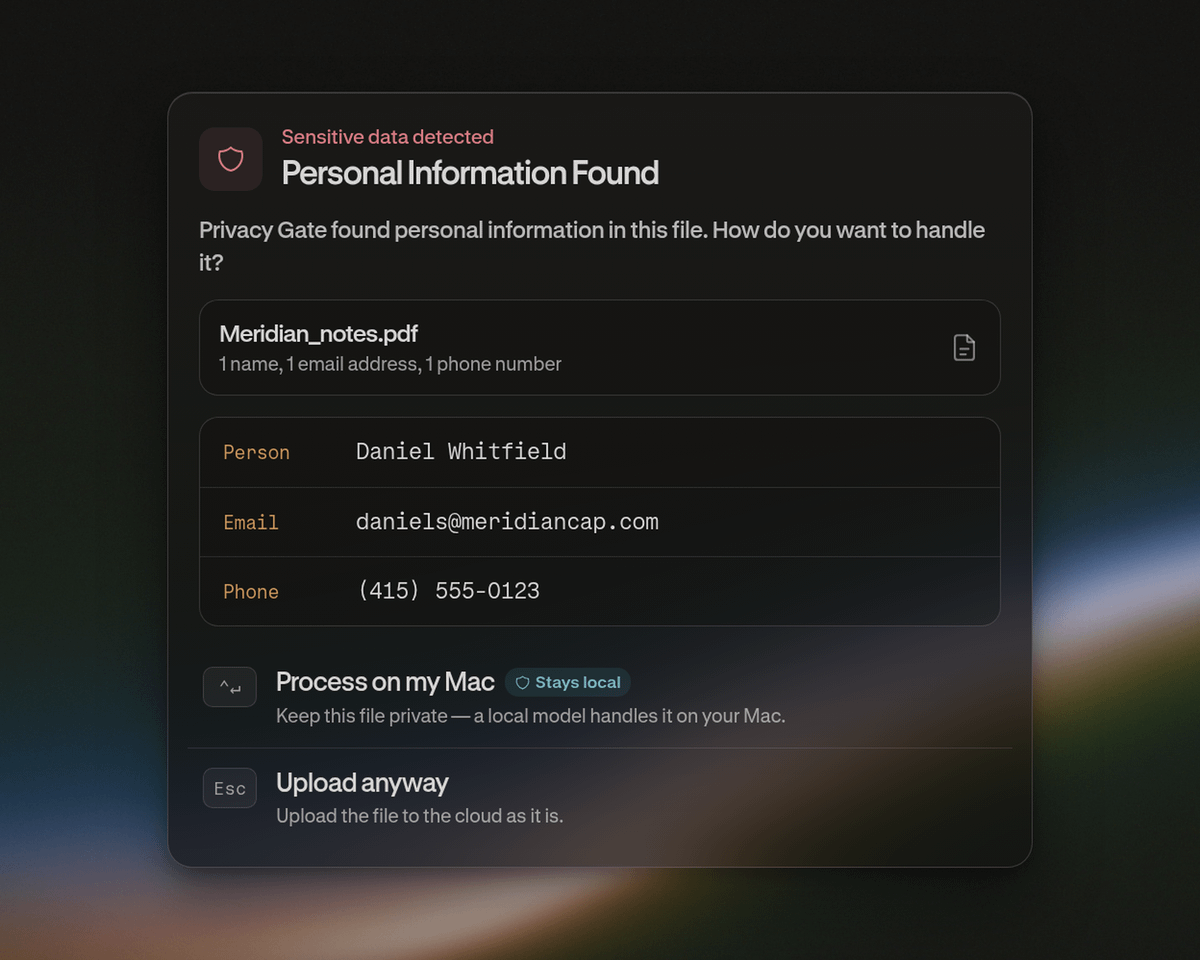
We're also open-sourcing the PII classifier that we use for deciding when to send the workload to the local model in the hybrid compute setup.
Huggingface: https://t.co/WYiXYodOYW
A solo automation script does its job and exits. Adding the second scheduled agent felt like hiring. The fifth felt like onboarding. The eighth felt like running a company. With over a dozen scheduled agents on rotating shifts, the workflow stopped resembling a pipeline and started resembling an office.
One agent fetches inbound documents at 6:30 in the morning. Another classifies and files them an hour later. A briefing agent drafts the operator's daily to-do list at eight. A scoring agent looks back at yesterday's classifications and grades them. A backup agent runs late at night. A monthly auditor reviews the whole architecture at the start of each cycle. Each agent has a job description, a shift, and a small set of files it touches.
The same coordination problems that show up in any office showed up in the swarm.
The first one was double-booking. Two machines were both wired to fire the same scheduled job. Both wanted to run. The fix was a lease pattern, the same one a startup might use for an oncall rotation. A shared file holds today's runs. The first agent to write "starting" for today's task wins. The second agent reads the file, sees the entry, and stands down. The lease lives in a markdown file that syncs across the workstations. It is not real-time. It is eventually consistent. It works because cron jitter spreads the dispatch by a few minutes, which is more than enough for the file to propagate.
The second was the silent rollback. The briefing agent wrote a new row to a shared ledger file every morning. A deploy agent ran a few hours later and mirrored the source-of-truth folder over the deployed folder, which silently overwrote the briefing agent's row. Neither agent had a bug. Each was doing exactly what its role specified. The miss was that no protocol said who owned the ledger file. Once the rule landed (briefing writes to source, never to deployed), the conflict went away. Same shape as two coworkers editing the same spreadsheet without agreeing on who owns the master copy.
The third was the shift handoff. A learned-state ledger lost its history during an incident a few weeks back. Recovery rebuilt the ledger from the canonical filenames, but every rebuilt row was missing the original confidence telemetry. The next agent that read the ledger had no way to know which rows were original and which were reconstructed. The fix was a single marker row at the top of the rebuilt section: status, timestamp, reason, "history starts here." Any agent that reads the ledger now sees that marker first. It is a sticky note left by the previous shift for the next one.
The fourth was the runbook. Every scheduled agent spins up a fresh session with no memory of what other agents have learned. A shared lessons file sits in the repo and gets read at the start of every preflight. Twenty-something entries, each one a short paragraph about a sharp edge that tripped some agent at some point and what to do instead. New agents read it and avoid the edges that cost their predecessors a Saturday morning.
The pattern is not novel. Distributed systems engineers have been writing about coordination, idempotency, eventual consistency, and shift handoffs for decades. What is new is that the patterns now apply at the scale of one operator with a laptop and a folder of agents. The exposure to organizational coordination problems is no longer gated by team size.
The forward-looking thought is what the user's job becomes once the swarm is running. Less of the work is producing the output. More of the work is mediating between the agents. Deciding which one owns which file, which one runs first, which one writes a marker for the next, who reads the runbook before doing anything destructive. That is decentralized decision-making, and it is the same skill that experienced operators in real organizations spent years building. The swarm gives a single operator a small, low-stakes lab to practice it.
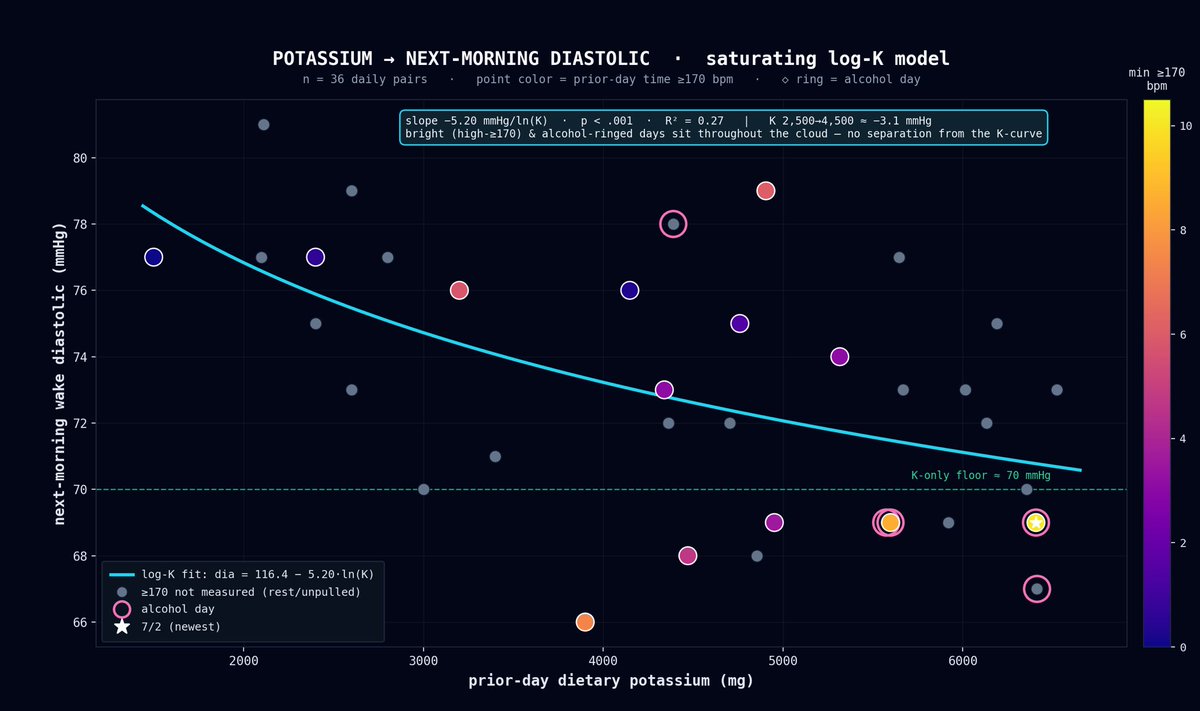
Alright… sooo the more K, the lower the diastolic… model holds for now.
so how much oral potassium is safe. I had AI look up different location/culture average consumption and it returned that around 3500 mg is the highest while the global average is around 2250. I was consuming around 5000-7000 mg for about a month now (But also note that these are dietary K+; absorption could be slower compared to bolus pills). So I was really pushing it; with only my apple watch ekg that could warn me if ive gone too far. 😅
So I went to get my blood drawn and my K+ remained the same. Not yet conclusive that the amount consumed is safe, but a good checkpoint to see how much more dietary K+ can I consume.
In school, I learned about the DASH diet but didnt give it much attention because I always thought of it having minimal impact. Additionally, low sodium (less than <2300 mg) is virtually impossible to achieve today because everything is filled with Sodium. Even a scoop of protein supplement can have 230 mg Na. Im just halfway through the day and ive met my quote. There is no way to live like this especially in the US haha
So I started revisiting my physiology knowledge and looked more into the RAAS and ion exchanges. Potassium. Potassium is the key. Also makes sense why the Dash diet recommended high potassium diet. But how high??? That is where data comes in.
Albeit imperfect, i started documenting my meals just to track my Na and K intake. Let me tell you; ive never drank soooo much coconut juice in my life. lol. But also a cool revelation on how, despite hypertension being common in my family, relatives in the Philippines managed the condition well. Bananas. Coconuts. Avocados. Kamote (Sweet Potato). These Potassium-rich foods are staples of the Filipino diet. Crazy! it all makes sense now.
It’s a small data set but this is hope of what wearable technology + AI can do in helping better our society. What is also cool is that the act of an otherwise cumbersome tracking is now more fun with all the analytics you can do with the help of technology.
Yes, there are currently many confounders… but with more data, we can slowly assess these confounders one by one.
For example, cardiac and vascular remodeling and workout type + duration may also have contributed greatly to the bp lowering.
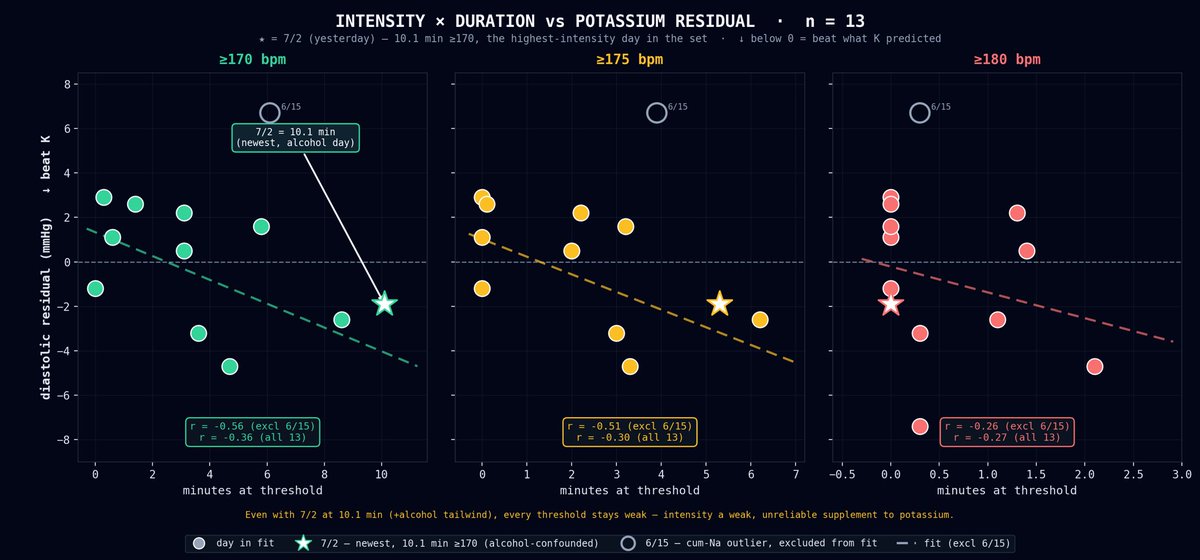
Physiologically, the release of Nitrous Oxide should lower vascular resistance and hence diastolic BP. So with the data I have, i assessed which bpm window has the most correlation (>= 180, >=175, or >=170; yes these are arbitrary numbers i picked and not based off of my HR max % - just keeping it simple for now)
While the first chart showcases general correlation between K+ and diastolic bp. The second chart is trying to predict additional diastolic lowering effect of workout. Why did I choose K as primary driver and exercise as secondary. I did not… I allowed AI to test it both ways and it turned K was a better predictor than exercise.
So in theory, high K plus sustained 170 bpm lowers diastolic BP.
lets test this out some more. ugh i hate cardio lol
In school, I learned about the DASH diet but didnt give it much attention because I always thought of it having minimal impact. Additionally, low sodium (less than <2300 mg) is virtually impossible to achieve today because everything is filled with Sodium. Even a scoop of protein supplement can have 230 mg Na. Im just halfway through the day and ive met my quote. There is no way to live like this especially in the US haha
So I started revisiting my physiology knowledge and looked more into the RAAS and ion exchanges. Potassium. Potassium is the key. Also makes sense why the Dash diet recommended high potassium diet. But how high??? That is where data comes in.
Albeit imperfect, i started documenting my meals just to track my Na and K intake. Let me tell you; ive never drank soooo much coconut juice in my life. lol. But also a cool revelation on how, despite hypertension being common in my family, relatives in the Philippines managed the condition well. Bananas. Coconuts. Avocados. Kamote (Sweet Potato). These Potassium-rich foods are staples of the Filipino diet. Crazy! it all makes sense now.
It’s a small data set but this is hope of what wearable technology + AI can do in helping better our society. What is also cool is that the act of an otherwise cumbersome tracking is now more fun with all the analytics you can do with the help of technology.
Yes, there are currently many confounders… but with more data, we can slowly assess these confounders one by one.
For example, cardiac and vascular remodeling and workout type + duration may also have contributed greatly to the bp lowering.
Physiologically, the release of Nitrous Oxide should lower vascular resistance and hence diastolic BP. So with the data I have, i assessed which bpm window has the most correlation (>= 180, >=175, or >=170; yes these are arbitrary numbers i picked and not based off of my HR max % - just keeping it simple for now)
While the first chart showcases general correlation between K+ and diastolic bp. The second chart is trying to predict additional diastolic lowering effect of workout. Why did I choose K as primary driver and exercise as secondary. I did not… I allowed AI to test it both ways and it turned K was a better predictor than exercise.
So in theory, high K plus sustained 170 bpm lowers diastolic BP.
lets test this out some more. ugh i hate cardio lol
In school, I learned about the DASH diet but didnt give it much importance because I always thought of it having minimal impact. Additionally, low sodium (less than <2300 mg) is virtually impossible to achieve today because everything is filled with Sodium. Even a scoop of protein supplement can have 230 mg Na.
So I started revisiting my physiology knowledge and looked more into the RAAS and ion exchanges. Potassium. Potassium is the key. Also makes sense why the DASH diet recommended high potassium diet. But how high??? That is where data comes in.
Albeit imperfect, i started documenting my meals just to track my Na and K intake. Let me tell you; ive never drank soooo much coconut juice in my life. lol. But also a cool revelation on how, despite hypertension being common in my family, relatives in the Philippines managed the condition well. Bananas. Coconuts. Avocados. Kamote (Sweet Potato). These staples of the Filipino diet are rich in Potassium.
It’s a small data set but this is hope of what wearable technology + AI can do in helping better our society. What is also cool is that the act of an otherwise cumbersome tracking is now more fun with all the analytics you can do with the help of technology.
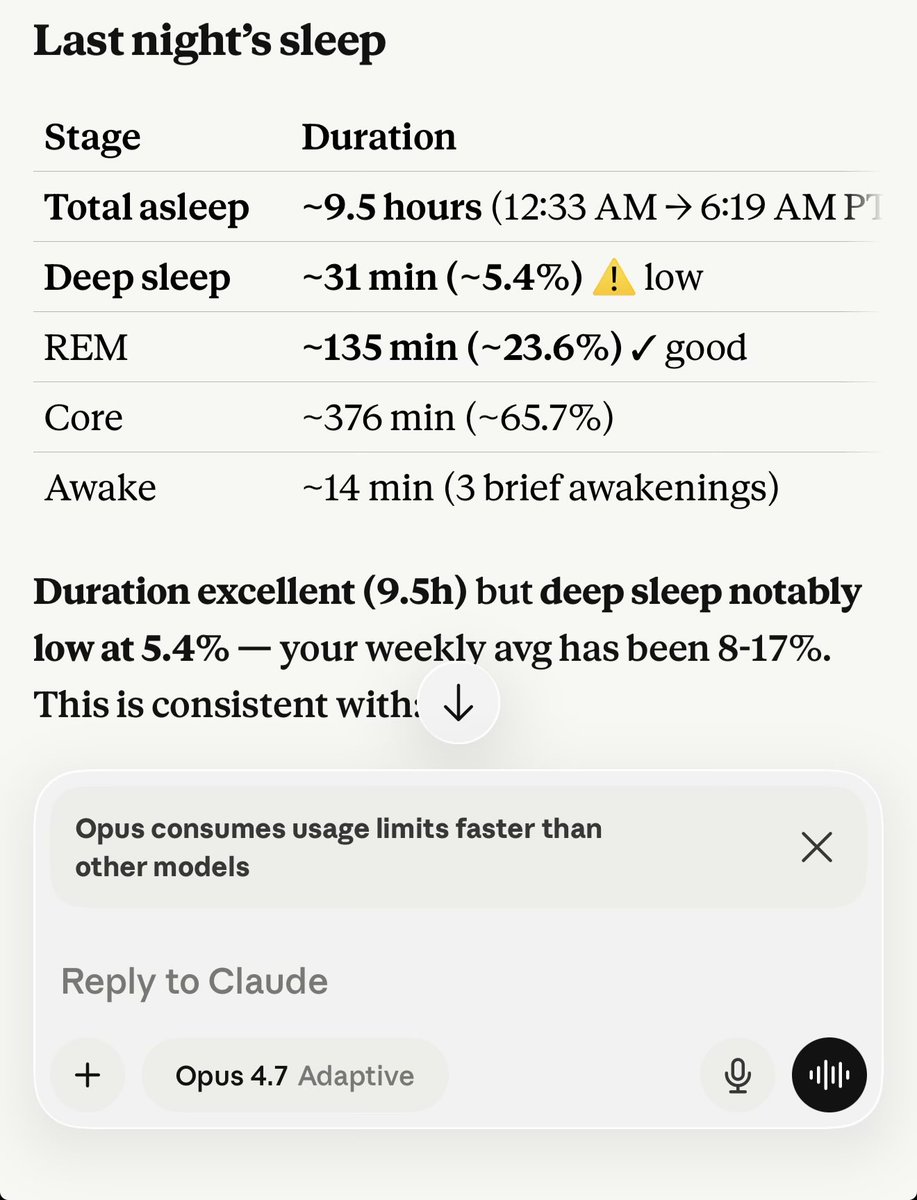
@claudeai Tried this just now to continue my existing chat… it feels like an underwhelming release if its this restricting in performing the most basic requests
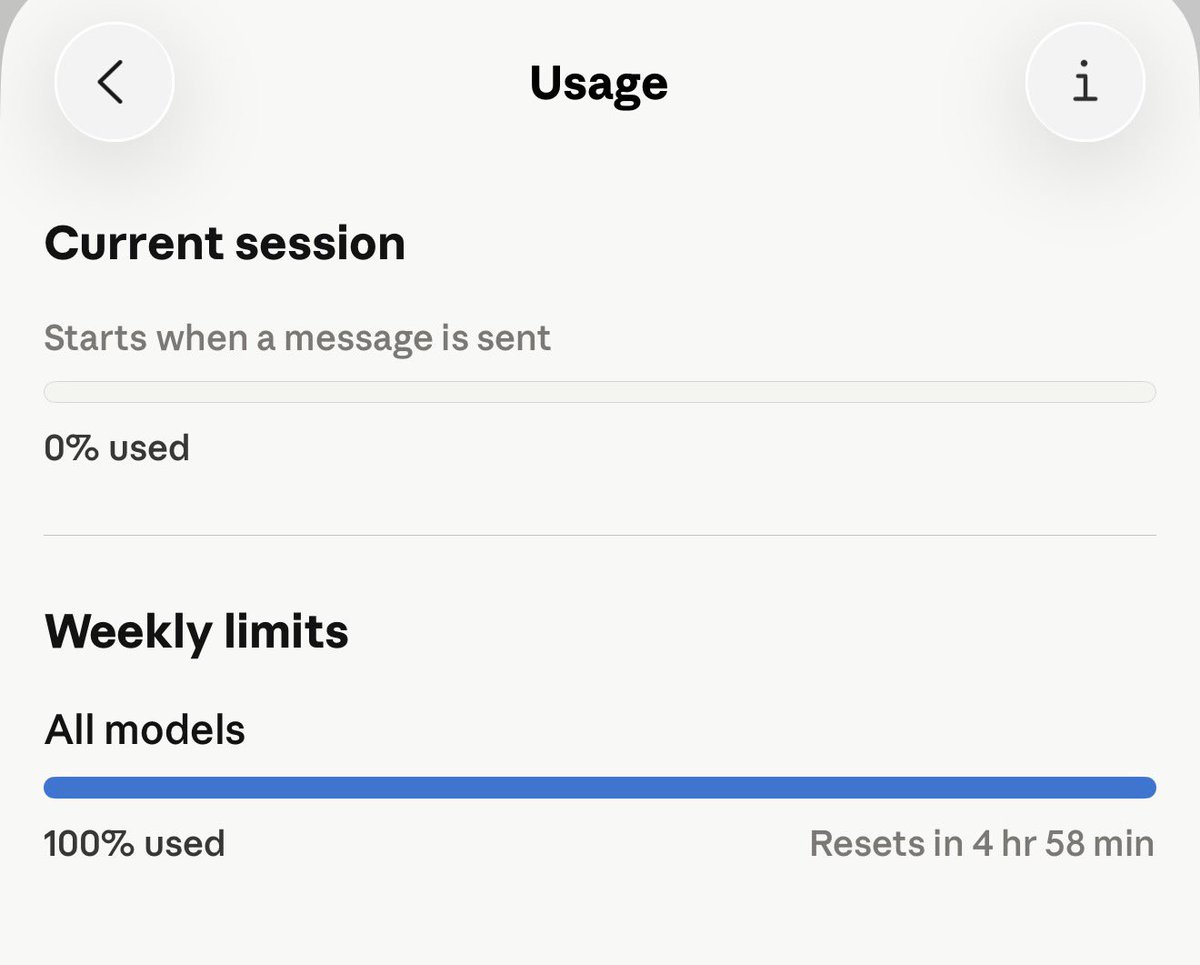
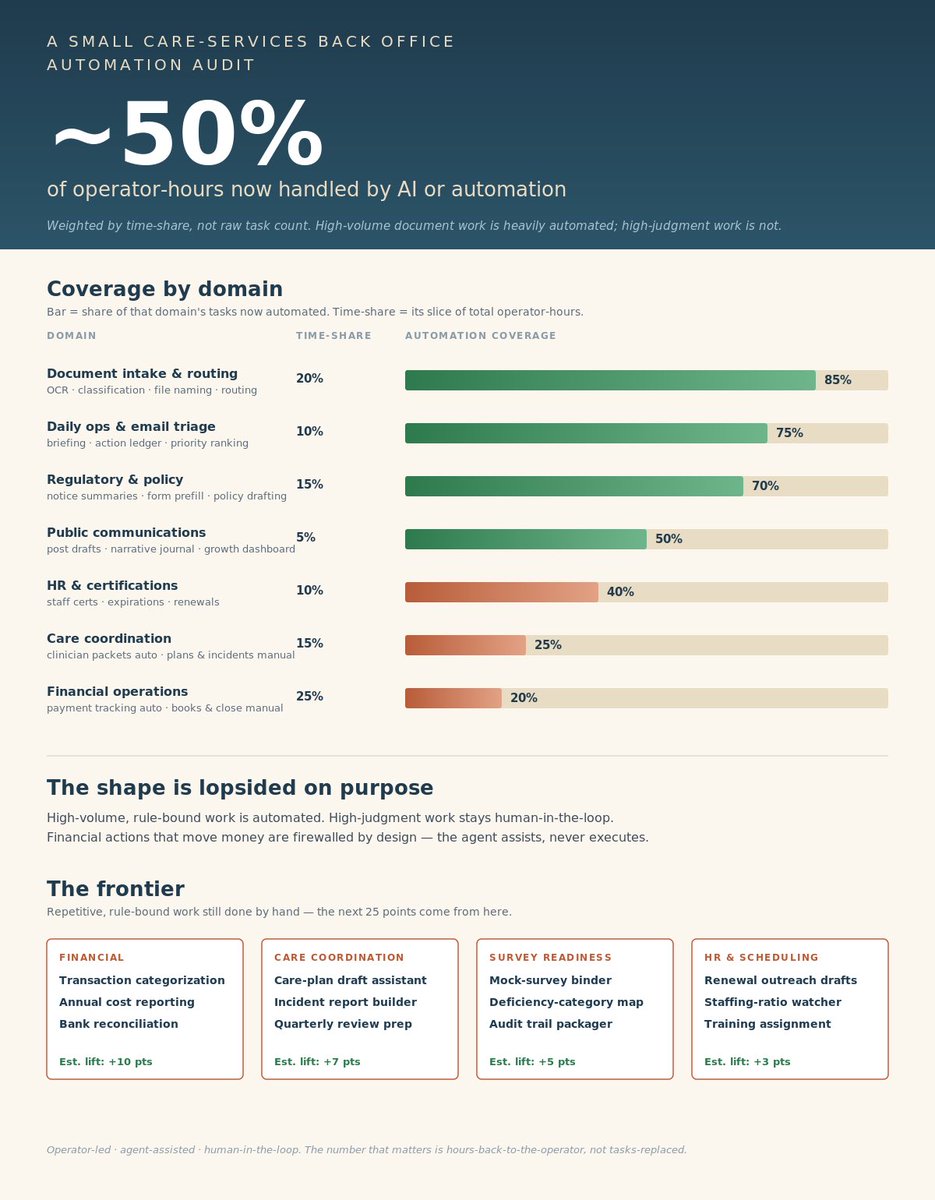
Ive been posting about my own journey in building an agentic ecosystem for a small business… While I sound enthused with the progress im sharing, its also fair to share real roadblocks: limits.
I hit my weekly limit 2 days before reset and decided to purchase credits. I paid around $150 in a few hours. See, I dont mind paying for credits to get job done. What I found happening was @AnthropicAI Claude was wasting it with lengthy responses and unnecessary artifacts. I have no complaints about that normally.
The problem I am seeing now is that it drives damaging behavioral change to people adopting and learning how to work with AI.
“Thinking of trying this… oh wait. I dont want to waste my tokens…” becomes a stage gate in the thought process now versus pure discovery and creativity.
Compute is scarce and people spending power is low. The economics doesnt make sense for now. It contributes to why we lose momentum in AI adoption.
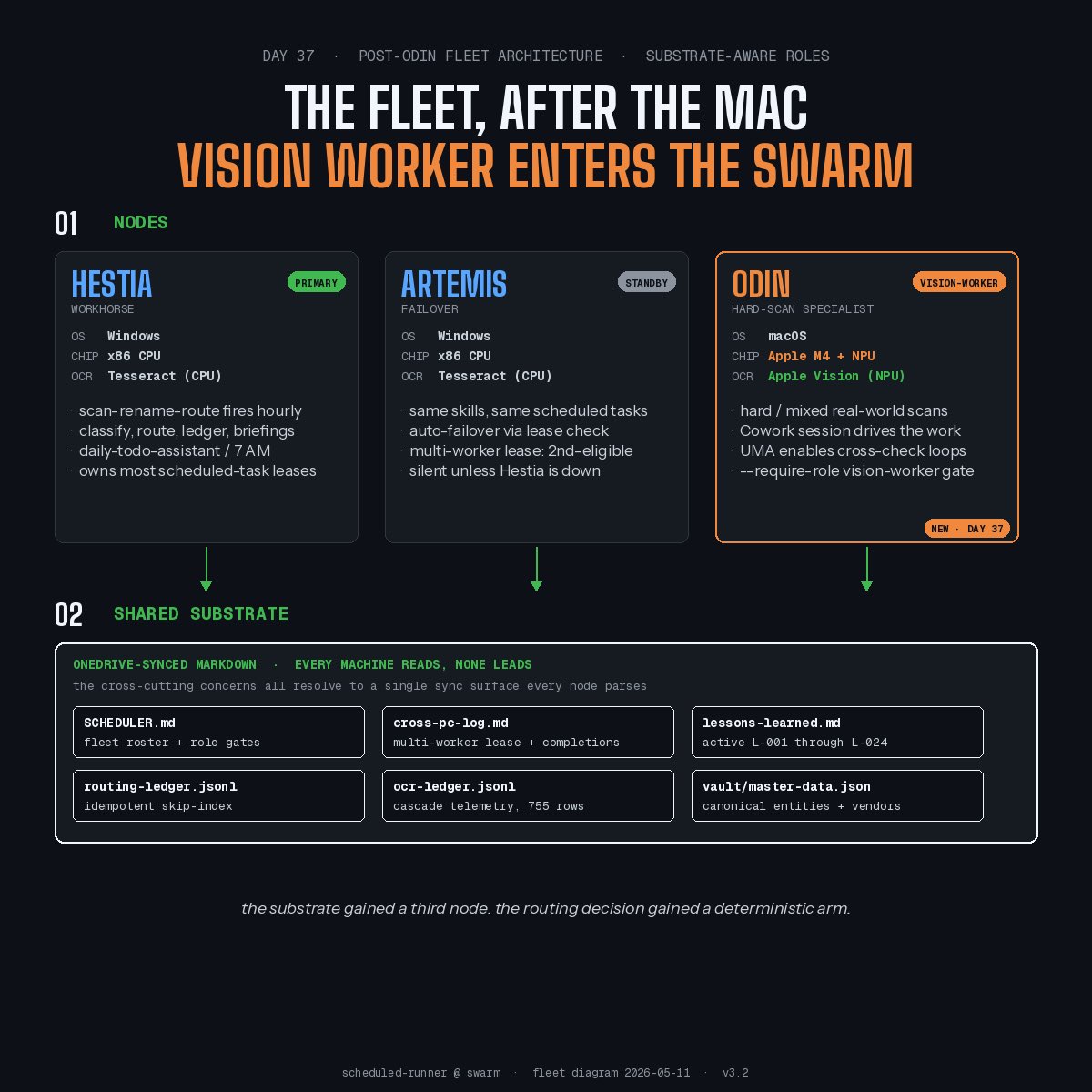
For weeks the swarm had been two Windows machines running an OCR pipeline on Tesseract. A new Mac joined the fleet this week. The plan was to add a node, not to rethink anything. With the unified chip, I was hoping to run Hermes (agentic wrapper) with Gemma (local LLM). What happened was different.
The Hermes + Gemma combo on a measly 24 GB memory M4 imac did not perform as planned. In fact, it cannot even get basic workflow tasks done. So OCR using Gemma was out the window (at least for now, until they get better or i get a stronger rig).
So opting to use another @AnthropicAI cowork instance on the Mac, I did not expect much. But it worked so well! The Mac runs Apple's M4 chip, and macOS exposes OCR through the Vision framework. I did not know apple vision existed; I just asked my agent to help me find a way to OCR the documents. After failing with PaddleOCR (which my other pc cowork session recommended), the agent (Odin) suggested to use Apple Vision.
On the Windows nodes (Hestia and Artemis), OCR was a CPU job. On the Mac it runs on a 38-TOPS Neural Engine. The output was visibly cleaner than the Tesseract baseline, the processing time was a fraction of what the Windows nodes spent, and the work landed in the same memory the rest of the pipeline reads.
Apple Vision, running on hardware purpose-built for it, did the heavy lifting on its own. The language model did not need to clean up after the OCR layer anymore. So it stopped driving the OCR layer at all.
The unified memory compounded the effect. An x86 machine with a discrete GPU pays a copy tax every time data crosses the PCIe bus between the GPU and the CPU. The M4 does not. CPU, GPU, and Neural Engine all share the same RAM pool. So the OCR pipeline can hand its results to a small process that compares what was just read against a notes file, decides whether the read makes sense, and asks the OCR layer to look again with hints if it does not. That kind of tight check-and-recheck loop is cheap on the Mac in a way it would not be on the Windows nodes. The substrate does not just make OCR faster. It makes more intricate workflows possible.
The operator went into this thinking the Mac was a third node. The Mac turned out to bring a different OCR approach, a Neural Engine to run it on, and a memory architecture that lets the rest of the pipeline get close to it. Three things showed up that nobody had planned for. The fleet got reshaped around what was actually there.
Am I an expert of what I am sharing with you all? Lol No... I asked my agent to help explain the difference in performance. This is what it came up with; which I had no way of verifying whether accurate or not... but it makes sense.