Introducing Claude Science, a new app designed with every stage of research in mind.
Artifacts traced to their code, environments managed on demand, and 60+ optional scientific databases that you can connect.
Available now in beta.
As a result of a US government directive, we are suspending access to Claude Fable 5 for all users. You can continue to use all other Claude models.
Here’s what this means for you:
Across Claude products, new sessions will run on your selected default model or Opus 4.8, and existing Fable 5 sessions will end with an error.
On the Claude Platform, requests to Fable 5 will also return an error. Please update your integrations to other Claude models.
We know this is a disruption to your workflows; we appreciate your patience and support.
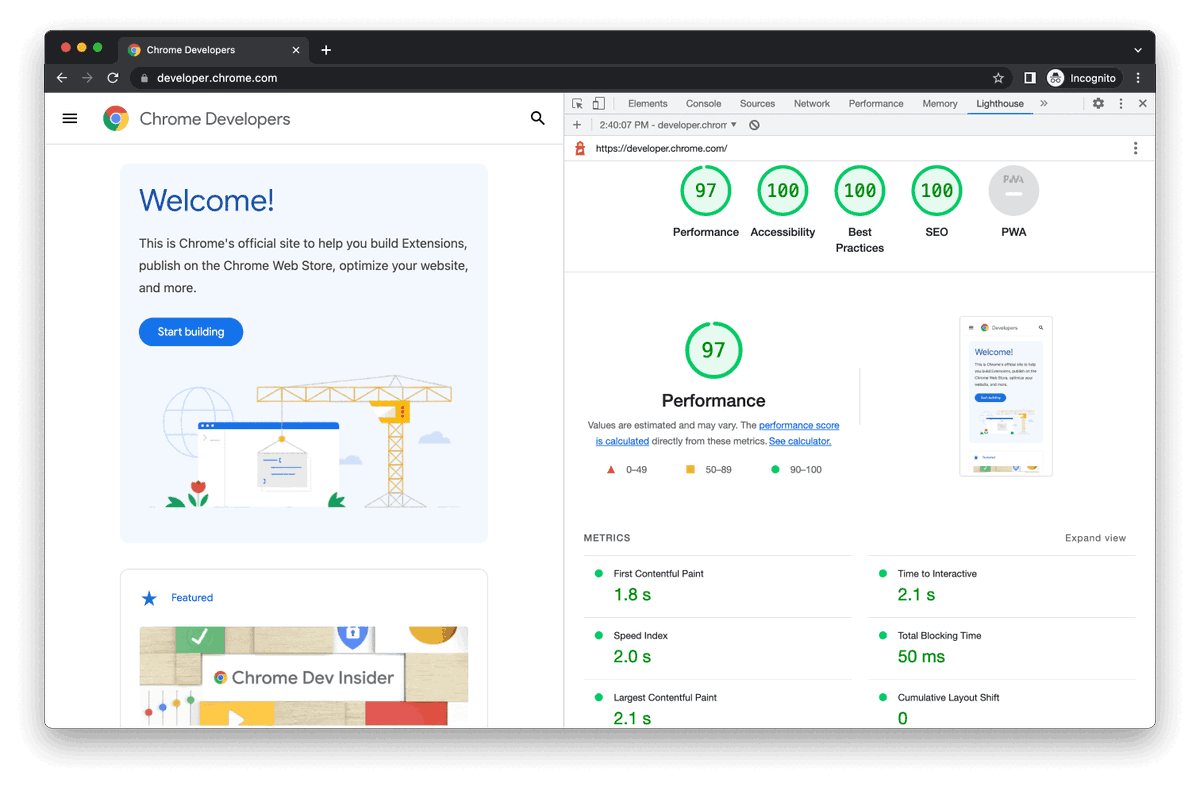
Prepare your site for AI agent interaction with Lighthouse → https://t.co/5myVWdLZd9
If you want AI agents to actually navigate your site properly, the new experimental audit in Lighthouse lets you see:
☀️ Discoverability for AI agents
⚡ WebMCP integration
👀 AI accessibility
#GoogleIO
An early beta of Grok Build, an agentic CLI for coding, building apps, and automating workflows is now available for SuperGrok Heavy subscribers.
Through this early beta, we will improve the model and product based on your feedback.
Try it at https://t.co/bpTHpjivWD
Our official Agent Skills repository on @github is here!
Skills are a simple, open format for giving agents new capabilities and expertise. Think of a skill as compact, agent-first documentation for a specific tech or task.
Learn more → https://t.co/7w887vz3lE #GoogleCloudNext
Introducing Claude Opus 4.7, our most capable Opus model yet.
It handles long-running tasks with more rigor, follows instructions more precisely, and verifies its own outputs before reporting back.
You can hand off your hardest work with less supervision.
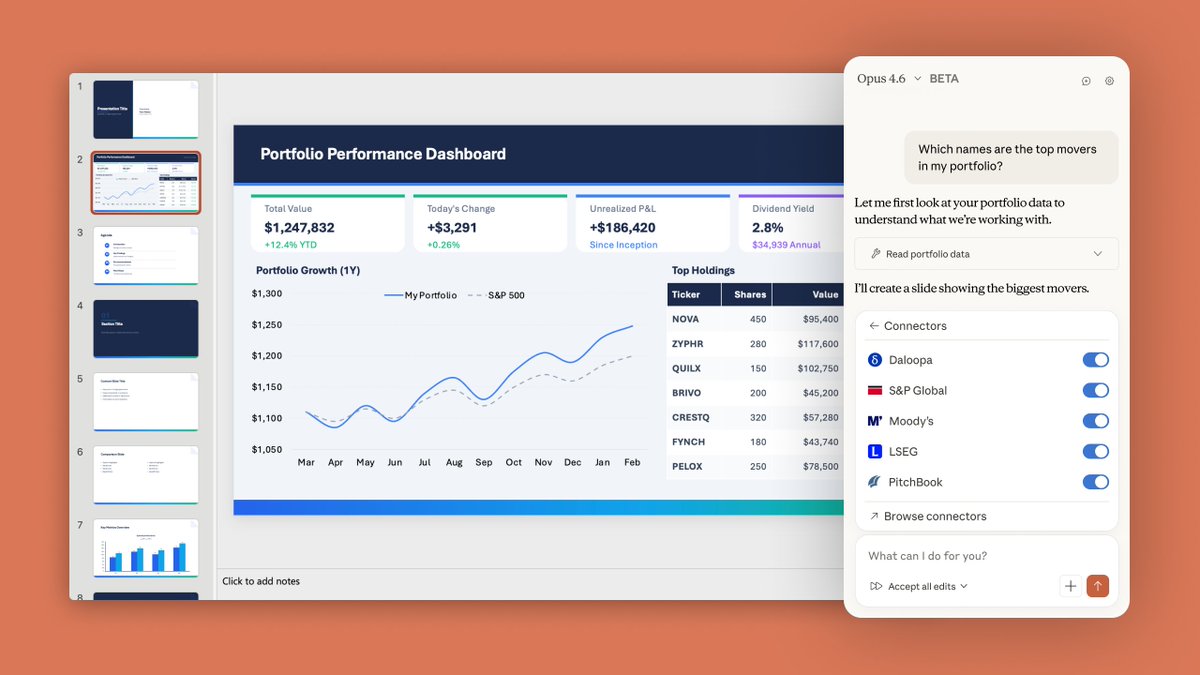
Claude in PowerPoint is now available on the Pro plan.
It also now supports connectors, bringing context from your daily tools directly into your slides.
Try it here: https://t.co/N52VtGwcPj
Anthropic just took a big swipe at OpenAI's decision to put ads in ChatGPT. Anthropic is airing ads mocking ChatGPT ads during the Super Bowl, and they're hilarious 😅 Anthropic is also committing to no ads in Claude https://t.co/LR1v4xz9ds
Little tip - You can right click and 'Show Inlinks', 'Show Inlinks to Children', or perform the same for 'Outlinks' to see all inlink and outlink relationships in our site visualisations.
Little tip - You can fetch API data without any crawling. Just go to 'Mode > APIs', select your APIs such as GA4, GSC, PSI or link metrics - and upload the list of URLs to pull data quickly.
SEO News: if you missed my post over the weekend, there’s been some massive fluctuations to data in GSC.
Interestingly, this change may actually point to a broader underlying issue in our data that was originally thought to be related to the AI overviews rollout.
Impressions going up but clicks not following. This has been the shared understanding of the SEO community based on recent studies, but we may be now discovering how flawed this methodology was in the first place.
Google has been pushing back on these studies recently and the disabling of &num=100 may have motives outside of preventing competition from scraping their search results.
The outcome? Well, it seems like desktop impressions in particular in GSC for many sites (due to desktop being the primary rank tracking surface) may have been heavily influenced from an influx in bots (due to new AI analytics entrants) scraping their search results.
We can see this in the graph shown, where desktop impressions have dropped a whopping 200K impressions overnight for this site, forcing average position to move in a direction that is more close to mobile.
So you’re telling me 200K daily impressions on desktop were from scraper tools!? That seems a bit ridiculous, but potentially not fully outlandish. There is likely more to this story.
The reason for this is that by default, most users would have the top 10 search results shown in Search. An impression is only recorded in GSC if the result is loaded on that page and the link is within visible, but it doesn’t need to be scrolled into view. When the top 100 results are loaded, this will completely throw this dataset out of whack, causing the average position to increase dramatically.
Many think that Google has made this change to prevent external services abusing their systems. While this may be true, I do wonder whether there are ulterior motives in putting “the great decoupling” theories to rest.
Just released a small update to v.22.1 after out latest release - https://t.co/Kdkz5MhR7M. Mainly small improvements such as configurable endpoint for Ollama, and bug fixes.