Brendan Foley and Co will be giving a free lunchtime talk in London next week on the #Gripshunden; in person or online: details here: 9 June 2026 Society of Antiquaries, London
Lunchtime talks on the Gribshunden (also available online)
https://t.co/ZP3VaIYryK
This #UKSpringBankHoliday😎don’t just leaf through 300 years of Lee family history, immerse yourself in their company while exploring their grand houses.📖
https://t.co/4pASmD4e97
Every Honeycrisp apple is a clone of a single tree planted at the University of Minnesota in 1962. Every one. Apple seeds are random. Plant a Honeycrisp seed and the new tree produces a small, sour apple that’s usually inedible.
So apple growers do something old and clever. They cut a small branch off the original Honeycrisp tree, slot it into a slit in a young apple sapling, wrap the joint, and wait. The branch fuses to its new host and starts producing Honeycrisps. About 20 million Honeycrisp trees exist worldwide, every one a piece of that 1962 tree on different roots.
Same goes for Gala, Fuji, Pink Lady, Granny Smith. Every Granny Smith on Earth traces back to a seedling found in 1868 by a woman named Maria Ann Smith in Australia. She’d thrown French crab apple cores onto her compost heap, one of them sprouted, and the apples it bore were unusually tart and good for cooking. That one tree is the ancestor of every Granny Smith in every grocery store on the planet.
Wine has the bigger story. In the 1860s, a tiny aphid called phylloxera caught a boat from America to France, hidden in some grapevine cuttings. It eats grape roots. French vines had no defense and started dying everywhere. Within 15 years, French wine production crashed from about 11 billion bottles a year to 3 billion. The blight then tore through Italy, Spain, and Germany, and European wine was on the edge of collapse.
The rescue came from Missouri and Texas. American grapevines had grown up with phylloxera and were immune to it. So growers chopped French grape varieties off at the trunk and joined them to American roots. Above the soil: still French grapes. Below the soil: aphid-proof American root. It worked. Today, almost every bottle of French, Italian, Spanish, Australian, and Californian wine you’ve ever drunk sits on top of an American root.
The technique is ancient. Chinese farmers were grafting trees by 1000 BCE. A Greek medical text from 424 BCE describes it casually, like it was already old news. It works because plants don’t have a rejection system the way animals do. Cut two branches. Match the green layers just under the bark. Wrap them tight. In a few weeks the plumbing has fused into a single plant.
A Syracuse University art professor named Sam Van Aken has spent 18 years building a single tree that grows 40 different fruits: peaches, plums, apricots, cherries, nectarines, almonds. In spring it blossoms in pink, white, and crimson all at once. He’s made more than a dozen. They sell for up to $30,000 each.
Without grafting, there would be no commercial apple industry, no global wine industry, and most of the heirloom fruits humans have bred over the centuries would have gone extinct. One clean cut, and you’ve kept entire species alive.
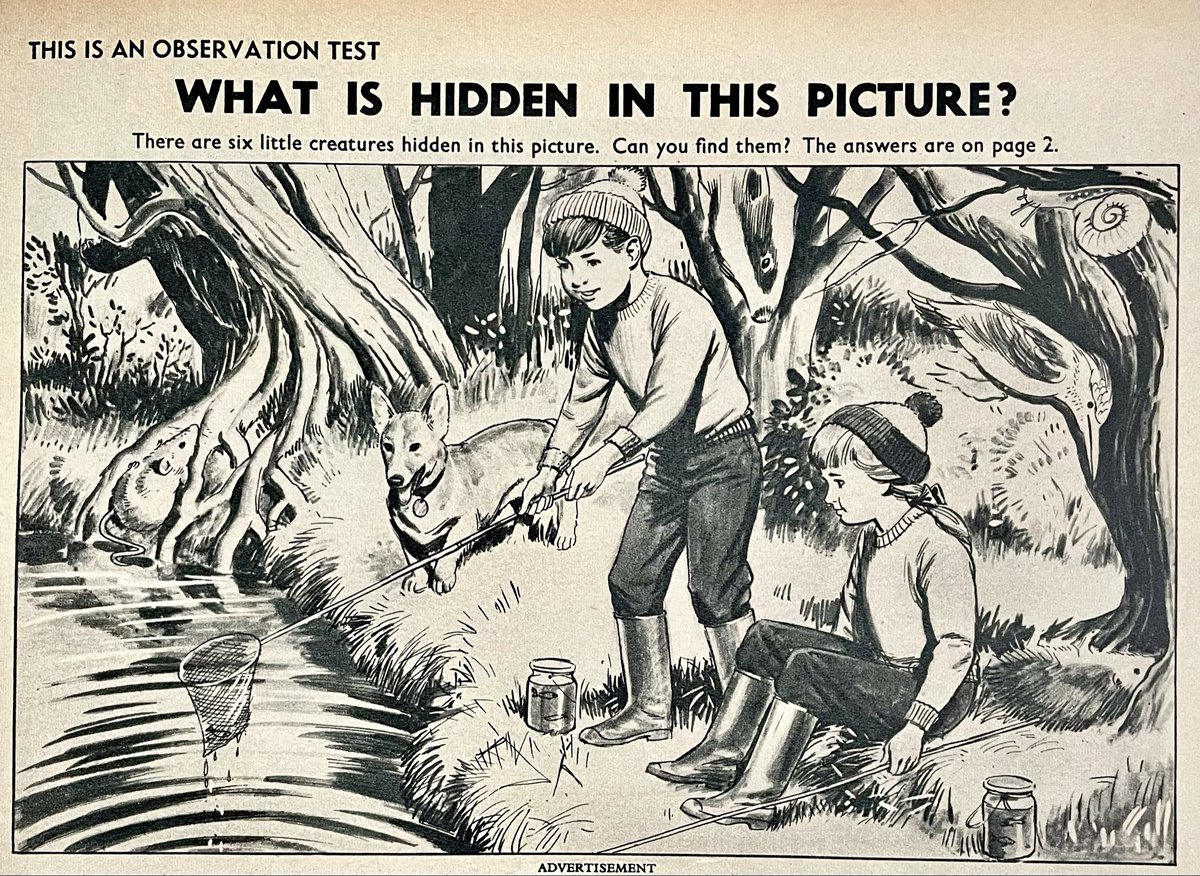
An observation test for your inner 8-year-old.
Can you spot the 6 creatures hidden in the picture?
From Treasure magazine, 1965
Official answers coming soon
(Even if you don’t reply, could you please ‘like’ or share this one?)
@GalanthusA@cnocbeag@PhilNvestigates Mr Robinson was very admiring of the Tate brothers. And the other Robinson. Perhaps his hatred and jealousy of women has something to do with the current Archbishop of Canterbury.
NEW PUBLICATION!
Bringing to life a #SocialHistory of the Lee family of Knights, Baronets & Earls of Litchfield during the #16thCentury, #17thCentury & #18thCentury.
THE LEES OF DITCHLEY & THEIR GRAND HOUSES -
Visited by Tudor, Stuart & Windsor Monarchs.
https://t.co/ZI5mh8NZwD
Little known secret that the EU designed this environmentally friendly bottle cap to frustrate, enrage, and befuddle low intelligence MAGA and brexiteer middle-aged 'conservative' men. It works 100% of the time.
A very Happy #WorldPenguinDay from the Falkland Islands! 🐧
One of the world's great penguin capitals, our Islands are proudly home to over one million penguins and five different species. 🇫🇰
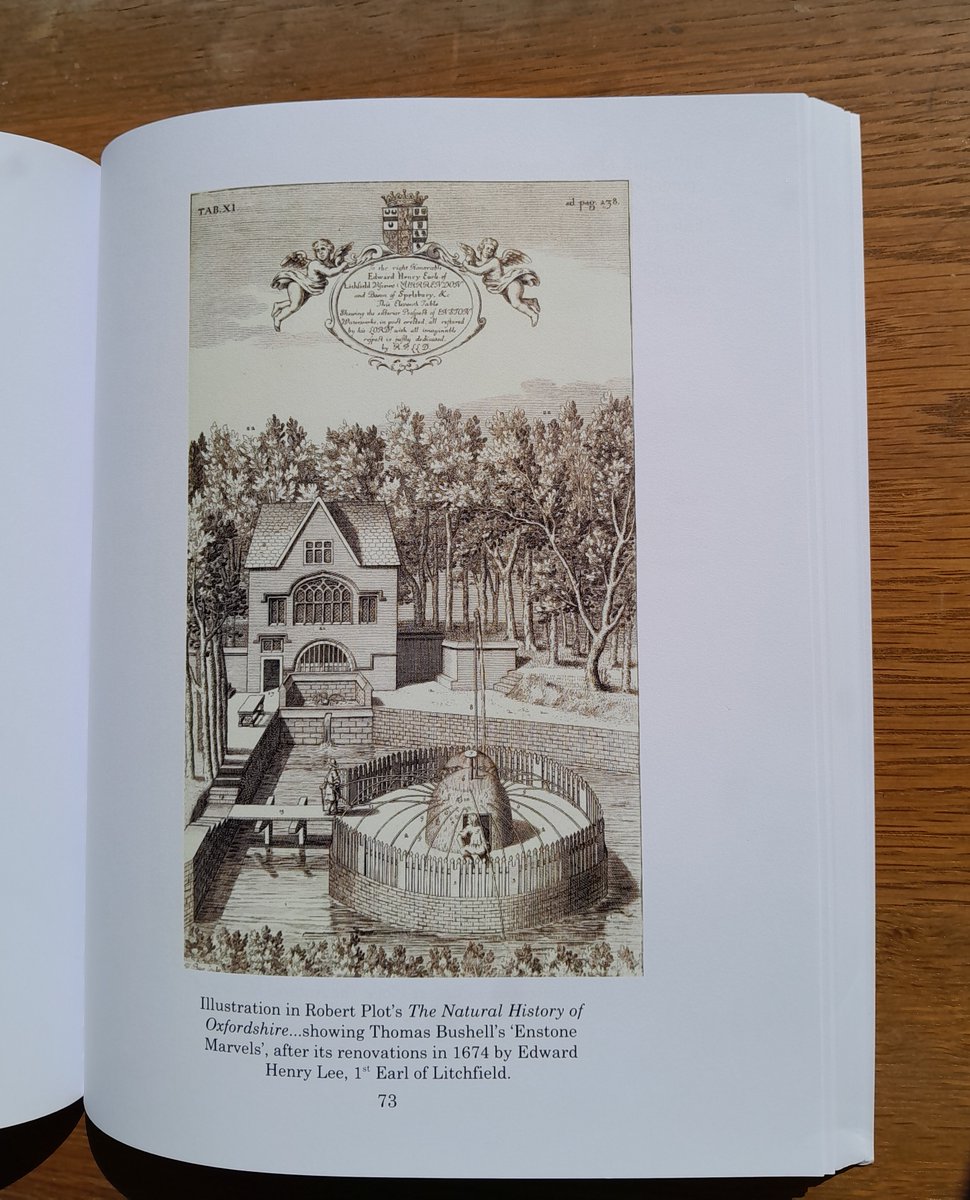
The ‘Enstone Marvels’, seen by #CharlesI & #Henrietta, 1636. The Queen was so captivated she bade them be named after her! In disrepair by 1674 the ‘Marvels’ were renovated by #EdwardHenryLee#1stEarlofLitchfield.
THE LEES OF DITCHLEY & THEIR GRAND HOUSES
https://t.co/6guhRqKq2B