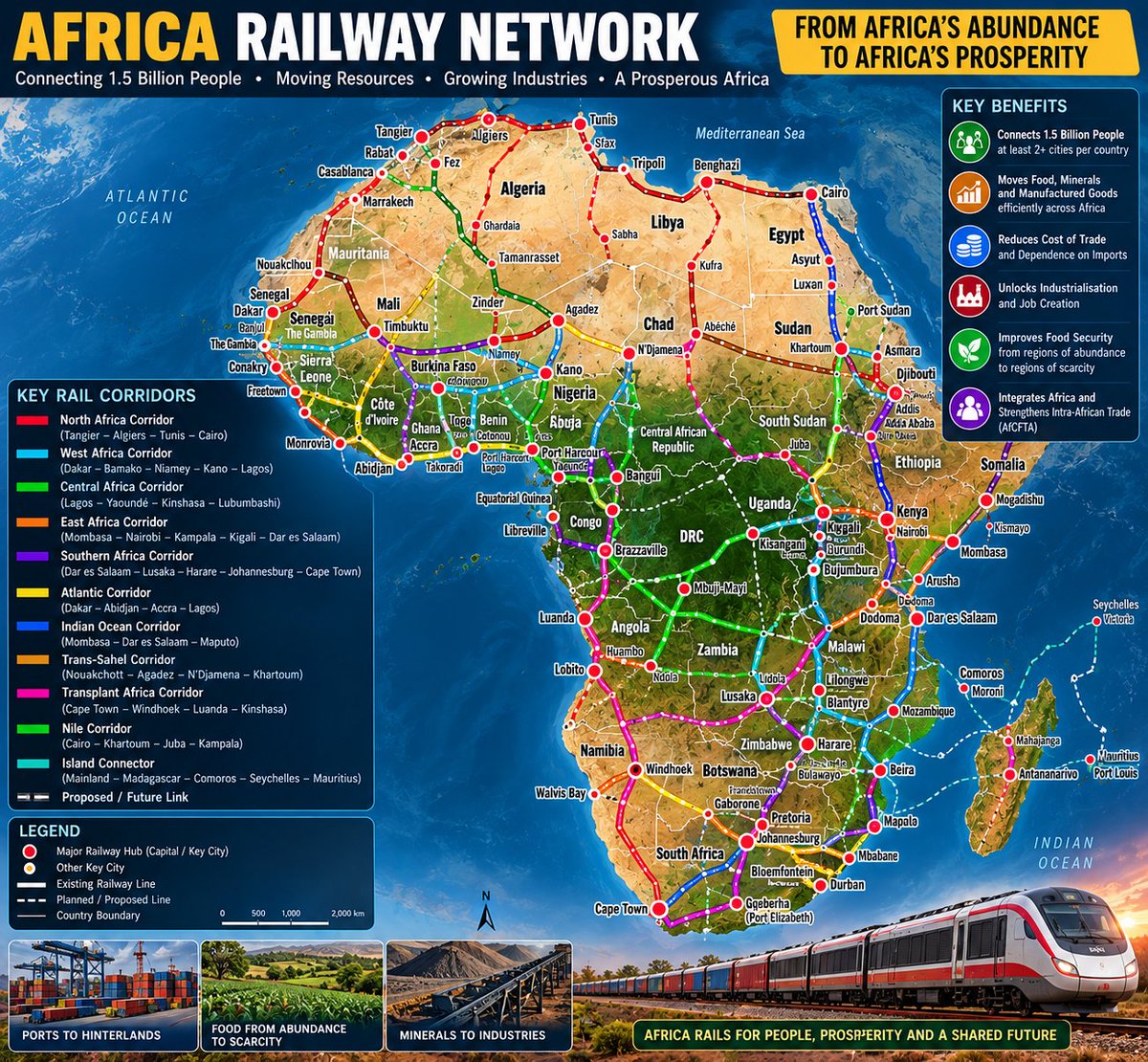
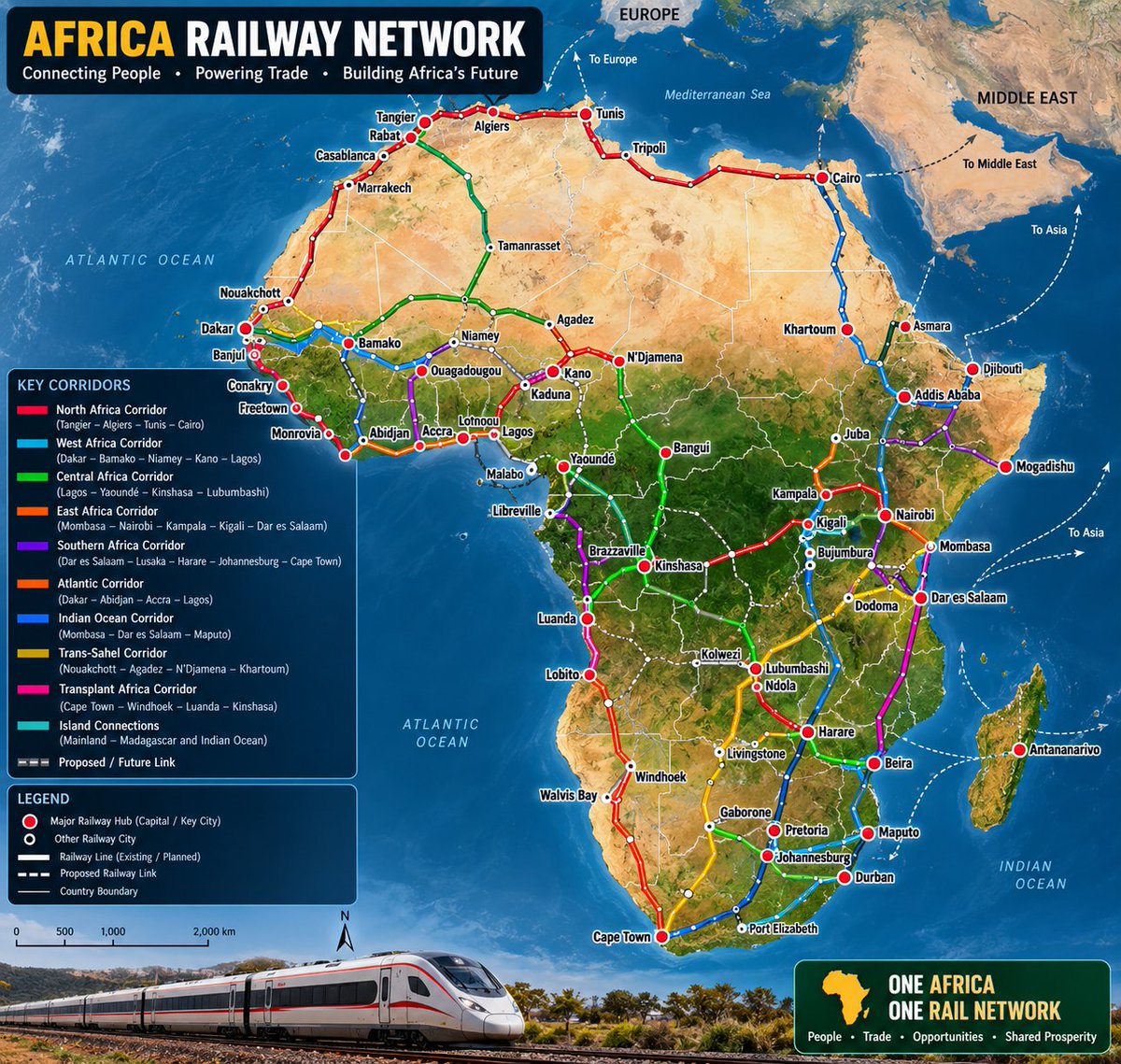
Today it's often cheaper to import from China than to buy from a neighboring country. Only about 15% of Africa's trade is with itself. Air is too costly, and our old railways only lead to the ports. imagine if Cities of Africa were connected by railways. trade can increase to 70%.
From today and forever more ALL Ugandan Police Officers will wear their name tags on their right chest pocket. They must also wear their police badge and number on their left chest pocket. Finally, all Ugandan citizens have the right to demand the name and badge number of any arresting officer. If they do not respond, you have the right to resist arrest.
I have accommodation on Ishaka katuguru road. @wekesa_amos it’s near the road and in a protected environment. In Kayembe Mashonga Kyamuhunga my WhatsApp contact is +256782495118
For far too long, many organizations have relied heavily on spreadsheets, reports, and boardroom metrics while overlooking the very people who make those numbers possible.
As businesses grow and profitability increases, many employees continue to struggle with stagnant salaries, rising living costs, and increasing personal debt. This creates a disconnect between organizational success and employee well-being.
The reality is simple: without people, there is no profitability. Even the most advanced machines, sophisticated systems, and world-class technologies cannot replace the commitment, creativity, and dedication of a motivated workforce.
Boards and management teams must place greater emphasis on creating value not only for shareholders but also for employees. Sustainable growth is achieved when organizations build a win-win culture where business performance and employee welfare advance together.
At the same time, employees must uphold integrity, professionalism, accountability, and strong moral values. Organizations thrive when good stewardship is matched with fair reward and recognition.
The future belongs to organizations that understand that people are not just a cost to manage—they are the greatest asset to invest in.
When employees win, organizations win. When organizations win, communities and economies prosper.
#Leadership #CorporateGovernance #HumanCapital #EmployeeWellbeing #BusinessGrowth #PeopleFirst #OrganizationalDevelopment #FutureOfWork #WorkplaceCulture #Integrity #Stewardship #SustainableGrowth #BoardLeadership #Management #BusinessSuccess
East Africa's 2026/27 Budgets: Why Investors and Development Partners Should Pay Attention Now
The 2026/27 budgets across East Africa reveal a common theme: governments are investing heavily in infrastructure, industrialization, energy, regional trade integration, and value addition. For investors and development partners, this presents a rare opportunity to enter markets before asset prices, competition, and operating costs rise significantly.The countries of the East African Community collectively represent a market of over 330 million people, one of the fastest-growing regions in the world, abundant natural resources, and an increasingly young workforce.Why East Africa Is Becoming More Attractive
1. Massive Infrastructure Expansion
Governments across Uganda, Kenya, Tanzania, Rwanda, Burundi, and South Sudan continue allocating significant resources to:Roads and highways
Rail transport
Energy generation and transmission
Industrial parks
ICT infrastructure
Border and trade facilitation
These investments reduce logistics costs and improve market access, making the region more attractive for manufacturing, agriculture, mining, and services.2. Industrialization Is Now a Government Priority
Most regional budgets are shifting away from exporting raw materials toward value addition.Priority sectors include:Agro-processing
Textiles and garments
Leather processing
Pharmaceuticals
Automotive assembly
Renewable energy
Mineral beneficiation
This creates opportunities for investors seeking incentives, government support, and access to regional markets.Country-by-Country Opportunities
Uganda
Uganda's budget emphasizes:Agro-industrialization
Oil and gas development
Mineral processing
Industrial parks
Export promotion
Infrastructure development
Investment opportunities include:Coffee value addition
Banana fiber textiles
Leather manufacturing
Automotive assembly
Renewable energy
Logistics and warehousing
The commencement of oil production and associated infrastructure is expected to create multiplier effects across the economy.Why Invest Now?
Land, industrial assets, and labor remain relatively affordable compared to more mature African markets.Kenya
Kenya remains the region's commercial hub.The budget continues supporting:Digital economy
Manufacturing
Green energy
Transport infrastructure
Financial services
Opportunities include:Technology
Fintech
Logistics
Healthcare
Manufacturing
Export processing
Kenya offers sophisticated capital markets and serves as a gateway into East and Central Africa.Tanzania
Tanzania continues investing heavily in:Ports
Railways
Energy
Mining
Agriculture
Major opportunities include:Mining value chains
Fertilizer production
Agro-processing
Logistics
Manufacturing
With access to the Indian Ocean and a growing domestic market, Tanzania is increasingly becoming a manufacturing and logistics powerhouse.Rwanda
Rwanda's budget remains focused on:Innovation
Technology
Services
Tourism
Clean governance
Opportunities include:ICT
Fintech
Hospitality
Education
Healthcare
Business services
Rwanda offers one of Africa's most investor-friendly environments with efficient regulatory systems.Burundi
Though often overlooked, Burundi presents significant frontier opportunities in:Agriculture
Mining
Energy
Manufacturing
As infrastructure improves and regional integration deepens, early investors may benefit from first-mover advantages.South Sudan
Despite challenges, South Sudan remains one of Africa's least developed but resource-rich markets.Budget priorities include:Infrastructure
Agriculture
Energy
Trade facilitation
Opportunities exist in:Construction
Logistics
Agribusiness
Energy
Financial services
The reconstruction and development agenda creates substantial long-term potential.Why Development Partners Should Engage
Development finance institutions, sovereign wealth funds, impact investors, and donor agencies can achieve significant developmental impact through:Climate-smart agriculture
Renewable energy
Industrial parks
Skills development
SME financing
Women's economic empowerment
Infrastructure financing
The region's youthful population means investments today can generate both economic and social returns for decades.Why the Best Time to Invest Is Now
History consistently rewards early https://t.co/0VLtotBvy9 in East Africa:✓ Industrial land is still relatively affordable.✓ Many sectors remain underdeveloped.✓ Governments are actively seeking strategic investors.✓ Regional integration is accelerating.✓ Infrastructure is expanding rapidly.✓ Consumer markets are growing.✓ Labor costs remain competitive.The same industrial land, logistics hubs, energy projects, agricultural estates, and manufacturing opportunities that appear expensive tomorrow are often available today at a fraction of their future value.The question for investors is not whether East Africa will grow. The budgets across Uganda, Kenya, Tanzania, Rwanda, Burundi, and South Sudan indicate that growth is already underway. The strategic question is whether to participate at today's valuations or compete for the same opportunities after they become obvious to everyone else.For long-term investors, development partners, and industrial players, East Africa is increasingly shifting from being an emerging opportunity to becoming one of the world's most compelling growth frontiers.
more deeper analysis for Linkedin Post
East Africa's 2026/27 Budgets Signal a New Investment Cycle: Why Smart Capital Should Move Before the Crowd
For investors, development finance institutions, sovereign wealth funds, export credit agencies, private equity firms, manufacturers, and multinational corporations, the 2026/27 budgets of Uganda, Kenya, Tanzania, Rwanda, Burundi, and South Sudan reveal something larger than annual government spending plans.They signal the beginning of East Africa's next major economic expansion cycle.While much global capital remains concentrated in mature markets facing slow growth, aging populations, and rising operating costs, East Africa is investing heavily in the foundations of future economic growth: infrastructure, energy, industrialization, trade integration, digital transformation, and value addition.The region now represents a market of more than 330 million people with one of the youngest populations globally, increasing urbanization, growing consumer demand, and significant untapped natural resources.What Investors Should Be Watching
The most important observation is that nearly every East African government is moving in the same direction:➡️ Industrialization over raw material exports.➡️ Manufacturing over import dependence.➡️ Value addition over commodity exports.➡️ Regional trade over fragmented national markets.➡️ Energy and infrastructure expansion as economic multipliers.This alignment creates a powerful regional investment case rather than six separate country opportunities.Uganda: Positioning Itself as an Industrial and Resource Processing Hub
Uganda's budget prioritizes agro-industrialization, energy development, mineral beneficiation, oil and gas commercialization, and export-oriented manufacturing.The opportunity is not simply in Uganda's oil production. The real value lies in the industries that emerge around it:• Petrochemicals• Industrial parks• Logistics• Construction materials• Automotive assembly• Agro-processing• Leather manufacturing• Textile production• Renewable energyFor investors, Uganda remains one of the few markets where strategic industrial assets can still be acquired at relatively low entry costs compared to future valuations.Kenya: The Regional Gateway Economy
Kenya continues strengthening its position as East Africa's financial, logistics, and innovation hub.Its budget supports:• Digital transformation• Manufacturing• Renewable energy• Infrastructure• SME development• Export competitivenessKenya's greatest value to investors is its ability to serve as a regional headquarters for operations targeting the broader East African market.Tanzania: The Emerging Industrial Giant
Tanzania's budget investments in railways, ports, roads, mining, and energy are steadily transforming the country into a regional manufacturing and logistics powerhouse.With strategic access to the Indian Ocean and one of the largest land masses in East Africa, Tanzania is becoming increasingly attractive for:• Industrial manufacturing• Mining value chains• Fertilizer production• Export processing• Agribusiness• Logistics infrastructureInvestors who understand long-term industrial growth are increasingly viewing Tanzania as one of Africa's most important future manufacturing destinations.Rwanda: Building Africa's Premium Investment Environment
Rwanda continues focusing on efficiency, technology, governance, and innovation.While smaller in population, Rwanda offers:• Ease of doing business• Strong institutions• Digital economy growth• Service sector opportunities• Innovation ecosystemsFor technology firms, service providers, financial institutions, and development partners, Rwanda remains one of Africa's most predictable investment environments.Burundi and South Sudan: Frontier Market Opportunities
These markets remain challenging but present the greatest potential for first-mover https://t.co/SuYZorTzf1 infrastructure improves and regional integration deepens, sectors such as agriculture, construction, energy, logistics, and financial services may deliver substantial long-term returns for investors willing to enter early.Historically, some of the highest returns globally have been generated by investors who entered frontier markets before institutional capital arrived.Why Development Partners Should Pay Attention
The region's budgets align closely with many global development priorities:✅ Food security✅ Climate resilience✅ Renewable energy✅ Industrialization✅ Youth employment✅ Women's economic participation✅ SME development✅ Regional trade integrationDevelopment finance institutions therefore have a unique opportunity to crowd in private capital while achieving measurable developmental impact.The Most Important Investment Question
The question is not whether East Africa will grow.The budgets already demonstrate where governments are placing their capital and policy support.The real question is:Will investors enter while industrial land is affordable, competition is limited, and incentives are available—or wait until infrastructure is complete, markets are mature, and asset prices have multiplied?China was once considered a risky frontier market.Vietnam was once considered too small.India was once considered too https://t.co/B2naM2MACg, East Africa stands at a similar inflection point.Those who understand long-term economic cycles recognize that the greatest returns are rarely generated when opportunities become obvious. They are generated when the foundations are being laid.East Africa's 2026/27 budgets are not simply spending plans. They are investment roadmaps. The region is building the infrastructure, energy systems, industrial capacity, and trade networks that will define the next generation of African growth.#EastAfrica #Investment #Uganda #Kenya #Tanzania #Rwanda #Burundi #SouthSudan #Industrialization #Infrastructure #Manufacturing #DevelopmentFinance #PrivateEquity #ImpactInvesting #FDI #AfricaRising #EconomicDevelopment #RegionalIntegration #ValueAddition #EmergingMarkets
Uganda FY 2026/27 Budget: A Strategic Outlook for Leaders, Investors and The intending Partners with Ugandan corporate companies.
Uganda's FY 2026/27 Budget should not be viewed merely as a government expenditure plan. It is a strategic economic blueprint that signals where the country intends to deploy capital, create wealth, build industries, expand exports, and unlock long-term growth.
For leaders in government, corporate executives, development partners, private investors, and international businesses seeking opportunities in Africa, the fundamental question is no longer whether Uganda will grow, but rather how and where value will be created over the next decade.
The economic signals are increasingly compelling:
• Economic growth is projected to accelerate to 10.2%, driven by commercial oil production, industrial expansion, and continued infrastructure investment.
• Inflation remains stable at approximately 3.8%, providing a predictable environment for business planning and investment.
• Foreign Direct Investment has reached USD 3.2 billion, reflecting growing confidence in Uganda's economic trajectory.
• Export earnings have risen to USD 18.04 billion, more than tripling within a few years.
• Foreign exchange reserves stand at USD 6 billion, strengthening macroeconomic stability.
• Domestic revenue is projected to increase from UGX 35.7 trillion to UGX 45.6 trillion, improving Government's ability to finance development from internal resources.
These indicators point to an economy transitioning from consumption-led growth to production, value addition, industrialisation, export expansion, and technological advancement.
Where Leaders and Investors Should Pay Attention
1. Agro-Industrialisation and Value Addition
The largest productive sector allocation in the budget is directed toward agro-industrialisation.
Uganda possesses some of Africa's strongest agricultural fundamentals, yet significant value remains untapped. The future lies not in exporting raw commodities but in processing and manufacturing finished products for regional and global markets.
Strategic opportunities exist in:
• Coffee processing and specialty products
• Leather manufacturing and finished goods
• Banana fibre and textile production
• Food processing and packaging
• Irrigation systems and agricultural technology
• Mechanisation and farm services
• Export-oriented agribusiness
The next generation of African industrial champions will emerge from adding value to local resources rather than exporting them in raw form.
2. Oil, Gas and Mineral-Based Industrial Development
The commencement of commercial oil production marks one of the most significant economic milestones in Uganda's history.
While attention naturally focuses on oil extraction, the greatest opportunities often emerge across the wider value chain:
• Logistics and transportation
• Engineering and technical services
• Construction and infrastructure
• Industrial chemicals and manufacturing
• Hospitality and housing
• Fuel storage and distribution
• Local content supply chains
Businesses that position themselves early within these ecosystems stand to benefit from decades of downstream economic activity.
3. Science, Technology and Innovation
No nation has achieved sustainable prosperity without innovation.
Government's increased investment in electric mobility, pharmaceuticals, biotechnology, digital infrastructure, artificial intelligence, innovation ecosystems, and advanced manufacturing signals a deliberate shift toward a knowledge-based economy.
The planned Hi-Tech City, continued support for innovation commercialisation, and expansion of digital infrastructure should attract both local and international technology partners seeking a foothold in East Africa.
4. Tourism, Hospitality and Services
Tourism revenues have surpassed pre-pandemic levels and continue to grow.
Combined with preparations for AFCON 2027 and increased international marketing of Destination Uganda, opportunities exist in:
• Hotels and accommodation
• Conference and event facilities
• Eco-tourism ventures
• Medical tourism
• Transport and logistics
• Real estate linked to tourism corridors
Uganda's unique combination of natural attractions, strategic location, and improving infrastructure positions the sector for substantial growth.
5. Infrastructure, Energy and Logistics
Economic transformation is impossible without efficient infrastructure.
The continued investments in roads, rail, airports, electricity transmission, industrial parks, and logistics networks are designed to reduce the cost of doing business and increase competitiveness.
Particularly significant are:
• Standard Gauge Railway development
• Kabalega International Airport
• Expansion of Uganda Airlines
• Industrial park infrastructure
• Energy generation and transmission projects
For manufacturers, exporters, and logistics operators, these investments will gradually lower operational costs and improve market access.
What This Means for Corporate Leaders
The budget sends a clear message.
The future belongs to organisations that:
• Invest before demand peaks
• Build productive capacity
• Embrace technology and innovation
• Focus on value addition
• Target export markets
• Form strategic partnerships
• Build scalable industrial enterprises
The era of merely trading commodities is gradually giving way to the era of processing, manufacturing, branding, exporting, and creating intellectual property.
A Message to International Investors and Development Partners
Uganda is increasingly positioning itself as a gateway to East and Central Africa.
With a young population, expanding infrastructure, growing exports, improving energy access, strategic geographic location, and abundant natural resources, the country presents significant opportunities for long-term capital.
Partnerships between global investors and capable Ugandan enterprises will play a critical role in accelerating industrialisation, technology transfer, job creation, and export growth.
Final Observation
The FY 2026/27 Budget provides perhaps the clearest indication yet of Uganda's development direction.
The country's next growth phase is expected to be driven by:
✓ Commercial Agriculture
✓ Industrialisation
✓ Oil and Gas
✓ Technology and Innovation
✓ Infrastructure Development
✓ Export Expansion
✓ Tourism Growth
✓ Private Sector Investment
For leaders, investors, and partners, the opportunity is not simply to observe this transformation but to participate in it.
The most successful organisations over the coming decade will likely be those that align their strategies with the sectors, value chains, and opportunities that are shaping Uganda's economic future.
Uganda is not merely preparing for growth. It is laying the foundation for long-term economic transformation.
#UgandaBudget2026 #UgandaInvestment #EconomicTransformation #Industrialisation #Leadership #Boardrooms #PrivateEquity #Infrastructure #Manufacturing #Agribusiness #Technology #OilAndGas #Tourism #EastAfrica #InvestmentOpportunities #PublicPrivatePartnerships #TactEdgewaysConsultLtd
Today I presented the National Budget Speech outlining government priorities and allocations for the Financial Year 2026/27 at Kololo independence ground
In my speech I stated that Uganda has become a land of opportunity and promise.
Our economy has expanded to USD 69 billion and is projected to grow at double-digit rates,driven by strong export performance, first oil, & sustained wealth-creation interventions. More importantly, this growth is increasingly translating into jobs, higher incomes and better livelihood for Ugandans.
I also noted that Investor confidence is rising, and the Ugandan diaspora is responding with increased remittances, investment and active participation in our transformation.
This Budget aims to accelerate the attainment of the Tenfold Growth Strategy,adding that Government has allocated 95.6 percent of discretionary resources to the ATMS—Agro-industrialisation,
Tourism Development, Mineral-Based Industrialisation, and Science, Technology and Innovation—and their key enablers.
This Budget prioritises production, productivity, value addition, exports, and job creation. I invite the private sector to take full advantage of these opportunities to create wealth.
I also stated that Budget launches Uganda into the “Kisanja No More Sleep” and Every Ugandan must actively engage in wealth creation, and every leader must be accountable for transforming households and communities.
The era of planning and debate is over and the era of implementation and results has begun.
Our mission is clear
produce more, earn more, export more, and lift every household out of subsistence. I dedicate this Budget to all wealth creators, especially the youth, whose energy, enterprise and innovation will drive Uganda’s transformation into a 500-billion-dollar economy.
#KnowYourBudget26
Uganda FY 2026/27 Budget: A Strategic Outlook for Leaders, Investors and The intending Partners with Ugandan corporate companies.
Uganda's FY 2026/27 Budget should not be viewed merely as a government expenditure plan. It is a strategic economic blueprint that signals where the country intends to deploy capital, create wealth, build industries, expand exports, and unlock long-term growth.
For leaders in government, corporate executives, development partners, private investors, and international businesses seeking opportunities in Africa, the fundamental question is no longer whether Uganda will grow, but rather how and where value will be created over the next decade.
The economic signals are increasingly compelling:
• Economic growth is projected to accelerate to 10.2%, driven by commercial oil production, industrial expansion, and continued infrastructure investment.
• Inflation remains stable at approximately 3.8%, providing a predictable environment for business planning and investment.
• Foreign Direct Investment has reached USD 3.2 billion, reflecting growing confidence in Uganda's economic trajectory.
• Export earnings have risen to USD 18.04 billion, more than tripling within a few years.
• Foreign exchange reserves stand at USD 6 billion, strengthening macroeconomic stability.
• Domestic revenue is projected to increase from UGX 35.7 trillion to UGX 45.6 trillion, improving Government's ability to finance development from internal resources.
These indicators point to an economy transitioning from consumption-led growth to production, value addition, industrialisation, export expansion, and technological advancement.
Where Leaders and Investors Should Pay Attention
1. Agro-Industrialisation and Value Addition
The largest productive sector allocation in the budget is directed toward agro-industrialisation.
Uganda possesses some of Africa's strongest agricultural fundamentals, yet significant value remains untapped. The future lies not in exporting raw commodities but in processing and manufacturing finished products for regional and global markets.
Strategic opportunities exist in:
• Coffee processing and specialty products
• Leather manufacturing and finished goods
• Banana fibre and textile production
• Food processing and packaging
• Irrigation systems and agricultural technology
• Mechanisation and farm services
• Export-oriented agribusiness
The next generation of African industrial champions will emerge from adding value to local resources rather than exporting them in raw form.
2. Oil, Gas and Mineral-Based Industrial Development
The commencement of commercial oil production marks one of the most significant economic milestones in Uganda's history.
While attention naturally focuses on oil extraction, the greatest opportunities often emerge across the wider value chain:
• Logistics and transportation
• Engineering and technical services
• Construction and infrastructure
• Industrial chemicals and manufacturing
• Hospitality and housing
• Fuel storage and distribution
• Local content supply chains
Businesses that position themselves early within these ecosystems stand to benefit from decades of downstream economic activity.
3. Science, Technology and Innovation
No nation has achieved sustainable prosperity without innovation.
Government's increased investment in electric mobility, pharmaceuticals, biotechnology, digital infrastructure, artificial intelligence, innovation ecosystems, and advanced manufacturing signals a deliberate shift toward a knowledge-based economy.
The planned Hi-Tech City, continued support for innovation commercialisation, and expansion of digital infrastructure should attract both local and international technology partners seeking a foothold in East Africa.
4. Tourism, Hospitality and Services
Tourism revenues have surpassed pre-pandemic levels and continue to grow.
Combined with preparations for AFCON 2027 and increased international marketing of Destination Uganda, opportunities exist in:
• Hotels and accommodation
• Conference and event facilities
• Eco-tourism ventures
• Medical tourism
• Transport and logistics
• Real estate linked to tourism corridors
Uganda's unique combination of natural attractions, strategic location, and improving infrastructure positions the sector for substantial growth.
5. Infrastructure, Energy and Logistics
Economic transformation is impossible without efficient infrastructure.
The continued investments in roads, rail, airports, electricity transmission, industrial parks, and logistics networks are designed to reduce the cost of doing business and increase competitiveness.
Particularly significant are:
• Standard Gauge Railway development
• Kabalega International Airport
• Expansion of Uganda Airlines
• Industrial park infrastructure
• Energy generation and transmission projects
For manufacturers, exporters, and logistics operators, these investments will gradually lower operational costs and improve market access.
What This Means for Corporate Leaders
The budget sends a clear message.
The future belongs to organisations that:
• Invest before demand peaks
• Build productive capacity
• Embrace technology and innovation
• Focus on value addition
• Target export markets
• Form strategic partnerships
• Build scalable industrial enterprises
The era of merely trading commodities is gradually giving way to the era of processing, manufacturing, branding, exporting, and creating intellectual property.
A Message to International Investors and Development Partners
Uganda is increasingly positioning itself as a gateway to East and Central Africa.
With a young population, expanding infrastructure, growing exports, improving energy access, strategic geographic location, and abundant natural resources, the country presents significant opportunities for long-term capital.
Partnerships between global investors and capable Ugandan enterprises will play a critical role in accelerating industrialisation, technology transfer, job creation, and export growth.
Final Observation
The FY 2026/27 Budget provides perhaps the clearest indication yet of Uganda's development direction.
The country's next growth phase is expected to be driven by:
✓ Commercial Agriculture
✓ Industrialisation
✓ Oil and Gas
✓ Technology and Innovation
✓ Infrastructure Development
✓ Export Expansion
✓ Tourism Growth
✓ Private Sector Investment
For leaders, investors, and partners, the opportunity is not simply to observe this transformation but to participate in it.
The most successful organisations over the coming decade will likely be those that align their strategies with the sectors, value chains, and opportunities that are shaping Uganda's economic future.
Uganda is not merely preparing for growth. It is laying the foundation for long-term economic transformation.
#UgandaBudget2026 #UgandaInvestment #EconomicTransformation #Industrialisation #Leadership #Boardrooms #PrivateEquity #Infrastructure #Manufacturing #Agribusiness #Technology #OilAndGas #Tourism #EastAfrica #InvestmentOpportunities #PublicPrivatePartnerships #TactEdgewaysConsultLtd
I have lived in this land of the living long enough to learn some valuable lessons.
One of the greatest lessons is this: when you are in your glorious season, you often feel like the wisest person in the room. But do not be deceived. Others once stood where you stand today and faded because they failed to prepare for tomorrow.
Use your season wisely.
Help people when you can. Genuine support is an investment that often yields returns beyond money.
Build investments while you still have influence, energy, and opportunity. Diversify your portfolio across different industries and asset classes. Do not place all your hopes in one source of income, one title, one office, or one season.
The rainy days are wonderful, but remember that dry seasons will come. Days of isolation, retirement, transition, and reduced influence are part of life. When they arrive, may they find you prepared, equipped, and secure.
The media will praise you today. Fake friends will gather around you. Remember, flies gather where there is something to feed on. Many people love what you have, not necessarily who you are.
Even Presidents, CEOs, Ministers, Members of Parliament, and Secretaries-General of global organizations eventually leave office. When the title is gone, the crowds disappear, and the phone that once never stopped ringing can remain silent for weeks.
Sadly, the world often considers people wise only while they hold power. The moment their season changes, their wisdom is overlooked. This is one of life’s greatest mistakes.
Leaders, CEOs, MPs, entrepreneurs, executives, and professionals: this message is for you.
Preparation is not for tomorrow. Preparation is for now.
Retirement is certain. Change is inevitable. Seasons will shift.
The question is not whether change will come. The question is: when it comes, how will it find you?
Build. Invest. Diversify. Prepare.
Your future self will thank you.
#Leadership #WealthCreation #WealthPreservation #Investment #FinancialFreedom #Legacy #RetirementPlanning #BusinessGrowth #Entrepreneurship #PersonalFinance #LeadershipDevelopment #LongTermThinking #Success #PurposeDrivenLeadership #Uganda
Why I’m Losing Sleep Over Uganda’s Next 12 Years @mkainerugaba@KagutaMuseveni
Honestly? I’m frustrated.
I’ve spent 15 years building businesses across East Africa. And right now, I’m convinced Uganda is this close to something extraordinary but we’re moving like we have all the time in the world. We don’t.
Here’s what keeps me up:
78% of our population is under 35. That window closes in 12 years. Permanently.
$3.2B in agricultural exports leave Uganda as raw materials. Competitors process them, earn 10-15x more, and pocket the profit we should own.
$3B+ in diaspora capital is sitting idle, waiting for one signal: “Uganda is serious.”
I’ve been validating business models across agro-processing and value-add manufacturing. The ROI works. The capital is ready. The pathways are clear.
What’s missing? The will to move fast.
Here’s What Actually Needs to Happen (And I Mean Soon)
A farmer growing coffee earns $1-2/kg. A processor earns $12-25/kg on the same bean.
We should be exporting specialty coffee, chocolate, value-added dairy, branded textiles—not shipping raw materials and watching other countries build wealth from our resources.
Rwanda figured this out. They deploy $200M+ annually in venture and blended finance. We deploy $40-60M. The difference? They made capital accessible. We’re still gatekeeping it.
One successful agro-industrial breakthrough—just one—changes everything. It tells diaspora: “Come home.” It tells investors: “This is real.” It tells young Ugandans: “Build here, don’t leave.”
A Real Question for Leadership
@PresidentMuseveni: Your 40-year stability gave us this moment. What would it actually take to move agro-industrialization from policy paper to funded reality in the next 24 months?
@MuhoziKainerugaba: You talk about transformation. This isn’t rhetoric anymore—it’s execution. The models work. So what’s blocking us?
I’m not asking for handouts. I’m asking for clarity and speed.
And For Everyone Else
If you’re building in agro-space—you’re not just building a business. You’re proving Uganda works.
If you’re diaspora capital—this is where impact meets real returns.
If you’re in policy or talent—we need you operating at full conviction, not part-time hope.
My Honest Belief
I don’t bet on Uganda because it’s convenient. I bet because the math is brutal and undeniable.
The window is open. It closes whether we’re ready or not.
The real question: Will we move fast enough?
#Uganda #Leadership #Africa #Entrepreneurship #AgroIndustrialization #Transformation #FaithInAction
@mkainerugaba@KagutaMuseveni
Uganda has a 12-year window to become Africa’s first-world economy.
78% under 35years of age.
$3.2B in raw agr exports.
$3B+ dormant diaspora capital.
Proven agro-industrial ROI models.
The resources exist. The pathways exist.
What doesn’t exist: synchronized urgency.
Are we building or talking?
#Uganda #Leadership #africaforward2026
Leadership is a GIFT from God — but only a prepared vessel can carry it.
Museveni & Kagame don’t hand their sons power.
They hand them a rifle and send them to the frontline.
Muhoozi bled in the North during the LRA war.
Now his son walks the same fire.
That’s not cruelty. That’s covenant leadership.
Preparing the next generation the way God prepared David —
through lions, bears, and battles BEFORE the palace.
You wake up wanting a throne.
They wake up wanting to be worthy of one.
You cannot lead the trained if you have never been broken.
“A man’s gift makes room for him and brings him before great men.” — Proverbs 18:16
#Leadership #AfricanLeadership #CovenantLeadership #Museveni #Kagame #MuhoziKainerugaba #Uganda #Rwanda #EastAfrica #GenerationalLeadership #PreparedLeaders #NextGenAfrica #LeadershipDevelopment #BiblicalLeadership #BuiltNotBorn #Africa #LeadWithPurpose #WillingVessel #GodGivenLeadership #BuildingLegacy
True leadership doesn’t start at the top. It starts in the quiet moments when nobody’s watching.
Hon. Thomas Tayebwa — Deputy Speaker of Uganda’s Parliament — was once a calm, principled head boy at Nganwa High School.
And here’s the detail that hits different👇
He became the first Catholic head boy at Nganwa — an Anglican-founded school. 
Not because he campaigned loudly.
Not because he chased power.
But because character has no denomination.
When God places greatness in you, even institutions built for others open their doors to make room for you.
Proverbs 18:16 — “A man’s gift makes room for him.”
The Deputy Speaker wasn’t manufactured in Parliament.
He was shaped in the corridors of Nganwa.
Leadership rooted in God doesn’t just arrive — it was always there, waiting for its moment.
#ThomasTayebwa #Uganda #LeadershipMatters #NganwaHighSchool #GodsTimingIsPerfect #UgandaParliament