State of Bug Bounty Maturity Posture (2026)
A first benchmark from the Bug Bounty Maturity Framework.
Based on early program data and where participation breaks in practice.
https://t.co/gTwSNWwcjh
If trust, consistency, and operational quality matter more than ever, how does anyone know which bug bounty programs actually have them?
Most researchers find out only after investing significant time.
The ecosystem needs better maturity signals.
https://t.co/PwAWapCwmi
Most programs measure what comes in.
Nobody measures what stops coming in.
Researchers who moved on
Reports never submitted. Trust that eroded quietly
No dashboard for that
Programs that earn engagement stay on the list worth hunting
What’s driving this: https://t.co/9NXKT5Qx3U
@Dmitriy_Grey_AI Honestly, I think most programs are still trying to adapt.
A lot of workflows were built for a much slower discovery environment.
AI isn’t exposing isolated failures. It’s exposing how hard it is to maintain context, consistency, and good decisions at sustained scale.
A lot of what researchers are experiencing right now isn’t a single platform problem.
It’s what happens when vulnerability discovery accelerates faster than operational systems evolve around it.
AI didn’t create most of these weaknesses.
It exposed them under pressure.
The best researchers are increasingly selective about where they invest time
Most bug bounty programs still look identical from the outside
AI is increasing volume, compressing attention and making trust more valuable
The ecosystem needs better signals
https://t.co/43IL1TlJIJ
AI isn’t creating a new bug bounty maturity problem.
It’s accelerating the old one.
Report volume is up. Prompt injection submissions are up 540%.
The weaknesses that existed before AI? They’re just harder to hide now.
New piece: https://t.co/YH1GAi7icV
If you've been sending reports recently you've probably seen severities getting dropped, valid bugs closed as info/NA, reports marked as dupes of things that aren't actually dupes, payout timelines being obscenely stretched. We're collecting feedback to pass directly to the platforms, drop your thoughts here: https://t.co/rDKmqe2pkq
Our problems have mostly the same root cause: hacking is 10x faster but triage, validation, and programs' ability to actually fix and pay didn't scale as much. The platforms are NOT our enemies (kinda feels like it after the fifth DUPE in a row though), we need them as much as they need us, and giving them ideas now is way better than complaining on Twitter after they roll out something that screws us over.
The industry is already starting to adapt: Google's VRP cutting payouts on lows and mediums, programs requiring screenshots and videos on every submission, others running their own AI-powered review on infra before anything reaches public scope. Some of these we'll be fine with, some are gonna hurt, now's the time to speak up.
@ctbbpodcast Researchers don’t separate these out the way programs do internally. Severity changes, duplicate handling, payout delays. They all land as one signal: can I trust this process or not.
Hopefully this surfaces something platforms can actually act on.
@HackerOn2Wheels In bug bounty, perception matters almost as much as intent.
Once researchers feel escalation is the only way to create movement, trust starts breaking down quickly.
Wait times aren’t the problem.
Silence is.
If volume has changed, expectations need to change with it.
Most programs aren’t losing trust because they’re behind.
They’re losing it because they’re not saying anything.
A counterintuitive pattern:
Managed service platform programs scored ~0.65 points lower than self-managed programs.
Across all three pillars.
Not what most expect.
The platform alone doesn’t explain it.
Ownership seems to matter more.
https://t.co/EMobETlfbf
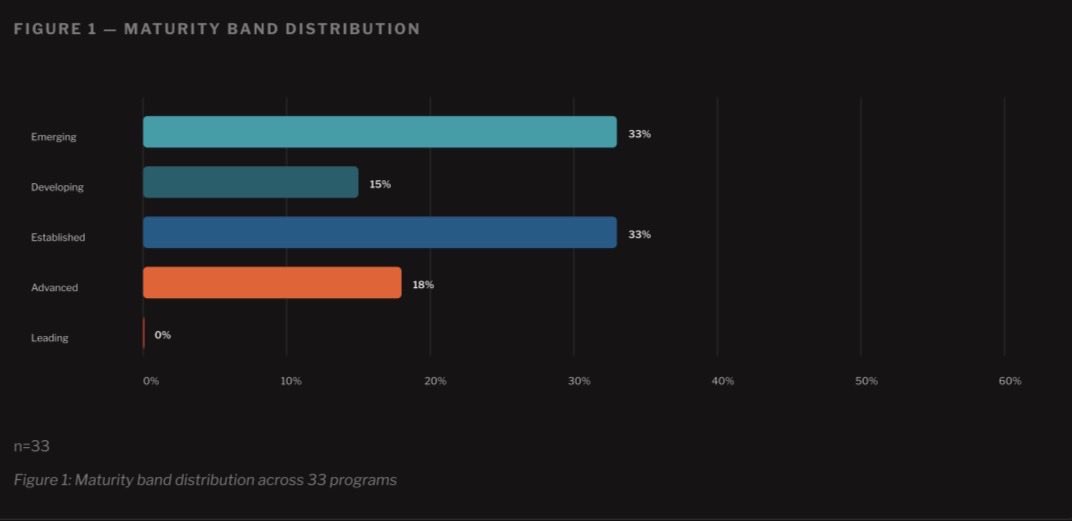
In our first cohort, ~33% of programs are at the lowest maturity band.
Not a tooling problem.
A consistency problem.
Low signal hides it.
Higher signal exposes it.
🧵
We analyzed 30+ bug bounty programs.
0 reached “Leading” maturity.
Across this cohort, the gap isn’t tooling or scope.
It’s consistency, predictability, and trust.
We may be overestimating how mature most programs really are.
Report: https://t.co/gTwSNWwcjh
@EvanKlein338226 Exactly this.
It’s rarely loud failure, it’s quiet disengagement.
And by the time it’s visible, the best researchers are already gone.
State of Bug Bounty Maturity Posture (2026)
A first benchmark from the Bug Bounty Maturity Framework.
Based on early program data and where participation breaks in practice.
https://t.co/gTwSNWwcjh
Across programs, consistent patterns emerge.
Where participation drops.
Where trust erodes.
Where signal disappears.
These are structural, not anecdotal.