LEATHER BIBLE GIVEAWAY🚨📖🚨
I’m giving away a GORGEOUS hand bound ESV that @calebcdee has generously contributed for this #barzonDESIGN giveaway.
Entering is Simple:
1️⃣ Follow me+Share/RT this post
2️⃣ Tag a friend👇🏼
Picking winner on Sunday, 5/18/25
Bible details below ⬇️
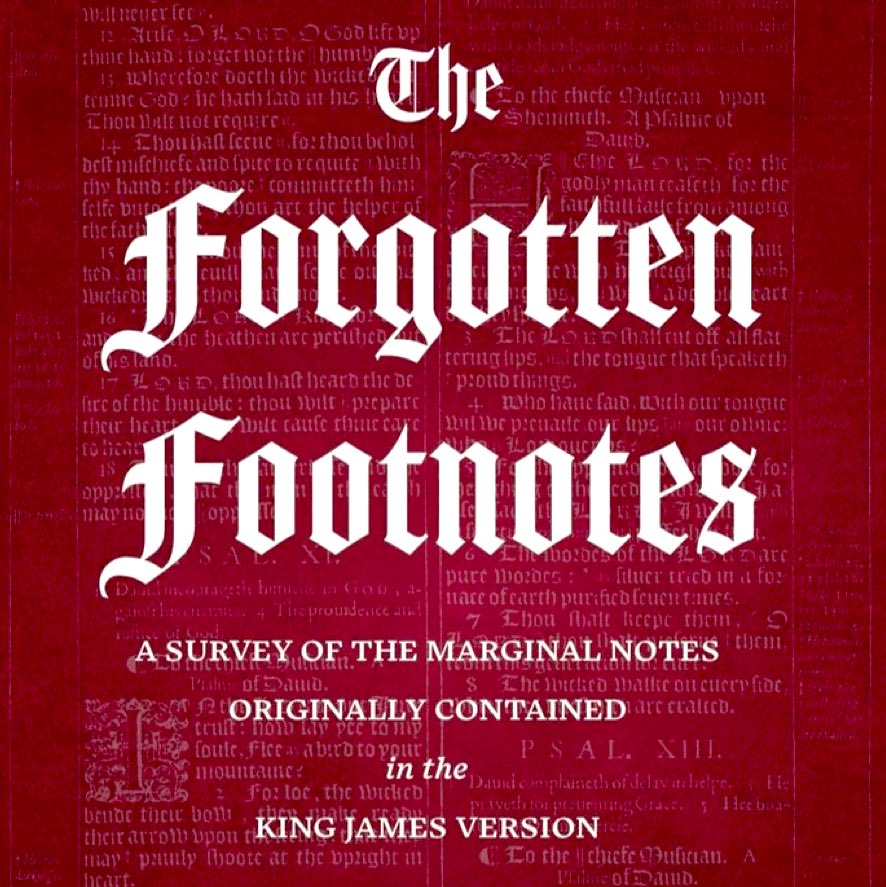
🧵/ I. A Fascinating Thread on “The Forgotten Footnotes of the 1611 King James Version (KJV) Bible”
You may have read the KJV. But have you read its forgotten footnotes?
When most people think of the 1611 King James Bible (KJV), they think of its majestic prose, theological legacy, and cultural influence. What they often miss is that this iconic translation also included thousands marginal notes that give us insight into the mind and theological culture of the Translators who brought the KJV to life. Below are just a few interesting and quick facts about the footnotes:
• The famous phrase “rock of ages” is not found in the text of the KJV, but rather in the margin at Isaiah 26:4.
• The very last marginal note in the 1611 was a typo at Rev. 20:13. For the word hell in the text, it had the marginal note “Or, hell.”
• There are no notes for the entire book of Philemon.
• At least 9 entire verses were rewritten in marginal notes.
• There are 6,565 marginal notes in the OT, and 777 in the NT, for a total of 7,342 marginal notes.
These notes, small and unobtrusive, carry enormous significance. They show the translators’ humility, academic honesty, and commitment to allowing readers to engage with the original texts of Scripture. Far from undermining the authority of the translation, these notes enhance it by showing where interpretive choices were made and where other viable options were possible.
This 🧵 explores the history, structure, categories, and lesser-known aspects of these footnotes. We’ll look at the five major types of marginal notes in the 1611 KJV, illustrate each type with multiple examples, and reflect on how they inform our reading of Scripture today.