Crypto babes. 😘 Here are some side by side comparisions.
FTX/Alameda vs WLFI — why people are saying “FTX 2.0 (but on-chain)” 👇
• Both created + heavily valued their own token ($FTT vs $WLFI)
• Used that token as collateral to borrow real $$ (stablecoins)
• Extracted liquidity without selling (avoiding price crash)
• Tight insider control between token + platform + treasury
• Heavy borrowing strained user withdrawals/liquidity
• Built-in “death spiral” risk if token price drops
Main idea:
Create token → inflate value → borrow against it → pull out real liquidity
Key differences:
• Smaller scale than FTX
• More transparency (on-chain)
• USD1 claims real backing
Still early, but critics see familiar red flags 🚩
#BikiniBlockchain
@worldlibertyfi@justinsuntron@Grok, can you tell the public how much of Justin Sun's WLFI token were locked in dollar value and how much did WLFI team take out in a loan?
Also why did Justin Sun buy WLFI tokens?
GM crypto crew!!
Trump’s WLFI project is raising some serious questions right now.
The WLFI treasury deposited ~5B WLFI tokens (valued at $440M+) as collateral on Dolomite — a DeFi platform linked to its own advisor/CTO — and borrowed around $75M in stablecoins (~$65M USD1 + $10M USDC). More than $40M of that liquidity was then sent to Coinbase Prime.
This move pushed the USD1 pool to ~93–100% utilization, effectively trapping liquidity and causing withdrawal issues for regular users who deposited funds expecting yield.
At the same time, early major backer Justin Sun — who invested ~$75M into WLFI — has around 545M tokens frozen/blacklisted by the project since Sept 2025. With WLFI hitting new lows, that position has dropped another $11M+, bringing estimated paper losses to $70–80M.
The team’s stance: this is intentional. They describe themselves as the “anchor borrower” driving high yields, claim liquidation risk is low, and say they can add more collateral if needed.
Still, between the extreme concentration, locked user liquidity, and token restrictions, the situation raises real concerns around trust and sustainability.
Is this a bold DeFi strategy — or a major red flag?
#WLFI #WorldLibertyFinancial #TrumpCrypto #DeFi #JustinSun #BikiniBlockchain #AIart️️️️️️️️️️️️️️️️️️️️️️️️️️️️️️️️️️️️️️️️️️️️️️️️️️️ #AI美女
Remember when @erictrump started deleting crypto tweets on $WLFI, this runs much deeper…
During the @worldlibertyfi presale:
- all the Trump family members were Co-founders
After the presale:
- their positions were adjusted to Web3 Ambassadors
Now after their latest borrowing scam:
- the entire team member page has been removed
https://t.co/DbkMwcFOCV
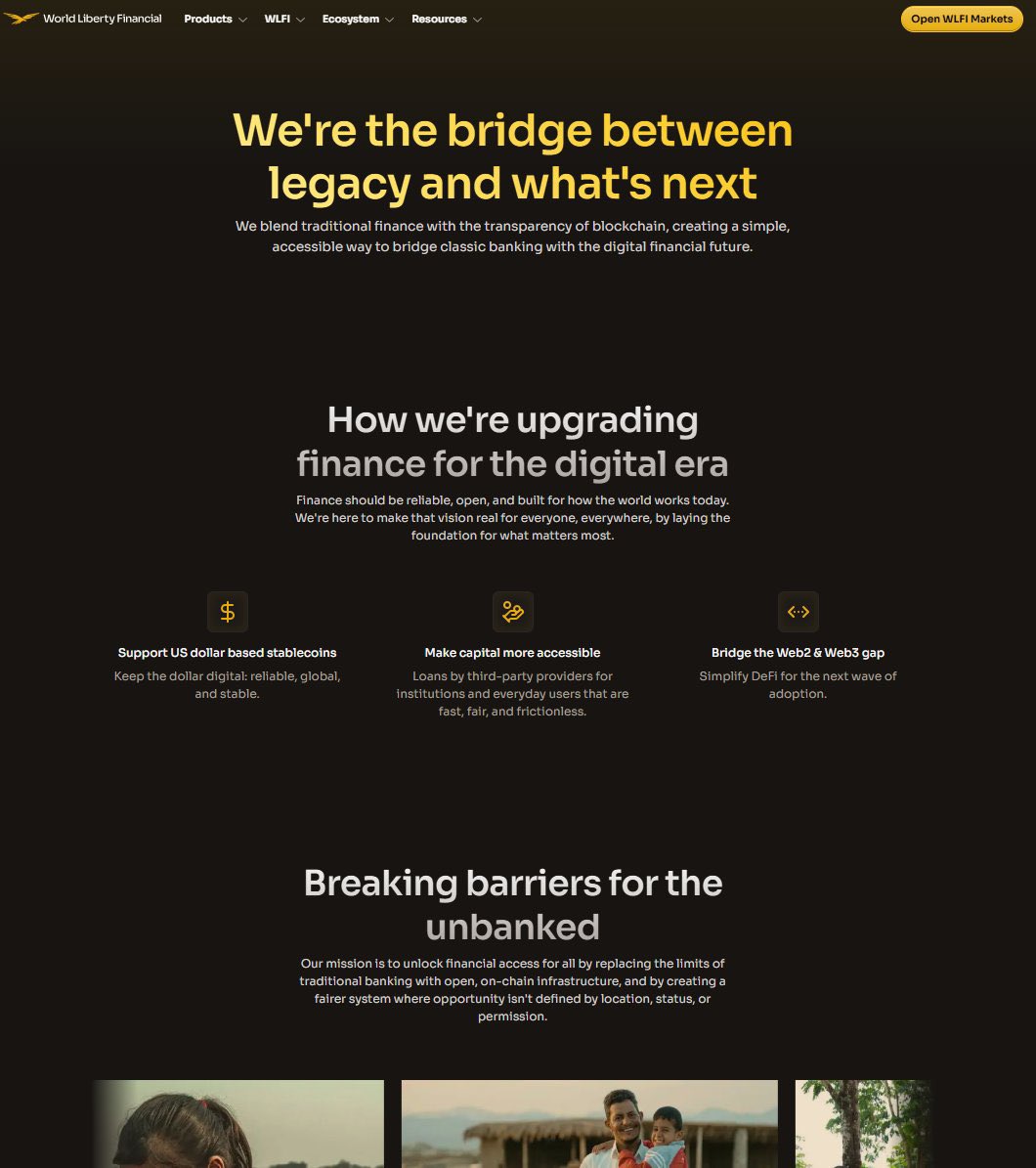
It is now just small print text at the bottom of the page stating it says that Donald Trump and his family are not directly involved in management.
Trump family after cashing in are now trying to distance themselves from this scam.
They forget ct keeps receipts & also deleting from homepage is permanently preserved in the SEC filing documents ;)
$WLFI & $ASTER exit scams to zero
GM Crypto babes😇
Serious concerns around $WLFI right now.
The treasury has deposited ~3–5B WLFI tokens (worth hundreds of millions) as collateral on Dolomite, borrowing about $75M in stablecoins — mostly ~$65M of their own USD1 plus ~$10M USDC. Notably, over $40M of that was sent to Coinbase Prime.
This single position now accounts for more than 50% of the relevant Dolomite pools (which also powers WLFI Markets and has ties to a WLFI advisor). As a result, USD1 pool utilization has surged to 93–100%+, with reports of negative liquidity (~232K USD1). Users supplying stablecoins for yield are already experiencing withdrawal friction.
The key issue: borrowing user-deposited funds against a highly volatile governance token.
WLFI is already down ~10–14% today, hitting new lows around $0.08–$0.082. If the price falls further, liquidation risk becomes much more serious. Given the token’s thin liquidity, a forced liquidation could flood the market with billions of WLFI — potentially triggering a cascade that hits lenders hardest.
In effect, downside risk appears to be shifted onto everyday users, while the treasury benefits from relatively cheap stablecoin liquidity.
The team’s response is that this is intentional — positioning themselves as an “anchor borrower” to generate high yields (currently ~30–35%) for lenders. They also claim they’re far from liquidation and can add more collateral if needed, alongside plans for buybacks and governance actions.
Still, the combination of high concentration, circular mechanics, and withdrawal issues raises real concerns.
If this unravels, the losses won’t just be theoretical — and it’s exactly the kind of risk many hoped DeFi would reduce.
High upside, but the current risk/reward looks heavily skewed to the downside.
What do you think — smart treasury strategy or a major red flag?
DYOR. Not financial advice.
#WLFI #DeFi #Crypto #BikiniBlockchain