Bitcoin Price Watch: Bulls aim for $100,000 after breakout surge
Bitcoin has traded between $96,869 and $97,057 in the past hour, remaining in a tight range around recent highs. The intraday trading range is $95,925 to $97,341 over the 24-hour period, and the leading cryptocurrency has a market cap of $1.92 trillion and a 24-hour trading volume of $27.81 billion, showing continued investor interest.
Bitcoin
The daily BTC/USD chart reflects a strong bullish breakout from the earlier $74,000 to $84,000 consolidation range. The breakout, followed by a surge to $97,470, was reinforced by increasing buying volume, indicating strong market support. Price action shows potential for a continuation pattern, possibly an ascending triangle before a breakout. Support is currently seen near $88,000, while immediate resistance is seen near $97,500. Technical analysts suggest that a pullback to the $90,000–$92,000 range could offer a low-risk long entry opportunity with a short-term target of $97,500 and a medium-term target of $100,000.
Bitcoin ETFs continued their winning streak of inflows for the eighth consecutive day, attracting $173 million, with Blackrock's IBIT remaining the main force. Ethereum ETFs also remained steadfast, receiving inflows for the fourth consecutive day, led by Fidelity's FETH.
Bitcoin and Ethereum ETFs maintain momentum with $191 million combined inflows
Cryptocurrency exchange-traded funds (ETFs) continued their rally on Tuesday, April 29, with another wave of new capital flowing into Bitcoin and Ethereum ETFs, continuing a multi-day trend of renewed institutional interest.
Bitcoin ETFs attracted $173 million in net inflows, marking the eighth consecutive day of gains. For the second day in a row, Blackrock's IBIT was the engine of the rally, attracting $216.73 million in new money. Outflows from Bitwise's BITB ($24.39 million), Ark 21Shares' ARKB ($13.32 million), and Fidelity's FBTC ($6.24 million) offset some of the momentum.
Other ETFs recorded no movement. However, it was enough to push total net assets to a new milestone, closing the day at $110.17 billion with total trading volume of $2.01 billion.
In the Ethereum camp, the atmosphere remained optimistic. Ethereum ETFs saw net inflows for the fourth consecutive day, totaling $18.4 million. Fidelity's FETH accounted for all the inflows, reaching $25.52 million, while Grayscale's ETHE reported an outflow of $7.12 million. All other funds remained neutral.
The total value of transactions in the Ethereum ETF reached $184.32 million, and total assets rose slightly to $6.3 billion.
Momentum remains strong on both sides, with Bitcoin continuing to see deeper inflows into the space, while the Ethereum ETF is gradually reversing weeks of losses.
Swiss National Bank slams Bitcoin reserve push as inflation storm brews
Switzerland’s staunch defence of tradition faces a major crypto challenge from the inclusion of Bitcoin in national reserves amid global economic turmoil and geopolitical shifts.
Swiss National Bank Chairman Warns Bitcoin’s ‘Very High’ Volatility Risks Threat to Currency Stability
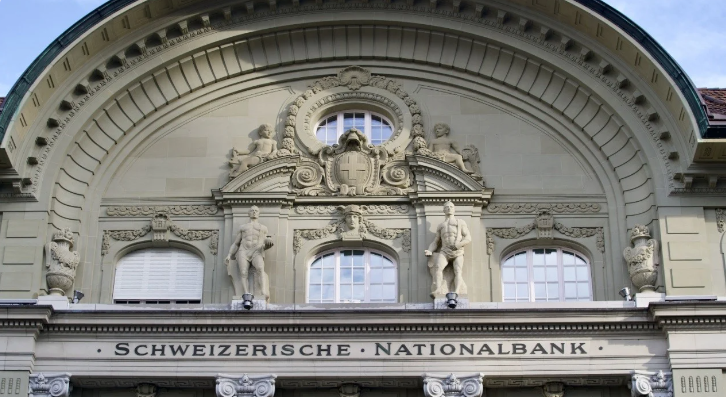
According to Reuters, Martin Schlögel, chairman of the Swiss National Bank (SNB), strongly opposed the inclusion of Bitcoin in the institution's currency reserves at a general meeting held in Bern on April 25. As concerns about inflation and geopolitical changes increase economic uncertainty, cryptocurrency supporters have launched a referendum initiative aimed at forcing the SNB to diversify its assets by holding Bitcoin alongside traditional gold reserves. They believe that this move will protect Switzerland's wealth from systemic risks, especially as U.S. President Donald Trump's tariff policy leads to market instability.
Schlegel dismissed calls for Bitcoin to be used as a reserve asset at the conference. He said:
Cryptocurrencies currently cannot meet our monetary reserve requirements.
Schlögl elaborated that the SNB's monetary reserve policy prioritizes highly liquid assets to enable the rapid purchase and sale of foreign exchange when necessary. He also pointed to the inherent volatility of cryptocurrencies, saying that they often exhibit "very, very high" fluctuations in value, which seriously undermines their effectiveness in maintaining the resilience and stability of bank reserves. These concerns continue to drive the SNB to take a conservative stance on digital currencies despite growing external pressure. Despite the SNB's persistent opposition, the referendum effort highlights the ongoing debate over the future structure of Switzerland's monetary security.
This is not the first time Schlegel has expressed his opposition to strategic Bitcoin reserves . Last month, he also said on Bloomberg TV that the SNB has no plans to purchase crypto assets, emphasizing that its foreign exchange reserves are strictly used to implement monetary policy. He said that due to their significant price volatility, digital currencies fail to meet basic requirements such as value preservation. Schlegel also raised technical concerns, pointing out that cryptocurrencies are essentially software and are prone to errors, further weakening their reliability.
Governments around the world are increasingly engaging in discussions about establishing strategic Bitcoin reserves, reflecting a significant change in the perception of cryptocurrencies as potential national assets. In March, the United States took the lead in taking steps to create a strategic Bitcoin reserve through BTC confiscated in legal proceedings , while also establishing a broader reserve of other crypto digital assets. The move has inspired similar considerations around the world. However, some countries remain cautious and have rejected proposals to include Bitcoin in their reserves, citing volatility and liquidity risks.
Bitcoin stabilizes at $93K, gold price competition continues
As of Thursday morning, cryptocurrencies are trading sideways while gold prices continue to rise as rumors of a $4,000 per ounce price start to get louder.
Store of Value Showdown: Bitcoin Holds at $93K While Gold Rises
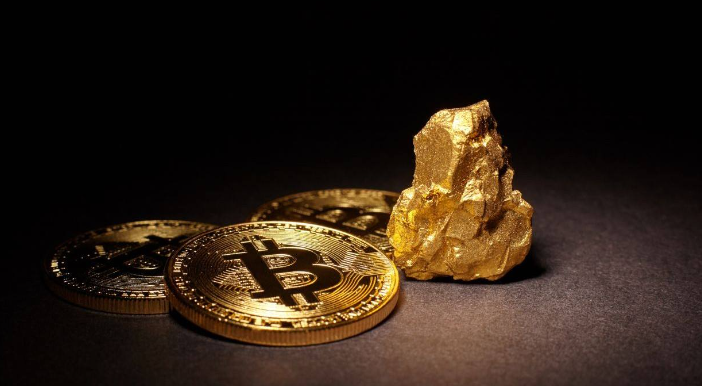
Bitcoin prices have remained flat over the past 24 hours, fluctuating above $93K. Meanwhile, gold continues to trade above $3,300 after hitting a new all-time high last week, with JPMorgan predicting the precious metal will break the $4,000 threshold sometime next year as investors ditch Treasury bonds and the U.S. dollar for the safe haven.
Market Indicators Overview
According to reports, Bitcoin is currently trading at $93,531.90. The flagship cryptocurrency is up 0.42% over the past 24 hours and 10.47% over the past week. Over the past day, BTC has fluctuated in a relatively narrow range between $91,696.71 and $94,212.90, indicating consolidation near recent highs.
Bitcoin Price Watch: $85K Key Point Paves the Way for a Weekend Event
Bitcoin traded at $85,287 on Saturday, with a market capitalization of $1.69 trillion, while $1.068 billion was transferred between exchanges in 24 hours. During this period, the largest cryptocurrency by market capitalization fluctuated between $84,366 and $85,398, with price tension concentrated in a narrow corridor that could trigger the next decisive breakout.
On the 1-hour chart, Bitcoin ’s price action has seen a rapid climb from $84,310 to $85,432 before retreating to a brief consolidation just above the 61.8% Fibonacci retracement at $84,739. Market depth shows increased buying around this golden ratio level, while short-term momentum is cooling without breaking down – suggesting that traders may add to long positions if Bitcoin retests the $84,700–$84,900 area under mild selling pressure. A decisive close above $85,400 on the hourly chart would accelerate the push toward this week’s $86,000 liquidity node, while a break below $84,300 would trigger a test of deeper support.
Trade War: Tit-for-Tat Tariffs Show Limits of Unilateral Action, Web3 Leaders Say
Web3 experts emphasize that the ongoing trade war, while presenting challenges, can also act as a catalyst for innovation within the blockchain space. However, they argue that fostering a mindset of global unity can help mitigate the divisive effects of trade wars.
Decentralized Governance Can Mitigate Disputes Caused by Protectionist Policies
As the U.S.-China trade war intensifies, exposing the challenges of unilateral action in a globally connected economy, blockchain and Web3 experts advocate for a different strategy. DWF Labs Managing Partner Andrei Grachev argues that decentralized technologies provide key insights for navigating complex international conflicts.
“Trade tensions involve reciprocal actions, like tariff responses, complicating matters,” Grachev states. He emphasizes the interconnected nature of modern trade disputes, where one nation’s actions often trigger retaliatory measures.
The DWF Labs executive’s remarks came just as the U.S. sharply escalated its tit-for-tat tariff war, reportedly imposing an additional 100% tariff on Chinese imports. This latest measure effectively raised the total tariff on goods originating from China to a punitive 245%.
Washington has defended this action as a necessary response to Beijing’s own series of retaliatory tariffs and export restrictions, including limitations on critical materials essential for high-tech and defense industries. The Trump administration also cited national security concerns, arguing that China’s trade practices pose a threat to American economic and strategic interests.
Grachev, meanwhile, contrasts the actions of nation states with the collaborative nature of the blockchain and Web3 space. “Open collaboration can help navigate these economic storms. Decentralized projects often operate more smoothly across borders than traditional systems.”
He believes blockchain’s open-source ethos provides a framework for resolving cross-border issues. Open-source development, with its transparency, shared contributions, and decentralized governance, can mitigate the escalation of disputes caused by unilateral and protectionist policies.
“Where effective, open-source offers alternative solutions to traditional policy tools,” Grachev concludes.
Policymakers Can Learn From the Crypto Industry
Ben Caselin, the CMO at the Africa-focused cryptocurrency VALR, supports this, adding a broader perspective: “Trade disputes reveal that despite humanity’s interconnectedness, our actions reflect fragmented identities—nations, tribes, or factions.” Caselin stresses the need for policymakers to acknowledge this interconnectedness, drawing parallels with crypto’s collaborative spirit.
Policymakers can learn from crypto’s cross-border collaboration, which fosters innovation while respecting differences. Progress requires recognizing our shared destiny.
The CMO warns against unilateral actions: “Unilateral moves disrupt our interdependent equilibrium.” He advocates prioritizing dialogue and trust-building, with mutual benefit as the guiding principle. “No nation thrives in isolation; dialogue and trust, aimed at mutual benefit, are crucial.”
Drawing on VALR’s experience, Caselin highlights the benefits of open systems: “Open systems unite diverse actors toward common goals—a model for global trade.”
While the trade war has fueled fears of a global recession, players in the blockchain and Web3 space see an increasing demand for decentralized solutions and foster collaboration among Web3 projects to create interoperable solutions. Explaining how the trade war impacts Web3, Caselin said:
“Trade wars expose the limits of divisive systems, increasing interest in borderless blockchain solutions.”
Caselin believes the resulting volatility drives adoption of Web3 tools—like decentralized finance and tokenized trade assets—that bypass traditional barriers. “Volatility drives businesses and individuals to use Web3 tools, such as DeFi and tokenized assets, to avoid tariffs and intermediaries.”
Beyond practicalities, Caselin stresses the philosophical shift: “Declining trust in centralized systems fuels the search for alternatives reflecting our interconnected reality.” He connects this to the rising interest in cryptocurrencies and their potential to improve financial access, as seen at VALR. “As trust in centralized systems wanes, people seek alternatives that reflect a world without artificial boundaries. At VALR, we see growing curiosity about crypto’s potential to enhance financial access.”
However, Caselin believes widespread adoption requires a fundamental change in perspective. “Widespread adoption, however, requires a shift towards seeing humanity as one family. While trade disputes may spur innovation, lasting change means redefining loyalty beyond nations.”
Grachev also addressed the impact of trade wars on blockchain development: “Trade wars don’t directly drive blockchain development, but geopolitical uncertainty increases the appeal of flexible, transparent options.”
The DWF Labs executives also believe that Web3 aims to connect with, not replace, existing systems. “The Web3 community aims to connect with, not replace, traditional trade systems.” Instead, he views the technology as a complement. “We’re seeing efforts to fill gaps, offering alternatives where current systems are inefficient, costly, or exclusionary. It’s about expanding our toolkit.”
Bitcoin Price Watch: Bulls defend $84K, $88K breakout imminent
Bitcoin (BTC) has traded between $84,969 and $85,171 in the past 60 minutes, after fluctuating between $83,197 and $85,315 in the previous 24 hours. With a daily trading volume of $30.74 billion and a market cap of $1.68 trillion, Bitcoin remains stable despite mixed technical signals.
Bitcoin
The Bitcoin market structure on April 14, 2025 shows a cautious yet optimistic sentiment amid mixed technical signals across multiple timeframes. The 1-hour chart shows consolidation between $83,000 and $85,000, with Bitcoin recently rebounding from a brief drop to $83,031, confirming short-term support. However, the presence of red volume suggests a temporary pullback is likely, highlighting the uncertainty in the near-term market. A volume-supported rally in the $83,500 to $84,000 range could offer a viable entry point, while a break below $83,000 could trigger downside risk.
Latam Insights: Argentina Congress takes aim at Libra, Brazil’s cryptocurrencies can now be seized
Argentina's Congress formally investigates government officials' involvement in Libra
Argentina’s lower house of Congress approved the creation of a commission focused on investigating the involvement of senior government officials in the launch and failure of La Libertad Avanza, also known as the Libra token.
The result, described by local media as a "major setback", was supported by 128 delegates from left-leaning groups, while 93 were against the idea and only seven abstained.
Twenty-four deputies will lead the investigation, which will examine different testimonies to determine whether President Javier Millay, his sister Karina Millay and other officials were involved in the currency's launch and subsequent collapse.
The committee will begin its investigation on April 23 and will issue a report on its findings within three months, holding those responsible accountable.
Read the full article.
In historic move, crypto assets can now be legally seized in Brazil
Cryptocurrencies are being recognized and incorporated into the international legal and economic system. Brazil’s National Superior Court (STJ) has issued a landmark decision determining that cryptocurrencies can be seized as payment for outstanding debts.
This case has now placed the digital asset system within the legal system’s sight, making it possible to repay debts through entities that do not use the traditional financial system to store funds.
The court ruled on the basis that cryptocurrencies are taxable assets whose transactions must be reported to the Federal Tax Service, and that even though they are not legal tender, they can still be used as a means of payment and a store of value.
Read the full article.
Brazil's Drex faces roadblocks over privacy, waning support from outside partners
Brazil’s central bank digital currency (CBDC) pilot, Drex, is facing headwinds, with the process already slowing down due to a reduction in resources devoted to the project.
According to Valor Economico, two major companies involved in the design of the project’s privacy solutions, Microsoft and EY, have recently reduced the staff assigned to these efforts. The impasse is related to the central bank’s recent practice of not approving any of the projects proposed by participants at the end of the second phase of the Drex pilot.
Drex is currently stalled because no privacy proposal can guarantee the confidentiality of transactions while allowing regulators to review them, as central banks require.
Argentina’s stablecoin market surges after announcement of end to currency controls
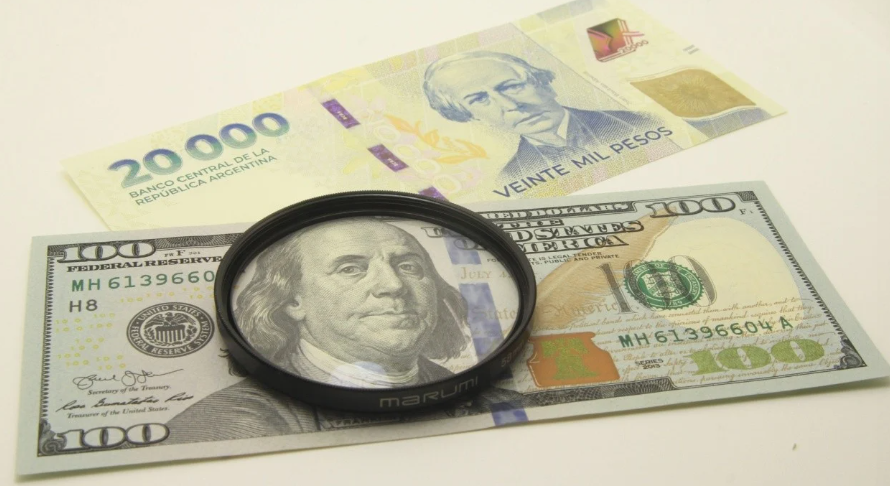
Stablecoin trading volumes surged after the end of currency controls in the Argentine market was confirmed. Local exchanges reported a 100% increase in trading volume, initially driven by a selling trend. However, by Saturday, buyers had taken the lead, causing the exchange rate to rise.
Stablecoin trading volume surges after Argentina lifts currency controls
The upcoming loosening of currency controls has caused turmoil in the Argentine market, with traders reacting to market moves on Monday. The stablecoin market was no exception, with Argentines initially selling off digital dollars such as USDT.
After Economy Minister Luis Caputo announced the measure, the stablecoin market exploded on crypto exchanges, registering a significant increase in trading volumes. Local exchange Lemon reported a nearly 100% increase in trading volume within an hour of Caputo’s speech.
Lemon users are more inclined to buy stablecoins, with buy transactions being 35% higher than sell transactions. However, on other exchanges, the opposite is true.
Bitso, one of the largest exchanges in Latin America, reported the opposite. Bitso’s customers posted more sell orders, which led to a 5% price drop in the hours following the announcement.
The exchange noted that most traders moving stablecoins were concerned about market behavior next week, but speculators also participated in the trading chaos.
Julian Colombo, CEO of Bitso Argentina, described the increase in market activity following the announcement. He said :
We are experiencing a period of high volatility, which is reflected in user behavior. At Bitso, we are seeing unusually high buy and sell volumes for this time of year.
It remains to be seen whether Argentinians will abandon the stablecoin market in favor of real dollars, or whether stablecoins, which traditionally experience high trading volumes, will remain strong in the face of these currency movements. The facts suggest the latter will happen, as demand for stablecoins grew again on Saturday, causing the price of the digital dollar to stabilize along with the rest of the U.S. dollar index.
Bitcoin life insurance startup Meanwhile raises $40 million in Series A funding
Meanwhile, a crypto-focused life insurance startup that is collecting premiums and paying out life insurance policies via Bitcoin has raised $40 million in its Series A round. The round, led by Framework Ventures and Fulgur Ventures, with participation from Xapo founder Wences Casares, values Meanwhile at $190 million. Meanwhile co-founder and CEO Zac Townsend told Fortune that the funds will be used for global expansion and to ensure that its products comply with regulations around the world. Townsend revealed that the idea behind Meanwhile was an anticipation of a decline in the value of the U.S. dollar. “So the idea of storing some value for your kids in a currency that’s global, censorship-resistant, decentralized, and uncontrollable is very appealing,” he concluded.
EU regulator: Crypto assets do not pose significant risks to financial stability
The securities regulator believes that crypto assets currently pose minimal risks to financial stability due to their relatively small size and limited integration with the traditional financial system.
Crypto assets account for 1% of global financial assets
The European Securities and Markets Authority (ESMA) said that crypto assets do not currently pose a significant risk to financial stability. The regulator mentioned that as of April 9, the market capitalization of the crypto asset market was $2.45 trillion, accounting for only about 1% of global financial assets.
In addition, ESMA said that crypto assets have "limited integration" with traditional finance and the real economy, making them unlikely to be a source of instability. Natasha Cazenave, ESMA's executive director , said that crypto assets are not "widely used" in important financial services, including payments, which reduces their potential to disrupt financial markets.
While some worry that the proliferation of crypto funds and derivatives could spread risk between crypto and traditional markets, Cazenave again cited their small size as reason for limited concern.
“We believe that these products do not currently represent a significant financial stability risk due to their small size. We estimate that crypto funds in the EU account for less than 1% of EU funds as a whole,” Cazenave told the European Parliament’s Economic and Monetary Affairs Committee.
However, Cazenave acknowledged that risks to financial stability will increase as EU residents increase their adoption of crypto assets, and she also pointed to stablecoins as well as Bitcoin and Ethereum as assets that require constant monitoring.
In his opening statement on April 8, Cazenave said that the stablecoin market needs a robust and consistent global regulatory framework to address issues such as decoupling or stablecoin runs. Under the EU's Markets in Crypto-Assets (MiCA) legislation, stablecoin issuers face strict prudential and governance rules, as well as rules on reserve composition and management.
Cazenave acknowledged that MiCA may “require some adjustments to mitigate emerging risks in the future.” She also stressed the importance of regulatory cooperation.
“International work, in which ESMA also plays a role, is also important to ensure that appropriate safeguards are in place to protect financial stability not only in the EU, but also globally. We are ready to provide insights and support to the EU co-legislators on these matters,” Cazenave said.
Will Bitcoin Return to $10K? Bloomberg's Mike McGlone Thinks So
Bloomberg Intelligence senior commodity strategist Mike McGlone is skeptical about bitcoin and its digital peers, believing the flagship cryptocurrency could fall back to $10,000.
Bloomberg strategists predict cryptocurrencies could face a sharp drop
In a recent analysis shared via Bloomberg and Platform X, Mike McGlone has dissected the vulnerability of cryptocurrencies amid turbulent macroeconomic conditions. President Trump’s tariff escalation has injected volatility into global markets, triggering a synchronized decline in stocks and digital assets.
Bitcoin, for example, has lost 7% of its dollar value in the past seven days. Smaller cryptocurrencies have been hit harder: Ethereum (ETH) is down 16.7%, while Solana (SOL) is down 15.8% in the same period. McGlone speculated in a recent X-Review that the crypto space could face a profound depreciation while predicting that gold will continue to shine. He also pointed to Treasurys as a historically reliable competitor in uncertain environments.
“In a sell-while-you-can market, highly speculative and volatile cryptocurrencies have a lot of froth to lose,” McGlone wrote . “Gold may suffer margin calls early on, but Treasuries generally win, especially when their yields are more than double those of the deflationary leaders.” A few hours later, McGlone added:
When a paradigm shift occurs, it’s best not to risk being on the wrong side of history, especially if it’s a simple mean reversion of stupidly expensive risk assets. Cryptocurrencies are the riskiest of them all. Treasuries are the opposite. Michael Thaler is all in Bitcoin, Warren Buffett – Treasuries. My preference is good old Treasuries.
McGlone’s calculations favor the timeless appeal of Treasuries over the volatile dance of cryptocurrencies, viewing bonds as a careful counterweight to the historically impermanent thrills of digital gambling. “What does HODL mean?” McGlone wrote in a follow-up X post. “Everyone is ready to hold long term as long as it’s going up. I don’t know how Bitcoin got from $10,000 to $100,000 in 2020, but the trend shows. Now, I see it on a path back to $10,000.”
The commodity strategist continued:
Technology is amazing, as evidenced by the most widely traded cryptocurrency – Tether – a USD token that is expected to upend Ethereum’s market cap soon.
From trillions to hundreds of billions: The $6 trillion collapse in traditional finance far exceeds
Over the past seven days, Bitcoin has shown resolute stability, hovering near its previous valuation, yet the digital asset ecosystem has shed $30 billion in the process. The most notable setbacks came from IMX and IP, which lost 22.8% and 20.1% of their value, respectively.
Bitcoin Holds Ground While Crypto Market Loses $30 Billion
This week presented a fascinating contrast: Traditional finance (TradFi) experienced a multi-trillion dollar earthquake, while Bitcoin (BTC) defied the gravitational pull of volatility and held its balance. In a subtle but remarkable display of its resilience, the flagship cryptocurrency has appreciated 1% since March 30, 2025.
Ethereum (ETH) showed modest losses, falling just 0.9% during the same period. EOS was the star of the week, surging 37.7% since March 30, followed by ATOM's 14.9% growth. OKB jumped 7.9%, while Sky Money's MKR rose 3.2% against the dollar. TRX withstood the turmoil, rising 2%, while Sonic's S token rose 1.8%.
However, the entire digital asset space shrank from $2.69 trillion to $2.66 trillion, with most tokens suffering double-digit declines. IMX plunged 22.8%, while IP fell 20.1%. Jupiter's JUP fell 18.1%, DEXE fell 16.5%, and TIA suffered a heavy blow of 15.8%. MOVE copied TIA's decline and also lost the same amount, while Ethena's ENA gave up 12.6% of its valuation.
As markets teetered on the edge of uncertainty ahead of Monday’s open as the financial world grappled with the shock of President Donald Trump’s tariffs , a stark contrast emerged: The cryptocurrency sector lost $30 billion in value while Wall Street lost about $6 trillion in two disastrous trades — its worst weekly performance since the pandemic trough.
Max Keiser, long-term Bitcoin bull: Trump's 'Great Reset' strengthens Bitcoin's position as the best
Max Keiser, an international journalist and current cryptocurrency advisor to the Bukele administration, mentioned Bitcoin’s resilience in the face of the new tariff-based trade order implemented by President Trump. Keiser said that even if Trump’s measures initiate the Great Reset, traditional financial measures will not bring about a lasting improvement in the quality of life of American citizens. This means that even if incomes and high-quality jobs increase, “the overall inflation rate will soar, so the quality of life will not improve substantially.” “The only way to substantially improve the quality of life is to accumulate Bitcoin,” Keiser concluded .
EU reportedly preparing to impose huge fine on Elon Musk's X-Company, possibly over $1 billion
European Union regulators are reportedly preparing to impose severe penalties on Elon Musk's social media platform X for violating the Digital Services Act, which is designed to combat illegal content and disinformation, according to a report from The New York Times. Sources familiar with the situation said the penalties could include large fines, potentially exceeding $1 billion, and required product modifications. This marks the first enforcement action under the new law, which requires social media companies to strengthen their content moderation practices. The investigation, which began in 2023, has been conducted independently of ongoing tariff negotiations between the United States and Europe, despite concerns about tensions between the two countries over trade and regulatory issues. X is also facing a broader investigation related to its handling of user-generated content, which has raised concerns about hate speech and disinformation.
RICS expands currency independence plan, Brazil advocates dollar-free transactions
Brazil supports the BRICS push to trade in national currencies, urging less reliance on the dollar even as business prefers its liquidity and dominance in private transactions.
Brazil announces full support for turning to BRICS to accelerate local currency trade
Brazil's Ministry of Finance has reaffirmed its commitment to expanding the use of national currencies in trade between BRICS countries, according to Secretary Tatiana Rossito. In an interview with the "BRICS 2025" portal in Buenos Aires, Rossito said Brazil is ready to support any move to reduce reliance on the US dollar in transactions within the bloc. She said, according to Russian news agency TASS:
Trade in local currencies is already happening, for example between Brazil and China. There are no obstacles to this on the Brazilian side.
The BRICS alliance – which now includes Brazil, Russia, India, China, South Africa, Egypt, Ethiopia, Indonesia, Iran and the United Arab Emirates (UAE) – has been promoting financial strategies to reduce external dependence. One of these is the creation of a new development bank, which Rossito sees as an important cornerstone of this transformation. “The opening of this bank reflects the desire of BRICS members to actively participate in the transformation of the economic and financial order,” she elaborated. The expansion of the BRICS and its financial infrastructure underscores the collective vision to reshape the global trade environment and reduce vulnerability to currency fluctuations associated with the US dollar.
Acknowledging the current limitations, Rossito admitted that the dollar's dominance still exists, especially in the private sector, due to its widespread acceptance and superior liquidity. She noted that businesses still show a strong preference for using the dollar, which makes the transition to national currencies more complicated. "The desire of businessmen to use the dollar in trade due to its higher liquidity remains an issue for BRICS member countries," Rossito stressed. Nevertheless, she stressed the group's primary goal:
The BRICS countries therefore aim to expand the use of their national currencies in any way that would reduce costs and be in the interests of the association's members.
Brazil takes over the BRICS presidency from Russia from January 1, 2025, and will host the 17th BRICS summit in Rio de Janeiro on July 6-7. The group has been working to reduce its reliance on the U.S. dollar and support cross-border payments in national currencies. While there have been discussions about the BRICS countries unifying their currencies to counter the dominance of the U.S. dollar, recent developments suggest that such a project is not currently on the group's agenda. Brazil's Ministry of Finance previously made it clear that there are no formal discussions among the BRICS countries on creating a common currency.
Grayscale seeks SEC approval to list crypto ETFs with BTC, ETH, XRP, SOL, and ADA holdings
Grayscale has filed with the SEC to list its Digital Mega Fund as an ETF on NYSE Arca, offering investments in Bitcoin, Ethereum, XRP, Solana, and Cardano.
Grayscale’s Digital Mega Fund Targets NYSE Arca Listing for Wider Crypto Exposure
Crypto asset management company Grayscale Investments filed a Form S-3 registration statement with the U.S. Securities and Exchange Commission (SEC) on March 31, aiming to list shares of its Grayscale Digital Large Fund on NYSE Arca under the ticker symbol GDLC. The move will convert the fund into an exchange-traded fund (ETF) and expand public trading access to a diversified digital asset fund consisting of major cryptocurrencies.
Grayscale shared on social media platform X:
Today, we filed a registration statement on Form S-3 registering shares of Grayscale Digital Large Cap Fund (symbol: GDLC) under the Securities Act of 1933. This is an important step in elevating GDLC to an ETP. GDLC holds the top 5 crypto assets by market cap.
However, the launch of the program is still contingent on SEC approval of a separate 19b-4 filing by NYSE Arca in October 2024. Grayscale said: “The Fund will not seek the effectiveness of that registration statement and will not make any offerings of shares unless and until such approval is obtained.”
The fund's holdings are determined by the Coindesk Large Select Index (DLCS), which selects digital assets with the largest market cap that meet certain criteria, such as availability under Coinbase custody, and excludes stablecoins and memecoins. As of March 31, the fund holds five assets: Bitcoin (BTC), Ethereum (ETH), XRP, Solana (SOL), and Cardano (ADA). As of writing, the portfolio by weight includes: Bitcoin 79.40%, Ethereum 10.69%, XRP 5.85%, Solana 2.92%, and Cardano 1.14%.
The Fund’s investment objective is to cause the value of the Shares (based on net asset value per share) to reflect the value of the digital assets held by the Fund… plus any cash held by the Fund and less the Fund’s expenses and other liabilities,” Grayscale explained. Currently, only cash-based share creation and redemption are offered, and pledging of fund assets is not permitted.
Grayscale also discussed the historical trading discount on OTCQX, with the fund's shares often trading below net asset value (NAV). From July 1, 2022 to December 31, 2024, the highest observed discount was 63%, with an average of 40%. This discount narrowed to 12% by the end of 2024 and was 10% as of March 18. The company believes that the exchange listing and redemption plan can align the share price with the net asset value. The filing details:
Following the listing of NYSE Arca, the Manager expects the stock market price and the net asset value per share to converge.
The fund uses Coinbase Custody Trust Company as custodian and Bank of New York Mellon as administrator and transfer agent, and operates under Cayman Islands regulations.
Elon Musk Clarifies No Plans for the Government to Use Dogecoin
Elon Musk clarified that the Department of Government Efficiency (DOGE) has no plans to integrate Dogecoin into its operations for transparency, despite his personal support for the meme crypto.
Dogecoin vs DOGE: Elon Musk Draws the Line
Elon Musk discussed the potential role of dogecoin in government during a March 30 town hall event in Green Bay, Wisconsin. He addressed a possible connection between the cryptocurrency and his Department of Government Efficiency (DOGE), which shares its acronym with the digital asset.
Musk was asked whether his DOGE initiative would consider using the dogecoin blockchain to increase government transparency. Musk clarified: “The names are similar but they’re doing two very different things.” He continued:
There are no plans for the government to use dogecoin or anything as far as I know. They happen to be similar names, but really, we’re just literally trying to make the government 15% more efficient.
Despite distancing his DOGE department from the meme cryptocurrency, Musk has long been one of dogecoin’s most visible supporters. He frequently mentions the token on social media platform X, where his endorsements have historically triggered price surges. Musk has referred to dogecoin as “the people’s crypto” and even allowed it as a payment option for select Tesla merchandise.
President Donald Trump established DOGE through executive order earlier this year, appointing Elon Musk as a senior advisor to lead the initiative focused on modernizing federal operations and cutting spending. DOGE has implemented measures, including widespread layoffs across agencies and the elimination of programs related to climate change and diversity, equity, and inclusion. Musk has said the cuts are necessary to streamline government functions and has projected a $1 trillion reduction in federal spending within 130 days.
Although the initiative claims to have saved more than $100 billion, it has drawn criticism for potentially weakening essential services and lacking transparency. Musk has defended the reforms as a way to improve efficiency without affecting core government functions. He plans to step down from his advisory role at the end of May after reaching the projected deficit reduction.
Bitcoin Price Analysis: Can Bitcoin Bulls Overcome $84,000 Resistance?
Bitcoin is currently trading between $82,856 to $83,032 at 7:30 a.m. (ET) on Sunday, with a market cap of $1.65 trillion and a 24-hour global trade volume of $15.6 billion. Throughout the past 24 hours, the cryptocurrency’s price has ranged between $81,629 and $83,496.03, placing it 23.6% below its all-time high of January 20, 2025.
UAE Central Bank reveals digital dirham symbol, aims to launch by end of 2025
The Central Bank of the United Arab Emirates (CBUAE) has released the official symbol for the digital dirham, which will be launched in the retail market by the end of 2025.
Digital Dirham Promotes Tokenization
The Central Bank of the United Arab Emirates (CBUAE) has announced significant progress in its digital dirham initiative, launching the official symbol for the country’s digital currency. It also confirmed plans for a retail launch in the fourth quarter of 2025. This development is a key component of the CBUAE’s Financial Infrastructure Transformation (FIT) program, which aims to consolidate the UAE’s position as a global leader in financial market infrastructure and digital financial innovation.
The digital dirham, backed by Federal Decree No. (54) of 2023, will become legal tender, ensuring acceptance alongside physical currency in all payment channels and corridors. According to the statement, the CBUAE aims to create a secure and efficient digital version of the national currency, using blockchain technology to reduce payment costs and ensure data privacy.
Individuals and businesses will be able to access the digital dirham through licensed financial institutions, including banks, exchange houses, finance companies and fintech companies. In its statement, CBUAE highlighted the key advantages of the digital dirham, including its ability to facilitate tokenization to improve financial inclusion and liquidity. It also mentioned its compatibility with smart contracts to enable automated and instant transaction settlement.
HE Khaled Mohamed Balama, Governor of the Central Bank of the UAE, said: “Today we are proud to unveil the physical and digital representation of the new symbol for the UAE’s national currency, the ‘Dirham’, as well as the design of the digital Dirham wallet. This reflects significant progress in the implementation of the Digital Dirham initiative and a major step towards achieving the CBUAE’s vision.”
To support the digital dirham, CBUAE has developed an integrated and secure platform, including a user-friendly digital wallet. This wallet will enable a range of financial transactions, including retail, wholesale and cross-border payments. The platform is designed to accommodate innovative financial solutions that cater to the UAE's rapidly growing digital economy.
Balama added: “As a blockchain-based platform, the digital dirham is expected to significantly enhance financial stability, inclusion, resilience, and the fight against financial crime with advanced capabilities. It will further facilitate the development of innovative digital products, services, and new business models while reducing costs and increasing access to international markets.”
This CBUAE initiative aims to build a flexible and advanced financial system that strengthens the UAE’s competitive advantage as a leading financial hub and global digital payments platform.