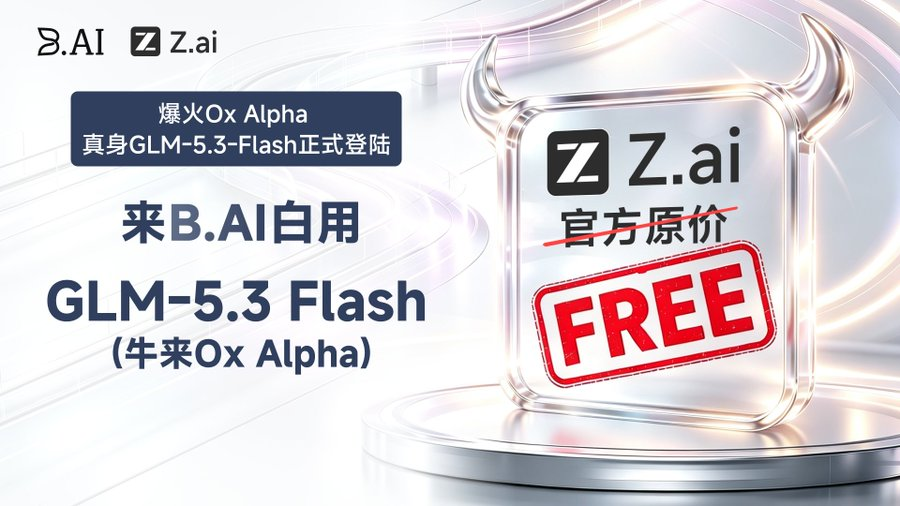
💡 AI is becoming easier to access, and Hy3 is a great example of that direction.
For web users, getting started can be remarkably simple. Instead of going through a complicated installation process, users can open the https://t.co/Cn979JI93S chat platform, select Hy3 from the model dropdown, and begin exploring the model through conversation. This creates an easy entry point for anyone who wants to experience AI directly.
But accessibility is not only about chatting with a model. Developers need a practical way to turn AI capabilities into applications, services, and automated workflows. That is where API access becomes important.
Through the https://t.co/Cn979JI93S API Dashboard, developers can access the relevant settings, create an API key, locate the Hy3 model ID, and start experimenting with integration. This means the same AI technology can be approached from two different directions: direct interaction for users and programmable access for builders.
That combination can help create a stronger AI ecosystem. Users can discover interesting capabilities through conversations, while developers can take those discoveries and turn them into useful products.
The most exciting part of AI is often not what a model can do in isolation, but what people can build around it. A capable model can become an assistant, a research tool, a productivity feature, an educational application, or part of a much larger AI agent.
Lowering the barrier to experimentation gives more people an opportunity to participate.
Hy3 provides another opportunity for users and developers to explore what becomes possible when AI access is made simpler.
@BAI_AGI@justinsuntron #TRONEcoStar
🔥 USDD IS EVOLVING — FROM STABILITY TO ON-CHAIN YIELD & CAPITAL EFFICIENCY
A strong new feature from ChangeNOW takes a deeper look at the evolution of USDD and how the ecosystem is moving beyond the traditional definition of a stablecoin.
The bigger picture is becoming increasingly clear:
USDD is building an ecosystem around stability, transparency, yield, multi-chain liquidity, and capital efficiency.
1️⃣ 🌐 USDD 2.0 — Multi-Chain Expansion
USDD 2.0 is expanding its native ecosystem across major networks including:
🔹 TRON
🔹 Ethereum
🔹 BNB Chain
This multi-chain architecture matters because stablecoin adoption is increasingly about where liquidity can move and where capital can be deployed, rather than being restricted to a single network.
More chain coverage means more potential access to:
💰 DeFi liquidity
📈 Yield opportunities
🔄 Trading markets
🏦 Lending infrastructure
🌐 Cross-chain applications
2️⃣ 💎 sUSDD Brings Yield Into the Equation
USDD isn't positioned only as a stable asset.
Through sUSDD, users can access on-chain yield strategies while maintaining exposure to the broader USDD ecosystem.
This creates a fundamentally different proposition:
Stability + transparency + productive capital
Instead of simply holding stablecoins, users can potentially put their capital to work across DeFi.
3️⃣ 🧩 Pendle + Morpho = Deeper Capital Efficiency
The integration of sUSDD with protocols such as Pendle and Morpho is particularly important.
Pendle introduces structured yield markets.
Morpho adds lending and collateral functionality.
Together, these primitives can allow users to construct more sophisticated strategies around sUSDD.
That can include:
➡️ Yield exposure
➡️ PT positions
➡️ Collateral utilization
➡️ Borrowing
➡️ Looping strategies
This is where stablecoin liquidity starts becoming financial infrastructure, rather than simply a parking place for capital.
4️⃣ 🔄 Looping Changes the Capital Efficiency Equation
When PT-sUSDD can be used as collateral, users can potentially borrow against their positions and redeploy liquidity.
The objective is straightforward:
Make existing capital work harder.
But higher capital efficiency also comes with higher complexity and risk.
Users need to consider:
⚠️ Liquidation risk
⚠️ Borrowing costs
⚠️ Collateral volatility
⚠️ Liquidity conditions
⚠️ Smart-contract risk
⚠️ Oracle risk
Higher potential returns should always be evaluated against the additional risks involved.
5️⃣ ⚡ GasFree Removes a Major Stablecoin Friction Point
Another important development highlighted in the report is GasFree.
For many users, one of the biggest obstacles to using blockchain-based stablecoins is the requirement to maintain a balance of the network's native gas token.
GasFree changes that experience by allowing eligible transfers to use the stablecoin itself for fee payment.
That means users can potentially avoid the familiar situation of:
“I have stablecoins, but I don't have enough TRX to send them.”
This is a major UX improvement.
6️⃣ 💸 Lower Transfer Costs Can Accelerate Adoption
The reported comparison indicates that GasFree can reduce transfer costs by up to 80% compared with USDT under applicable conditions.
The broader significance goes beyond the percentage.
Lower friction makes stablecoins more practical for:
🌍 Global transfers
💳 Payments
🏦 Treasury operations
🔄 Wallet-to-wallet transfers
📱 Consumer applications
The easier it becomes to move stablecoins, the more naturally they can become part of everyday on-chain financial activity.
7️⃣ 📊 The Growth Data Is Especially Interesting
According to the ChangeNOW data highlighted in the report:
📈 From January through July 2026, monthly USDD exchange volume increased by approximately 85%.
During the same period, the reported growth for USDT was approximately 38%.
The difference is notable.
It suggests that USDD's growth story is not only about supply or incentives — actual exchange activity is becoming an increasingly important part of the narrative.
8️⃣ 🔍 Transparency Is Becoming a Competitive Advantage
One of the strongest characteristics of an on-chain stablecoin ecosystem is verifiability.
Instead of relying entirely on traditional financial reporting cycles, users can inspect blockchain activity and reserve-related information through public on-chain infrastructure.
That creates a different relationship between the protocol and its users:
Don't just trust the system — verify the data.
For stablecoins, that transparency can become increasingly important as the market grows more sophisticated.
9️⃣ 🚀 From Stablecoin to DeFi Financial Layer
The evolution can be summarized simply:
USDD → sUSDD → Pendle → Morpho → GasFree → Multi-chain DeFi
Each component addresses a different part of the stablecoin experience.
💵 USDD provides the stable asset
💎 sUSDD introduces productive capital
📈 Pendle expands yield strategies
🏦 Morpho adds lending and collateral utility
⚡ GasFree reduces transaction friction
🌐 Multi-chain expansion increases accessibility
This is much bigger than simply launching another stablecoin.
🔟 🌎 The Bigger USDD Thesis
The future of stablecoins won't be determined only by which asset maintains its peg.
The bigger competition will be around:
Liquidity + utility + transparency + yield + accessibility + capital efficiency.
USDD is positioning itself around all of these dimensions.
And as more DeFi infrastructure becomes composable, the ability to move seamlessly between stablecoin liquidity, yield markets, lending markets and payment infrastructure could become one of the most valuable advantages in the ecosystem.
🔥 USDD isn't just about staying stable.
It's about making stable capital productive, transparent, mobile, and increasingly efficient across Web3.
The next phase of stablecoin adoption may not simply be about holding digital dollars.
It may be about what those digital dollars can do once they are fully integrated into an on-chain financial ecosystem.
@justinsuntron@DecentralizeUSD
#TRONEcoStar