Host of EWTN Long Ride Home TV, Host of EWTN The Bear Woznick Adventure RadioShow,Author,TandemSurf World Champ,Founder Deep Adventure Ministries, NinjaBlackblt
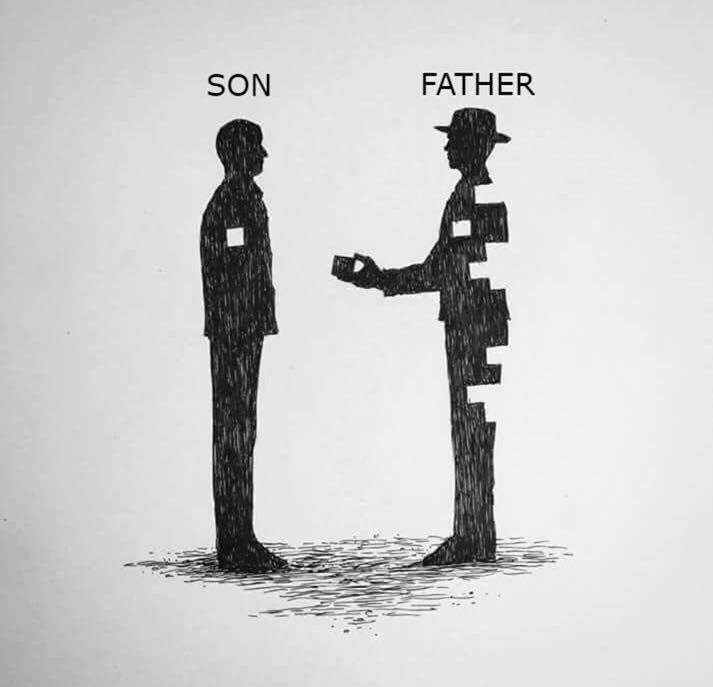
RULES FOR SONS:
1. Never shake a man’s hand sitting down.
2. Don’t enter a pool by the stairs.
3. The man at the BBQ Grill is the closest thing to a king.
4. In a negotiation, never make the first offer.
5. Request the late check-out.
6. When entrusted with a secret, keep it.
7. Hold your heroes to a higher standard.
8. Return a borrowed car with a full tank of gas.
9. Play with passion or not at all…
10. When shaking hands, grip firmly and look them in the eye.
11. Don’t let a wishbone grow where a backbone should be.
12. If you need music on the beach, you’re missing the point.
13. Carry two handkerchiefs. The one in your back pocket is for you. The one in your breast pocket is for her.
14. You marry the girl, you marry her family.
15. Be like a duck. Remain calm on the surface and paddle like crazy underneath.
16. Experience the serenity of traveling alone.
17. Never be afraid to ask out the best looking girl in the room.
18. Never turn down a breath mint.
19. A sport coat is worth 1000 words.
20. Try writing your own eulogy. Never stop revising.
21. Thank a veteran. Then make it up to him.
22. Eat lunch with the new kid.
23. After writing an angry email, read it carefully. Then delete it.
24. Ask your mom to play. She won’t let you win.
25. Manners maketh the man.
26. Give credit. Take the blame.
27. Stand up to Bullies. Protect those bullied.
28. Write down your dreams.
29. Always protect your siblings (and teammates).
30. Be confident and humble at the same time.
31. Call and visit your parents often. They miss you.
32. The healthiest relationships are those where you’re a team; where you respect, protect, and stand up for each other.
@BasedMikeLee They do not believe Jesus was eternally begotten of Father God. Just the highest created being. The old Arian Heresy. Christians believe in the 3 persons of Father Son and Holy Spirit who share same nature - one in being.
ROME 155 AD
Justin Martyr wrote of how he and other early Christians attended Mass:
'This food is called among us Eucharistia [the Eucharist], of which no one is allowed to partake but the man who believes that the things which we teach are true, and who has been washed with the washing that is for the remission of sins, and unto regeneration, and who is so living as Christ has enjoined.
For not as common bread and common drink do we receive these; but in like manner as Jesus Christ our Saviour, having been made flesh by the Word of God, had both flesh and blood for our salvation, so likewise have we been taught that the food which is blessed by the prayer of His word, and from which our blood and flesh by transmutation are nourished, is the flesh and blood of that Jesus who was made flesh.
For the apostles, in the memoirs composed by them, which are called Gospels, have thus delivered unto us what was enjoined upon them; that Jesus took bread, and when He had given thanks, said, ‘This do ye in remembrance of Me, this is My body;’ and that, after the same manner, having taken the cup and given thanks, He said, ‘This is My blood;’ and gave it to them alone.”
Cheerfulness strengthens the heart and makes us persevere in a good life. Therefore the servant of God ought always to be in good spirits.
- St. Phillip Neri
Reply STOP to opt-out
https://t.co/IFN0IKSAxT CCC 3.16.10 Among all the Scriptural texts about creation, the first three chapters of Genesis occupy a unique place. From a literary standpoint these texts may have had diverse sources. the inspired authors have placed them at the beginning of Scripture to express in their solemn language the truths of creation
Everyone talks about the Western intellectual tradition. Almost no one credits who built it.
Consider the timeline.
Justin Martyr writes the first systematic defense of Christianity to a Roman emperor. Around 155 AD.
Origen produces the Hexapla, a six-column parallel Bible, and pioneers biblical scholarship on a scale no one had attempted. Around 230 AD.
Augustine writes "The City of God," a work so profound it shaped Western civilization for over a thousand years. Around 426 AD.
Thomas Aquinas composes the Summa Theologiae, synthesizing faith and reason with a precision that still staggers philosophers today. Around 1270 AD.
Then the Church does something unprecedented.
She builds the university system.
Bologna. Paris. Oxford. Cambridge. All founded as Catholic institutions. All built on the conviction that faith and reason are not enemies but allies.
Catholic monks preserved Aristotle, Plato, Cicero, and Virgil through centuries when classical learning could have vanished forever. Every manuscript copied by hand. Every library maintained by religious orders.
St. Augustine put it plainly: "Crede, ut intelligas." Believe, so that you may understand (Sermon 43.9, circa 418 AD).
This is the Catholic intellectual tradition. Not faith against reason. Faith seeking reason. Reason illuminated by faith.
Pope John Paul II opened his encyclical Fides et Ratio with these words: "Faith and reason are like two wings on which the human spirit rises to the contemplation of truth."
Two wings. Not one against the other.
This is your inheritance. Know it. Celebrate it. Share it.
What Catholic thinker or work first opened your eyes to the depth of this tradition?
Ignatius of Antioch called the Eucharist "the medicine of immortality."
Not a symbol of immortality. Not a reminder of immortality. The medicine itself.
This is a man who sat at the feet of the Apostles. John was likely his teacher. He wrote these words around 107 AD, while being transported to Rome to be eaten by lions. His mind was clear. His theology was precise.
And here is what he said about those who rejected the Real Presence:
"They abstain from the Eucharist and from prayer, because they confess not the Eucharist to be the flesh of our Savior Jesus Christ."
Notice the logic. He does not say they have a different interpretation. He says they deny that the Eucharist IS the flesh of Christ. That is the dividing line. That is the heresy.
Ignatius was not building a theological system. He was dying. Men facing martyrdom do not speak in elaborate metaphors about memorial meals.
He believed he was about to give his body the way Christ gave his. And he knew what Christ had given.
The symbolic view of the Eucharist has no representative in the historical record until Berengar of Tours in the 11th century. And when he argued against the physical Real Presence, he was condemned at multiple Church councils. The Church recognized it immediately as a break from what had always been believed. Zwingli formalized it as a Protestant doctrine in 1525, but even he was not the first. That is still over a thousand years of unbroken consensus.
Where does your church's understanding of the Eucharist come from, and how far back can you trace it?
https://t.co/Zo4LIsdobd
Father Joe Paddock and Bear sit down and start the conversation with their favorite talking point, college football. Father Paddock explains how the Montana State football team had grit and grace, by sticking to their game plan and not panicking. The conversation leads into Father and his campus ministry work. Fathers' success comes from telling the wholesome truth, and young men wanting the truth. He explains how good strong men in the Church are the good role models bringing more young men into the Church. They both agree that adventure is wild and the importance of relying on God when he gives you detours to do his will. They end the conversation with how critical it is to participate in Christs suffering and the gift to participate in the crucifixion. Full Episodes! https://t.co/9eYTYEwtnl... #Catholic #Faith #Hope #Love #God
https://t.co/IFN0IKSAxT CCC 3.14.5 The Church uses (I) the term "substance" (rendered also at times by "essence" or "nature") to designate the divine being in its unity, (II) the term "person" or "hypostasis" to designate the Father, Son and Holy Spirit in the real distinction among them, and (III) the term "relation" to designate the fact that their distinction lies in the relationship of each to the others.
https://t.co/xz8At7tvQI CCC 3.14.2 Such formulations are already found in the apostolic writings, such as this salutation taken up in the Eucharistic liturgy: "The grace of the Lord Jesus Christ and the love of God and the fellowship of the Holy Spirit be with you all."








![CatholicArena's tweet photo. ROME 155 AD
Justin Martyr wrote of how he and other early Christians attended Mass:
'This food is called among us Eucharistia [the Eucharist], of which no one is allowed to partake but the man who believes that the things which we teach are true, and who has been washed with the washing that is for the remission of sins, and unto regeneration, and who is so living as Christ has enjoined.
For not as common bread and common drink do we receive these; but in like manner as Jesus Christ our Saviour, having been made flesh by the Word of God, had both flesh and blood for our salvation, so likewise have we been taught that the food which is blessed by the prayer of His word, and from which our blood and flesh by transmutation are nourished, is the flesh and blood of that Jesus who was made flesh.
For the apostles, in the memoirs composed by them, which are called Gospels, have thus delivered unto us what was enjoined upon them; that Jesus took bread, and when He had given thanks, said, ‘This do ye in remembrance of Me, this is My body;’ and that, after the same manner, having taken the cup and given thanks, He said, ‘This is My blood;’ and gave it to them alone.”](https://pbs.twimg.com/media/HJuYrZtWsAEOmOE.jpg)


