Tiffany Stratton feels she’s better as a heel and being a b*tch.
“I always knew I’m better as a heel. I know how to be a b*tch and cuss people out.”
(@BustedOpenRadio)
4 years ago today during a backstage segment Sami Zayn almost made Jey Uso break character and bust out laughing mid promo 😭
“Bruh, you really like him?” 💀
(2022)
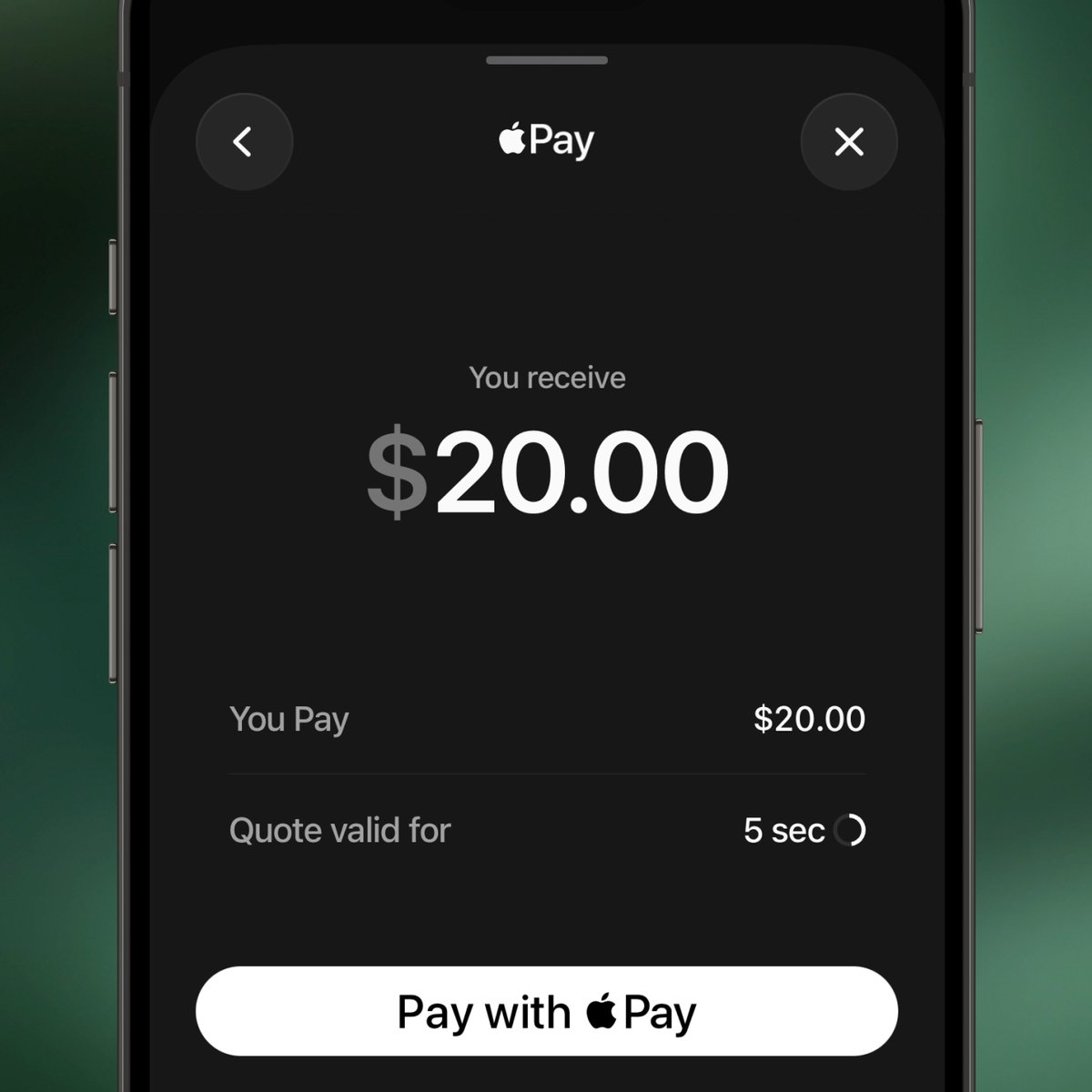
Plasma One has partnered with MoonPay to add new deposit methods
alongside crypto deposits and virtual bank accounts, Plasma One now lets users add money via Apple Pay and bank cards through MoonPay
details:
- MoonPay verification is required. everything is done inside the Plasma One app: phone number, a short form, and a face scan. nothing else was requested
- minimum deposit is $20 for both Apple Pay and bank cards
- deposits are free for all 3 tiers
why is this great news?
Plasma One is gradually removing barriers between traditional finance and onchain
regular users don't want to deal with crypto exchanges, blockchains, or stablecoins. it's always easier to tap a couple of buttons, move money from your bank to a neobank, and start using its benefits
now waiting for the Stripe update
Good morning everyone.
Four Submission Lanes, One Execution Strategy.
A single transaction connection is one thing.
Building multiple submission paths around the same execution event requires a more deliberate infrastructure design.
@Hypesium uses four parallel submission lanes:
➜ 2 WebSocket sockets.
➜ 2 keep-alive HTTP connections.
Once the pool creation trigger fires, the same prepared transaction bytes are broadcast across all four lanes.
The reasoning is straightforward: create multiple routes to the sequencer rather than relying on one connection.
However, there's an important distinction between submission redundancy and execution success.
Four submission lanes do not guarantee four independent confirmations or successful transactions.
The final outcome still comes down to nonce handling, sequencer ordering, priority fees and transaction validity.
This is the part worth understanding when evaluating transaction infrastructure.
More submission paths can improve the architecture's resilience, but the number of connections alone doesn't tell the whole performance story.
How much difference can multiple submission paths make when transaction speed and reliability matter most?
Always DYOR.
AMEX WILL PAY YOU $10 TO USE APPLE PAY 3 TIMES
The targeted Apple Pay offer is back, and some people are getting it AGAIN even after using it last round.
The offer
- Make 3 purchases with Apple Pay
- Get a $10 statement credit
- Valid through 12/31/26
There's no minimum spend listed per purchase.
One person reports three $1 Wikipedia donations through Apple Pay triggered it, so that's $10 back on $3.
Important
- Targeted, so check every Amex card you have
- Save the offer BEFORE making the purchases
- These often hit an enrollment cap, so add it now
Small, but $10 for tapping your phone three times is about as easy as free money gets.
On this day 2 years ago The Original Bloodline reunited to take down Solo Sikoa.
The Usos
Roman Reigns
Honorary Uce, Sami Zayn.
NO WORDS WERE SAID AND THE CROWD WAS UNGLUED. 🔥
(2024)
Imagine waking up one day and finding out that quantum computers could break the cryptography protecting your blockchain.
Your wallet: “I’m built different.”
Quantum computer: “Let’s test that.”
Sounds like a sci-fi movie, right? But blockchain security needs to think about this future BEFORE it becomes a real problem.
And this is where @Starknet caught my attention.
Instead of waiting for the quantum boss fight to begin, Starknet is already preparing for it.
A little story about what’s happening.
1. The problem nobody wants to ignore
Most blockchains rely on cryptographic signatures that could become vulnerable if sufficiently powerful quantum computers arrive.
Imagine spending years securing your digital assets, only for future technology to say, “Nice security bro, would be a shame if someone broke it.”
Obviously, nobody wants that plot twist.
2. Starknet's strategy: stay upgradeable
Starknet is working toward something called cryptographic agility.
In simple English? Don't marry your blockchain to one type of cryptography forever.
Build the ability to upgrade and replace cryptographic components when better alternatives become necessary.
Because in technology, “we've always done it this way” is not a security strategy.
3. STARKs enter the conversation
Starknet already uses STARK-based cryptographic proofs.
Combine that foundation with a strategy for upgrading cryptography, and you get an ecosystem preparing to adapt as the threat landscape evolves.
Not a magical force field against every quantum threat. Just serious engineering for a future that could look very different.
4. The work has already started
October 21: The Falcon-512 challenge went live, inviting people to help make quantum-resistant signatures cheaper.
October 22: The community voted 93.5% YES on researching an independent post-quantum L1.
Important detail: this is a research decision, NOT an automatic decision to launch a new chain. Any actual move would need another vote.
The target? Full post-quantum security by 2027.
Ambitious? Absolutely. But at least the conversation has moved beyond “we'll figure it out later.”
5. The funny part?
Crypto loves talking about the future.
AI agents? Future.
Millions of TPS? Future.
A new token narrative every 48 hours? Also future.
But preparing the cryptography that might protect your assets years from now?
That's the kind of work that isn't always flashy, but could matter when it counts.
My takeaway
I'd rather see a project test difficult ideas early, invite the community to participate, and make research decisions transparently than wait until the threat is knocking at the door.
Quantum computers aren't breaking every blockchain tomorrow.
But preparing before the problem becomes urgent? That's the point.
Starknet isn't waiting for the final boss to spawn before upgrading its armor.
Built to adapt, not built to break.
Read more: https://t.co/4sC7fG5L6a
Like and repost if you think blockchain security should be preparing for the next generation of computing.
The card for tomorrow’s SmackDown...
- CM Punk is advertised
- Cody Rhodes is set to appear
- Chelsea Green vs. Roxanne Perez (Women’s Championship)
- Giulia vs. Blake Monroe (Street Fight)
- Michin & B-Fab vs. Alexa Bliss & Tatum Paxley (Women’s Tag Team Championship)
- The MFTs vs. Bakusai
#SmackDown
if the signature protecting your crypto wallet became vulnerable to quantum computing, how easily could you change it?
think of it like changing the lock on your door without rebuilding the house.
on @Starknet, accounts are programmable smart contracts, so developers can adopt new signature methods without a protocol-wide hard fork.
that's separate from the proof layer. signatures authorize transactions, STARK proofs verify computation, and STARKs rely on hash functions rather than elliptic curve assumptions.
but Starknet is preparing for quantum threats, not already fully quantum safe. as an Ethereum L2, parts of its wider security and migration path still depend on Ethereum.
my takeaway: security isn't just about stronger cryptography. it's about being able to change it when threats change.
would you trust a blockchain more if its signature methods could be changed without a protocol-wide hard fork?
Want to dig deeper into Starknet's approach to cryptographic agility and its post quantum roadmap?
https://t.co/1aHaieOrBy