we look forward to hosting nature walks around Grounds to find and document pollinators on iNaturalist. Keep an eye out for future announcements, or contact us if you’d like to get involved (2/2)
While the bees, butterflies, & moths continue to hibernate underground, beneath fallen leaves, or inside plant stems, BGUVA is gearing up to spread the love for pollinators! Our mission is to promote pollinators through land stewardship & community outreach. This semester, (1/2)
Have you ever wondered where insects go in winter? Many of them, including most pollinators, will take shelter in leaves, plant stems, brush piles, dead wood, soil, and flower heads where they hibernate 'til spring. #LeaveTheLeaves & stems & brush to help protect our pollinators!
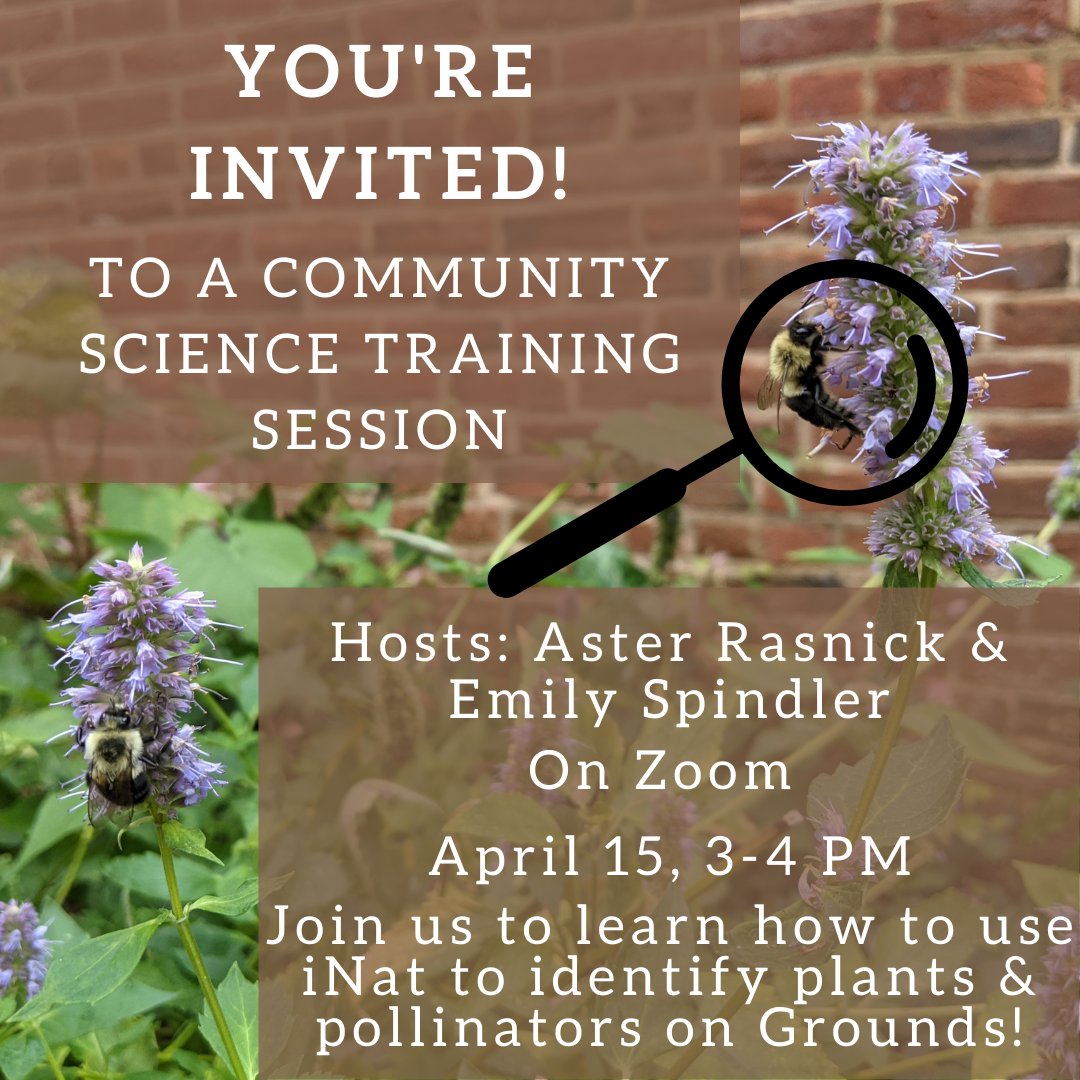
You’re invited! A training session for our community science project will be held via Zoom next Friday, 3-4pm! Come join us to learn how to use the iNaturalist platform to start observing plants & pollinators on grounds! Zoom link will be posted here: https://t.co/9bBdd9La1C
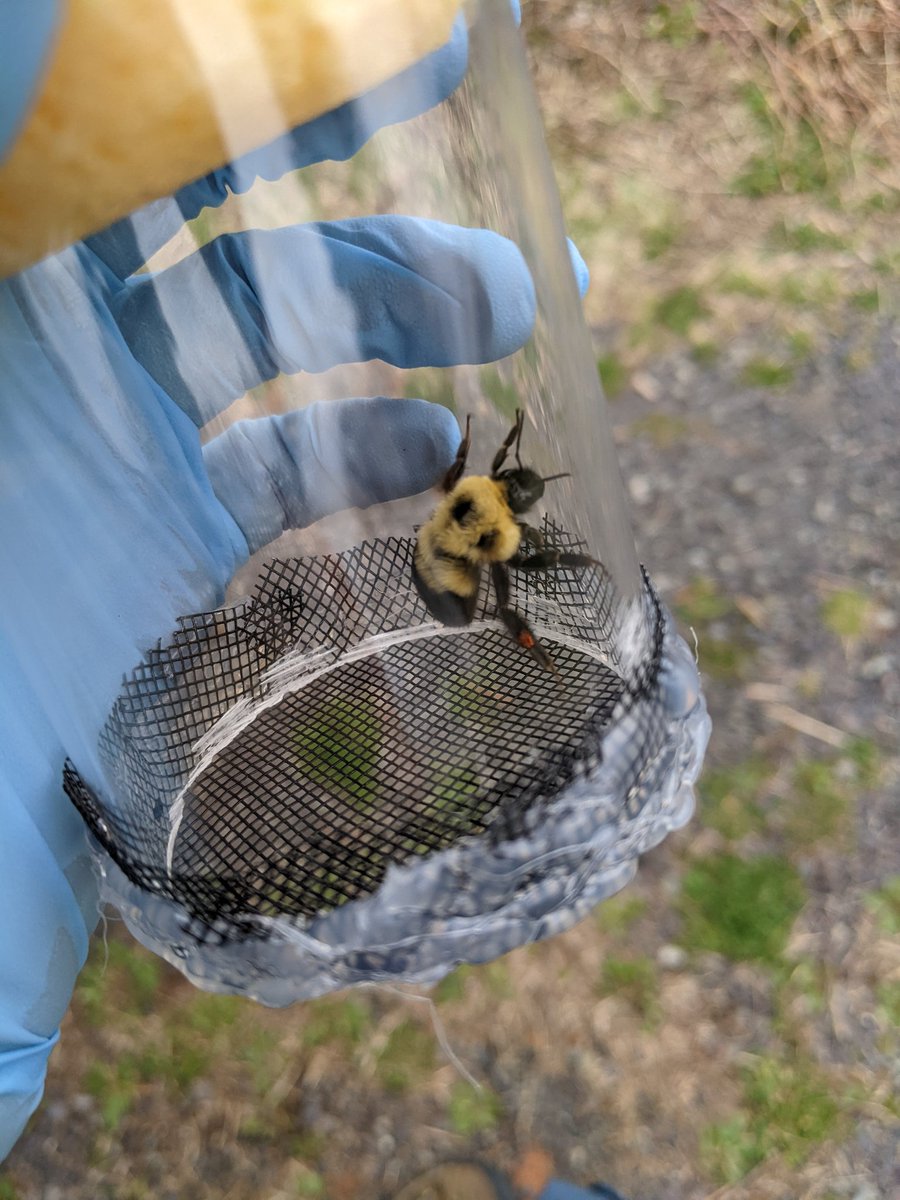
It’s queen season! Bumble bee queens – who were born last summer, mated in late summer/fall, and hid out in soil/leaves all winter – are now emerging to look for a place to nest and start raising the next generation of bees.
Whew! Big day yesterday - a student volunteer (from my old high school!) and I caught 11 #Bombus queens at one site, the most yet all season! She even found one carrying #pollen!
We don’t know a lot about where these queens look for nests or what floral resources they use. Bee Grounds co-chair, Kelsey, is doing fieldwork this spring to answer these questions at sites across urban-rural & forested-open gradients in central & northern piedmont of Virginia.
They highlight 6 gaps in knowledge that need to be addressed moving forward, including the need for more studies of solitary species.
Check out the paper here: https://t.co/0blSrhv02t
A new study reports ecological risk assessment for tropical bee species exposed to #neonic imidacloprid using data from Apis and native species.
They report "most of the native bees are more sensitive to imidacloprid than the Africanized Apis mellifera."
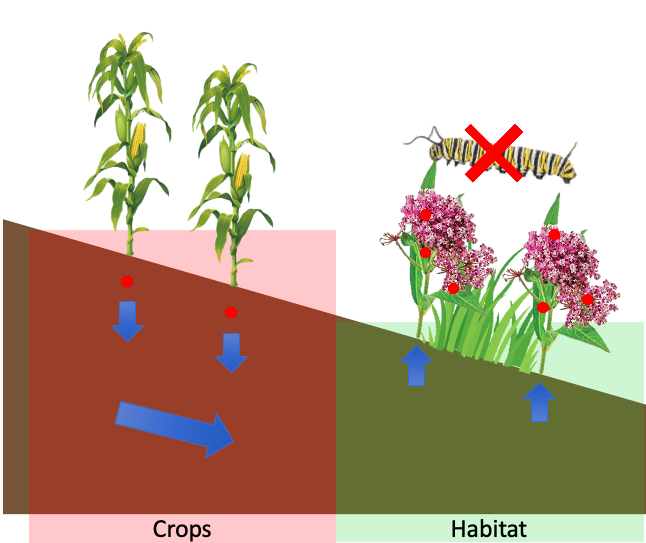
Have you heard about neonicotinoid pesticides? Researchers have been uncovering the detrimental effects of “neonics” on bees, butterflies, and birds since they came onto the scene in the 90s.
The EPA is currently reviewing a decision to keep several neonicotinoids registered for use, despite them being banned in the European Union, and in New Jersey and Connecticut. Pesticides should be considered as a last resort to protect pollinators and people.
Bee Grounds is co-chaired by EnviSci grad students Emily & Kelsey, but soon Emily will leave to start a new job at the Xerces Society! So we're looking for someone new to take over - time commitment is flexible (2-5h/wk) & workload is decided cooperatively by co-chairs. Email us!
Bee Grounds UVA strives to increase awareness of pollinators and pollinator-friendly practices. We work with partners across Grounds to host educational and service-learning events, conduct community-driven research, and install pollinator habitat and interpretive signage.
We’re excited to debut our community science project on @iNaturalist! Anyone can submit photos of flowering plants and pollinators on Central Grounds! Learn more: https://t.co/QDHppSCqcH
With your help, we can map flower diversity & blooming time and create a detailed record of pollinators over the year. This info will support science-based decision making for future landscaping projects that will enhance the biodiversity value of UVA Grounds!