Mary Poppins wasn’t just one of Disney’s greatest films — it gave us a cast that stayed with generations of families.
Julie Andrews, now aged 90, became a global star after playing Mary Poppins. She went on to star in classics such as The Sound of Music, Victor/Victoria and The Princess Diaries. Although she lost her singing voice after surgery in the late 1990s, she has continued writing books, voice acting and making occasional public appearances.
Dick Van Dyke, now 100, somehow still seems to have more energy than people half his age. Since playing Bert, he starred in Chitty Chitty Bang Bang, Diagnosis: Murder, Night at the Museum and even returned for Mary Poppins Returns. He remains active and still regularly surprises fans with appearances.
Karen Dotrice, now 70, stepped away from acting much earlier than many expected. After appearing in films and British television through the 1970s, she largely left the spotlight behind and now lives a quieter life, occasionally returning for Disney events and reunions.
Matthew Garber sadly had the shortest life story of them all. After Mary Poppins and The Gnome-Mobile, he travelled widely before becoming ill after a trip to India. He died in 1977 at just 21 years old and was later named a Disney Legend.
Glynis Johns, who played Mrs Banks, enjoyed a remarkable career that stretched across eight decades. Away from Mary Poppins, she became famous for introducing the song Send in the Clowns on stage and won a Tony Award during her career. She passed away in 2024 aged 100.
David Tomlinson, the perfect Mr Banks, built a reputation as one of Disney’s most reliable leading men. He also starred in The Love Bug and Bedknobs and Broomsticks before retiring from acting in 1980. He passed away in 2000 aged 83.
More than 60 years later, it’s incredible how one film still means so much to so many people. For many of us, this really was practically perfect in every way.
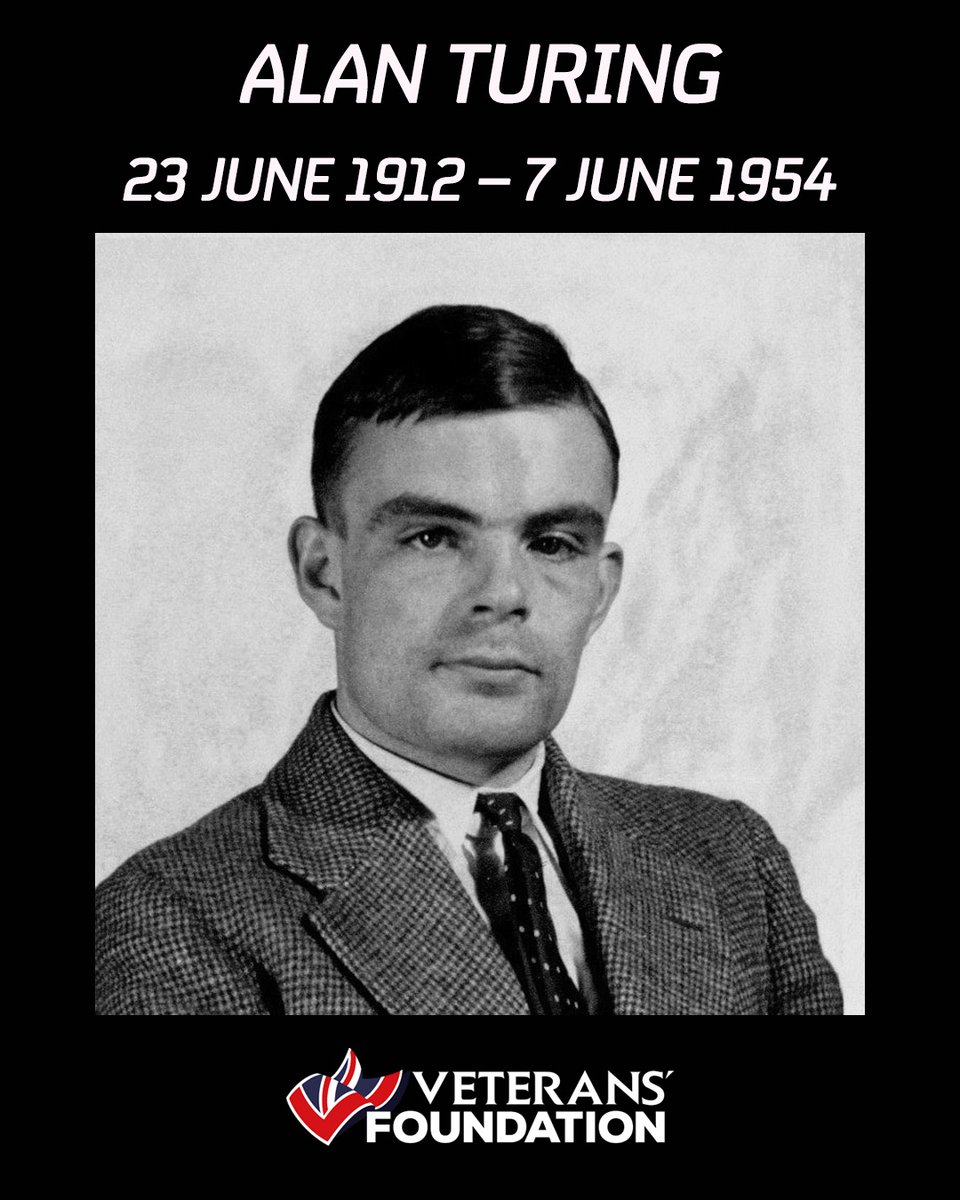
Today, we remember Alan Turing, who died on 7 June 1954.
A mathematician, codebreaker and pioneer of modern computing, Turing's work helped shorten the Second World War and laid the foundations for technologies that shape our lives today.
For decades, his achievements went largely unrecognised, and he faced profound personal challenges because of who he was. Yet his contribution to science, innovation and society remains extraordinary.
On the anniversary of his death, we honour a man whose ideas changed the world and whose legacy continues to inspire generations of thinkers, problem-solvers and innovators.
Photo: Princeton University Archives – Public domain (via Wikimedia Commons)
🇦🇺 #Australia history is one of the world’s oldest continuous human stories — from ancient Aboriginal civilizations and Dreamtime traditions to British colonization, gold rushes, world wars, and modern multicultural democracy.
Over the last 5,000 years, Australia transformed from an Indigenous continent into one of the world’s leading economies and Indo-Pacific powers. Today, Australia is known for its strong democracy, high living standards, global cities like Sydney & Melbourne, and rich Indigenous heritage that continues to shape the nation’s identity. 🦘🌏
#australia #AustraliaHistory #history
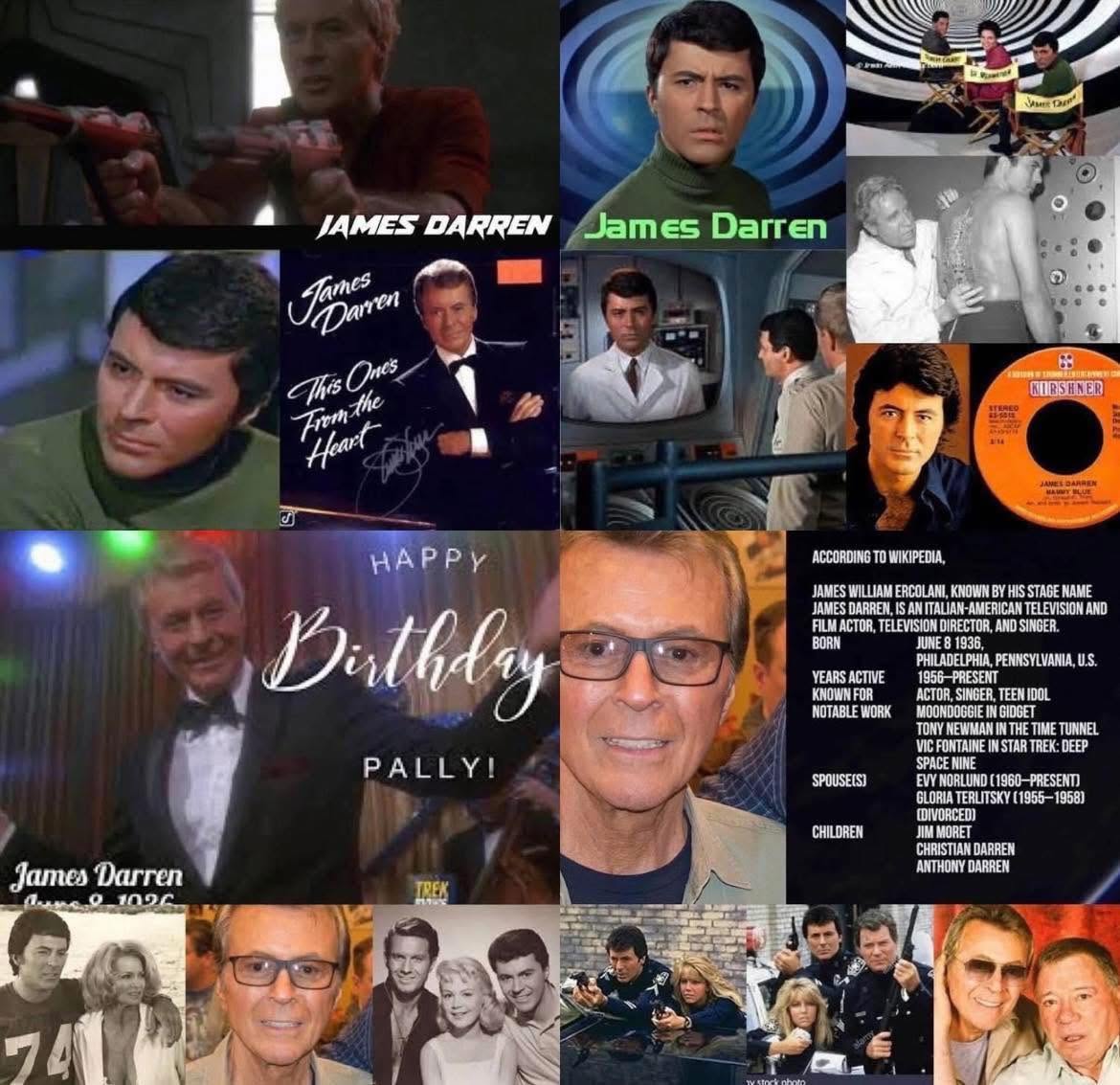
James Darren - Happy Posthumous Birthday
June 8, 1936 - September 2 2024
American television and film actor, television director, and singer.
54 acting credits i During the late-1950s and early-'60s, he had notable starring and supporting roles in such films as Gidget (1959) and its sequels, The Gene Krupa Story (1959), All the Young Men (1960), The Guns of Navarone (1961), and Diamond Head (1962), and was briefly promoted as a teen pop singer.
Later in the 1960s he became more active in television, starring in the short-lived science fiction series The Time Tunnel (1966-1967) and taking on the recurring role of Vic Fontaine in Star Trek: Deep Space Nine (1998-1999).
History of Iceland — The Last 1,000 Years 📷📷📷
The history of #Iceland is a story of Viking settlement, medieval sagas, foreign rule, volcanic disasters, national awakening, and transformation into one of the world’s most peaceful and modern societies.
---
📷 1. Viking Iceland & the Commonwealth (c. 1000–1262)
Around 1,000 years ago, Iceland was a young Viking society founded mainly by Norse settlers from Norway, along with Celtic settlers from the #British Isles.
One of the most remarkable events occurred in the year 1000, when Iceland peacefully adopted Christianity through a decision made at the Alþingi (Althing), one of the world’s oldest parliaments.
Key Features of Early Iceland
No king ruled the island
Society was organized through clan leaders called chieftains
Laws were discussed publicly at the Alþingi
Icelandic sagas and poetry flourished
The famous Icelandic sagas later recorded stories of Viking heroes, exploration, and family feuds.
---
📷 2. Norwegian Rule (1262–1380)
Internal conflicts weakened the Icelandic Commonwealth during the 13th century in a violent period called the Age of the Sturlungs.
In 1262, Icelanders accepted the authority of the Norwegian king through the “Old Covenant.”
Under Norwegian rule:
Trade became more controlled
Iceland remained sparsely populated
Fishing and farming stayed central to life
Harsh climate and volcanic activity often caused famine
---
📷 3. Danish Control & Hardship (1380–1814)
When the crowns of Norway and Denmark united, Iceland gradually came under Danish rule.
This era was difficult for Iceland:
Trade monopolies limited economic growth
Epidemics and volcanic eruptions devastated the population
Harsh winters and food shortages were common
📷 The Laki Eruption (1783–1784)
One of the worst volcanic disasters in history occurred when the Laki volcanic system erupted.
Effects included:
Massive lava flows
Poisonous gas clouds
Crop failures and famine
Around one-quarter of Iceland’s population died
The eruption also affected weather patterns across #Europe
---
📷 4. National Awakening & Independence Movement (1800s)
During the 19th century, Icelandic nationalism grew, inspired by European independence movements.
Key developments:
Revival of Icelandic language and literature
Expansion of fishing industries
Calls for self-government
Reykjavík developed into the island’s political and cultural center
A major independence leader was Jón Sigurðsson, who became a symbol of Icelandic nationalism.
---
📷 5. Home Rule & Sovereignty (1904–1944)
Iceland gradually gained autonomy from Denmark.
Important Milestones
1904: Home Rule established
1918: Iceland became a sovereign state in union with #Denmark
Iceland controlled its own domestic affairs
During World War II, Denmark was occupied by Nazi Germany, isolating Iceland.
In 1940, British forces occupied Iceland to prevent German control. Later, American troops arrived.
---
📷 6. The Republic of Iceland (1944)
In 1944, Icelanders voted overwhelmingly to end the union with Denmark.
The modern Republic of Iceland was officially established at Þingvellir, the historic assembly site.
Iceland after Independence
Fishing became the economic backbone
Infrastructure modernized rapidly
Education and healthcare expanded
Hydropower and geothermal energy transformed the economy
---
📷 7. The Cod Wars (1950s–1970s)
Iceland fought a series of disputes with the United Kingdom over fishing rights called the “Cod Wars.”
Iceland expanded its fishing zones to protect its economy.
Despite tensions with the British Royal Navy, Iceland eventually secured control over large fishing areas, greatly strengthening its economy.
---
📷 8. Modern Iceland (1980s–Present)
Modern Iceland became known for:
High living standards
Gender equality
Renewable energy leadership
Strong democratic institutions
Tourism and natural beauty
Economic Boom & Crash
In the early 2000s, Iceland’s banking sector expanded rapidly. However, the 2008 global financial crisis caused a severe banking collapse.
Iceland recovered through:
Economic reforms
Tourism growth
Renewable energy industries
Technology and innovation
---
📷 Iceland Today
Today, Iceland is famous for:
Volcanoes, glaciers, waterfalls, and geothermal springs
One of the world’s oldest parliamentary traditions
A small but highly educated population
Strong environmental policies
Peaceful society and high quality of life
Its capital, Reykjavík, is among the northernmost capitals in the world and serves as the country’s cultural and economic heart.
---
📷 Timeline Summary
c. 1000 — Iceland converts to #Christianity
1262 — Comes under Norwegian rule
1380 — Danish control begins
1783 — Catastrophic Laki eruption
1904 — Home Rule established
1918 — #SovereignKingdom of Iceland formed
1944 — Republic of Iceland declared
1950s–70s — Cod Wars with the UK
2008 — Financial crisis and recovery
Today — Advanced, green, democratic Nordic nation 📷
See less
— in Iceland.
Remembering Mike Pratt who was born on this day in 1931.Pratt is most famously remembered as Jeff Randall, the hard-up, cynical private investigator who navigated the bizarre criminal underworld of London in the cult ITC television series Randall and Hopkirk (Deceased).
As Randall, he perfectly captured the spirit of a down-to-earth, perpetually stressed-out detective who just wanted to earn an honest crust. His character provided the perfect foil to his deceased, white-suited business partner Marty Hopkirk, played by Kenneth Cope, whose ghostly interference constantly exasperated the living investigator. Randall was known for his deadpan exasperation, a rumpled charm, and his frequent, desperate commands to his spectral partner to stop meddling in his mortal affairs.
Before finding television immortality, Pratt worked in advertising and served a very different kind of apprenticeship during the skiffle boom of the 1950s. An incredibly accomplished musician and songwriter, he jammed at Soho’s legendary 2 I's coffee bar and toured Europe in an old London taxi alongside his close friend Lionel Bart. His career was varied; he co-wrote many of Tommy Steele’s earliest hits, famously winning a prestigious Ivor Novello Award for the classic tracks "A Handful of Songs" and "Little White Bull". Beyond his musical triumphs, he was an esteemed stage actor who trod the boards with the Royal Shakespeare Company and lent his gritty realism to acclaimed feature films like Roman Polanski’s Repulsion (1965).
Off-screen, Pratt was a deeply creative, multifaceted man who seamlessly balanced the worlds of mainstream television, avant-garde theatre, and musical composition. He was a devoted family man whose musical DNA lived on through his son, Guy Pratt, who would grow up to become a world-renowned session bass player for Pink Floyd. He was a dedicated professional who fiercely poured his energy into his writing and acting, continuing to script television episodes and perform on the London stage despite privately battling severe illness in his final years.
His life came to a tragically premature end on 10 July 1976 after a courageous battle with lung cancer, passing away at the age of just 45. The British entertainment industry felt his loss deeply, and the following month, a massive memorial show was staged at London’s Aldwych Theatre, featuring a star-studded cast of his peers, including Glenda Jackson and John Le Mesurier, to honour his memory.
'Buffy the Vampire Slayer's Alyson Hannigan has paid tribute to co-star Anthony Head, following the Giles actor's death at 72.
"This cut is so deep I fear it can never heal," she wrote. "Oh Tonal…I am so grateful to have had you in my life! I want to say a million wonderful things about you and yet I can’t seem to find the words that would do you justice. I love you so much and will miss you forever. RIP"
Read more tributes here: https://t.co/6zLnJvJh4s
On his birthday, remembering Gary Graham, who was Ambassador Soval on Star Trek: Enterprise, Prime and Mirror versions. He also guest starred on Voyager as Tanis in "Cold Fire."
#StarTrek
For those of you interested in celebrating our Mum’s life with us on Monday June 8 at 12 noon (8pm UK) Here is the link for the Live Stream.
https://t.co/6r9OpwPXLL
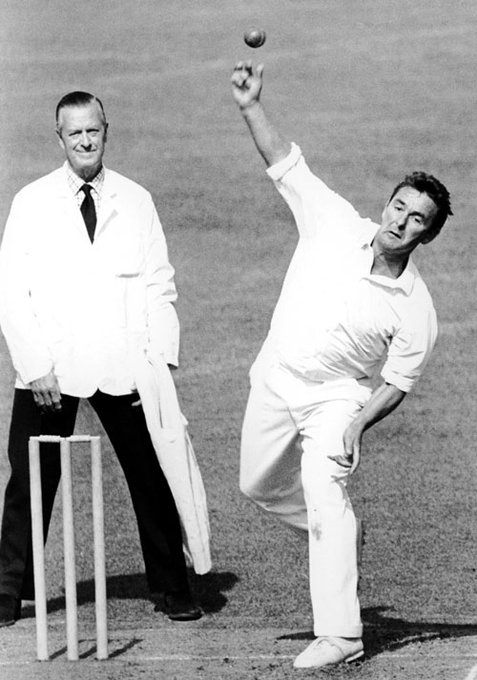
Brian Clough, who loved cricket, bowling at Lord's in a charity match in front of 8000 spectators in August 1975. Clough took 2 for 45 dismissing the great cricketing pair of Geoff Boycott and, er, Clement Freud. With the bat he scored 13. A lover of cricket, he once said he would have prefer to make a Test century at Lord's than to have scored a hat-trick at Wembley