Read more from Fr Chris Furmage and about his journey to the priesthood and serving the Church in Scotland.
https://t.co/xGy8pzwwHc
https://t.co/xGy8pzwwHc
“I don’t regret taking that chance. I wish I had done it sooner.”
Fr Chris Furmage of the Diocese of Motherwell reflects on his decision to enter seminary and follow his vocation to the priesthood.
If you’ve been wondering whether God might be calling you, Priests for Scotland will hold a “Come and See” weekend on 5–6 December 2026 for men discerning a possible vocation to the priesthood.
Contact your diocesan vocations director to find out more.
Find your diocesan vocations director: https://t.co/S4IYEcZk2v
𝗖𝗮𝘁𝗵𝗼𝗹𝗶𝗰 𝗕𝗶𝘀𝗵𝗼𝗽𝘀 𝗦𝘂𝗽𝗽𝗼𝗿𝘁 𝗔𝗰𝘁𝗶𝗼𝗻 𝗼𝗻 𝗙𝗼𝗼𝗱 𝗣𝗼𝘃𝗲𝗿𝘁𝘆 𝗯𝘂𝘁 𝗨𝗿𝗴𝗲 𝗖𝗮𝘂𝘁𝗶𝗼𝗻 𝗼𝗻 𝗙𝗼𝗼𝗱 𝗣𝗿𝗶𝗰𝗲 𝗖𝗮𝗽𝘀
The Bishops’ Conference of Scotland has responded to the Scottish Government’s consultation on food price controls, affirming that access to sufficient, nutritious food is a matter of human dignity and social justice, while expressing reservations about the introduction of permanent food price caps.
In its submission, the Conference agrees that improving the affordability of essential food items, particularly for low-income households, should be a major policy priority. The Bishops also support government action to address food insecurity but question whether food price caps are the most effective means of achieving that goal.
Drawing on Catholic social teaching, the submission emphasises the dignity of every person, the common good, solidarity, and the preferential option for the poor. The Bishops argue that no individual or family should have to rely on emergency assistance to obtain adequate food and that public policy should be assessed by how effectively it serves those with the fewest resources.
The submission highlights the extensive work already undertaken by Catholic parishes and charities across Scotland to support people experiencing hardship. Examples include food banks, parish pantries, food parcel initiatives and the work of the Society of St Vincent de Paul Scotland, which provides practical assistance to people in need regardless of faith or background.
However, the Bishops caution that food price caps could have significant unintended consequences. These may include shifting costs onto farmers, fishers, food producers and workers, weakening supply chains, and increasing the price of goods not covered by the cap. International experience suggests that while price controls can offer immediate relief, they may also generate wider economic distortions and fail to address the underlying causes of poverty and food insecurity.
The submission also raises concerns that price-capped products could become lower-quality alternatives, limiting consumer choice and potentially creating a two-tier food system in which the poorest households face reduced access to nutritious food.
While acknowledging that temporary price controls may have a role during exceptional economic circumstances, the Bishops argue that they should be regarded as short-term emergency measures rather than permanent solutions. Any scheme introduced should contain robust safeguards, be subject to early review, and include a sunset clause.
The Conference concludes that government should give serious consideration to alternative approaches that may better address the root causes of food poverty, including improved income support, social security measures, targeted food vouchers, tax measures and support for local food networks.
Commenting on the submission, Anthony Horan, Director of the Catholic Parliamentary Office, added:
"The ability to access sufficient, nutritious food is a basic requirement of human dignity and should never depend on wealth alone. The Bishops’ Conference of Scotland welcomes efforts to tackle food poverty and support measures that place the needs of the most vulnerable at their heart. However, policies must be effective, proportionate and fair. We are concerned that food price caps could unintentionally harm farmers, producers, retailers and workers, while failing to address the deeper causes of poverty. The long-term goal should be a society in which every person and family can afford the food they need with dignity, security and choice."
𝗖𝗮𝗹𝗹𝗲𝗱 𝗮𝗻𝗱 𝗦𝗲𝗻𝘁
𝗟𝗲𝗮𝗱𝗲𝗿𝘀𝗵𝗶𝗽 𝗙𝗼𝗿𝗺𝗮𝘁𝗶𝗼𝗻 𝗳𝗼𝗿 𝗮 𝗦𝘆𝗻𝗼𝗱𝗮𝗹 𝗖𝗵𝘂𝗿𝗰𝗵
The journey into a synodal way of being Church together, begun by Pope Francis and continued by Pope Leo is one where we will require a new passion for equipping, and using the gifts of, leaders. Responding to this call and to what people have asked for, the Bishops’ Conference are excited to offer Called and Sent, formation for Christian leaders.
This course will equip people with skills and tools that, while necessary in the Church today, will be even more so in the Church going into the future, where clergy, lay and religious are called to be co-responsible for the ‘the being and action of the Church’. (Pope Benedict). The course will be conducted in a spirit of prayerfulness and entail one full day’s formation and four follow up online formation sessions.
We are looking for people who are prayerful, faith-filled and already involved in the life of the Church in their parish, diocese or organisation. Please consider if you might be the right person for this course.
For more information, and to apply for Called and Sent, go to; https://t.co/J6n1K92k1K
Considering teaching in a Catholic school?
St Andrew’s Foundation’s online information session takes place today, from 5.00 to 6.00pm.
Find the joining information in the event notice, and explore the SCES Becoming a Teacher resources as you consider your next step.
If you are interested in becoming a teacher in a Catholic school, you are most welcome to join the information session (via Teams) at https://t.co/hB8gamiIti.
For further information please email: [email protected].
Gospel
Luke 21:12-19
‘You will be hated by all for the sake of my name. But not a hair of your head will perish.’
At that time: Jesus said to his disciples, ‘They will lay their hands on you and persecute you, delivering you up to the synagogues and prisons, and you will be brought before kings and governors for my name’s sake. This will be your opportunity to bear witness. Settle it, therefore, in your minds, not to meditate beforehand how to answer, for I will give you a mouth and wisdom, which none of your adversaries will be able to withstand or contradict. You will be delivered up even by parents and brothers and sisters, and relatives and friends, and some of you they will put to death. You will be hated by all for my name’s sake. But not a hair of your head will perish. By your endurance you will gain your lives.’
Our young people raise their voices in the Called to Teach hymn as we celebrate Catholic Education Week. 🎶
We give thanks for the teachers who help our children and young people grow in faith, discover their gifts and find the confidence to use them.
Could God be calling you to teach? Explore the Scottish Catholic Education Service’s resources for anyone considering a vocation in Catholic education.
https://t.co/LjlA9gzScv
𝗪𝗵𝗮𝘁 𝗺𝗮𝗸𝗲𝘀 𝗮 𝗖𝗮𝘁𝗵𝗼𝗹𝗶𝗰 𝘀𝗰𝗵𝗼𝗼𝗹 𝗖𝗮𝘁𝗵𝗼𝗹𝗶𝗰?
In the Catholic Education Week newsletter, Dr Natalie Finnigan reflects on the purpose of Catholic education: helping young people to know, love and follow Christ.
This mission is lived through prayer, learning and the relationships at the heart of school life — where every young person should experience the dignity and love that belong to them as a child of God.
As we celebrate Catholic Education Week, we give thanks for everyone who helps our school communities live this mission each day.
Read Dr Finnigan’s reflection in the SCES newsletter.
Next weekend, Priests for Scotland will hold its “Come and See” weekend for men discerning a possible call to the priesthood.
Perhaps the thought of priesthood has been with you for some time. Perhaps it is only a question beginning to emerge. Either way, discernment starts by listening to where God may be leading.
The weekend takes place on 5–6 December and offers an opportunity to pray, reflect and explore that call.
If you feel God may be asking something more of you, contact your diocesan Vocations Director and find out more.
“Come and see.” John 1:39
Gospel
Luke 21:5-11
‘There will not be left here one stone upon another.’
At that time: While some were speaking of the Temple, how it was adorned with noble stones and offerings, Jesus said, ‘As for these things that you see, the days will come when there will not be left here one stone upon another that will not be thrown down.’ And they asked him, ‘Teacher, when will these things be, and what will be the sign when these things are about to take place?’ And he said, ‘See that you are not led astray. For many will come in my name, saying, “I am he!” and, “The time is at hand!” Do not go after them. And when you hear of wars and tumults, do not be terrified, for these things must first take place, but the end will not be at once.’
Then he said to them, ‘Nation will rise against nation, and kingdom against kingdom. There will be great earthquakes, and in various places famines and pestilences. And there will be terrors and great signs from heaven.’
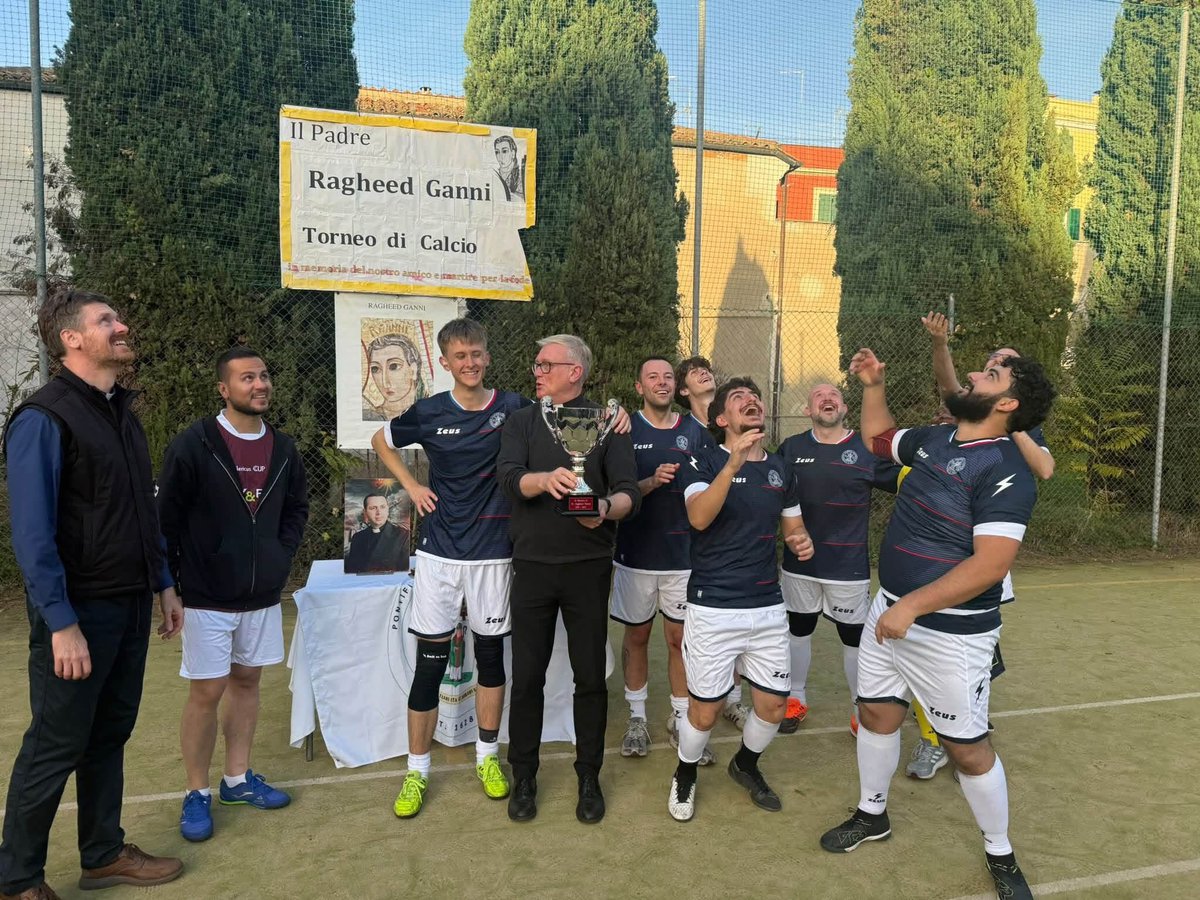
A historic victory for the Scots College in Rome!
Congratulations to the students of the Pontifical Scots College in Rome, who have won the Fr Ragheed Ganni Cup for the very first time.
The annual football tournament brings together seminaries and colleges from across Rome, with the Scots securing victory over the University of Notre Dame following a penalty shootout.
A fantastic achievement and a proud moment for the College.
Well done to everyone who represented the Scots College and to all those who helped make the tournament possible.
Preparing to become a Catholic teacher includes nurturing a relationship with God.
In the Catholic Education Week newsletter, Fr Charles Coyle describes how prayer, Scripture and the teaching of the Church shape Catholic Teacher Formation at the University of Glasgow’s St Andrew’s Foundation.
Students are encouraged to reflect and pray about what they are learning, deepening their faith as they prepare to accompany young people.
Please keep our student teachers, and everyone discerning a vocation in Catholic education, in your prayers.
Read Fr Charles’s article in the SCES newsletter.
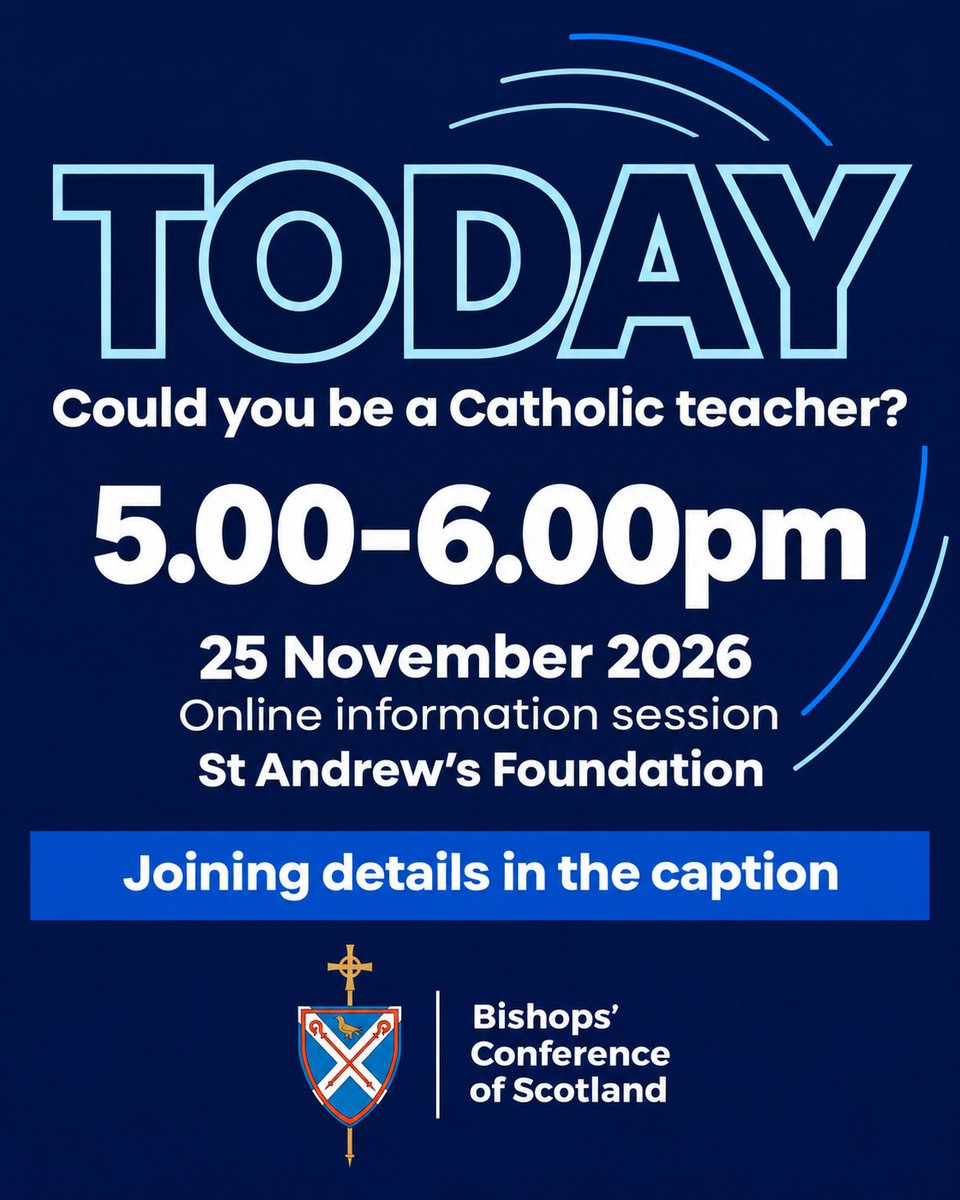
Could you be a Catholic teacher?
St Andrew��s Foundation for Catholic Teacher Education is hosting an online information session on Wednesday 25 November, from 5.00 to 6.00pm.
The session will cover routes into teaching and the Catholic Teacher Certificate for practising teachers.
If you’re considering your next step, find the joining information in the event notice below. Please share this with someone who might be interested.
If you are interested in becoming a teacher in a Catholic school, you are most welcome to join the information session (via Teams) at https://t.co/hB8gamiIti.
For further information please email: [email protected].
Gospel
Luke 21:1-4
‘He saw a poor widow put in two small copper coins.’
At that time: Jesus looked up and saw the rich putting their gifts into the offering box, and he saw a poor widow put in two small copper coins. And he said, ‘Truly, I tell you, this poor widow has put in more than all of them. For they all contributed out of their abundance, but she out of her poverty put in all she had to live on.’
⛓️💥𝗗𝗜𝗚𝗡����𝗧𝗬 𝗡𝗢𝗧 𝗗𝗘𝗧𝗘𝗡𝗧𝗜𝗢𝗡 – 𝗦𝗧 𝗔𝗡𝗗𝗥𝗘𝗪’𝗦 𝗗𝗔𝗬 𝗚𝗔𝗧𝗛𝗘𝗥𝗜𝗡𝗚 – 𝗡𝗢𝗩 𝟮𝟵𝗧𝗛
As we approach St Andrew's Day, we reflect on the Scottish traditions of hospitality and welcome. For people detained at Dungavel Immigration Removal Centre, that welcome and hospitality can feel a long way away.
The UK remains the only country in Europe without a time limit on immigration detention, meaning people can be held for months, sometimes years, without knowing when they will be released. Many have committed no crime and some are detained simply because of issues with their immigration paperwork. This system causes enormous distress and raises serious questions about how we uphold the dignity and human rights of people seeking to make a life here.
How do we show our traditions of welcome and hospitality to those who come to Scotland in search of safety and a better future?
Our Christian faith calls us to recognise the dignity of every human person and to welcome the stranger. We cannot remain silent when people are treated in ways that deny their humanity.
To mark St Andrew's Day, join Justice & Peace Scotland and the Scottish Peace Network outside Dungavel for our annual Dignity Not Detention Solidarity Witness where we gather to show those detained inside they are not forgotten and call for a more humane immigration system that respects the dignity and rights of every person.
🔹Sunday 29th November
🔹1.00 – 1.45pm
🔹Dungavel House Immigration Removal Centre, Strathaven, South Lanarkshire, ML10 6RF.
All are welcome. Please join us and spread the word!
Find out how St Bernadette’s Primary, Falkirk, and Caritas pupils from St Mungo’s High School are helping young people grow in faith on page 8:
https://t.co/73ynUDzPjP
Prayer buddies, pupil-led prayer clubs and older pupils supporting younger children, young people have an important part to play in sharing the faith.
At St Bernadette’s Primary School in Falkirk, pupils are being supported to grow as faith leaders within their school community.
S6 Caritas candidates from St Mungo’s High School have also led faith formation sessions for Primary 7 pupils as they prepare for the move to secondary school.
Read more in the SCES newsletter about how pupils, staff and the parish are working together to help children encounter Christ and grow in faith.