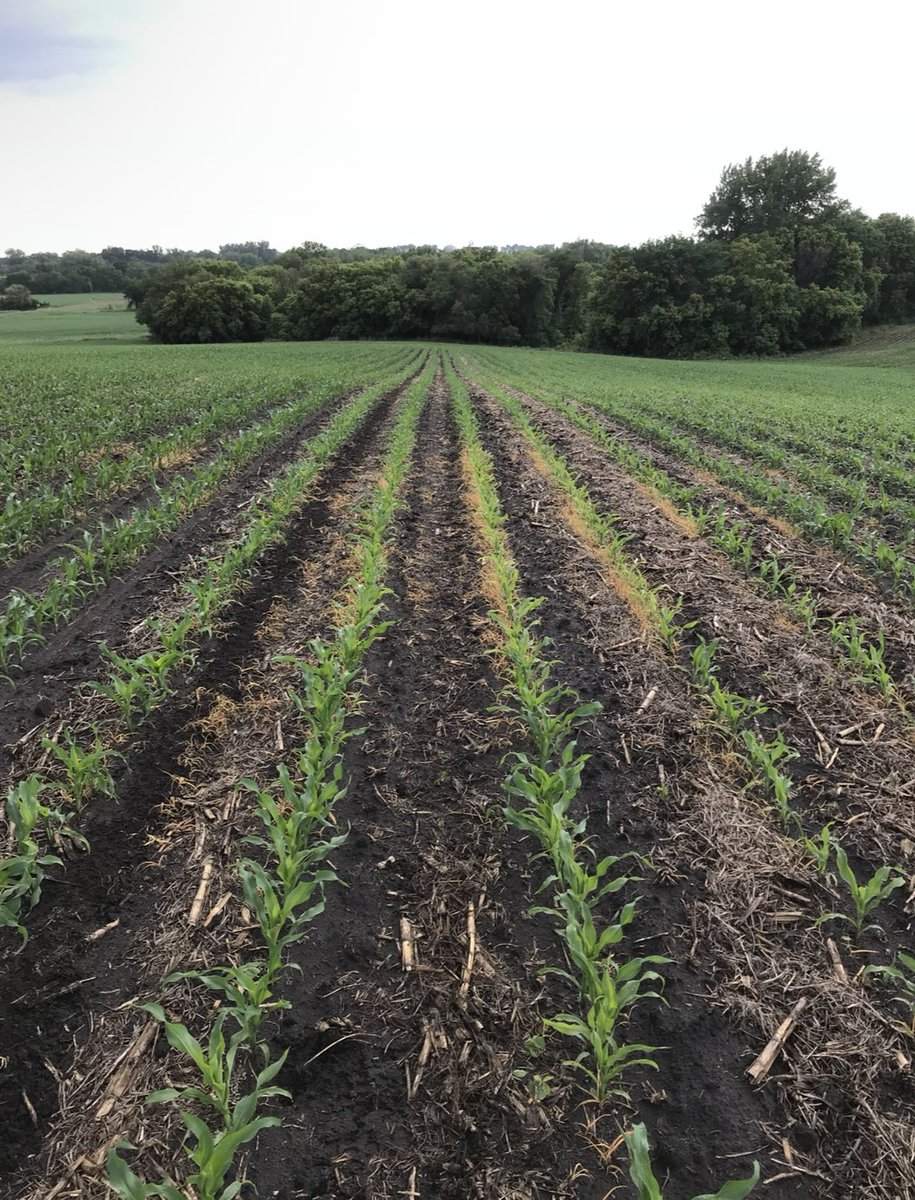
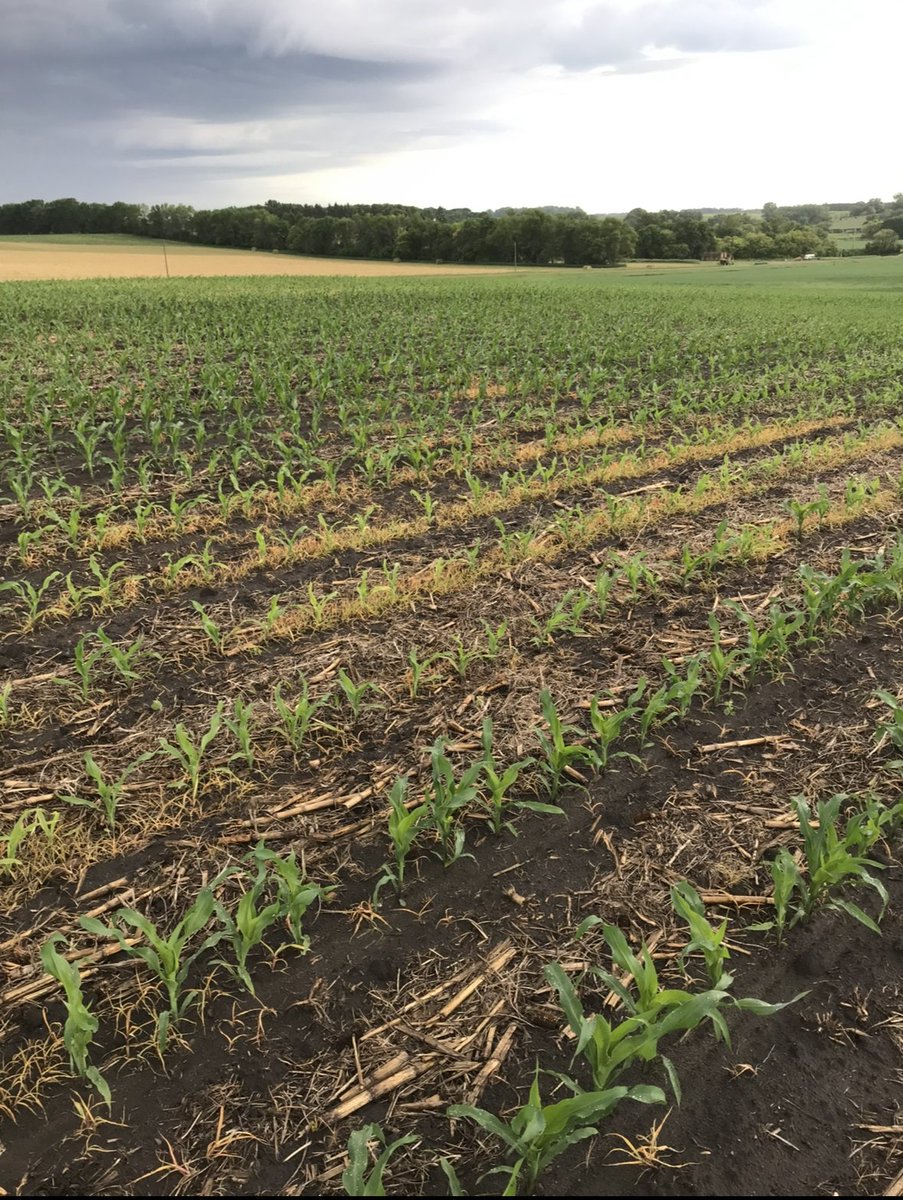
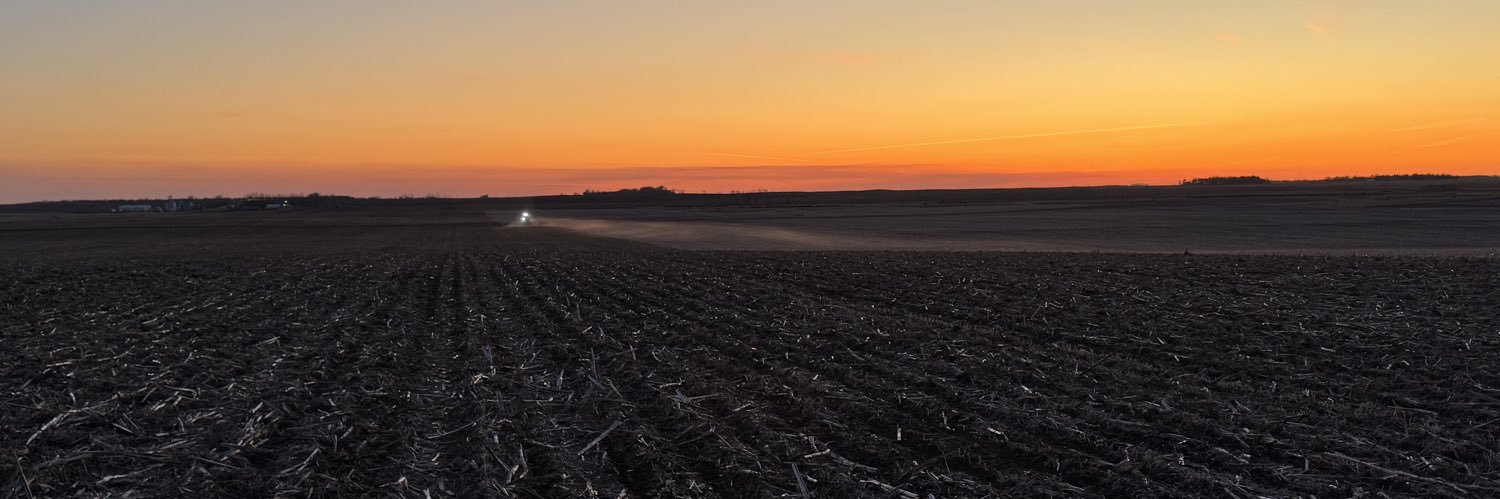
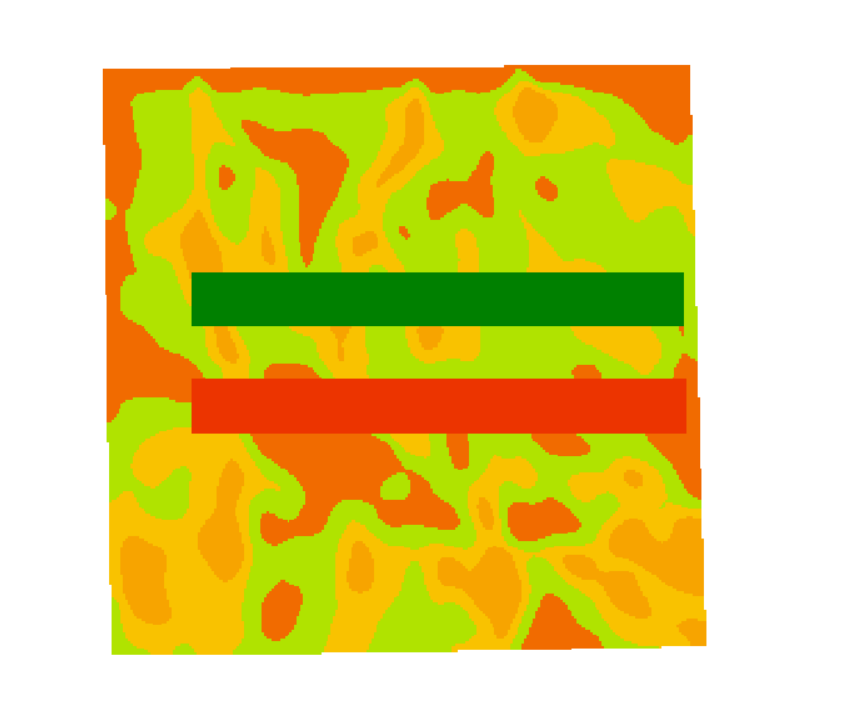
Bare soil temps still climbing even on a cloudy, cool, windy day. Soil moisture remains the dominant control on warming rate — the wetter the soil, the more energy required to move the thermometer.
Total Fe on the label tells you what's in the jug. The ortho-ortho percentage tells you what's actually going to reach your beans.
Two products both saying "6% Fe EDDHA" can be night and day different. NDSU work showed yield response tracks right with the o,o number.
If you can't get that number from your supplier, that's worth thinking about.
People underestimate how much pH can vary within a single field.
Glacial till next to old lakebed sediments. Eroded hilltops next to deep depositional soils. Capillary rise concentrating carbonates in one zone while 400 feet away the topsoil is buffering pH down two full units.
That variability changes everything — P availability, micronutrient access, even which products will actually perform. But most fertility plans don't even acknowledge it exists.
The ag input model depends on selling something for every acre. When technology threatens to reduce acres treated, the playbook is predictable: create a new "essential" input that covers every acre anyway. Watch what gets marketed hardest in the next 5 years and ask yourself why.
On SE ND glacial till soils, the capillary zone is a moving nutrient reservoir. Nitrate and sulfate delivered upward during dry periods. Flushed back down through tile or runoff in wet years. A 0-24" nitrate sample pulled in a dry fall tells you where nutrients were — not where they'll be come planting. Where you are on the landscape matters just as much as the number on the report.
Economic optimum N rate can deviate from the regional average by 40-80 lbs/acre depending on soil texture, drainage, OM, and weather. The rate you follow is the mean of a distribution — not a prescription for your field. When was the last time you tested whether it's actually right for your ground?
We spend a lot of time talking about fertilizer rates. Not nearly enough time talking about what the soil actually does with it after it's down. On high-pH calcareous ground, broadcast P gets tied up fast. That's where placement — banding, starter, in-furrow — earns its keep.
Compaction doesn't just restrict roots — it suppresses mycorrhizal colonization. Mycorrhizae are aerobic organisms that extend P foraging reach by orders of magnitude beyond the root surface. Compacted, poorly aerated soil shuts them down. You lose your most efficient P uptake mechanism exactly when diffusion limitations make it most critical.
About 25-30% of 10-34-0 is already orthophosphate — immediately plant available. The rest converts in 1-2 weeks via microbial hydrolysis. Before you pay extra for "100% ortho" products, ask yourself if that 1-2 week difference is really worth the premium.
How are we supposed to accurately evaluate herbicide and adjuvant performance when the adjuvant formulation keeps changing? Same jug, same name—but the ingredients might not be the same from year to year.
7/
As a consultant, I try to match adjuvants to herbicides and environments. But that only works when the product in the jug actually matches the name on the label.
Adjuvant variability is real. And too often overlooked.
6/
Bottom line:
✔️Know your supplier
✔️Ask for spec sheets when possible
✔️Trial new adjuvants before going full scale
✔️Don’t assume all NIS or MSOs are created equal
Consistency matters—especially when margins are tight.
5/
Most adjuvants don’t disclose surfactant load or oil purity. The base might be from soy, cottonseed, or something synthetic.
And unless you're in a state like CA or WA, there's no requirement to register or prove performance.
4/
Ever had a “go-to” adjuvant suddenly stop working like it used to?
Or seen one outperform another, even though both are labeled as MSO or NIS?
That’s often not your imagination. The formulation likely changed.
3/
That means two jugs of the same adjuvant—same name, same supplier—can be completely different from year to year.
Even during the same season, companies may change ingredients based on supply, cost, or sourcing issues.
2/
Herbicides go through years of EPA review. Labels are legally binding. What’s on the label has to be true.
Adjuvants, on the other hand, aren’t regulated by the EPA in most states. No testing required. No standardization. No label enforcement.
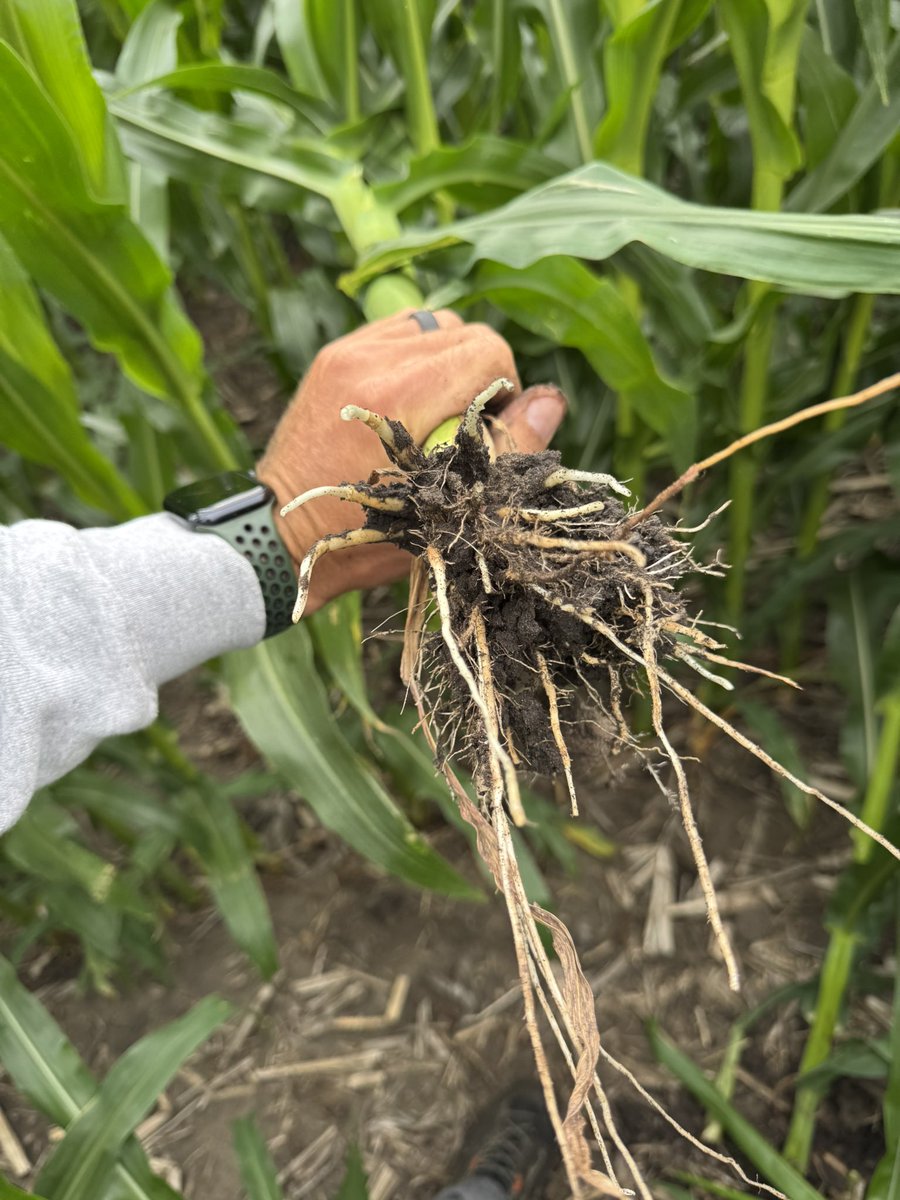
Found corn rootworm larvae feeding in a field that’s mostly rotated, but has had some recent corn-on-corn history. Rotation isn’t bulletproof anymore. Time to start digging roots and checking trait effectiveness.
Bottom line:
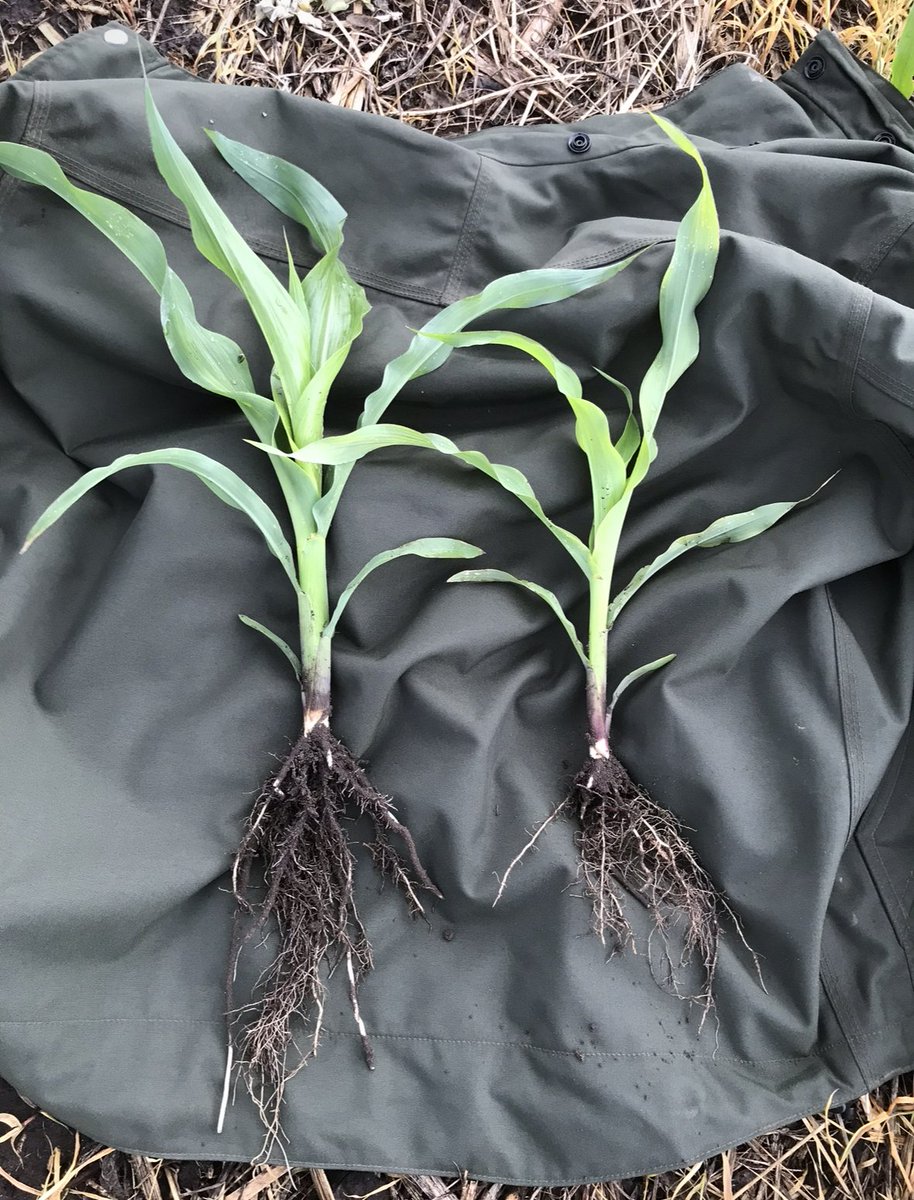
Early weed pressure leads to tall, skinny plants with poor roots and compromised photosynthetic potential. Yield losses start well before you see them.
Early weed control isn't just about clean fields—it's about proper crop development.
Early-season weed pressure doesn’t just steal water and nutrients.
It can permanently change how a corn plant grows—altering architecture, reducing stability, and hurting yield.
Here’s what happens when weed pressure is too high early on: