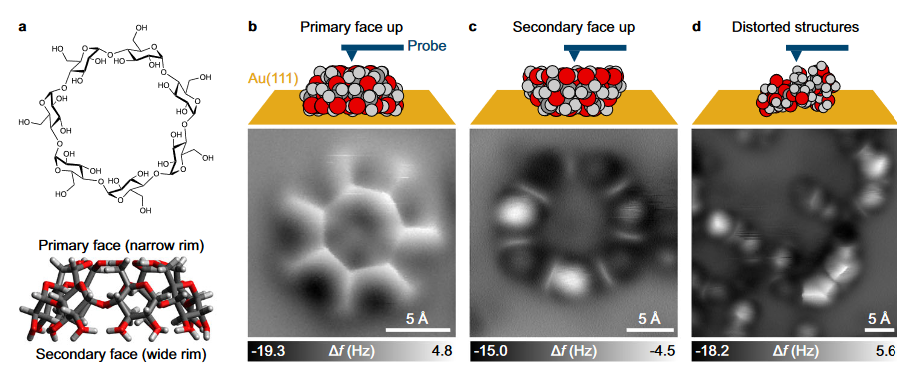
🧵 Using nc-AFM, we've visualized #cyclodextrins (CDs) with submolecular resolution— molecules made of glucose units with the remarkable ability to "trap" other molecules. 1/10 (paper in Nat Comm: https://t.co/Gh3oAI5bRB)
@OrlandoMejaRiv1 Hacedor de Estrellas (Stapledon). Nunca aparece en las listas españolas, supongo que por las escasísimas veces que se han editado. Prácticamente todos los grandes la han alabado (Clarke, Lem, etc9
@philipturnerar What about the tilt of the surface itself ? It can vary between microscopic regions of the sample. Terraces are flat, but they almost never grow perfectly normal to the tip axis. Even a 0.1° tilt, in 1 um ,will deliver almost two nanometers of height difference
Near-100% spontaneous rolling up of polar van der Waals materials @NatureMaterials. Congrats Prof Li Zejun @SoutheastUni and his team! Grateful to be part of this collaboration @NUSResearch https://t.co/WWXSPSU7ZC & https://t.co/lcnFuyU7Xa
We found (theoretically) another case of F tunnel!
Now, for the same price, including a fluorine halogen bond.
"Fluorine Ping-Pong Tunnelling in Cages"
New J. Chem. - Festschrift for Giuseppe Resnati
https://t.co/Lsfs8ZAGf4
@observie The analogy goes very far... for instance, the same mechanical control of an atomic force microscopy sensor, a mechanical fork or cantilever, to keep it in resonance and obtain the interaction between tip and sample, is the same as AM/FM demodulation of radio signals.
Huge 3D Printing Breakthrough!
Caltech is printing metal atom by atom. A hydrogel scaffold soaked in metal salts becomes the blueprint, the gel burns away, and oxygen is stripped in a hydrogen-rich chamber, leaving alloys crafted with surgical precision.
They can change metal ratios on the fly. Flip from a copper-heavy mix to a Cu12Ni88 alloy nearly four times stronger, without altering shape or tooling. Every property, from strength to density, is now designed, not guessed.
This is metallurgy reinvented. Also a game changer for Aerospace applications.
https://t.co/Wcr2mNaKgb
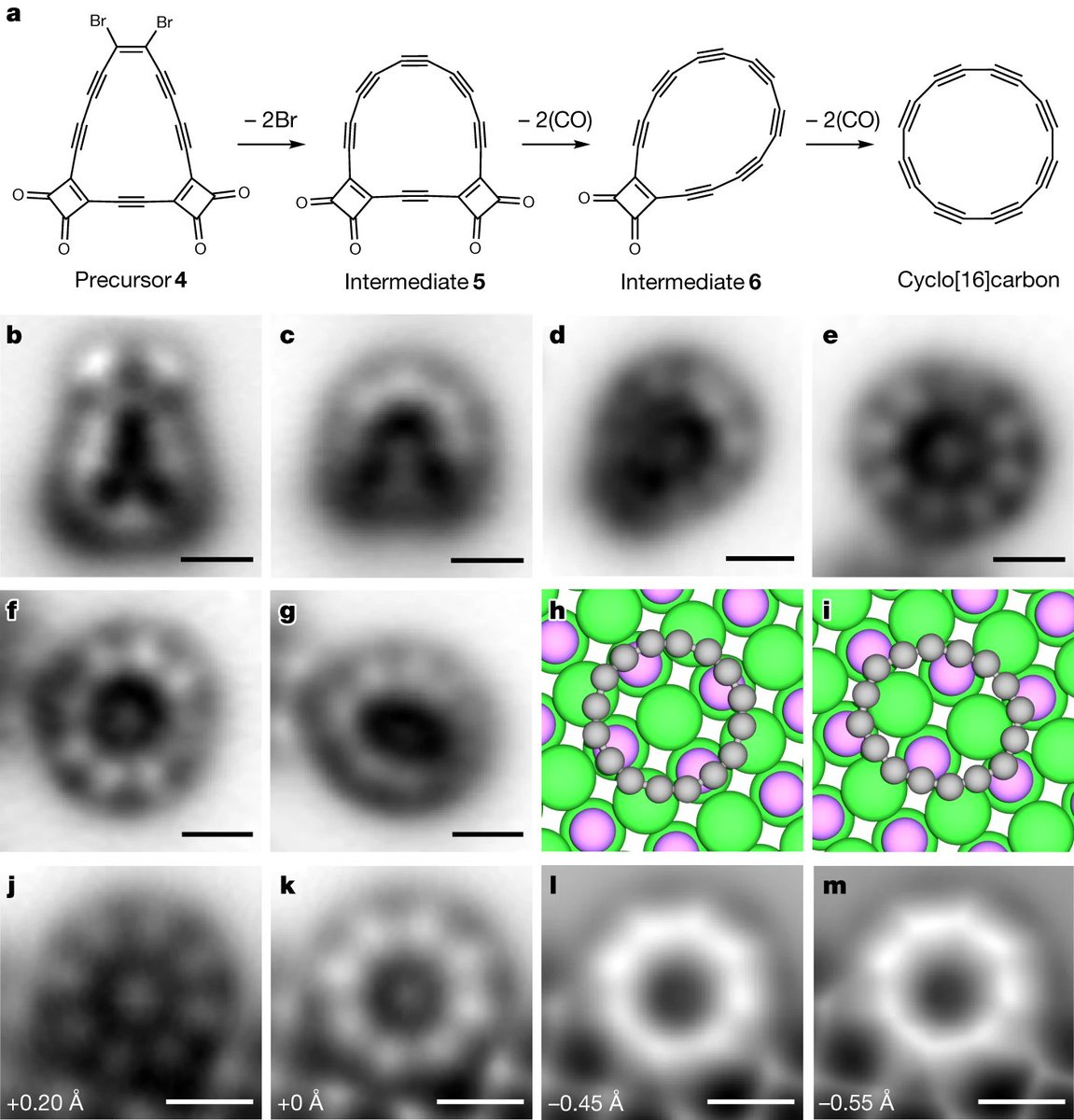
Congratulations to @HLAGroupOx (!) On surfaces, we have seen cyclocarbon rings created with clever tip-induced strategies (tldr: removing atoms from a precursor) Now…48 carbons stabilized with catenates in solution.
https://t.co/VBPeBiP3h6
Sometimes intuition is enough, but steric repulsion was hard to visualize for me. I used to eyeball it from simulations, and now it’s right there to see...cool work!
Just published in @ChemRxiv:
A Practicable Measure and Spatial Visualization of Steric repulsion with Atomic Resolution
==> https://t.co/Wa80BbHAYk
We successfully present a method to hunt one of the unicorn of #Chemistry: steric repulsion!
#compchem@khartab
@InnaVishik I like to think that strange properties of matter live within the inclusions of random minerals with strange stoichiometries. Perpetually hidden in collections or Earth's crust
Great read! Mass selection + landing energy control is crucial to avoid any fragments on surfaces that interrupt or hinder interesting reactions on surfaces. But also enables using gigantic precursors or biomolecules into surfaces. Maybe I'll show soon some examples of this...
Excited to share a primer* my team and I wrote for ACS as an entry piece to the field of ion soft landing + single molecule imaging!
https://t.co/O1TS1aP7gb
* A pedagogical piece bridging a complete stranger to review papers in the field!
Renormalisation is a central concept in modern physics. It describes how the dynamics of a system change at different scales. A great way to understand and visualise renormalisation is the Ising model
(some math, but one can follow without it )
1/13
@philipturnerar Is this also including the almost by 'default' 1 pF capacitance of having a short wire attached to an amplifier? (typical number from Chen and elsewhere)
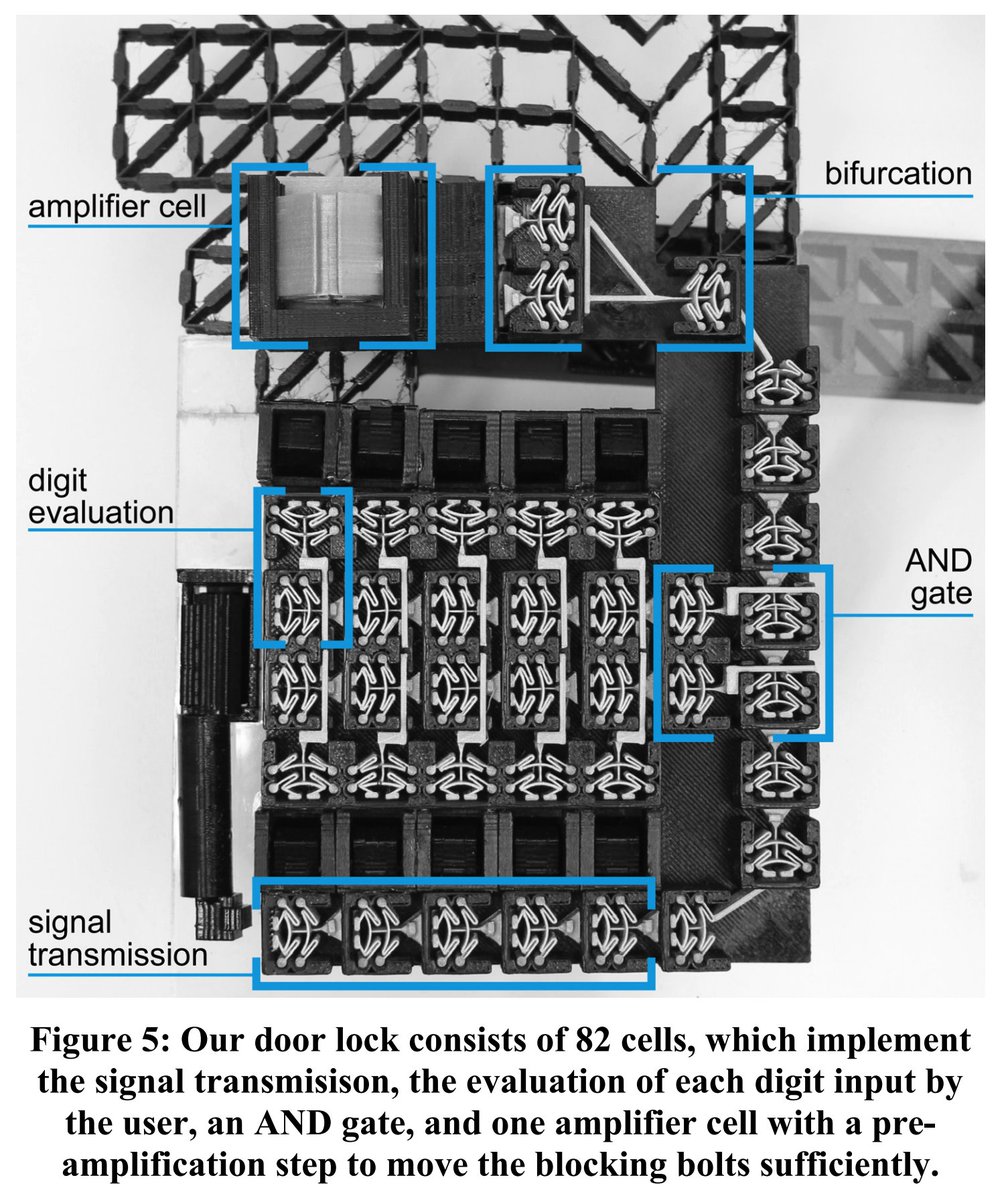
These analog systems are always full of ingenuity 'how to embody mechanical computation into 3D printed objects, i.e., without electronic sensors, actuators, or controller'. The video in the thread is really cool.
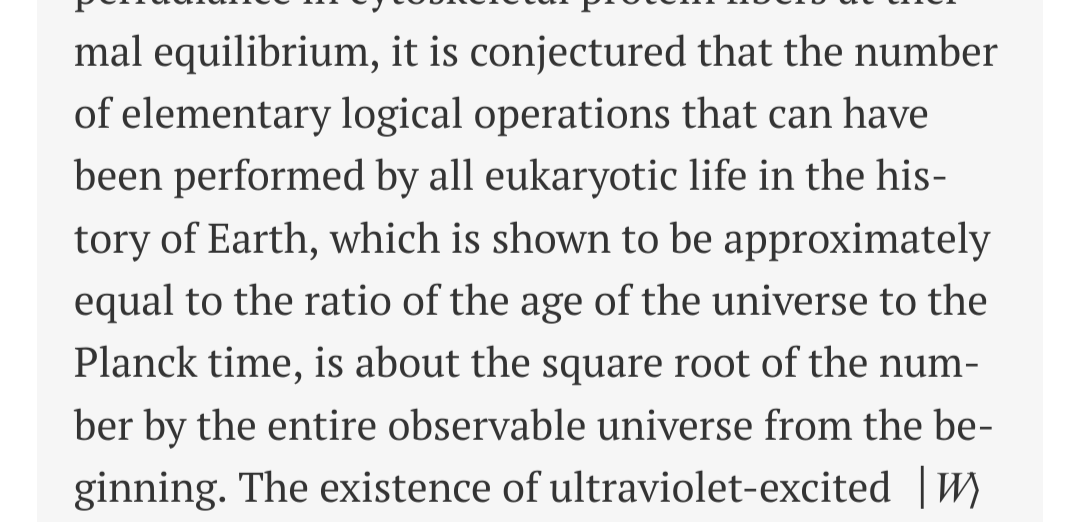
Curious to see what people think about this, we had quite a debate at the Editorial Board. After the reviews came in, the conclusion was that, on the great wide spectrum that stretches from bonkers to brilliant, this is closer to brilliant. https://t.co/PoNXZxdjkH