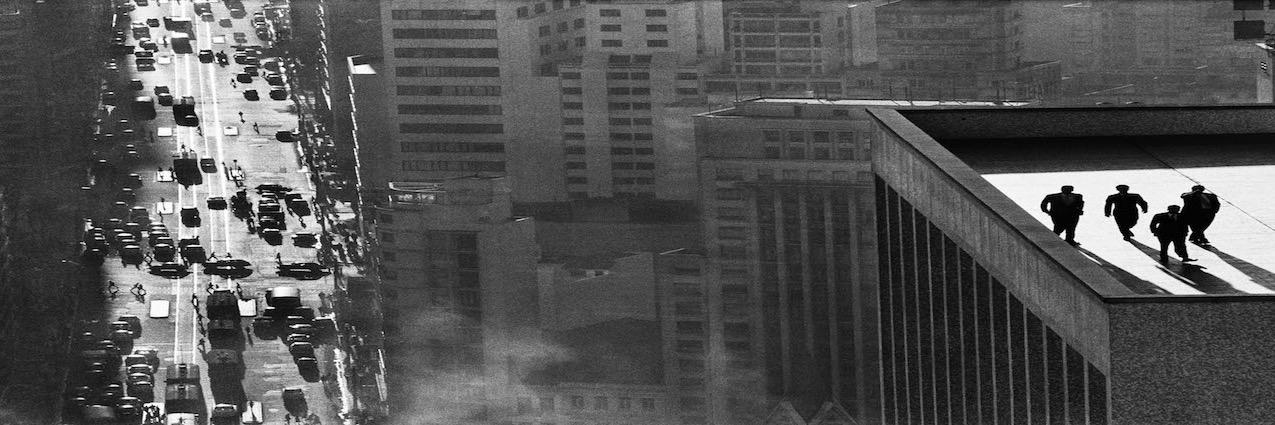
Born in 1922 into a house someone else had built.
The Actual Cure: How to Treat the Patient
A reply from an Irishman living in France since 1992
Your essay asks "HOW?" at escalating volume. You searched for the logic beneath the nonsense "only to find none." A question that survives the discovery that it has no answer is no longer an inquiry; it's a symptom. Ireland, as you say yourself, produces the world's most eloquent accounts of its own failure and the eloquence is part of the illness. The complaint has become the national art form.
So let‘s swap the question. Not how is this possible, but why this State, specifically. And then the only "how" worth keeping: how do you treat the patient?
The why
Put Ireland on the couch and the history is not so obscure.
Born in 1922 into a house someone else had built. It inherited someone else's entire administrative apparatus (the civil service, the courts, the very buildings) and simply changed the letterhead. Every new state inherits something, but most eventually have a founding act, a moment when they tear up the inherited plan and build machinery of their own. Ireland never did. This one moved into a fully furnished apartment, and has spent a century behaving like a tenant. Tenants don't bother renovating, and they definitely don't invest.
And in the one domain the previous landlord left empty (health, education, the care of the poor), the space was already occupied by the Catholic Church. The infant State never had to grow those organs, the way a child raised by an overwhelming mother never develops the capacities she performs first. The State's role was reduced, from the beginning, to what it remains today: writing cheques to institutions it doesn't own and cannot see. Your "shadow government" is not an accident of the Health Act 2004. Section 38 and 39 are the fossil record of a subject that never separated from its first caregiver.
Then, in the 1990s, the trauma and the second missed door. The people's trust in the Church collapsed, at almost exactly the moment the money arrived. Read that sequence clinically: the old authority died, and the heir simultaneously came into a fortune. A normal country would have nationalized the orphaned functions and finally built its own organs. Instead, Ireland kept the exact same architecture and changed the tenants. The nuns left; lay boards, NGOs and Section 39 bodies moved into the same buildings, often literally. We threw out the owner and kept the outsourcing: the old system's opacity without its coherence, rebranded as progress.
So the State didn't stop being able to build. It never learned, and it declined the lesson twice: at independence, and at secularization. The money just made the absence expensive enough to see.
That is why your Four Locks exist. A tenant has no agent, keeps no ledger of a house it doesn't own, has no slack because it is always just paying the rent, and remembers nothing because it’s not in the tenant’s name. And it’s probably why the announcements never stop: a State that has never once experienced "I have built" from a position it authored keeps saying "I will build," trying to speak itself into being.
And the tenant has one more habit perhaps worth naming. A State that cannot grow its own capacity imports it. This is the consultancy pattern applied to people: renting the capacity it declined to build, permanently, at a premium. And having done so, the State has quietly found itself a new raison d'��tre, managing the consequences of its own workaround. None of this is the fault of the imported capacity; it is the symptom, not the disease. But a State whose main occupation is administering the side effects of its own incapacity has travelled a long way from building anything at all.
The view from France
I've watched all of this from France since 1992, before the Tiger, before the money. France is no model; lately it's a state that never met a domain it didn't want to administer. But that's precisely the point: capacity is dual-use. The machinery that built the TGV, and in my thirty years here the Millau Viaduct, the tram lines of thirty cities including my own, and a rebuilt Notre-Dame in five years flat, is the same machinery that is now clearly overreaching, because the state canexecute what it decides. France's disease is a state that does too much; Ireland's is a state that can't do anything. I've lived thirty years under a state with too much capacity, watching my own country with none. Neither is the model but only one of them can build a metro.
How to treat the patient
Your nine thousand words contain a three-line cure, and the treatment is not bravery, money, or better people.
Decide the undecided thing. The 38/39 question ("are these people our employees or not?") has two answers, and Ireland has paid twenty years' interest to avoid choosing either. The therapeutic value is not the policy outcome; it's the patient discovering it can make a cut and survive the loss.
Build one agent. Not a task force but a body with real authority over a bounded domain. Your own A/B test proves it: the same Tom Keane succeeded with cancer control, where the domain was bounded and owned, and failed with Sláintecare, where nobody saw over the whole. Ireland doesn't lack talent; it builds structures to defeat it.
Write things down. The patient identifier, the common ledger, the crash data. Not IT projects but the State learning to inscribe itself. A subject that cannot count itself cannot reform itself, or even mourn what it has lost.
Ireland already inhabits its failures beautifully; it does not need another one to live up to.
The cure is not a stronger father, and it is not hope either. It is one small act, completed and signed. That is how the patient learns there is no competent State behind the curtain waiting to be summoned. There never was. There is only what we decide to build, and what we are willing to lose in the building of it.
A State, in other words, that can bear to sign its own name. It has one. Éire.
Why can't Ireland just DO stuff?
My latest: Ireland's Delivery Inability.
In which I look at the gap between record input highs of money and the size of Ireland's government against record output lows of ...nothing.
🇺🇲 Robert F. Kennedy Jr. sur Fox News :
« En 1948, il y avait environ 1 million de Juifs dans les pays arabes du Moyen-Orient. Aujourd’hui, il n’en reste qu’environ 15 000.
Les chrétiens représentaient 20 % de la population du Moyen-Orient. Aujourd’hui, ils ne représentent plus que 5 %.
En Israël, en revanche, il y avait environ 150 000 Palestiniens en 1948. Aujourd’hui, ils sont près de 2 millions, soit environ 20 % de la population.
Si Israël voulait commettre un génocide contre les Palestiniens, il pourrait le faire en une minute. Il fait l’inverse : la population palestinienne autour d’Israël augmente considérablement.
Il n’y a plus de Juifs en Jordanie.
Il n’y a plus de Juifs à Gaza.
Et le nombre de chrétiens à Gaza a chuté d’environ 80 % en dix ans.
Si vous voulez voir où se déroule un véritable génocide, ce n’est pas en Israël.
Ça se passe dans toutes les nations qui l’entourent. »
Une question simple : pourquoi ce sujet est-il si rarement évoqué ?
TERRIFYING: Zohran Mamdani attended Friday prayers at a mosque where the imam literally called for the killing of infidels (non-Muslims).
This didn’t get enough attention.
Revenue sent my tax return back this year because apparently I answered one of the questions incorrectly…
Question: “Do you have anyone dependent on you?”
I wrote:
145,100 unemployed,
1.7 million on state benefits
33,000+ people in IPAS accommodation,
5,800 prisoners,
174 TDs,
60 Senators, an army of advisers, and consultants,
281,000 employed NGOs pushing the woke government agenda.
Around €1.8 BILLION a year going on overseas development aid…
464,000 public and civil servants
…plus a Government that seems to think the Irish taxpayer has an unlimited credit card.”
Revenue said my answer was “UNACCEPTABLE.”
So I wrote back:
“Why? WHO DID I LEAVE OUT???” 🇮🇪😂
🚨 JUST NOW: President Trump DOUBLES DOWN on his executive order BANNING the US government from creating a central bank digital currency
GREAT news. The federal government ALREADY has too much power over your money
A central bank digital currency would be VERY dangerous, giving them the ability to restrict what you spend your money money on, among other risks.
No central bank digital currency!
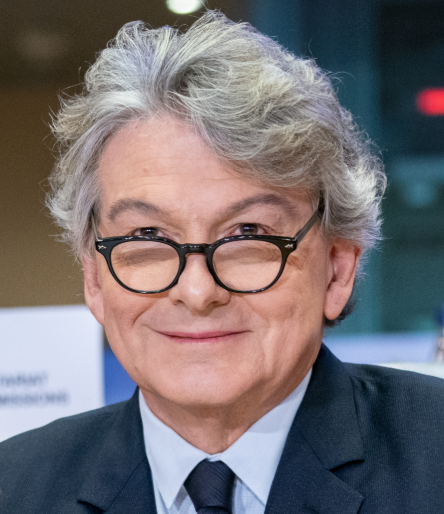
Thierry Breton, l’homme qui sauve les entreprises comme d’autres sauvent les meubles : juste avant l’incendie.
Regardez-le bien. Né le 15 janvier 1955 à Paris. École alsacienne, Louis-le-Grand, Supélec. Pendant son service national, il enseigne les maths et l’informatique au lycée français de New York.
De retour, il crée Forma Systems. Puis il dirige le Futuroscope de Poitiers, aux côtés de René Monory. Pendant qu’il y est, il co-signe *Softwar*, un thriller high-tech qui se vend très bien. Son co-auteur, Denis Beneich, affirmera plus tard que Breton n’a pas écrit une seule ligne. Il a eu l’idée. Beneich a tenu la plume. Breton reconnaît que « pour l’essentiel » c’est l’autre qui a écrit, mais garde le titre d’auteur. Le futur grand stratège commence déjà par une collaboration un peu floue. En 2015, il acquiert aussi la nationalité sénégalaise. Double nationalité franco-africaine. Pratique.
Ensuite, Bull, puis PDG de Thomson en 1997. La boîte vaut un franc symbolique. Il la « sauve », empoche les titres de stratège de l’année, part. France Télécom en 2002. Dette monstrueuse. Il lance les plans de réduction des coûts et de la masse salariale. L’action remonte. En 2005, il part à Bercy comme ministre de l’Économie. Son successeur amplifie et radicalise la politique. Les plans de restructuration deviennent une machine à pression. Une vague de suicides s’abat sur l’entreprise. La justice reconnaîtra plus tard un « harcèlement moral institutionnel ». Breton, lui, est déjà ailleurs.
Puis Atos. Onze ans de rachats frénétiques. En 2011, il déclare la guerre à l’email. « Zero Email ». L’email interne est une pollution informationnelle, explique-t-il. Il faut le remplacer par des outils collaboratifs. Les salariés regardent ça avec un mélange d’incrédulité et d’amusement. Lui, il vend ça comme une révolution managériale. En 2019, il vend ses actions à plus de 60 euros, empoche une fortune, et s’envole à Bruxelles. L’entreprise, elle, continue. Quelques années plus tard, le titre s’effondre. Lui n’est plus là.
À la Commission, il se découvre une nouvelle passion : Elon Musk. Il l’écrit, le rappelle à l’ordre, le menace publiquement avec le DSA, poste des lettres ouvertes. Avant l’interview Musk-Trump, il sort une missive solennelle. Musk lui répond avec un mème de Tropic Thunder : « Take a big step back and literally fuck your own face. » La Commission elle-même doit prendre ses distances. L’acharnement continue. Musk s’en amuse. Breton s’énerve.
En septembre 2024, Ursula von der Leyen le lâche. Il claque la porte en accusant une « gouvernance contestable ». Portrait officiel pour le prochain mandat : un cadre vide.
Depuis, il est partout. Plateaux télé, radios, interviews. L’ex-ministre, l’ex-commissaire, l’ex-PDG, l’ex-tout. On le sort dès qu’il faut un regard « d’expérience » sur l’économie, l’Europe ou le numérique. Certains ont même essayé de le pousser vers une candidature en 2027. Lui refuse poliment. Il ne veut pas être le énième candidat. Il préfère commenter. Toujours disponible, toujours en costume, toujours prêt à expliquer comment il aurait fait mieux.
Et pour couronner le tout, l’administration Trump lui a refusé le visa américain fin 2025, le ciblant comme l’un des architectes de la régulation européenne des plateformes. Il dénonce une chasse aux sorcières. L’ex-commissaire se retrouve persona non grata aux États-Unis. Pendant ce temps, ses coupes de cheveux deviennent de plus en plus baroques, comme s’il fallait compenser chaque sortie de scène par un volume supplémentaire.
Thierry Breton a le don rare de transformer chaque crise différée en succès personnel. Il est toujours le stratège de l’année tant qu’il est en place. Il est toujours ailleurs quand la facture arrive. Du roman co-signé dont on discute encore la paternité réelle jusqu’aux entreprises qu’il quitte avant le crash, en passant par la culture de pression chez France Télécom, la croisade absurde contre les emails, l’acharnement ridicule contre Musk, la double nationalité franco-sénégalaise et le visa américain refusé, le même schéma. Il vend haut, part bien, et laisse les autres gérer les débris.
Aujourd’hui, il vend du commentaire. Le chevalier du fédéralisme européen n’est pas un sauveur. C’est un professionnel de la sortie avant l’explosion… et du plateau télé après.
The left’s real priority, exposed in one sentence.
An MP attacked Margaret Thatcher over the “widening gap” between rich and poor. Her reply cut straight through the rhetoric:
“He would rather the poor were poorer, provided the rich were less rich.”
That’s the entire equality-of-outcome argument, said out loud. Not lifting people up — dragging others down so the gap looks smaller.
I know I’ve been posting a lot recently, but as Fr. Richard John Neuhaus used to say, “it’s a target-rich environment” right now.
The governor of Massachusetts just signed into law a statute that permits abortion up until the moment of birth, as long as mother and doctor give the go-ahead.
Please understand what this means. A fully-formed child, moments before exiting the birth canal, can be eviscerated, chopped into pieces, have its head crushed or skin burned off—all under the full protection of Massachusetts law.
What I found particularly gross was the reaction of the entirely female crowd around the female governor of Massachusetts as she signed this barbaric provision into law. They were clapping and cackling with delight because what can only be called infanticide can now be practiced with impunity in their state.
I’m old enough to remember when Mario Cuomo, the devoutly Catholic governor of New York, admitted that, though he found abortion personally repugnant, he was, after tortured wrestling with his conscience, willing to give it limited protection of law.
How far we have fallen from agonized and conflicted Cuomo to the present governor of Massachusetts and her entourage gleefully applauding the murder of children.
Under what authority does this man get to demand so much? He is a ex commissionner, ex minister. Ex business man. The level of arrogance is extraordinary. The only authority he actual has is the media who seem to worship his over-reach
Breton appelle à l’ouverture d’une enquête de l’UE sur la désinformation autour de Ceuta: Il propose également une « doctrine » établissant un lien entre les #technologies et la lutte contre l'immigration clandestine
The post Breton appelle à… https://t.co/xNupZssYlY
Le gouvernement d’Emmanuel Macron a décidé que mes propos tenus publiquement sur les plateaux de CNEWS et d’Europe 1, ainsi que mes chroniques publiées dans les pages du JDNews, représentaient un danger immédiat pour la République, et a prononcé mon expulsion en urgence absolue.
Il m’est reproché de chercher « à saper la confiance des citoyens européens, et en particulier des citoyens français, en leurs institutions et à instiller le doute sur le bien-fondé du soutien apporté à l’Ukraine ».
Ils affirment que mon comportement, qui consiste à vivre en France depuis près de dix ans dans le respect de la loi, à payer mes impôts, mais aussi à avoir une opinion et à l’exprimer dans le cadre de mon travail de journaliste, « porte ainsi atteinte aux intérêts fondamentaux de l’Etat » et que ma présence sur le territoire constitue « une menace particulièrement grave et actuelle pour l’ordre public; que par suite, il y a lieu de prononcer en urgence absolue son expulsion du territoire national en application de l’article L. 631-1 du CESEDA afin de faire cesser au plus vite ces prises de positions qui ont pour effet de destabiliser le corps social ».
En outre, le ministre de l’Économie, Roland Lescure, et le ministre de l’Intérieur, Laurent Nuñez, ont pris dans la nuit un arrêté visant à geler mes avoirs.
Mes avocats contesteront cette décision. Le résultat reste à voir, alors que nous assistons à une forme entièrement nouvelle de pression politique ayant un seul objectif, la censure des opinions qui ne correspondent pas au discours officiel.
Les médias mainstream s’emploient activement à expliquer aux Français qu’il ne s’agit pas d’une menace pour la liberté d’expression, et cela fonctionne, car la décision est justifiée par le fait que je suis russe et que le terrain d’une « russophobie publiquement admise » a malheureusement été préparé depuis plusieurs années.
Ceux qui célèbrent cette décision manquent de clairvoyance, car aujourd’hui, c’est moi, et demain, ce sera toute personne qui osera s’exprimer en dehors de la pensée unique.
Enfin, je tiens à remercier tous ceux qui m’ont adressé des messages de soutien et d’encouragement, et tout particulièrement Canal+ et Lagardère pour leur attachement à la liberté d’expression.