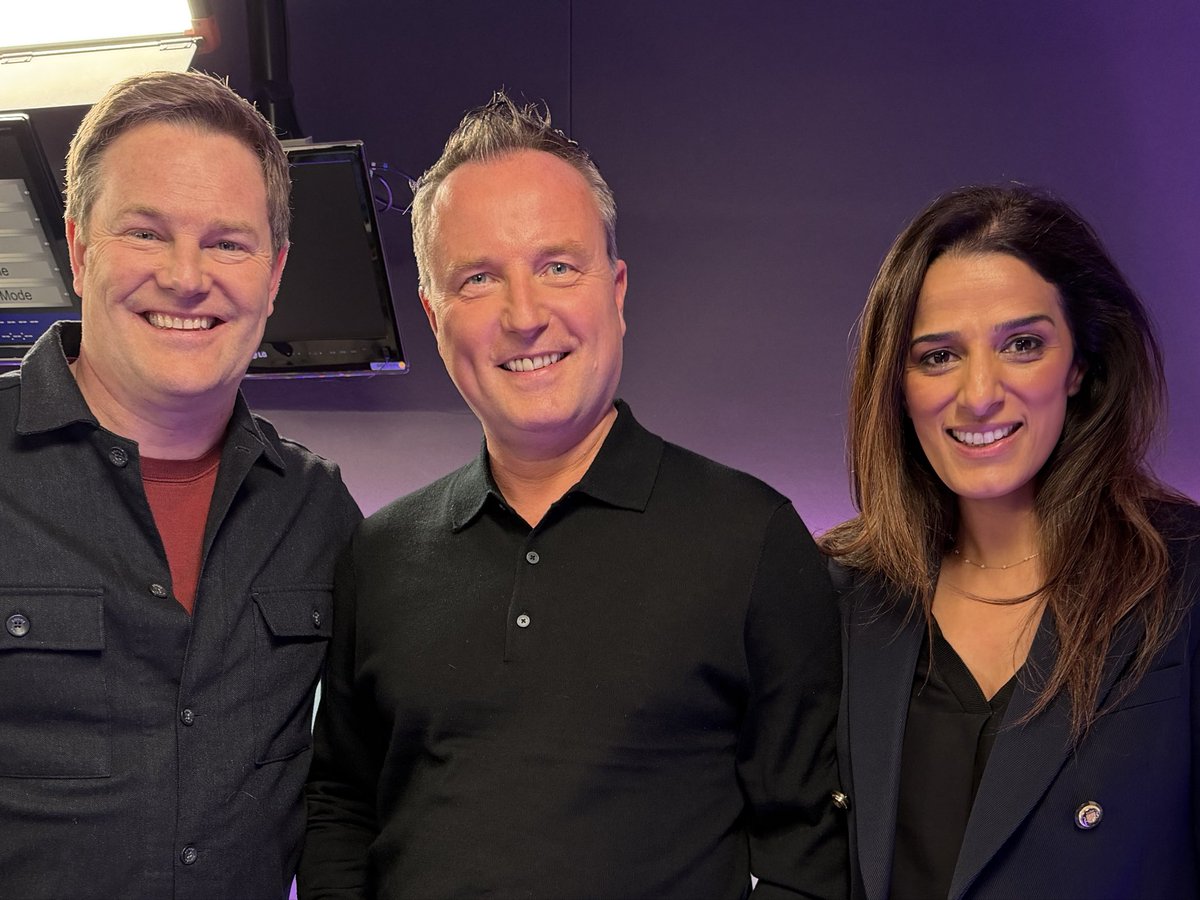
Was such an honor to appear on the BBC programme AI Decoded!
The title of the episode is: What Jobs Will Al Leave Us?
Hosted by Christian Fraser and Priya Lakhani OBE we were also joined by @EllaHaferMalz.
It shows six times on BBC News and BBC World this weekend and you can watch it on BBC iPlayer and on YouTube:
https://t.co/jYZ8THRtiq
AI could make us smarter, or it could quietly make us weaker?
If we use it to write every email, build every slide, and do all the thinking, we stop practising the skills that make us effective leaders and communicators. It’s the GPS effect, follow the tool for every journey, and you forget how to navigate.
In this video, I share a better approach, use AI as a thought partner. Ask it for ️⃣ strong counterarguments to stress test a strategy, role play a tough negotiator, or get it to challenge your assumptions like a sceptical investor or audience. When AI questions you, it becomes a coach, you uncover blind spots and sharpen your reasoning.
How do you use AI today, as a shortcut that replaces thinking, or as a tool that strengthens it?
🤖 Autonomous AI is here, but are enterprises really ready?
AI agents are starting to move beyond simple assistance and into real business workflows. They can plan, use tools, make decisions and take action across enterprise systems. That creates huge opportunities for speed, scale and smarter operations, but it also raises urgent questions around trust, governance and accountability.
In my latest newsletter article, I explore what this shift means for business leaders, based on my conversation with Shayan Mohanty, Chief Data and AI Officer at Thoughtworks.
One of the key takeaways from the conversation was clear: the technology is moving fast, but enterprise readiness depends on everything around it. Data foundations. Governance. Architecture. Observability. Human oversight. And, critically, the ability to move beyond pilots into production-grade AI systems.
Ready to dive deeper into enterprise agentic AI? Explore The agentic enterprise: Building an ecosystem of continuous evolution and reliable impact to see how Thoughtworks and AWS help enterprises move from isolated AI pilots to governed, scalable systems that adapt, act and keep improving.
#Sponsored
https://t.co/rxMnlaK68z
AI is transforming mobility, and the real opportunity is much bigger than adding more features to vehicles.
At Bosch ConnectedWorld 2026 in Berlin, I spoke with Christoph Hartung, Member of the Board at Bosch Mobility, CTO Systems, Software and Services and President Cross-Domain Computing Solutions, about how AI is changing the automotive industry.
His message was clear: AI will “infuse everything” in mobility, creating more context, awareness and speed in the customer experience.
That connects perfectly with one of the big themes from Bosch ConnectedWorld: AI is moving from the digital world into the physical world.
In mobility, that means vehicles can become more intelligent, more adaptive and more aware of the people using them. It also means automotive companies can develop faster and focus more precisely on what really matters: customer value.
But as vehicles become more AI-enabled, safety and security become even more important.
Christoph put it simply: at Bosch, “Safety and security we do not compromise.”
He also talked about Bosch’s approach to combining AI with safety architectures, creating what he called a “safety shell” around AI-enabled mobility systems.
For me, this is one of the most important points about physical AI. When AI moves into cars, factories, robots and other real-world systems, trust has to be designed in from the start.
The future of mobility will be shaped by AI, software-defined vehicles, contextual intelligence and safer, more personalized experiences. The companies that get this right will connect innovation with reliability, speed with safety and technology with real customer value.
#Sponsored #BoschConnectedWorld #BCW26
Job hunting is exhausting, and AI can help you stand out, save time, and even uncover opportunities you might never have found.
In this video, I show how to use AI across the whole process, tailoring your CV to beat ATS filters, discovering roles through smarter recommendations on platforms like LinkedIn and Google job search, upgrading your professional image with AI, and using AI as an interview coach through realistic role play and feedback. I also explain the mistakes to avoid, letting AI write your entire cover letter, sending robotic text, and trusting AI output without checking it.
What part of the job search would you most want AI to help with, CV optimisation, role discovery, interview prep, or skill-building?
#AI #JobSearch #Careers #FutureOfWork #CV #Resume #LinkedIn #InterviewTips #Upskilling #GenerativeAI
Will AI Break The Internet, Or Make It Better?
#AI is becoming the new front door to #search, #shopping, #browsing and decision-making, raising urgent questions about trust, choice and who controls what we see online. As #browsers, #AIagents and advertising models collide, the next version of the #internet will depend on whether users stay in control or quietly hand that control away.
https://t.co/lud5yiZb8l
Don't miss my latest #livestream at 12 noon today - "Will AI Break The Internet, Or Make It Better?"
📅 Date: Today, 23rd June
🕒 Time: 12:00 GMT, 07:00 EST, 04:00 PST, 17:30 IST
LinkedIn > https://t.co/dDQ0tmujLt
Twitter > https://t.co/ixSHwCtj0p
Facebook > https://t.co/RDh51JkXsw
YouTube > https://t.co/4tAp939sDG
AI is becoming the new front door to the internet, and that raises a huge question: will it make the web more useful, or quietly hand more control to a few powerful platforms? 🌐🤖
I’m joined by Anthony Enzor-DeMeo, CEO of Mozilla, to discuss the future of search, browsers as the next AI layer, user choice and consent, creepy advertising, AI agents, open source models, trust, transparency and what a healthier AI-powered internet could look like. 🔍🧠
AI And The Future Of Marketing
#AI is changing #marketing from a discipline built around #campaigns, #content and #dashboards into one shaped by intelligent #agents, deeper personalization and faster execution. The biggest opportunity is to use AI to remove the friction from marketing work so humans can focus on #strategy, #storytelling and #creativity.
https://t.co/TACuUkzU4e
🤖 What happens to human decision-making when AI agents start taking action inside the enterprise?
In this short clip from my interview with Shayan Mohanty, Chief Data and AI Officer at Thoughtworks, he explains why humans “go up the abstraction chain.”
As autonomous AI takes on more routine processes, approvals and triage, the role of people shifts toward setting the rules of the game, defining the boundaries and deciding where human judgment is needed.
That is one of the most important leadership questions in the agentic AI era. How do we design organizations where AI can act with speed, while humans remain accountable for the goals, constraints and outcomes?
This is an extract from my full interview with Shayan, where we discuss autonomous AI, enterprise readiness, governance, AI-ready data and Thoughtworks’ AI/works™, its agentic development platform for production-grade AI adoption.
🎥 Watch the full interview here: https://t.co/xekceGbpz4
To learn more, check out the white paper: The agentic enterprise: Building an ecosystem of continuous evolution and reliable impact - https://t.co/amMVWrND28
#Sponsored #ThoughtworksPartnership
#PhysicalAI is moving artificial intelligence from screens and software into #robots, #drones, self-driving #vehicles and #intelligent#machines.
Here are the companies #leading the race to bring #AI into the real world and why their work could reshape #business, work and everyday life.
https://t.co/pnTMIL8hmP
AI Layoffs Are Here, But They Don’t Mean What You Think
Tech layoffs are increasingly being linked to #AI, but the real story is more complex than #machines simply replacing humans. As companies pour billions into AI #infrastructure, #cloudcomputing and specialist #skills, the latest #job cuts reveal how businesses are reshaping themselves around AI adoption and the #future of #work.
https://t.co/N24nipbzeV
AI can tattoo you, mix your cocktail, model fashion, blend whiskey, and even become a pop star.
In this video, I walk through some of the most surprising AI capabilities appearing right now, from robotic tattooing and robot bartenders, to digital humans used in fashion campaigns, AI-designed whiskey blends, AI influencers landing brand deals, and virtual pop stars building real audiences.
These are all areas we used to assume were safely “human,” creative, and expressive, which is why the shift feels so dramatic.
Do you find these AI breakthroughs exciting, unsettling, or a bit of both, and which example surprised you most?
#AI #ArtificialIntelligence #FutureOfWork #Robotics #GenerativeAI #DigitalHumans #AIinBusiness #Innovation #TechnologyTrends #CreatorEconomy
Humanoid Robots: 18 Companies Racing To Build The Next Big Thing In AI
#HumanoidRobots are moving from science fiction into #factories, #warehouses and potentially our homes, as tech giants and ambitious startups race to bring them into the real world.
From Tesla and Boston Dynamics to Figure AI, Unitree, UBTech and 1X, these are the companies shaping one of the most exciting new frontiers in #robotics.
https://t.co/AvgGeDAuRD
Don't miss my latest #livestream at 12 noon today - "Autonomous AI Is Here, But Are Enterprises Ready?"
📅 Date: Today, 18th June
🕒 Time: 12:00 GMT, 07:00 EST, 04:00 PST, 17:30 IST
LinkedIn > https://t.co/dDQ0tmujLt
Twitter > https://t.co/ixSHwCtj0p
Facebook > https://t.co/RDh51JkXsw
YouTube > https://t.co/4tAp939sDG
🚀 Autonomous AI is moving from theory into the enterprise, and the big question is no longer whether AI agents can act, but whether businesses are ready to let them.
In this new interview, I speak with Shayan Mohanty, Chief Data and AI Officer at Thoughtworks, about what it really takes to move from AI assistants and copilots toward agentic systems that can plan, use tools and take action across real business workflows.
We discuss why governance cannot be treated as paperwork, why accountability has to be built into the architecture from day one, and why the real competitive advantage in AI may come from orchestration, execution and AI-ready data rather than access to the latest model.
For any business leader thinking seriously about AI transformation, this is a conversation about what needs to happen before autonomous AI can be trusted at scale.
To learn more, check out the white paper: The agentic enterprise: Building an ecosystem of continuous evolution and reliable impact. https://t.co/amMVWrND28
#Sponsored #ThoughtworksPartnership
🚀 AI is moving beyond screens and into the real world.
For years, we've focused on AI's ability to generate content, analyse data and support decision-making. But the next major shift is already underway: Physical AI.
At Bosch ConnectedWorld 2026 in Berlin, one message stood out clearly: AI is becoming operational.
We're entering an era where AI doesn't just process information - it powers factories, supports workers, optimises production lines, enables smarter vehicles and helps robots operate safely in complex environments.
Some of the key themes I explore in my latest article include:
✅ Why Physical AI could be the next major business transformation
✅ How AI-powered factories are moving from connected machines to autonomous decision-making
✅ The evolution of digital twins into living operational intelligence systems
✅ Why AI will amplify human expertise rather than simply replace it
✅ The growing importance of trust, safety and governance as AI enters physical systems
The first wave of AI transformed how we work with information.
The next wave will transform how the physical world operates.
Which industry do you think will be transformed most by Physical AI over the next five years?
https://t.co/pIG34TVpUl
#AI #ArtificialIntelligence #PhysicalAI #Industry40 #Manufacturing #DigitalTransformation #Innovation #FutureOfWork #Leadership #Technology #Robotics #DigitalTwins #BusinessStrategy
Humanoid robots are moving from demos to deployment, and Physical AI is the reason.
Physical AI brings together perception, real-time learning, and embodied action, so robots can navigate human spaces, adapt to changing environments, and work safely alongside people.
In this video, I explain what Physical AI is, why a humanoid form acts like a “universal adapter” in a world built for humans, and what the next decade could look like as costs fall and adoption accelerates across factories, warehouses, hospitals, and eventually homes. I also explore the harder questions we need to face, impact on jobs, safety, governance, and the risk of misuse for policing or surveillance.
Where do you think humanoid robots will create the most value first, manufacturing, logistics, healthcare, or home support?
Should You Really Say Please And Thank You To AI?
Millions of people now say please and thank you to #AI#chatbots, but does #politeness actually improve the answers or simply waste time and energy?
As AI becomes more human-like, the bigger question may be how our #conversations with #machines shape the way we #communicate with each other.
https://t.co/WQNeiTMey2
The Humanoid Robots You Can Actually Buy Right Now
#HumanoidRobots are moving from science fiction into the real world, with several models now available for homes, #research labs and industrial deployments. From $16,000 developer #robots to six-figure enterprise #machines, this guide looks at what you can actually buy today and what is still waiting in the wings.
https://t.co/HqJpF56IIH