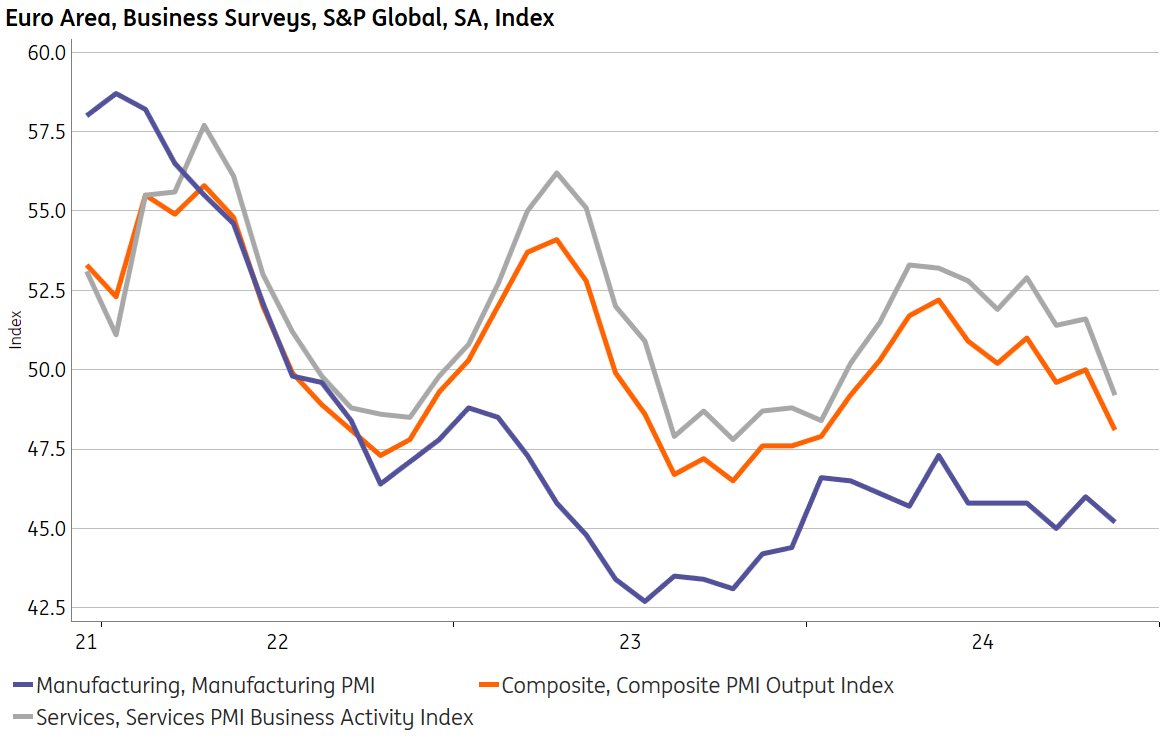
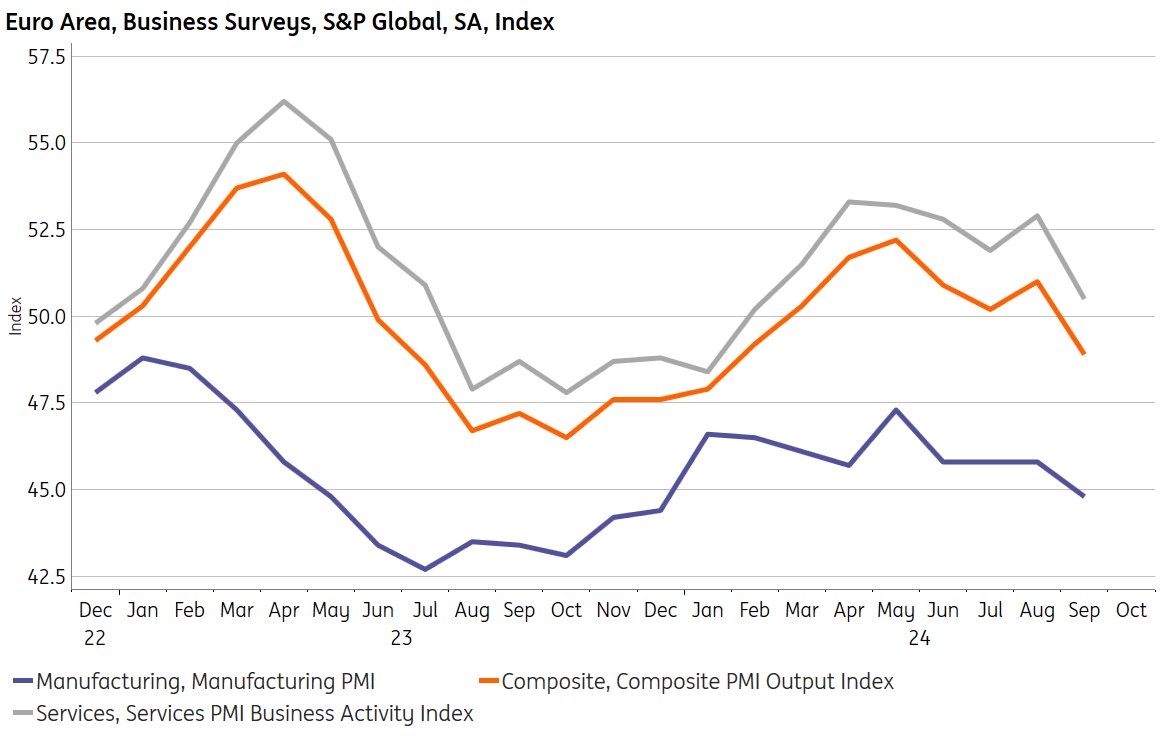
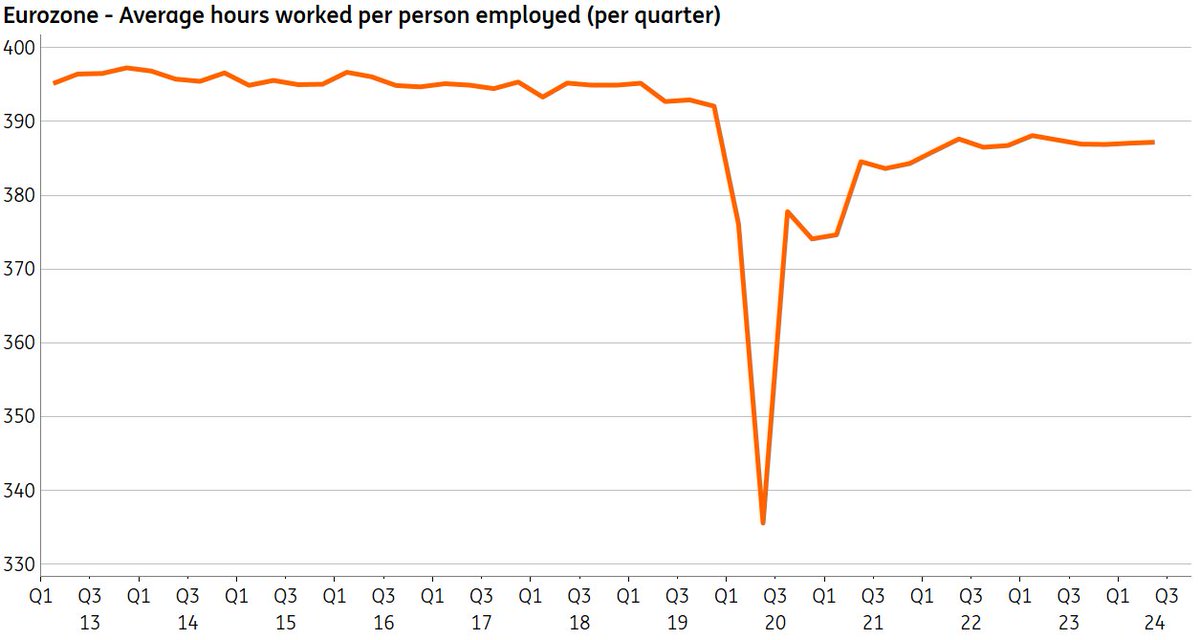
Stock markets have become more upbeat about Europe recently - but improving sentiment is difficult to justify looking at the short-term outlook illustrated by this morning's PMI, writes @BertColijn
https://t.co/IeVEie5Gxx
The composite PMI dropped from 50 to 48.1, once more stressing growth concerns. But GDP data actually came in better than expected recently. Now the ECB has to figure out whether this is the PMI crying wolf or whether it should take this signal seriously, we think it’s the latter
Nederlandse inflatie steeg in oktober weer iets, van 3,5 naar 3,6% terwijl de ECB juist de rente versneld aan het verlagen is. Lees meer hieronder:
https://t.co/5VRhTY6tAk
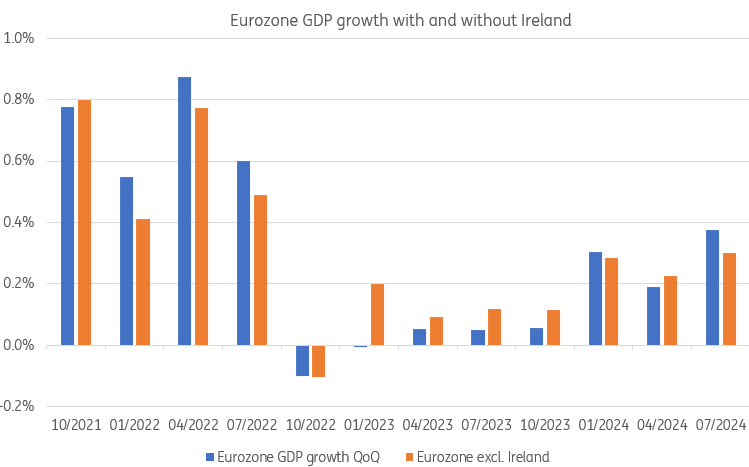
Eurozone GDP data might be looking a little brighter this morning, but we're still not convinced of a meaningful recovery for the region just yet.
Here's why, from @BertColijn
https://t.co/qP3YPtyoO0
Eurozone GDP accelerated big time (for European standards) in 3Q. In part thanks to one-offs like the Olympics in France and 0.1ppt was due to Ireland. Still, no sign of deceleration underlying here despite PMI misery. But that brings no guarantee for quarters ahead.
Another weak PMI, which looks worse under the hood than in the headline figure (up from 49.6 to 49.7). Services - the engine of eurozone growth - weakened as new orders worsen and businesses reduce headcount. Read more here: https://t.co/cEuBfSwB75
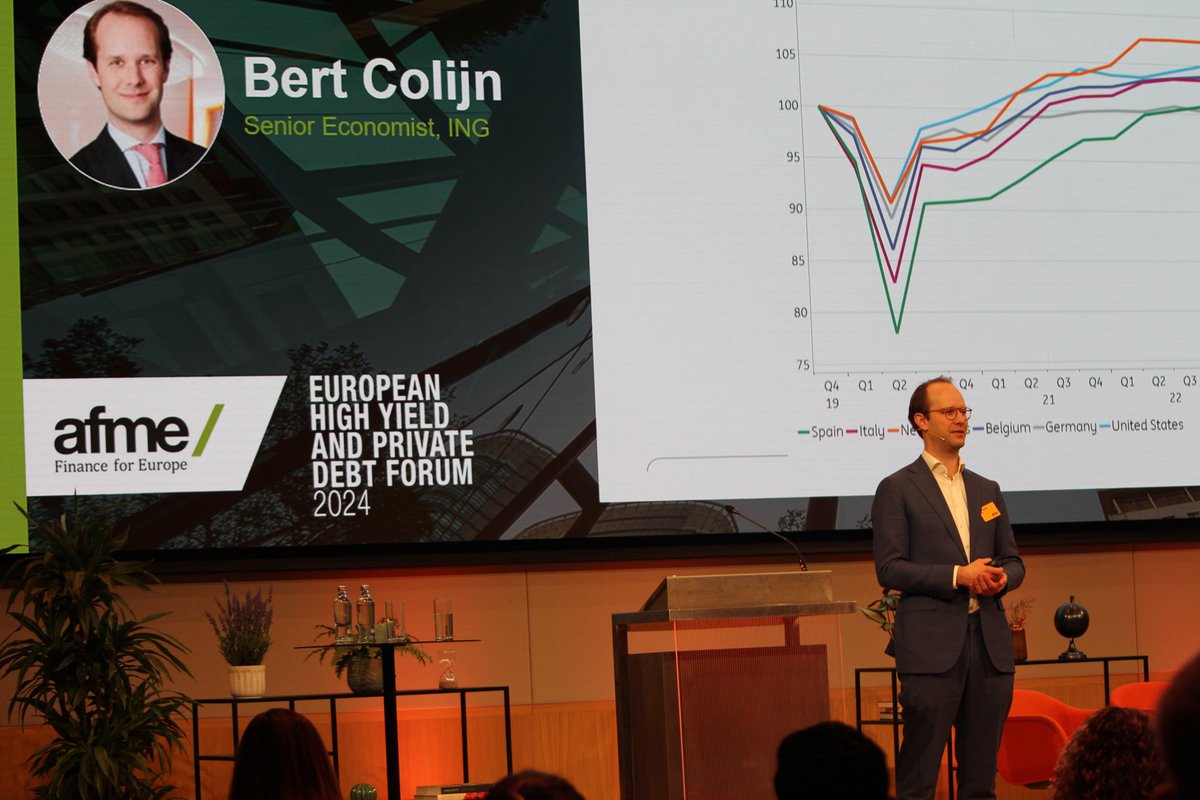
@BertColijn, @ING_news's Chief Economist of The Netherlands, gave a macro economic update in his keynote at AFME's European High Yield and Private Debt Forum #EHYPD2024
As the Olympic flame extinguished, so did eurozone optimism. The August uptick in the PMI was met by a sharp decline in September. The PMI now stands at 48.9, which indicates contraction according to the survey. This further fuels growth concerns in the bloc.
To be clear, Draghi’s musings of joint debt apply to less than EUR100 (for common goods investments) out of the identified 850bn in total investment, which in turn is wrapped up in 400 pages of solid analysis and sounds recommendation.
Well, this is what Mario Draghi was talking about. Eurozone production once again fell in July, which means that the declining trend in production that started in September 2022 continues. More thoughts here: https://t.co/Ly09tQnKQ7
De keek op de week gaat deze keer over het rapport van Draghi en waarom Nederland daar beter naar moet kijken dan deze week gedaan is. En ook over de ECB natuurlijk.
https://t.co/nAchmQwTz0
De ECB besloot vandaag de rente weer te verlagen. Grote zorg bij de ECB is de grote stijging van lonen, zegt @BertColijn in Geld of je Leven. "Als lonen sterk blijven stijgen dan zien bedrijven hun grootste kostenpost stijgen en dan moeten de prijzen weer omhoog".
Profit growth in the eurozone has dipped further in Q2 and points (with some delay) to sharply declining total compensation growth in the economy. That happens through lower wage growth, lower employment or both. In any case, dovish for the ECB.